Be Scrappy, Be Loyal, Ride the Wave of Success | AirBnB Founder Nate Blecharczyk
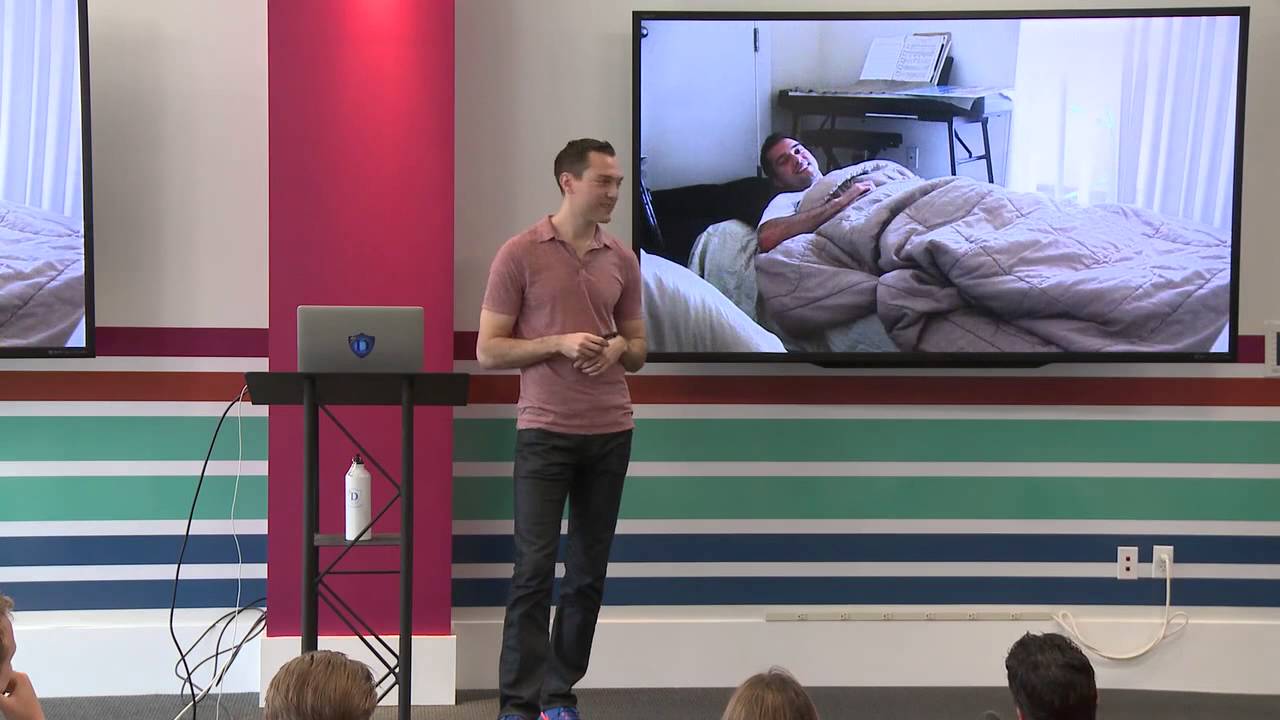
Airbnb co-founder Nate Blecharczyk describes the startup's near-death in 2008: after a convention launch fizzled, the team sold $30,000 worth of Obama O's cereal for survival money. Y Combinator taught them to do unscalable things like photographing listings themselves. Greg McAdoo at Sequoia saw the wave and invested $600,000.
Chapters
So this is now the summer of 2008, and we have this vision I told you about, make it just as easy to book someone's home as a hotel. And we're working on this thing, and we get the idea to launch it during another really big event. This time it's the Democratic National Convention that's happening in Denver in late August of 2008. It's where Barack Obama is going to receive the nomination for the Democratic Party, a very historic event. And we're like, It's being held in this stadium that can hold 80,000 people. And there are only 17,000 hotel rooms in Denver. And we said, clearly people are not going to have any place to stay. And yet people are going to this event and paying out of pocket because they're just so passionate. And so we thought to ourselves, there's going to be a clear need here. And so we got the idea to launch just a couple weeks before this event and really try to ride this wave. And sure enough, we launched 2 weeks beforehand. We managed to get 800 properties on our website within about a week because there are a lot of locals who are looking to get out of town, make a quick buck. So we get all these properties. And meanwhile, the news, they're writing stories about how there's this historic event all these people want to attend, but they can't find a place to stay. And so we write to the local newspaper and we say, actually, we have 800 places that are confirmed available on our website. They said, oh, that's pretty interesting. Let's put you on the news. And so we're in the newspaper, the city newspaper, and then before we know it, we're actually on CNN, national news, talking about what is AirBed and Breakfast, all within the first week of launch. I mean, this is exactly what you dream of, right, being this relevant. We got great exposure. It was a great way to launch. And yet, one week later, we were no longer relevant. The crickets were chirping. So we had this super successful launch and then nothing. And then that same month, the recession begins. This is now September of 2008. It's the beginning of the recession. Sequoia Capital, VC firm, puts out a memo to all their portfolio companies saying, this is the beginning of a really hard time. that you should consider laying off staff, you're not going to be able to raise money. So any investors that did exist basically stopped existing, buttoned up their pocketbooks, their bank accounts, and things just got darker for us. And this begins a period that we like to call the trough of sorrows. And so this is a well-known diagram, but I think it's incredibly accurate. Every company I've ever talked to goes through this. path where leading up to launch you're just so excited. It kind of— the excitement kind of peaks at the point of launch, right? Like everything feels right. You feel rewarded. You've launched. You're getting on TechCrunch, maybe even CNN. But then very quickly people stop caring. And this begins a period we call the trough of sorrows where despite everything you do and all your hard work, It's almost impossible to make yourself relevant again. And if you make it through that, well then things might get better, but it's a long path usually. And it's during this period in the trough of sorrows that we get creative. And if you recall, our name is Air Bed and Breakfast. Joe and Brian get this wacky idea to make a breakfast cereal that is presidentially themed as a way to generate buzz for the company. They come up with a concept for Obama O's, Hope in Every Bowl, and Captain McCain's, A Maverick in Every Bite. And so their idea is that they're gonna come up with all this artwork. This is all original. They came up with this artwork. They're going to get 500 boxes of each cereal made. They're gonna send the first 100 to reporters, And then we're going to sell the other 400 on our website. And the thought is that leading up to the election— the election's going to be in November. There's a lot of hype around this. There's a lot of wacky stuff happening anyways. The thought is if we mail these to reporters, they're going to write about us. They're going to feature us on their program. Whereas if we were to email them anything, they would probably just delete it. If you get this in the mail, we said, they're definitely going to call us back. And so that was the idea. Of course, we had to make the boxes, which included going to the supermarket and buying a whole ton of cereal, over 1,000 boxes. And then of course, the boxes had to be assembled. So we had to take the cereal out of one box, put it into the next, hot glue these boxes that we had made, have the artwork done, the photography. That's a lot of cereal. But you know what? It worked. We were once again on CNN talking about, this time, our cereal. During no part of this did we actually even talk about Air Bed and Breakfast. We really just talked about the cereal. But we were on CNN. We were on Good Morning America. And in fact, the video on CNN was the number one political video of the day. And that day we sold a $40 box of cereal every 3 minutes. And by the end of the week, we had sold out $30,000 worth of cereal. And we like to half-joke that we financed our company off of cereal in that first year. Because our core business of air beds had made no money. By no money, I mean a couple thousand bucks. And here we go in one week, we make $30,000 from cereal. I mean, it was a legitimate question to ask, should we become a cereal company? Should we pivot? We didn't, though. Because we knew there wasn't going to be another election for 4 years. But if there was an election every week, I think we would have had a business model. So a fun story, but really we are in the trough of Soros. And we're coming to the end of 2008, a whole year without jobs, failing to raise venture capital money. We're in the recession. And we're at the point as a team where we wonder, is it ever going to take off? How do we know when we should quit? Because there's an opportunity cost of anything. So that's a really tough conversation. And our mentor, Michael Seibel, saw kind of the state we were in as a team, and he recommended to us that we join Y Combinator. Ooh. And we decided to because we thought to ourselves, we hadn't actually given it 100% yet. We'd worked really hard, but we hadn't been completely focused. I had been in Boston for much of the time. We each had side projects going on. And so the thought was, let's do Y Combinator. It's only a 13-week program. And at the end of 13 weeks, we can ask ourselves legitimately, should we keep going or not? Because we all applied ourselves 110%. So we all agreed to do this. But of course, first we have to get in, right? And that's not an easy thing. And so we go into the interview. You have about 5 minutes to pitch. And I think within 2 minutes of the interview starting into our pitch, Paul basically says, people actually do this? That's a crazy idea. And he basically takes control of the conversation and tries to convince us to do some other idea. And then time's up and we're walking out the door. And we're like, oh no, that did not go very well. But as we were walking out, Joe takes out of his bag a box of the Obama O's. And hands it to Paul Graham. Paul says, hey, what is this? Did you buy this for me? And we said, no, we made this. He says, I don't understand you made this. This is a box of cereal. You're a tech company. And we said, no, we made it. He said, OK, come back to my office and tell me how you made this. And so we tell him the story behind the cereal, after which he says, I may not believe in your idea at all, but you guys are scrappy. You know how to get things done and I'm willing to bet on that. That's the hardest thing to find. And he has this saying about what he calls cockroaches, basically meaning that he looks for founders who are incredibly scrappy that you just can't kill. They're that resilient. They persevere that much. That's what investors want to ultimately fund. It's less about your ideas, it's more about you and your perseverance and determination. to succeed. And so that's what he saw in us and Y Combinator kicks off and we are super regimented. So I come back from Boston, I move in with the guys again living in the apartment. In fact, sleeping on an air bed at the foot of Joe's bed. And again, we are super regimented. We wake up together at the same time, 8:00 AM every day. We work all day, we go to bed at midnight. We take only a couple hours break to make breakfast, go to the gym, buy groceries, that sort of thing. But there's nothing else going on in our life. This is what we do 6 or 7 days of the week for 13 weeks. And another thing we do is Paul Graham says we're in the middle of a recession. Investors might not fund any of the companies out of this batch. So it's going to be really important that you're able to demonstrate revenue, that you can say at Demo Day, At the end of the 13 weeks that you are profitable. So we come up with this concept of what we call ramen profitability. Ramen profitability is the idea that you have enough money to pay your rent and pay for ramen, enough to eat, right? The real basics. And if you can do that, you're profitable. And for us, that number was $1,000 a week. That's what we had to get to. And so we made this graph and we posted it throughout the house. This graph shows our weekly revenue and our goal. And it was the first thing we saw when we woke up, it was in the middle of our bathroom mirror, it was the last thing we saw before going to bed, we put it over the fireplace, you just couldn't look anywhere without seeing this graph. So we were hyper-focused on creating revenue and making that chart go up every single week. And it was during YC that we got some really good advice from, again, from some mentors. And one of the pieces of advice that we really took to heart was from Paul Buchheit, the founder of Gmail. And what he told us is that it's better to have 100 users who love you than 1,000 users who like you. You need to have evangelists at your core. And then PG told us something. He said, do things that don't scale. Despite the fact that you're trying to become an internet company, right, and internet is all about scale, when you're figuring out your product-market fit, It's OK to do things that don't scale. You should go and meet your users. Well, we said our users are everywhere. He's like, well, where are most of your users? New York. So he said, go to New York, meet your users, which was counterintuitive to us at the time because we had no money. Here we are during YC. We're supposed to be in Mountain View. And he's telling us to go to New York. But we take the advice to heart. And we go to New York. and we meet all of our users, all 40 of them. So not many. And one of the things that we notice is that our hosts, our 40 hosts, their photos are not very good. They're poorly lit. They're low quality. So we get this idea that we should offer them free professional photography. And so we call them up and we say, hey, would you like a professional photographer to come by your house and take pictures. Most people were surprised by this offer, but they said, sure, why not? So they'd get a knock at the door, and who would be there but Joe and Brian, the founders of the company, who were also the professional photographers. I think the hosts were rather surprised, but they let them in anyways. And so Joe and Brian would take the pictures using a camera that they couldn't afford, but they would rent on the weekends from a camera shop. They took the pictures, they sat with the host at the computer, got product feedback, they would also invite them out for beers afterwards and over beers they would tell them our story over the last year, that entrepreneurial story of struggle that I'm telling you right now, such that after our users heard this story they were really rooting for us. And that was really important for a concept that involves trust. And it was through this process that we were able to were able to really curate our inventory. This is when things really started to take off. When our 40 properties in New York had great photos, good prices, well-written descriptions, and we had hosts that understood what we were all about and wanted us to succeed, that's when the marketplace really began to grow. And it was at this time, still during YC, but now towards the end of the 13 weeks, that we come across a speaker. Every week there's a speaker who comes to YC. And it's a venture capitalist by the name of Greg McAdoo of Sequoia Capital. And Greg we had seen speak the year before. And Sequoia is a very well-known firm. They've funded some of the biggest companies, Google, Cisco, et cetera. And so Greg is talking about how Sequoia approaches fund investing. And he says, well, first they look for like really big waves, right, really big trends that are happening in the market. And once they identify one of these trends, then they look for really good surfers who can surf that wave, and that's what makes these really big successful companies. And so having heard that story, that wasn't a story we necessarily identified with, right? We didn't at the time feel like we were onto a really big wave. I mean, maybe we were hoping to be surfers, but it was hard to imagine ourselves being that. But at the same time, we were determined. And we made sure to approach Greg, and we pitched him on our company. So Greg listened. And then afterwards, he says, let me see if I got that straight. And he basically re-pitched our company back to us, but just way better. And we're like, yeah, like what you said. It was really amazing. He actually got it, and he understood. And he saw a big wave that we weren't even aware of. And sure enough, Sequoia invests $600,000 just a couple weeks later. And for us, this was so huge because not only was it capital, but just months earlier we were on the verge of quitting. And every investor we had met had not taken a second meeting. In fact, some had just gotten up and ran out the door. And here we have one of the best firms in the world investing in us thinking this is a big deal. And so we never had to have that conversation about quitting. And really that was the beginning of our success story. That was somewhere right about here. And Greg was right. There was a big wave that was about to emerge. And we have ridden it very successfully.
More from Tim


He Sold His Car to Build This Startup, Then Pitched It for $1M 😳 #Startups #AI

This Startup Moves Your Crypto BEFORE Hackers Can Steal It 😳 #Crypto #Cybersecurity




15 Months Without Refrigeration?! This Startup Thinks It Can Go Global 🥥 #FoodTech #Startups



