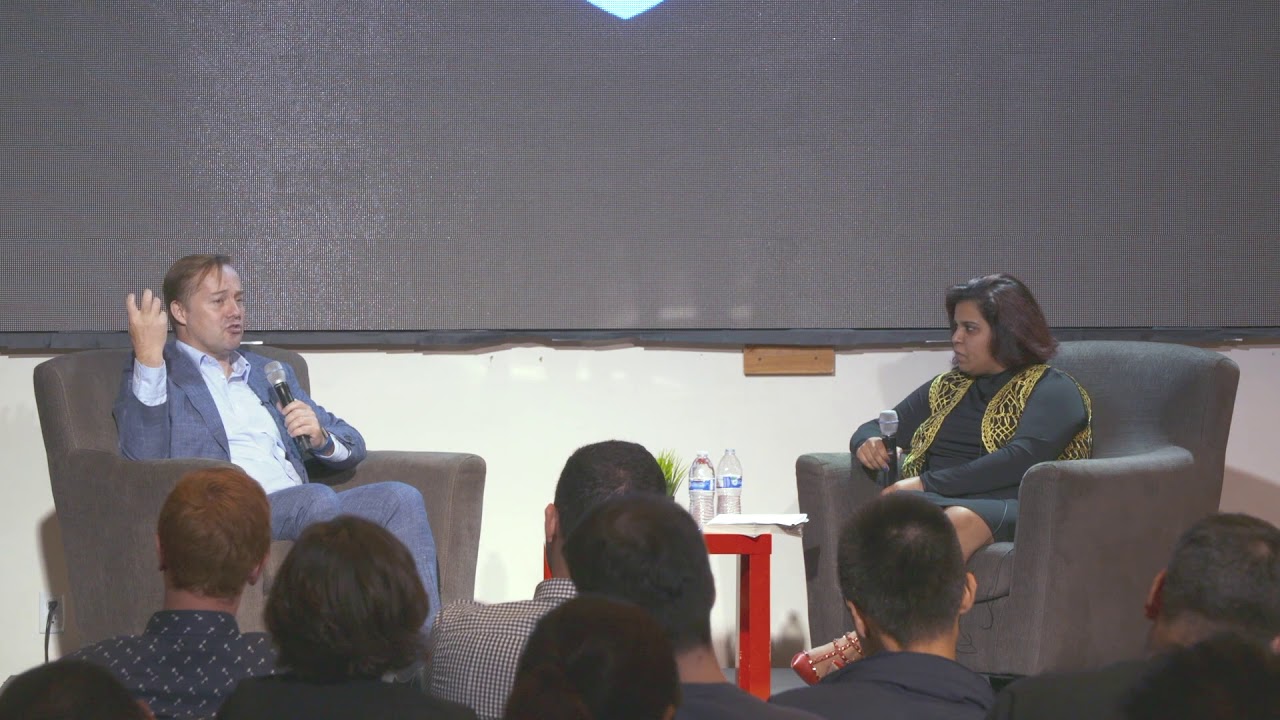
Jason Calacanis on why self-criticism matters: he runs weekly team lunches to identify weaknesses, assigns ownership of skills like paid marketing, and rewrites job descriptions as blog posts to hire better. He also explains that only a term sheet means real investor interest, and shares how Silicon Valley figures like Tim Draper and Ron Conway give candid feedback without expecting anything back.
Chapters
I can't say enough about acquiring skills and focusing on your performance. People are not critical of themselves enough. They don't— I look at myself, God, such a shitty investor. I got to work harder. I was like literally in a meeting today with somebody who runs a hedge fund and I explained, here's my entire process. Here's how I'm going to invest in the next 200 companies. Tell me how to do it better. He's like, Well, you're the best at this right now. Like, everybody else retired and called in rich. Like, I don't know what to tell you. I said, you, you must see something here that would make this work better. Give me something. Right. And he said, let me think about it. And he asked me a couple questions. He's like, well, what about this? And what about that? Well, I did think about that, and here's why I wasn't going to do that, but I didn't think about this. That's a good point, right? So I'm 46 years old. I've done 125 investments. I read the book for the audio for Audible, and there were like 6 or 7 things I was like, I gotta write another book. I have like 6 or 7 things I need to add that I've learned since writing the book. Right. You know, like you have to constantly be looking at yourself and saying, how can I improve? And I don't think people do that enough. Right. You know, be self-critical. You don't have to be down on yourself, but you have to be able to look at yourself objectively and say, am I doing a good job at this? Right? And how can I be better at my skills? Am I a good leader? And I, in my— I have a 9-person team, and what I do to the team is when we have our weekly lunch, I say, you know, once every couple of weeks I'll say, what are we the worst at right now? What are we absolutely terrible at? And they're like, we don't really do paid marketing. I'm like, great, who would like to make that our number one skill? And somebody raises their hand, says, I'll do it. And somebody who works for me named Troy said, I'll I'll work the next 6 months on paid marketing to get people to know our events, to get to know what we're doing. And he mastered growth and paid marketing in 3 months, changed the entire organization. So what you do is you make a list of everything you're great at. Most people will lean into what they're good at. Right. So for me, I'm good at talking. Okay, great, I'll do another podcast. Well, that doesn't really help the organization. Well, what do I suck at? Well, I've never written a book. Great, let's make the book the best thing we could ever do. So just take whatever you suck at. If you're terrible at sales, you're terrible at public speaking, terrible at hiring people. How many people think they suck at hiring people and struggle with it like me? Raise your hand if you feel like you suck at it, right? So here's your assignment to the 10 people who admitted it. The other 90, you have open positions in your company, so you're lying. But for the 10 who can admit it, you're on the way. Go talk to 5 people who are founders and say, I'm having a hard— I'm struggling with hiring people. What's worked for you? Just ask 5 friends. If they can talk to you for 20 minutes, write down what they say, look for the common threads. I did that. I was like, how do we get better at hiring people? One of my friends was like, your job descriptions are cold and they have no personality. Why don't you write it like a blog post? So now when we write job descriptions, we write them in a very fun, personal way. Hi, I'm Jason. I'm the CEO of Launch. We are a company that's mission-based. We want to support founders and inspire innovation. We have a fun time doing what we do. And we love entrepreneurs. If you love entrepreneurs, startups, and technology, you should work with us. We're trying to invest in 30 companies a year and host these amazing events that inspire people to start companies. If that's interesting to you, we have 3 positions open. Why don't you join us for coffee? That's how we wrote the job description. 10 times better candidates. 10 times better. But I had to ask other people for help and to say, hey, what, what do you do that's working? Who's good at this? Man, people will tell you— that's one of the beautiful things about Silicon Valley. If you ask people for help here, they help you. It's unbelievable, with no expectation of ever getting anything in return. Tim Draper is so crazy rich, he owns every building in San Mateo, and he comes here and he helps all you guys and gals grow your companies. Right. He doesn't need to do this anymore. His sons don't need to do this. They're a bunch of trust fund kids. They're super rich. They don't need to do any of this. They get a mention in the book. They do. I was like, there's only 2. Well, I was like, I was like, nobody's born into this industry except maybe Ron Conway and Tim Draper's kids, but that's it. But even you would think like, oh wow, you know, your, your, your dad and your granddad's a venture capitalist. Your dad is the greatest angel investor of all time, Ron Conway. Their kids work harder and take the work super seriously than most investors I know. This is a beautiful, amazing industry where everybody is trying to help each other to succeed. Right. It is one of the great things. So ask people for help and help each other. If you're great at design and your fellow, you know, classmate or entrepreneur is, you know, great at sales, there's a perfect dynamic there. Hey, teach me how to sell. I'll teach you how to design. And ask people to be candid with you. Most people are not going to be candid with you. Investors will never tell you the truth. They're going to tell you, you are awesome. Your idea— I love you guys. It's not a fit for us now, but let's stay in touch. Send me your monthly updates, and I totally want to check in with you. It was amazing meeting you. Translation, I will never invest in you. I think you guys are schmucks. But that's what they say. Anything other than a yes Right. Like, unless they ask you for a term sheet, they're not interested in you. Only a term sheet matters. Whatever else they say, ignore. There is nothing that matters other than, can we send you a term sheet, or can we see your term sheet, can we discuss your term sheet? Unless it's at the term sheet level, assume it's not going to happen. And then what you do is— here's the big hack— say, You know, Jason, it was a great meeting. I know you're not going to invest right now. It's not right. You could do me a real service. We're just getting started. It's our first startup. Would you be totally candid with me and tell me the 3 things I need to work on? When I have a founder do that, and most founders would never do that, I just tell them, like, are you sure you want to take the red pill, not the blue pill? Because the red pill, you know, the matrix is pretty ugly. Like, it's an ugly place. It's fine. But I'll tell you. And then there's like, yes. And I say, okay, this design is a 5 out of 10. Your business model has been tried before. It never worked. You guys have no experience and no skills. Come back with skills. One of you learn how to be a developer. One of you learn how to be a designer. Get this from a 5 to an 8.5 in terms of design. That'll take $5,000 or $10,000 in 6 months or 3 months if you're working really hard. And let's come up with a business model where you're not afraid to make money and your answer to how you make money isn't, we're going to sell our data and we're going to license our software and we'll have an enterprise version and we're going to do merchandising and we're going to sell ads and we'll have subscriptions. Like, literally somebody answered a question that way to me. I was like, I think you just listed every business model possible. Which one is it? They're like, yes. I'm like, no, you can't have 6 business models. Facebook makes money through advertising. Google makes money through advertising. Airbnb and Uber and eBay take a piece of the transaction. It's very simple. You're either taking a cut of the action. You're either advertising-based or subscription-based. It's a very— Netflix, we have subscriptions. Any other way you make money? What do you mean? What's the second way you make money? Well, we make so much money from the primary way. Why would we need a second? Right. That's the answer to the question. Oh, how does Instagram, Facebook, WhatsApp make money? Advertising. Any other ways? We're printing money. Why would we need another way? Right. So there's all these tells. I talk about it in the book. I hope you read the book. If you do read the book, I will come back and sign them. I know that you guys want to ask questions, maybe. Yeah.