Binance CMO Rachel Conlan: Crypto’s Biggest Growth Wave is Just Starting | Crypto Megan Podcast
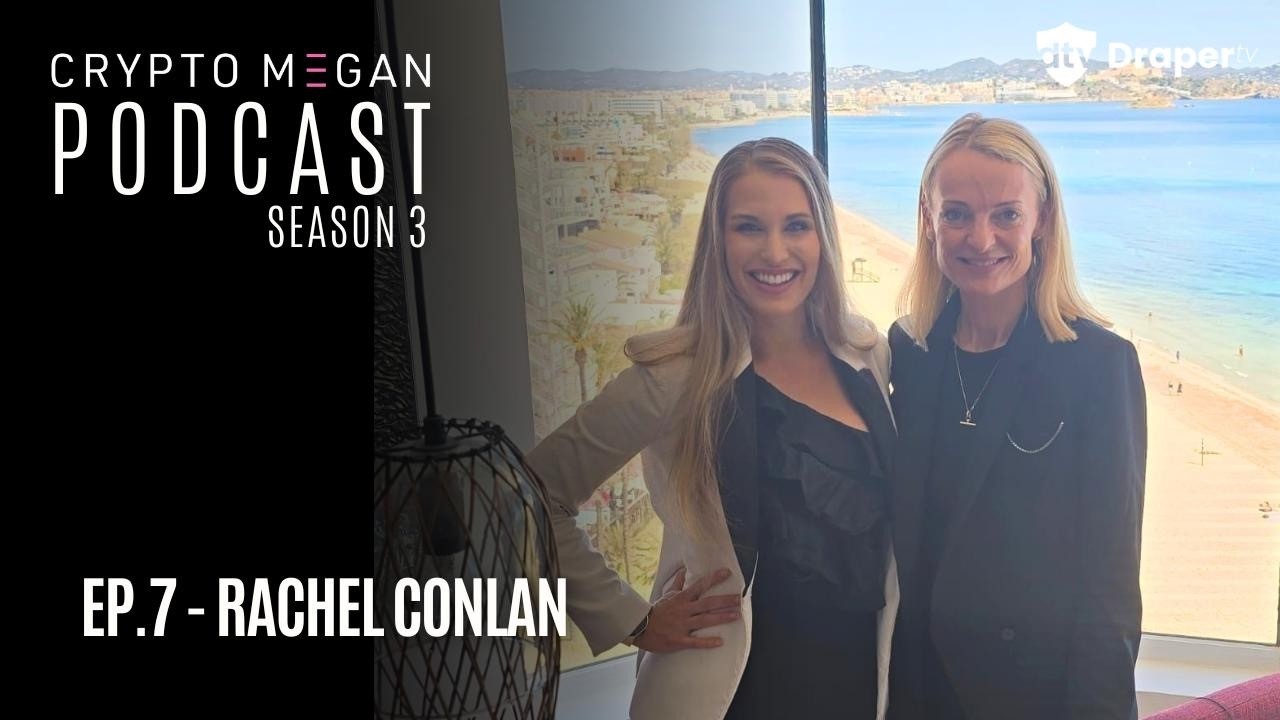
Rachel Conlan, Binance's global CMO, says the company hit 250 million users by end of 2024, up from 100 million five years earlier. Only 5% of the world owns crypto, so mainstream adoption is just beginning. She credits partnerships with Cristiano Ronaldo and The Weeknd, plus a focus on real-world utility and authentic messaging, for driving growth.
Chapters
We hit 250 million users at the end of 2024. That's a quarter of a billion users. And just to give you some context, it took us 5 years to get to 100 million and 2 years to get to that 250 million, which just shows you about the mainstream adoption of the space. No one sees the story coming. No, no.
I mean, we're so far from it, right? We're early adopter, more or less. 4% worldwide global adoption?
Yeah. I think it's 5%. 620 holders. But it's still so marginal.
620 now?
Wow.
Yeah. Because when I joined, when I started in this movement, it was a very, very small percentage of women in the space. I've seen that you've done quite a few initiatives. I mean, you yourself, being who you are, is just a huge, huge step forward for other women who want to get involved. How have you been able to navigate driving inclusivity in that way?
Well, I think, as the largest in the industry, we have a massive obligation to invite not just more gender diversity; it should be diversity. Across the board.
Right.
And, you know, it's something that Binance as a business and us as a marketing org takes really seriously.
Welcome to the Crypto Megan Podcast. I'm your host, Megan Nilsen, and I have a very special guest for you today here in Ibiza during the Ibiza Tech Forum. It's absolutely amazing. I have today here Rachel Conlan from Binance, the Global Chief Marketing Officer. Rachel, how are you doing?
I'm great. Nice to be here. And can we talk about the incredible, spectacular view that we're getting? Our business is hard.
It's amazing. We're here at the Hard Rock Hotel. They've really gone all out. I've actually really been enjoying this conference and it's amazing to see you here. I mean, Binance is literally at every event I'm at all over the world.
So we try to be. I don't get to go to every one of them. But, you know, as a European, it's always nice to come back. And, you know, it's funny, Ibiza is somewhere I've come a long time on vacation, but it's nice to be here in a professional capacity. And we all are working. There is a lot of work going on.
That is true.
There's a lot of work going on.
It's fun to be able to enjoy the work while being in such an iconic location, right?
But it also is indicative of our industry. You know, it's borderless. We can work from wherever we want. Like, it's such a privilege and such an opportunity for kind of the next generation of workers that don't want to be, you know, in capital cities where they're in 9-to-5s.
Yeah, that's a really good point that we're here in this beautiful setting, yet we are working, but we're enjoying what we do. It is indicative of this industry. I like how you pointed that out. It's very clear that you're the global chief marketing officer. You've already said several things that I'm like, wow, yeah, that That clicks. So speaking of this industry, I know you worked in more traditional industries before, like with CAA Sports, and you've done various missions. You transitioned to Web3, and I recall seeing an interview where some of your friends said that that would be possibly the worst decision ever to take that leap of faith, yet you did it. Why?
Well, I've worked for 20 years in kind of marketing, media, entertainment. And I'm a big believer that unless you're uncomfortable and learning, you're not— and outside your comfort zone, you're not in the right role. So, you know, as I've been really privileged, you know, over my 20-year career to work at what I would think are, you know, in pioneering industries and with pioneering brands, whether that be from when social media first entered into the marketing mix and, you know, we had luxury brands to CPGs completely, you know, overvamping— revamping how they were doing their marketing. To whether that be in sports when cultural relevance became so critical during COVID And it was about how do you connect meaningfully with people. So, for me, Web3 and crypto was actually a natural move. And I haven't looked back since. While the path in Binance wasn't necessarily straightforward, I knew there was going to be so much potential. And I've been really lucky over the last 2 and a half years to realise some of that potential and also be at the The heart of what is this movement towards, you know, financial freedom and the democratization of finance, which, you know, I get to marry purpose with a job I love. You know, what more could you want?
I mean, you couldn't ask for more, right? And it's very interesting, actually. I was expecting more of an answer like, yeah, it was a culture shock at first. But if you are accustomed to being on the cutting edge of new movements and creating new things and, you know, kind of going against the grain when everybody thinks, no, that's not the next thing, well, it is. And it's hard to see that in the moment. And there's a lot of skepticism, so it can be challenging to navigate that. I know when I first got in, people were kind of like— my dad's a traditional finance guy, an accountant. He's like, oh no, not crypto. And I'm like, yes, it's amazing. You just— you've never seen anything like this. And it's just so cool that we all get to connect in this way. And it's so purpose-driven, like you said. So the transition for you wasn't so jarring. It was smooth.
It wasn't as jarring. But speaking about fathers, when I moved from CAA Sports, into crypto full-time, my father was just blown away. First of all, I was in his dream job. He's an engineer and a businessman. And he was like, why are you leaving sports? You get to do something you're so passionate and you love. And there was this just lure. It just kept calling me back, which is one of the reasons I went back in. But just last week, I spent some time with him over Easter. And he was like, look, I can see this was the best move you ever made. And I wish I'd taken financial advice from you a little earlier when you told me to buy Bitcoin, which was a big win. I was like, OK, finally, he's realized.
I do share that sentiment. with you. I think around $3,000, I'm calling him up like, come on, Dad, you gotta get in. He's like, no, $17,000 again. And it's kind of how it is, right? It's just, it takes time. But now he's fully embraced it later. But the skepticism was truly there. So you transition into this amazing world and you're here now. And what was it like when you first got to Binance? I mean, I've followed the trajectory of Binance throughout the whole— since I've been here. And it's just been absolutely amazing. I think they've been one of the Exchanges are on the forefront of all of the changes, and they've always kind of been in the center of everything. So when you got in, what was the culture like and how has it shifted over time?
I think Binance is still only 7 years old. We'll hit our 8-year-old— we're 8 years old this July. But what has been extraordinary, I think one thing that was the biggest culture shock for me when I joined was just the speed. Everything is 24/7, 100%, full-on hardcore. As someone who hates missing, you know, I'm very Type A and hate missing things. Like, you just have to acknowledge, I have to set some boundaries and actually sleep. Because otherwise, you will burn out. But, you know, what I would say has been, you know, the biggest change over the last 2 years since I've been in the business is, you know, we hit 250 million users at the end of 2024. That's a quarter of a billion users. And just to give you some context, you know, it took us 5 years to get to 100 million. And 2 years to get to that $250 million, which just shows you about the mainstream adoption of the space. And yet, even though we've had that adoption, we're still so early in the journey. Because until we get to that kind of 1 in 6, 1 in 7 people holding crypto or in this sector globally, we're still not mainstream. No, we're actually so far from it.
Right? We're early adopter, more or less. And what are we, like 4% worldwide global adoption?
Yeah. I think it's 5%, 620 holders, but it's still so marginal. Is it so little? Wow.
Yeah.
And I think that research is even a little bit dated. But I think we have— I think for Binance, we've always, since I've been there, highly collaborative, wanting to work with as many partners as we can, wanting to build those real-life utilities and showing how this industry can be part of everyday fabric. When I first joined, there was a lot of reluctance from those partners. It was a lot harder, an uphill climb in order to engage them and get them to partner with us. I think what's been extraordinary over the last 14 months since we've seen the ETF approval and more institutional interest, we've seen those discussions blow open. And people really want to understand how they can be engaging with blockchain, how they can be using it to optimize their businesses. From a traditional finance perspective, what are the revenue models and the new streams?
Right.
that they can be engaging with. So I think that's probably been the biggest change is going from— look, don't get me wrong, there's still a lot of myths and a lot of education that we need to provide for the everyday potential user, the retail user.
Right.
But I think seeing the corporate and institutional and the Web2 world really open their eyes of this industry is here to stay. And we can similarly, like to social media, to the rise of the internet, it's like, okay, we can choose to ignore this trend.
Right.
Which is a megatrend and is going to help us and support us and help us in our growth. Or, you know, we can choose to really deeply engage. And that's what I've seen as the biggest change in the last kind of 12 to 14 months.
Wow, that's really interesting. Yeah, it's kind of gone from— the maturity of the space has been very quick. It's been kind of like slow and gradual, but all of a sudden, it's like Arthur Hayes said, one of my favorite people in the space, he said, adoption will feel gradual until in hindsight it looks explosive. Right? And that's kind of where we're at now. You mentioned Davos. I was also there during the WEF. And Larry Fink, you know, the CEO of BlackRock, is there talking about RWA and Bitcoin and, you know, the projection for Bitcoin. So it's very much a validation of this space.
Oh, it's extraordinary. Like, it's funny because I always went from being like the popular person at the party, you know, when you worked in sports because everyone wanted to know what was going on in Formula 1 or football or the inside track, to when I joined crypto, there was like reticence. Some of my friends and my community who were like, what are you doing? You're working, you know, it's scam. To now, it's like everyone wants to understand what assets they should be buying into, what are the best platforms, what are the real-life use cases that we should be looking at. So it's been quite a fun trajectory. Oh yeah.
And it is lightning-fast-paced, like you say, and you feel like you've got to be on all the time. But it's something that engages. It's something that I love. That's what got me into this space is that's how I like to be, just in the middle of it all, right? Just in this, I don't know, this cutting-edge movement. And one of the things I love about Binance is that You seem to have a very strong vision of the future, but yet adaptable and pivot during the different changes and embracing every new kind of, like, trend or narrative that comes up and really getting behind it. So, you've done an incredible job at that.
Well, we have an incredible, you know, founder set that built this playbook that I would argue the entire industry is now following. So, you know, once you've been handed those incredible keys, it's then how do you continue to innovate on top of that and ensure that we're being agile? You know, I was just talking to— we have about 250 people on the marketing team at Wow. Which seems enormous, but when you think we operate in 100 countries—
That is wild.
That's actually very small in the grand scheme of things. Say, if you put us up against a L'Oréal or even a Formula 1 or even, you know, a Unilever, you know, in terms of how they operate. And I think that agility and that ability to be flexible and understand, like, the needs of that user at that time. So, for example, you wake up, there's been a big token drop. You need to be able to adapt your social, your community strategy that week to make sure you're understanding the sentiment and giving the education they need when they may be concerned. Or when there's a big, you know, Bitcoin's back up on top, as we've seen over the last kind of 24 hours, you know, it's like then how do you kind of capitalize on the buoyancy of the community and ensure then that you're giving them the tools and helping them navigate that?
Right.
So it's about having that flexibility and that adaptability, which is one of the, you know, it's one of the beauties of our industry because I think it attracts I can see that you're someone who is very passionate and very committed, but we tend to attract these very Type A people to our industry who really want to— and that energy is necessary in order to fuel the type of growth that we're going to see at that moment, to Arthur Hayes' quote, to have that explosive growth.
Yeah. I think you're very much like what we need in this industry, like the image and the energy and the projection of the industry to the outside world. Having been someone who comes from the traditional Web2 kind of atmosphere, I think it's really cool. And that's kind of like the bridge and the intermediary we need to get people involved in a space like this, to make it feel normalized, to make it feel like it can be mainstream. And I think that's one of the biggest changes is now with RWA and Larry Fink talking about this everywhere about how all financial assets will be tokenized, that people will actually see that the technology will make their lives better. So the projects that are coming out, I remember doing a Spaces with Cathie Wood Yeah. From ARK Invest, and she's saying the technology is ready. We might have a pause now in the market, which we very much did, but the technology is ready and now we just got to go out there and implement it. So we've been seeing all these new projects arise. I myself am launching a consumable-backed product here in Spain and all over the world, and it's cool to see the technology make their lives better, you know, and that's the point that we're at and that's super exciting. So the next thing I wanted to go into with you is driving inclusivity in crypto. Because when I joined, when I started in this movement, it was a very, very small percentage of women in the space. I've seen that you've done quite a few initiatives. I mean, you yourself, being who you are, is just a huge, huge step forward for other women who want to get involved. How have you been able to navigate driving inclusivity in that way?
Well, I think, as the largest in the industry, we have a massive obligation to invite not just more gender diversity; it should be diversity. across the board.
Right.
And, you know, it's something that Binance as a business and us as a marketing org takes really seriously. I'm very privileged, you know, from the perspective that Binance was founded, you know, our co-founders are women.
Yeah.
You know, our management committee that I sit on, it's 40% female. You know, if we look at the, you know, we're around 6,000 people, give or take, at the moment. And I think we're 49% female across that.
That's very cool. I did not know that.
I know. So, and our team is like 51% from the marketing perspective. And I think, you know, that we've set that up from the beginning. That's not something we did because we had to hit quotas or ensure that we were, you know, following what was, you know, the right corporate approach. But I think it's inherently critical for us to invite more women into Binance to ensure that we're not only communicating and educating in a diverse way and ensuring that we're connecting with different communities and diverse user bases, but also ensure we're building the products and services for the future. If we want this to truly be a part of everyone's everyday life, we need to make sure it's relevant for the users of it.
Absolutely.
So that's a big push. We're really lucky that we have board and executive leadership support to drive initiatives, and it's something I'm personally passionate about. I think one of the initiatives that stands out is the Women in Tech Partnerships that we did in Turkey.
Oh.
We, over the course, we committed 2 years ago when we attended there for Binance Blockchain Week to educate up to 2,000 women over the course of 3 years. We just hit, I think it's 600 educated in blockchain and crypto. Very cool. So let's be clear, that's not just about trading. That goes far beyond that. That's about them understanding, you know, how to build, how to message, how to educate using the space. So, those type of initiatives are really important. And then thought leadership is important. You know, I think, you know, as females, we can both say we're influenced by people that we follow on social.
Yeah, absolutely.
And it's, you know, seeing people who look different that are in the space. Like, you and I might connect with someone that my aunt or my best friend doesn't connect with. So, we need to make sure we've got that diversity. So, a big part is just trying to bring more different types of users. ensure that we're working with the right partners, and that we're entering into people's lives at a part that they're comfortable with.
Yeah.
A time, you know, in a way that they're comfortable with, rather. And I think that's critical because, as we know, women have a huge amount of mental load as they get older. So we don't necessarily have the time to go deep on the education and deep on the, you know, the research. So we need to show that this is another financial revolution that they should not be left behind on. You know, so, so that's one thing that, you know, as you can see, I'm very passionate about. I know, I'm resonating so much.
Absolutely. When I started giving lectures, it was just, it was all men, you know, and it was fine. I was doing lectures here in Marbella where I live and at our private members club, and I'm like, man, I need to get out there and I want to connect with women because what you've said is so true. I think women connect largely, you know, social media with people that they see and that they can relate to or that inspire them, and also in person. I feel like that's a really important element, which is why I think that Binance being at all of these events physically is also very important for the community and that touch. But yet on the institutional side too, you're able to balance them all. And the messaging, which leads me to then your influential— your partnerships with influencers to kind of drive a little bit of that culture that you said and to connect and to stay relevant. You had an amazing partnership with Cristiano Ronaldo, The Weeknd, but also Anna Markovic, who was on my podcast as well. And that was cool to see that you had her right next Next to the, you know, the male influencer who is Cristiano. I mean, amazing worldwide star, but it was cool to see them together.
Yeah, I think it's the male GOAT meets the female GOAT. Right. Yeah, it's really good. You know, as anyone who follows, like, she is incredible.
Yeah, she is.
She just doesn't have that mainstream awareness yet because, you know, women in sports is still growing.
So it's kind of 2-in-1. It was women in sports and also coming into crypto. And I know she was really excited to learn more. And their faces, they just kind of light up when they start to learn about it. I think it's a little bit different. It's a very cool experience. experience?
Yeah, I think, you know, from the partnership side— and look, I spent a large amount of my career working in partnerships and how you build those cultural marketing programs to drive mainstream awareness. I think we're Cristiano Ronaldo, we're Alpine, we're even our local partner that we're working on at the moment with Islamabad Cricket.
Wow.
It's, you know, that's what I love about our role is that diversity. But that gives you the opportunity, you know, people— I would argue that crypto and the sports world probably have the most in common of any industries. Because, you know, the fans of sports, I would say, are similar profiles to the fans of crypto. Like, it's, you know, you're not just a user of crypto, you're a passionate fan. Yeah, for sure. You know, and I think that's something that's unique about our industry. So, I think being able to use the medium of these partnerships and ensure that they're authentically aligned with what we stand for. So, Ronaldo, he's the GOAT.
Yeah.
He is, you know, very tech-forward in terms of how he integrates tech into his own professional career. He's now an active investor, you know, in many technologies and in crypto. And for us, it gives you that opportunity. You know, he's also got one of the biggest fan bases in the world. It gives you that opportunity to collaborate on someone where there's a common theme and common connection, but also just to tell stories through different ways. And I was lucky enough previously to work with Ronaldo, and I know that, you know, every major crypto and blockchain company came to him with offers, and he chose to work at Binance. It was before I joined. It wasn't because of me. I wish it was. But I think that just is testament to the platform that Binance has built.
Right.
And testament to the credibility that we have, you know, as a business despite the headwinds. So, it just gives it that, you know, at the end of the day, these partnerships are about storytelling and being able to connect with someone on a passion and meet them where they are and bring them on that journey. So, whether someone just starts educating themselves or onboards onto the platform, it's a win for us.
That's very cool. I never thought about the intersection of sports and crypto like that, but it's so true. It's this insane fandom and passion for what— I love that.
Very different profiles, but the traits are similar in terms of like the commitment, the passion, the 24/7, live and breathe.
There's an intersection there for sure.
Definitely a convergence there.
Absolutely. And that trust that you speak about, the fact that he was willing to trust Binance, you've always been able to maintain this sort of trustworthy brand that people can count on and that, you know, they're aware of and they feel comfortable with. So, going forward, what is— I mean, there's been a lot of headwinds with regulation as well, and you've got to constantly balance the need for the drive for innovation and also to balance that regulatory framework. Has that been challenging?
I think, look, regulation is necessary, and it's necessary for us to be able to scale.
Yeah.
And I think you and I could probably sit here and refer to 10 to 12 industries over the last 30 years that have had to be regulated. in order to be able to grow mainstream awareness and adoption to the level that they need to. So, you know, people talk to me about regulation being a negative thing. I'm like, it's a positive. First of all, it allows us to enter into consumers' and users' lives in a safe and secure way.
Yeah.
Because we know that we're operating within the guidelines that they're protected in. And that's something that I would advocate a lot for. I think that we need to ensure that regulation doesn't compromise innovation, though. So that's where when you have a space such as blockchain and crypto where we have to double down on educating the government and the regulator players to ensure that they actually understand what is the legislation, the policy that they're building, and ensure that actually supports users. It doesn't maybe restrict them from entering into the space.
Absolutely. And doing that hand in hand with kind of like who you are and how you're so good at translating the message and getting this out there, I think it's important for them to learn from industry professionals and not from the outside, but to actually work together. And we see that shift happening now, which is so exciting.
It's so exciting. And I think this last year, you know, it's been extraordinary. While we don't operate in the US— excuse me— while we don't operate in the US, to see the spotlight that the new administration in the US has put on the need for clarity and for clearer legislation and how that has now influenced Western and Eastern economies around the world.
Yeah.
And I think we had an open invite, and our founder had an open invite to countries that we were happy to advise and support them if they wanted to look at how they could build blockchain and crypto as a viable part of their vision plan or their strategy. And we've seen overwhelming incoming from markets that are really trying to understand that, which just speaks to the opportunity now in this space. Because this is not just about trading. This is about creating, you know, an ecosystem and new revenue streams, foreign direct investment, new jobs. You know, like, it's— there's so much opportunity here. And that's why it's been so amazing here in Ibiza to see the government players and the regulators here who are trying to, you know, educate and understand how they can play. And one of the reasons why we've seen such growth in Spain is the clarity, you know, that we've had since the license. Which helps us kind of, you know, I suppose, operate in this space in the right way.
Absolutely. And like you said, it's a good thing. We're maturing as an industry. People feel safer, more secure in this space because of it, and we're able to scale that way.
Exactly.
Period. We're able to become mainstream. We can never do that if we don't have some sort of regulation.
Exactly.
Yet let's not have it stifle innovation.
Exactly.
It's like Tim Draper, who's a friend of mine and also is on the podcast. I love his vision. He's like, you know, The internet, when it started during the Clinton administration, instead of trying to get out in front of it and block it and ban it, he kind of just let it rip. He did— like, they did structure it and they did start to have regulatory framework, but they let innovation happen.
Yeah.
And I think we're seeing that shift now, and that really makes me passionate. So as we wrap this up, Rachel, it's been so amazing to talk to you. I could literally go on for hours because you have such amazing ideas, and I love your vision for the space. What do you see— where do you see crypto marketing headed? In the next 5 years?
So I see— I never talk in 5 years because this changes so quickly.
In the next—
should I say 2 months?
I know, I know.
In the next 2 months, exactly.
It changes so fast.
I know, it changes so fast. In the next year, I think, you know, a big priority is going to be about authenticity and real-life utility. Because the more that we are able, first of all, to connect our education and our marketing interests around authentic messages that matter, but then also marrying that with how this will benefit you in your everyday life. That's how we are going to continue on that path to the mainstream adoption or that kind of billion number that we talk about a lot. The next billion users. Exactly. The next billion users, which definitely keeps me up at night. Yeah, me too.
It's amazing. That's such a powerful message to end with. And like you said in the beginning, this has the power to democratize and uplift global citizens. And it certainly is going that way. And we're so lucky to have somebody like you in the space to kind of lead that revolution. So—
Well, likewise, thank you so much for all you do to educate. And thank you for, for having me today.
Yeah, thank you so much.
More from Tim


He Sold His Car to Build This Startup, Then Pitched It for $1M 😳 #Startups #AI

This Startup Moves Your Crypto BEFORE Hackers Can Steal It 😳 #Crypto #Cybersecurity




15 Months Without Refrigeration?! This Startup Thinks It Can Go Global 🥥 #FoodTech #Startups



