Blockchain and regulation Introduction | Blockchain: Out of the Labs
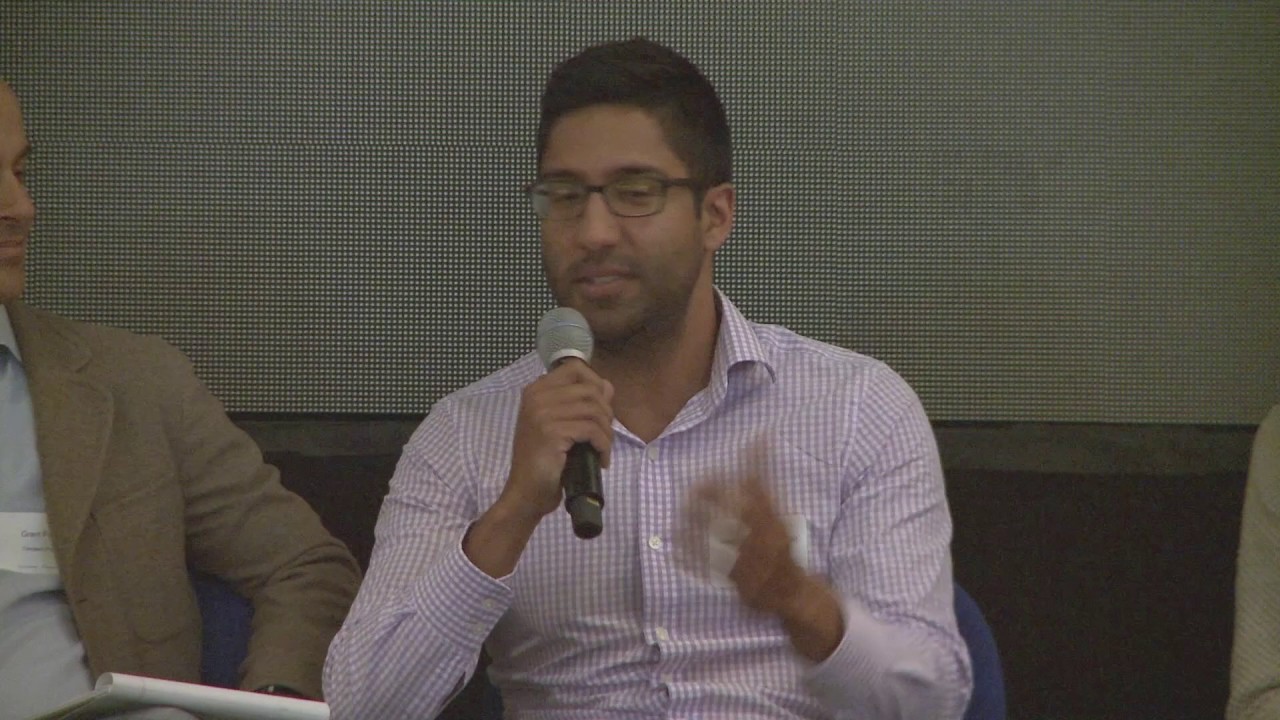
Grant Fondo, Reuben Ramanathan, Galia Benarzi, and Ryan Strauss discuss how regulators are approaching blockchain and crypto. They cover money transmitter licensing, the Howey Test for token offerings, and how different countries like Israel, Switzerland, and Singapore are responding.
Chapters
My name is Grant Fondo. I'm a partner at Goodwin Procter. I'm a former federal prosecutor. Got into this space, I think, in part due to that background a couple of years ago. I also head up our blog, our digital currency blog, and our digital currency and blockchain group.
My name's Reuben Ramanathan. I'm a product counsel at Coinbase. That means I'm responsible for all the decisions we make about the assets we list and the business that we do in different countries. And Coinbase's involvement in this space is largely as the piece of infrastructure that is the exchange, the bridge between fiat and the crypto world. And so we follow this space very closely.
Hi, my name is Galia Benarzi. I'm the co-founder of Bancor. Bancor is creating a standard for intrinsically tradable tokens, so tokens that won't need to be traded on an exchange. One day exchangeability is essentially baked in. into the smart contract of these tokens. I'm presenting later in the pitch competition, but I'll just say that I'm not a lawyer and nothing that I say here should be construed as legal advice. We are basically on the panel to represent the startup aspect. We're heading towards an ICO in late May, and so to share a little bit about what our experience has been gearing up for this process.
Hi, I'm Ryan Strauss. I'm an attorney at the Seattle office of Deloitte Touche, and I work with Yes. Companies developing new financial products and services?
Well, as you probably heard in the last presentation, I rambled on a little bit with my sort of rough vision, views of the SEC, and I think maybe I was a little bit hard, but, you know, I understand. I was having a chat earlier with Ryan, and I kind of want to hand this back to you, Ryan, in a sense. There was a ruling yesterday, I believe, With the, with the OSS, correct?
Oh, that's just— I think Richard said OCC. So some background. Anybody know who the OCC is? Don't be ashamed. All right, we're through with it. All right, so the OCC is the opposite of the Comptroller of the Currency. Can I put a hearing aid in the back?
Hold it closer.
All right, fair enough. All right, so, and the OCC is the chartering authority for national banks. So there's state charters and there's state-chartered and nationally chartered banks. The OCC came out recently with a proposal to start granting limited-purpose fintech bank charters. And what Richard's referring to is The states, the organization called the Conference of State Banking Supervisors, which is comprised of all of the various state chartering authorities, recently filed a complaint challenging the OCC's authority to issue these fintech charters.
So what are the implications of that though? We don't know.
Okay.
It happened yesterday.
So You talk about decentralization of some of the regulatory potentially?
Well, so historically we've had a dual-chartered banking system. So you can get a state charter or you can get a federal charter.
Okay.
And that is for traditional banks, for non-depository banks or non-depository financial institutions. These— you hear these— there's a variety of types of non-depository financial institutions. The one most relevant in this space, probably, I would say, would be the money transmitter. They are licensed by the states. There's also a registration process at the federal level, but the licensing authority is at the state level. So this is, in a lot of ways, the federal— is an attempt to balance that, to mirror, by the OCC, to balance that, to mirror the traditional dual charter system. That being said, there is no limited purpose state charter. So it's a complicated, really in the weeds conversation.
Okay, I won't push you too hard. Yeah, you're being filmed. So, um, yeah, I think, Dahlia, what about the regulatory challenges for Bancor? I mean, have you guys— it's funny because I was sitting with your brother on stage in Tel Aviv recently, and he was really impassioned. It was amazing because he stood up and he pointed out to this huge crowd in Tel Aviv and he says, we're leaving! Basically, interestingly enough, Israel recently decided to put VAT charges on Bitcoin on every transaction, and it's— I don't think it's made the community very happy. And, you know, certainly, obviously, maybe not obviously, but it's not true. You're not going to domicile in Tel Aviv for sure. I would assume.
Yeah, so we're based in Tel Aviv. Israel traditionally tracks America in terms of regulation, and so that's the direction that they're going in this topic as well. And essentially what that's causing is the same thing that you're seeing in America, which is that blockchain teams are leaving, or at least legally leaving, to establish their entities elsewhere. So we're doing the route that many startups are doing, which is we're a Swiss Swiss-based nonprofit. Actually, we're on the protocol level, so it's easier for us to justify a nonprofit rather than an application token, which is slightly different. But we're setting up in Switzerland as a nonprofit. The nonprofit— the Swiss entity is issuing our token, and that's what's happening in the Israeli ecosystem. So, you know, when we look at America and Israel, we basically see a lot of lost opportunity for these jurisdictions to keep teams in-house and to kind of lead, which is what Switzerland and Singapore, as we've heard today, are doing.
Okay, interesting. So you guys are actually creating your own coin then? You're talking about basing it on Ethereum. You're going to create a native cryptocurrency, or?
We are an ERC-20 token.
Oh, you're an ERC-20, okay, great. Well, let's move it on now. Coinbase, regulatory issues. How's it been going for you? I mean, do you have any comments on—
Yeah, I got plenty of them. I think based on your last session, Richard, I think there were some interesting issues that arose, especially around ICOs. I don't know if you want to talk about that right now, but I think that is more interesting than specifically anything to do with Coinbase. We have the same sort of issues that Ryan was alluding to, right? We have some state money transmitter licenses, which don't necessarily make the most sense for us, but that's just the closest thing to a regulatory structure that exists. And if there was a federal structure, that would solve our problems in the US, but again, there would be similar problems in the UK and the EU and everywhere else we operate. So I think there's like— we could talk endlessly about these structures, but maybe ICOs are more interesting.
Well, I was talking to Ryan earlier about ICOs, and rather than rewriting the regulatory structure, it was Ryan's opinion that we need to make make these things fit within what exists, within the language that exists. And I've heard something about Huey's Law, or, you know, they can basically label anything a security. It's very broad. It's hard to define what it is. We saw the big losses, got their butts kicked to the curb again. So when you talked about fitting in, that you believe that the legislation is flexible enough to create a framework within the existing regulatory system to make this possible.
That's addressing me?
Yeah.
Okay, so what I was— what Richard's alluding to is that there are many states that have, and New York being one of them, that have come out with blockchain-specific laws. And that's fine. That's one way to approach it. But finding your— and this is what Ruben was alluding to as well— finding Or an existing regulatory structure where you can fit in, or an existing legal structure where you can fit in, is much— it's usually the more effective route than trying to reinvent the wheel with a new regulatory structure. And there's a number of opportunities depending on how— I'm not the guy to talk about the how it does this. I'm not the guy to talk about the how it does this. I'm sure Grant can. But yeah, what I was talking about is technology-specific laws versus agnostic laws and finding ways to find appropriate regulatory structures that exist rather than reinventing the wheel.
Grant, love to hear your take on this.
Yeah, so it's the Howey Test. It's a 3-point test. And, um, but it's like a 50-year-old case, right? And so you're applying very modern technology, new ideas to a 50-year-old test. And what you're seeing, which is, you know, I have clients come to us and they say, well, we don't fit it because of the following reasons. And to some extent, it doesn't matter what you think, it matters what the SEC thinks. And the SEC is limited. And they're, you know, um, and as more and more money is raised, And particularly if people start getting defrauded, I mean, that's always like how many you know targets can you put on your back? You start defrauding people that adds in digital currency, whether it's ether or bitcoin, different targets, right? Raising money from consumers—that's a target. You start having people complain about it, the SEC will figure out a way to start regulating it or enforcing it. And the problem is, is that most of these companies that. I mean, it's amazing. The SEC will target and identify companies that are moving a couple thousand dollars. That's it. And if they see you're doing something wrong with equity securities, then they will come in. And so, now, not every company, but it's not one of these things, we're too small to be noticed. And I think ICOs are not too small. They are raising a lot of money. I mean, I do think they have some issues. deal with the Howey Test, and companies are being creative about getting around it. But I also always apply kind of a look— does it look like a security? Does it smell like a security? And in some ways, I think that's more of a test than when you go down the rigid analysis.
More from Tim


He Sold His Car to Build This Startup, Then Pitched It for $1M 😳 #Startups #AI

This Startup Moves Your Crypto BEFORE Hackers Can Steal It 😳 #Crypto #Cybersecurity




15 Months Without Refrigeration?! This Startup Thinks It Can Go Global 🥥 #FoodTech #Startups



