Blockchain and regulation Pt 4 Q & A | Blockchain: Out of the Labs
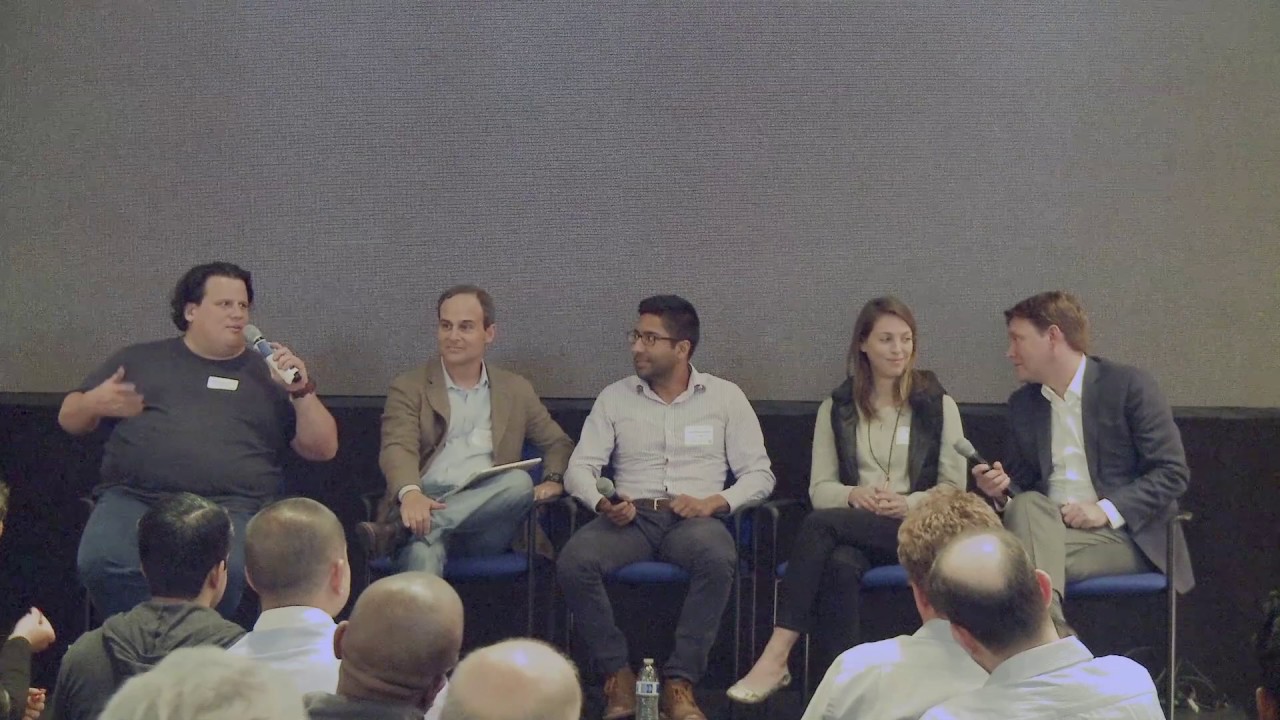
This content was created by Tim Draper. This content was uploaded by Tim Draper. This is a YouTube video titled "Blockchain and regulation Pt 4 Q & A | Blockchain: Out of the Labs" (posted June 5, 2017). The excerpt is a multi-speaker panel Q&A on blockchain regulation featuring several unnamed panelists (labelled SPEAKER A–G) and audience members; Adam Draper is referenced in discussion. Panelists debate the nature of money, ICOs and investor democratization, transparency and valuation/bubble concerns, jurisdictional domicile (e.g., Switzerland), and how U.S. state laws and potential federal/model acts (Uniform Law Commission) may address blockchain and cryptocurrencies.
Chapters
Maybe I'll add one thing. If you want to sort of zoom out to the meta layer of all of this, I think, and kind of what should be regulated and how should this look, really comes back to something that Adam Draper said in the morning, which is, what is money? What is money? We're kind of at the dawn of a new era as a society. What do we think money is, and who do we think should have the monopoly? On deciding what money is and issuing money and thus regulating it. So it's an interesting question, good kind of dinner conversation, but what is money? Money is what we agree it to be. For the past few hundred years, really few thousands of years, money's been controlled by whoever's governing society, whether it's the church or the state, and we're now kind of moving into this new era, just like we don't have as tight of governance on our content anymore. What's a TV station, or what's a newspaper? It's a blog, or it's a YouTube channel. We're kind of moving in that direction with money as well.
Just one comment before I open it up to questions. With Humaniq, they had 12,000 people investing in $5 million, or whatever they raised. So another interesting point is we're talking about the democratization of— actually being able to invest. Anybody can invest if they want to. I mean, that's a different concept from being an accredited investor and having to get licensed, pass licensing, and, you know, are these kind of structures— why can you walk into a casino in Vegas and throw away as much as you want without a problem? And what is different from that where we live in a world where due diligence is being crowdsourced and there's, you know, maybe not regulation now, but we're, you know, we're definitely Moving towards that way by moving to Switzerland and other other other domicile locations. But anyway, I just wanted to throw that in before I roll out the questions. Does anybody have any specific questions?
I'll start off with one question before I get back from the audience. It's it's really interesting how some governments are embracing the technological changes and taking in companies. And startups from other areas around the world. And I would like to ask everyone on the panel, what do they think that the extent is that those governments that are not really opening it up and enabling an easy startup world in their countries are afraid of this takeover of their power because their central banks and their governments may Potentially lose power?
I don't think it's as much as lose power. I think there's definitely an aspect of it. I just think there's a concern about criminality, not understanding it, what are people using it for, and trying to— like any new technology, like the internet, whatever the case may be— is trying to get it within their box. And so that's sort of my sense with the US is Is— I don't think they're that worried right now about the dollar being replaced. Other countries maybe, yes, but not the US.
But I think it's just controlling crime.
I'll just add to that. From our experience in Switzerland, at least from the conversations that we've had there through the setup process, it really has constantly come back to independence, which is, you know, in their ethos. It's sort of what they've always stood for. It's what they like to be in the global community. And so anywhere that you see a strong theme of independence and freedom, essentially, you're going to see more embracing of those tokens.
All right, so my question to you is, how can I calm down right now? Because I'm totally feeling like Chicken Little here. 1929, there was these massive valuations, lack of transparency, people like in Gnosis investing in things they didn't understand. Oh, I thought it was an ascending price offering, not a descending price offering like a Dutch auction, right? And so they invested in things. 1929 stock market crash, boom. A few years later, right, 1987 stock market crash. People investing in things, massive valuations, overvaluations, right? $300 million for a predictive site like Gnosis, like lack of transparency and so on.
Boom, crash.
2000, massive valuations in the stock market bubble, right?
Boom.
2008, massive valuations in the subprime mortgage market. Why is—
Why?
2018, not going to be a pop in the ICO market.
I live in the Netherlands, so I can talk about tulips for all day. You know, we've experienced this for hundreds of years. I think you're hitting the point in some parts, but other points you're not. Let's call it a bubble about to pop, fine, if you want to. You're talking about transparency and lack of transparency. Certainly I don't think that's the case when you're open sourcing your code on GitHub. You are, you know, you've got a white paper out. You've made it clear to the investment, you know, what you're going to do. You have a team that's well-respected enough to raise $10 or $12 million, who everybody knows in the crypto community, Peter Vicentez or whoever. You have an auditor, a code auditor that's from the Bitcoin Core team. You have an escrow holder who's, you know, who everybody knows. People attach their names to projects, and if you have the right people attached, then there's some— that's a huge amount of credibility. It's our community, it's still very small. You know, you've got the institutional investors are getting the phone all the time, well, who should, you know, how does this all work, and who's investable and who's not? It's like, we know on the inside because we're on the inside.
The mistake is people think that the institutional investors are the ones that are going to prevent the bubble from popping. They drive the bubble.
Well, yeah, but did we let them in? That's the point. You know, I don't know. They can join the crew along with 10,000 other people who invested in Humanic or in one of the other projects. They can invest if they want to as well. I don't think that just because they're getting involved will mean it'll turn it into a bubble, and I'm not saying it won't become a bubble. I don't know. And there are overvaluations, but I'm looking at Silicon Valley down the road here, and looking at, what, a dozen unicorns that haven't made any money? Or— talk about overvaluation. Waiting to go to IPO that's not going to happen, maybe? And everybody's sort of— with a select group of people on Sand Hill Road that get to play with the pie and no one else?
I don't know, I could be—
What I'm just trying to suggest though is maybe, like, rather than game theory, which has at its premise a conception of the human subject who's fundamentally rational, which is what most of the blockchain has been studying, maybe we should be studying behavioral finance a little bit as well.
Well, I think so, and it's a mixture of things. Blockchain is not only about game theory, it's also about economics, it's also about psychology, sociology, code. There's— it's many different elements. That's why there's no true— there's probably 100 people on the planet who really understand it at a fundamentally deep level. To be honest, I think, digital ekvatorian level, kind of. You know, it's very complicated, and it does incorporate many different mediums. So it's not just all about one thing or the other, or gray, you know, it's very subtle, I think, in terms of how— what makes it work and what doesn't. So there is— game theory is a big part of it, yes.
I'll try and calm you down, though. Doesn't look promising. I think one thing that's important to keep in mind, first of all, we talked about transparency. There actually is an incredible amount of transparency. So like Richard said, our code is on GitHub, our smart contract is public, everything's being audited. Doesn't mean we might not fail, but certainly there's no lack of transparency, including use of funds. Part of every healthy offer memorandum that I've seen in the ICO space is being quite detailed about how funds are being used. Will they use them in that way? You know, hopefully, but every startup kind of faces that same risk as well. I think it's important to keep in mind that it's not like grandmas are investing their pension fund into these ICOs generally right now. Maybe some are, sure. Your grandma did. Okay.
My friend actually invested $1 million.
Oh, okay.
And listen, anytime you're investing into something you don't understand, then that's a problem, obviously. But for the most part, a lot of these investors are, like Richard was saying earlier, crypto whales, right? So these are people who have amassed a lot of crypto wealth and are moving it around between crypto projects. Or institutional investors that, you know, frankly got a lot of money and if they lose some money in Gnosis or whatever else, you know, it's probably okay. I think the cool thing that's happening is that you actually can get much smaller investments from people. So there are a lot of people who are investing in these ICOs to the tune of, you know, $10, $100, $1,000, much like they're investing into Indiegogo projects or Kickstarter projects. And it's, you know, it's money that they've healthily decided that they could lose as well.
We have time for one more question.
This is the gentleman back here as a microphone.
Hi, this is not about CTOs. It's just about regulation in the US. You mentioned a little bit about digital and real assets, and then over here, and we mentioned New York with the BitLicense. And then I know I'm sure the lawyers have read the recent Arizona statute about Bitcoin that I've heard another lawyer colorfully describe as being written by a drunk toddler. There's a lot of words in there that are tied together and it doesn't really make sense. And as we start seeing laws in the states be written, how is that going to— and if Arizona is any indication, what's going to happen in North Dakota and Montana and other states start writing laws about Bitcoin? Is there going to be federal preemption, or just how is this going to work when you start getting with something like the blockchain? It's a very targeted question of the lawyers. Yes, these are fine, all your disclaimers. I'm just curious what you think, how this is going to play out when we do start seeing more regs in the US.
Yeah. So what we've seen is, and we do have a process for this, there's a body called the Uniform Law Commission that writes model laws. And usually the process, the hopeful Hopefully, we expect the process to be model law gets written and gets adopted by multiple states. What happens often often happens is that certain states, and I don't want to impute motives, but but get out in front of that process, and and oftentimes those laws are are once we the the model acts have been developed, those states then back off and. And become aligned with the Model Act. That's the hope. That's, I think, my expectation is that that's what will occur. And I think the one thing I want to repeat is that it's important that we understand that new laws aren't always necessary to address new technology. We have laws that can meet the— and again, this goes to the Bitcoin or blockchain magical thinking. We have laws that apply to most use cases, and, and it's about doing a thoughtful analysis on the existing regulatory regimes and, and finding where they fit.
And is that happening?
Yeah, it's happening. It's definitely happening. Excellent. Thank you guys very much.
More from Tim


He Sold His Car to Build This Startup, Then Pitched It for $1M 😳 #Startups #AI

This Startup Moves Your Crypto BEFORE Hackers Can Steal It 😳 #Crypto #Cybersecurity




15 Months Without Refrigeration?! This Startup Thinks It Can Go Global 🥥 #FoodTech #Startups



