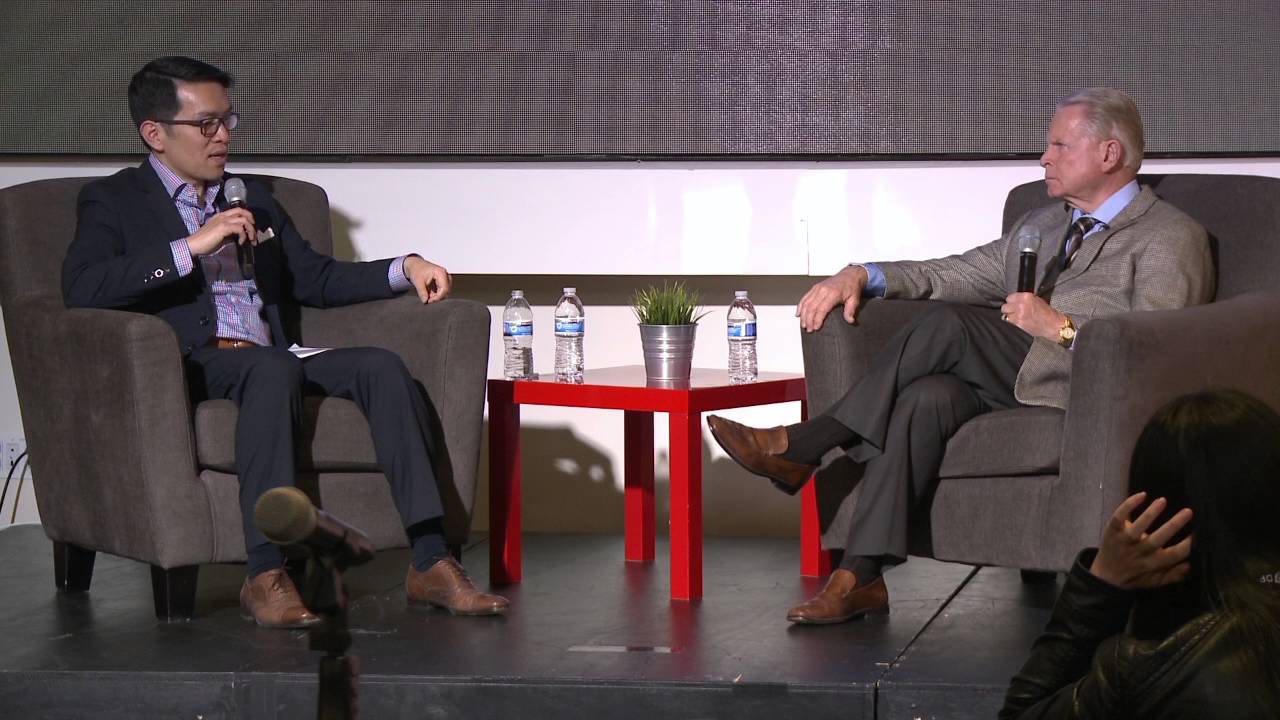
Ray Zinn founded Micrel in 1978 with $600,000 in bootstrapped capital and ran it profitably every year for 25 years until the dot-com crash. He argues that cash is king and that building around people and services first, not products, lets you avoid the endless fundraising treadmill that venture capital demands.
Chapters
Well, everyone, we're privileged to have Ray Zinn join us today for basically a fireside chat. I thought, again, you probably have come across various CEOs and entrepreneurs, and I think Ray has had a long track record here in Silicon Valley, has been the CEO of Micrel for 37 years. So that's the longest in Silicon Valley of a CEO serving a contiguous term at a company. So, and he's, as you mentioned, he's weathered amazing ups and downs in the market, but MyKrell has overall been very consistent in its performance, right? And I think we'll learn a lot of interesting things from Ray today. So, Ray, you know, maybe we can start about that. We talked about a couple of things that made you successful, but what do you think are key points that you would attribute to your success over the years?
Okay, Michael. Well, this is my second time here at Draper, thanks to Michael. So I was here, what, about 6 months ago, I think? Yeah, yeah, roughly 6 months ago. So the last time I came, everybody was in pajamas and sitting on beanbags.
We moved to the bigger room for you.
Yeah, anyway, Thank you for inviting me back to Draper and how fortunate you are to be able to be here and to listen to these great speakers. So, okay, so as Michael mentioned, I started my company in 1978, but a little before that when I was working at a company called Electromass down in Woodland Hills, I was having all these great ideas and things I thought the company should do, and they really weren't ready for someone like me to sit there and take them into the next evolution of products. And so my boss called me in one day, and this was in mid-1976, and he says, you know, you don't, really should work for another company, you should work for yourself. And I said, it shocked me, why? He says, well, because you don't fit in. And so he said, he told me I was too entrepreneurial, meaning I was, you know, what companies wanted, they want you to kind of conform to their, strategy and their kind of business. And when you're not willing to do that, when you are out there thinking of the next technology or next evolution, that puts a strain on them financially as well as it's somewhat disruptive to the organization. And, you know, we've talked about disruptive things, disruptive technology, and And I think that's why you're here at Draper is that you wanna know how to be disruptive and to change things. And so that's kind of why I left my company. I was getting a really good salary and went home that night, flew up, flew back to the Bay Area and told my wife I was not gonna work for anybody ever again.
So.
So from June of 1976 to now, I've signed my own paychecks. So it took me a couple of years to figure out what I wanted to do because I didn't leave my company with the idea, oh, I'm gonna start this company or that company. I just said, I'm just gonna work for myself. And I tried about 4 or 5 things and finally landed on this idea of starting this semiconductor company. but without venture capital. So back in those days, you really didn't start a semiconductor company unless it had venture funding. But I was bound and determined to start a semiconductor company without any venture money. So myself and my partner put up $300,000, got bank debt of $300,000, so we had a total of $600,000, and we started Micrel. The problem with that is that the bank required us to be profitable because again, you're not gonna get bank debt unless you can be profitable in running your company. So I agreed to, to run a company profitably from day one. They allowed me to have one quarter out of the year as a loss as long as the whole year itself wasn't a loss. And so from, November of '78 until we sold the company in August of 2015, the company was profitable every single year except for one year. And in that one year, in 2003, as a consequence of the dot-com implosion, we closed down 2 fabs, consolidated them down to one, and resulted in a $50,000 loss. So in 37 years, the most I ever lost in running the company was $50,000. So, and the company was a $250 million, $300 million revenue company with a market cap of, you know, $800, $900 million. And we'd really never lost money. It was just a profitable company from, from day one. So you don't run out of money. I mean, you don't, you don't, you don't shut your business down if you don't run out of money. My big thing is cash is king. And, you know, so make sure that you have enough cash to run your company. And another thing, Michael, that I want to really stress is the importance of raising— if you're going to start your own company, raise enough money at the outset to take you profitable. In other words, whatever money you need to start your company, do it up front. Until you get to the point where you can be profitable. Because you don't want to spend all your time raising money. That's, that's, that's a waste of time and it's, it's also counterproductive. Most companies fail because the CEO or the founders end up spending so much time raising money that they go out of business. So my theory is, or my belief is, is that if you're going to start your company, raise enough money up front That'll carry you through until you're profitable.
Now, Ray, I mean, that's certainly a really impressive track record of continuous profitability. And by the way, so Ray started the business in 1978, the company Micrel, and for $600,000 including bank debt. And you ended up selling the company in 2015 for, I think it was over $800 million, right? So certainly a very impressive track record. Ray, you mentioned venture capital and deciding to bootstrap and funding it yourself. Was—
what—
did you have an opportunity to raise that venture capital? Did you consider it? And, and why did you ultimately not choose to, to use venture capital?
Good question, Michael. Well, okay, so if you think of a, of a venture capital funded company, it has to start with a product. So in other words, you— the, the theory of venture capital is they, they want you to get in and get out. In other words, they They have a 5 to 7 year runway so that if you don't make it in 5 to 7 years, then they're gonna move on. So you have to have a product, you have to have an idea, and then you sit down with them, you know, go over your idea, your product, and then they'll decide if they wanna fund you based on their due diligence. In my case, that's not what I wanted to do. I wanted to start a company based on the concept of having an organization and people that support the company as opposed to having a product and having the product support the company. So first of all, what we did is we developed the company with employees. We had, we did testing services so that we could get paid right away. It's kind of like being a consultant. in a way, so you could get continued revenue. And then as we developed enough revenue, then we were able to develop our own products. About 8 years later, we actually went into developing our own products, but not until we could afford it. So first of all, I built a company, not a company around a product. I built a company and then put the products in the company. Right, right.
And you had mentioned that You mentioned about profitability, which is certainly something that not a lot of startups had focused on over the last few years and perhaps is more of a focus. What do you think of the current environment for fundraising in Silicon Valley, particularly as it relates to startups and starting— being an entrepreneur?
Well, it depends upon the market you want to go into. There is VC funding available. The issue with VC funding is that you're basically allowing someone else to own your company. And being an entrepreneur, the premise that I have for that is that you want to own the company. So to own the company, you have to own 50-plus percent of the company in order for you to say you own it. Now, if you're a venture-funded company, of course, you know, you may start out where you look like you got 50 or 60% of the company, but multiple rounds of financing, you'll find you end up with no ownership. And so you have to be aware of the fact that if you're going to go with the venture route, that unless you raise enough money up front to take you profitable in a short period of time, that you're going to get diluted to the point where you're not going to own your company. And that's the big issue or challenge. and a venture-funded company. And right now the VCs are focused on more of the unicorn, you know, the Facebook, Twitter type software companies. And so that's where the, you know, most of the funding is going in today's market.