In this talk, Aaron Levie emphasizes the value of aggregating knowledge from past experiences and established models to make strategic bets on emerging technologies. He references Geoffrey Moore’s Crossing the Chasm and the technology adoption lifecycle, describing the bell‑curve progression from early adopters to laggards that every new technology follows. Levie argues that, in the absence of hard data, these historical frameworks help entrepreneurs predict market dynamics and decide where to invest aggressively. He illustrates the concept with the launch of the iPad, noting that early adopters of new platforms (mainframes, minicomputers, PCs) historically became market leaders, so Box aimed to be the fastest adopter of the iPad. Levie also stresses the importance of studying both successful and failed approaches documented in books and analyses to increase the odds of making the right strategic moves.
Chapters
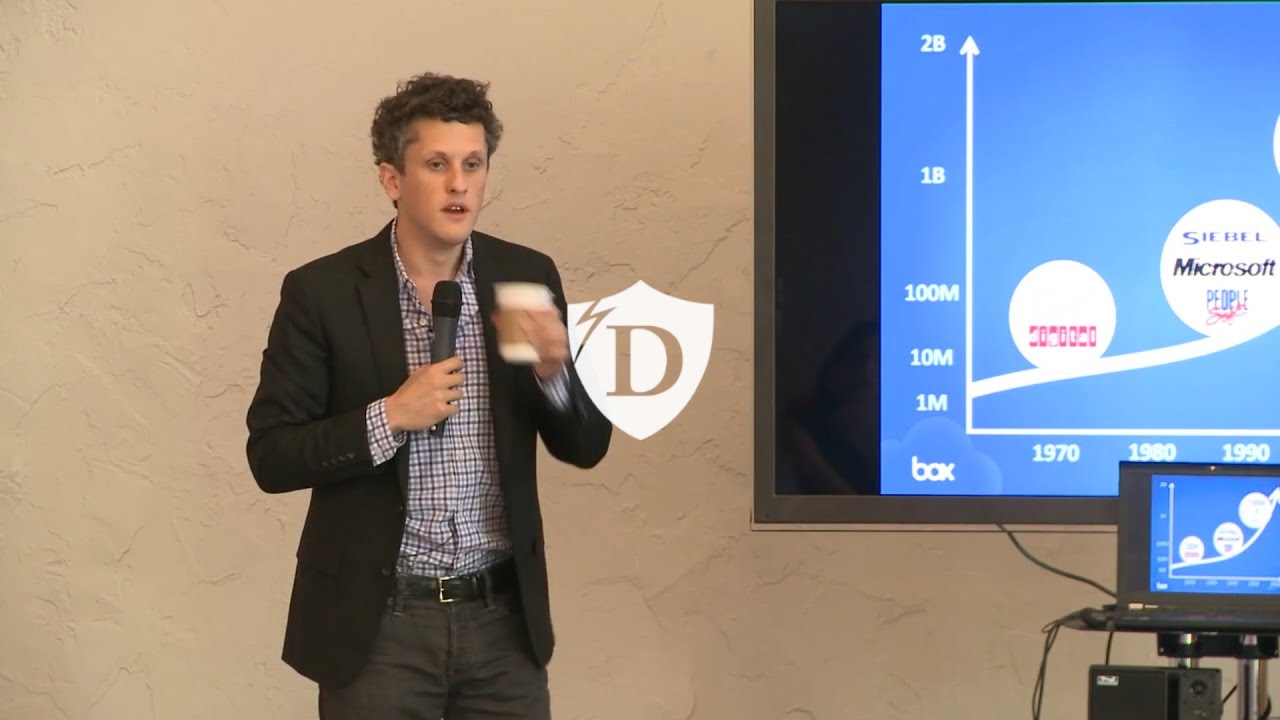
So, yeah, reading's important. You know, there's— the great thing is, is that there are thousands of people that have been through the exact same stages. Well, I mean, technically there's like hundreds of thousands that have been through the exact same stages as everybody in this room, including me, but there's thousands of people that have actually written about it, and there's hundreds of people that have analyzed other people who have gone through it and written about that as well. So the, you know, if you can sort of amass a sort of set of knowledge of everybody else that has been through similar stages, and you can sort of build, not necessarily, I mean, patterns is one way of thinking about it, but the best way I'd ever heard this put was this guy Geoffrey Moore who wrote Crossing the Chasm. And he said sort of models, so things like the technology adoption lifecycle is a model, which is sort of, if you imagine this curve, but it's a bell curve instead and it sort of flows like that, You have different markets that you basically can adopt technology at different times. You have early adopters that adopt it initially. You have sort of early majority that adopts it a little bit later. You have pragmatists that adopt it in the midsection, and then you have laggards which sort of never adopt it, or they adopt it years too late. And that's a curve that every technology flows through. It's a bell curve that there's not a single technology in the history of technology that does not go through that same bell curve. It's just sometimes they go through it faster than others. So that's a simple model. There's hundreds like it. But what these models do is in the absence of data, if you're starting a company or you're looking at the marketplace and you're trying to understand what's going to happen, in the absence of data, historical models give you a pretty good sense of what you should do to participate in that. So small example, when the iPad came out, Um, you know, the iPad was a fundamentally different device than had ever been seen before in, in, in the enterprise. I mean, there were people that had tried it before, um, tablet computers, but, but the iPad was truly a new way to do computing. And what we decided was that, you know, Steve Jobs is, is a pretty good entrepreneur. He'll probably, you know, try and make this really successful. Like, it's probably pretty straightforward to bet on him making the iPad successful. So we said, well, if the iPad is this new technology platform, And if at the start of new technology platforms in history, the mainframe and the minicomputer and the PC, each of these starts of new platforms created the next big companies for those who adopted those platforms most rapidly, then we should be the fastest one to adopt this new platform that's emerging. And if you went in with no data and you just saw the iPad, it would just look like a really cool new technology that, yeah, we'll get to that when it has a lot of adoption and And we'll work with it at that point. But when you think about it as a pattern of technology adoption, it becomes really, really important to know what things are you going to bet on very aggressively. So that's one thing on crossing the chasm. And there's lots of books. There's great books in the enterprise world and the consumer world that sort of help you find that other people have been through this situation also. And how did they respond to that? Because also, you'll equally learn all of the wrong ways to solve things and how to go the wrong direction. So what's great is if you can have all of that that you can sort of always lean on as information, then, you know, I think you have— you just increase your odds. Thank you.