Box CEO Aaron Levie on the Future of Enterprise & Cloud Software | Draper University
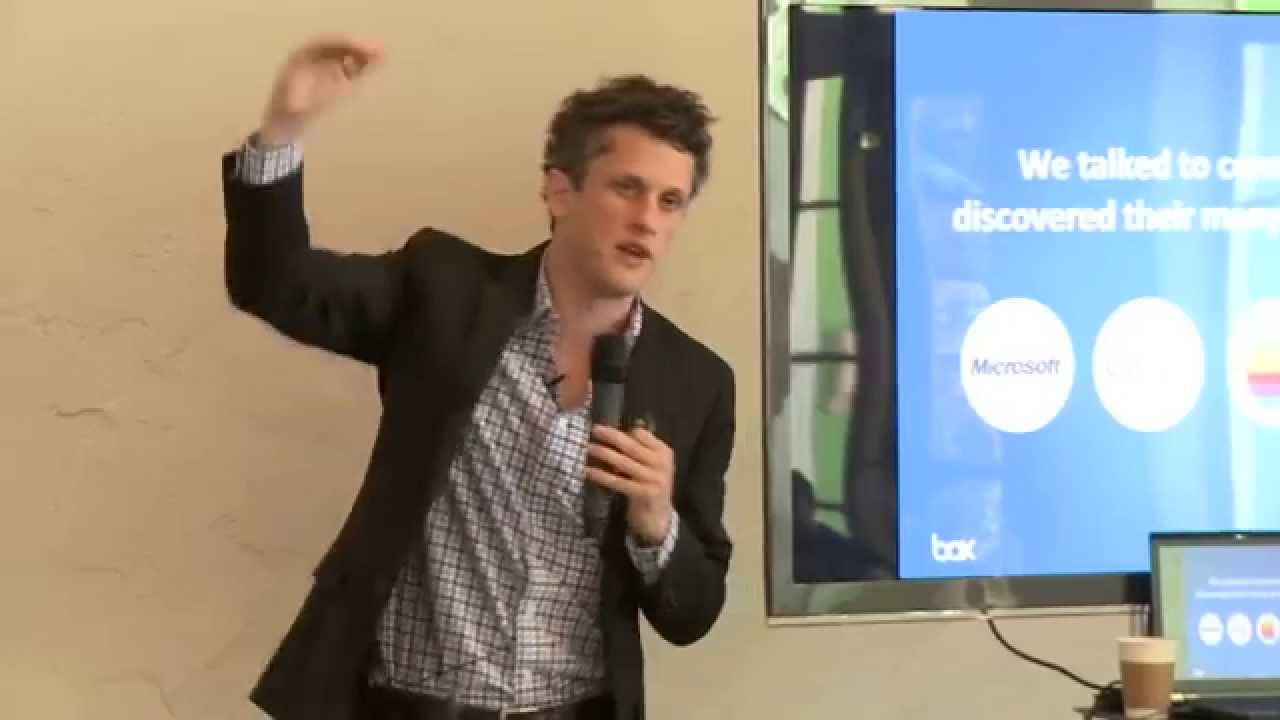
Aaron Levie explains how Box pivoted from consumer file-sharing to enterprise software in 2007, discovering that companies were paying tens of thousands for legacy solutions Box could deliver for $20 a month. He argues the old enterprise software model, with slow cycles and heavyweight sales teams, doesn't fit the internet era, so Box built a product-led approach that lets users adopt technology organically.
Chapters
We sort of got into this interesting chasm. So while the free service was giving us a lot of growth, we started to get hundreds of thousands of new signups a month. So lots of people were showing up every single month to use the service. We found ourselves in sort of this chasm. Effectively, we had this huge strategic challenge of we didn't know what kind of company we wanted to be when we grew up, as it were. We had started as really saying that we're going to be this horizontal consumer, cross-business kind of product. But we ran into this challenge where we weren't really serving any audience extremely well. So we had this challenge where the consumers had all these challenges with the service. They wanted better functionality for photo sharing or sharing their music. And the enterprises wanted very, very different functionality around security and how to manage their data. at scale in their business. And so we were both underserving enterprises, and we were sort of overserving consumers, because we had all this functionality that was sort of meant to be useful for businesses, but not quite enough to make them really successful, but way too much for consumers. So we found ourselves in this weird gap where we were kind of not really excelling at any market very well, and we had to decide what kind of company did we want to really emerge as. What kind of market did we want to focus on completely? And when we talked to the consumers, we discovered that they had many alternatives. So they had Microsoft and Google and Apple and even Yahoo at the time as services that were giving them or would eventually give them lots of free storage space online. And the reason for that is because Microsoft wants to sell you their operating system, and Google at the time wanted to have you join Gmail and other services. Apple wanted you to buy devices from them. Yahoo wanted more traffic. So they would have a reason to basically give away almost infinite storage space. And if you think about the cost of storage is going down rapidly, that these guys will all have alternative business models or ulterior motives to effectively fund that storage for consumers. And so we didn't really like the long-term prospects of how our business was going to look as a consumer play. And then when we went and talked to The enterprise customers, the potential enterprise customers, we talked to all of the businesses that were using our product, and we found that they actually hated their alternatives. So it wasn't that they had an abundant choice of alternatives that were going to give them something that was going to be far cheaper. It was actually that they really, really disliked the technology that they had to use in business. And it often cost them between 10 and 100 times more than what we were charging. So we had the opposite challenge of not only is this stuff not going to be getting cheaper or more free for customers and consumers. It's actually their alternative is up to 100 times more expensive. And the way we found that out is we would ask customers, okay, hey, you're paying us $20 a month today for our service. How much would you be paying for an alternative software package from Microsoft or some other vendor? And they would say thousands or tens of thousands of dollars. So we were basically selling them something for $20 that might cost them up to tens of thousands of dollars in their business. And so somewhere in between tens of thousands of dollars and $20, we could find maybe a better price point that would better capture the opportunity and also allow us to invest more aggressively in the enterprise market. So we ultimately decided, long story short, and this was in 2007, we ultimately decided to focus entirely on the enterprise market. And the challenge with— so consumer, enterprise, we decided enterprise. The challenge was nobody really liked their enterprise software. So the challenge is that the sort of businesses and the brands in the enterprise software market aren't really sort of loved by most people. So the sort of expectations that people have are very, very low for enterprise software. Who's worked in a large business before? OK, so when you interact with the payroll system, or if you interact with the HR system, Did you enjoy those experiences? Just go with it and just say no, and so we can move it along. No. OK, right, there you go. So as proven by that survey, people don't like their enterprise software. And the challenge is that the brands of enterprise software and the sort of feelings that you get around it are just not really strong or happy brands. Most people think about this as their enterprise software vendor. Actually, I got the wrong image. So they mostly think about this as their enterprise software image. And that's because we've had a business model that supports sort of charging way more, than what the customer actually wants, right? It tends to be very slow development cycles and innovation. You tend to not get as much sort of value from your technology as you're thinking. And most of the companies that we talked to ran into this problem with their enterprise software. So when we were, now at the time, 22 and 21, thinking like, do we really want to go build an enterprise software company, something that is not seen as very cool or very exciting, versus do we want to go into the consumer space and do some really cool stuff? This is what we were up against as a challenge. The other problem was that you had to hire all these salespeople. We wanted to be a very product-focused company. We wanted to be able to just innovate on the dimensions of build the best product, get it to the most number of users, and maybe we'll have online support, but we don't want to have to build up a sales team because if you build up a sales team, you have to hire all these guys named Chuck. Again, no offense if anybody's name is Chuck in here. I just had to prove a point. Just to make it more clear who Chuck is, this is Chuck. And Chuck sort of rolls up to the customer, and he's got a briefcase, and in his briefcase is another briefcase, and he's got gold-plated rings, and selling million-dollar deals to customers. And we just didn't think that was the way that enterprise software should be sold. We thought that people should just choose the best technology to solve their problem, and that they wouldn't actually— they wouldn't just go off of what the salesperson was telling them to buy. And so that was another problem we had. So it wasn't sexy. It was a very slow way to get to the market. And then the worst part was that in enterprise software, the biggest challenge is that you tend to sell to the buyer of the software, not the user of the software. And so what that means is you sort of get in a bunch of airplanes, and you sort of fly around the country. Anybody seen this movie? You should watch it if you haven't. Planes, Trains, Automobiles, the great classic. So you get in a bunch of airplanes, you fly around, And you go and sell to customers, and you're not really ever talking to the end user. You're basically talking to this huge sort of panel of IT buyers and trying to convince them to buy your technology. And so that's a huge problem. Also watch this movie, Dr. Strangelove. And so you run into this issue where you're not actually trying to convince the ultimate person who's going to use and have to consume your technology. You're convincing a set of buyers, and that set of buyers is going off of this RFP checklist, and they're basically the ones that are going to decide whether you win or lose in their enterprise. And even worse, it's— even when you get past this panel, there ultimately is just one buyer of technology in the enterprise, and that's the CIO. And that CIO is going to make the decision on behalf of the entire organization of whether or not your technology will be sold. And so this felt like the opposite of where the internet was moving, right? It's the opposite of this sort of open and sort of people can download any application they want at any time. This is the world that we're used to with the internet and with the iTunes Marketplace and being able to take in any technology that we want at any time. And the old way of doing enterprise software was that you built these big sales forces and you went in and sold just to the CIO or the IT buyer. So what we decided was the model was fundamentally flawed, and if we were going to go focus on the enterprise, We would need to do it very, very differently and sort of reinvent the model. And so what we decided to do is sort of attack the longstanding assumptions of enterprise software, that you had to be slow, that you had to only sell to the IT buyer, that you'd sort of just go and solve the RFP checklist of the technology they wanted. And so one by one, we sort of went and said, well, what would the redefined enterprise software company look like? The first is you'd have much simpler software. So we would build technology for humans, not technology just to sort of pass the RFP checklist. And that means that you have to invest aggressively in design and user experience and building directly for the end user. And what changes about this is it means that you're focused on what is the tool or what is the use case or what is the product that's going to have people bring your technology into the organization, not what technology does the sort of CIO or IT buyer think that their organization needs. And so if you're building enterprise software today, the corollary is really going out and talking to the end user of your application and making sure you're just building it for them and actually instrumenting your application to support that user virally adopting and virally sharing the application within their business. It's a huge disruption on the business model. And that brings us to really better business models. So in traditional enterprise software, you would go in and you'd do a sales cycle for 6 or 12 months, and you'd sell an enterprise your software. And that would be purely sort of people just talking about what are the needs of the organization, and I have this software to sell you. And then 12 months after that sales cycle, maybe the technology would finally be implemented. And then maybe 12 months after that, the technology would be in the organization and actually used. But more often than not, actually what happens is there's a bunch of delays in the process, people buy the wrong system, there's some disruptive change in the technology world, and it becomes obsolete very quickly. If you— something— if you— any libertarians in here? Okay. So, yeah, okay, okay. So one thing that will scare— I'm not a libertarian. But the one thing that will scare you if you are a libertarian, extra scare you, is if you ever look at how much the government spends on IT, and then if you look at how many wasteful projects there are, of projects that just get shut down midway. So, you know, the government might spend $500 million trying to build out some new big database system or some new technology system, and because of the integrator that they use or because of the vendor that they go with, that becomes a huge wasted project. The interesting asymmetry is that the vendors all make the money in that process. It's just that the customer never got the solution deployed. And you had this very, very perverse sort of structure where the vendor makes money, but the customer doesn't actually succeed. So with freemium, what you get is a model where people can go in and adopt technology on their own. For free because you build a version of your service that makes it easy for people to bring it into the organization. They use you for free, and that proves to the organization what technology is going to be most successful in their environment. So you tend to see less of organizations going out and buying or adopting solutions in advance of the usage within that organization, and far more of businesses where they're already seeing adoption of leading technology in their business, and then they're going out and choosing those vendors to work with more effectively and in a more concerted way. So brand new, better business models that actually align vendors and their customers way better in this model. And that means that enterprises, enterprise software companies fundamentally have to focus on customer delight in a way that was really never before necessary. So, you know, if you think about that previous sales cycle where you'd go in and you'd, you would spend 12 months trying to sell to an organization, that was the, that was the sales process. That's what you invested in. As soon as you then sold the technology, you could drop it off at the organization and basically leave. But with SaaS, or software as a service, or cloud solutions, customers tend to be subscribing to your technology. They are paying you every single month on an ongoing basis. And that means that if you stop helping them be successful in month 8, or 16, or 24, they'll just drop you. They'll just cancel their subscription and move to another vendor. And that basically creates much deeper customer and vendor alignment than ever before in this industry. And so it means that you invest in things like customer support, it means you invest in designing way better software, and it drives much better competitiveness within the industry for the vendors that are creating these solutions, because you can't be successful just selling your technology. You actually have to maintain the customer delight that goes into that. We also are seeing open solutions. So in the old world of enterprise software, you'd basically buy all or most of your technology from sort of one or two vendors, and they would try and sell all these solutions to your business. And have it all sort of integrated from just that vendor. And the new model, because there are so many new kinds of technologies and tools that have emerged, is that people are using these sort of open systems, these best-of-breed technologies, and having them work together. So if you're building enterprise software, or even if you're building consumer software, the idea is to make sure that you have a high degree of openness. So APIs that let you plug into other systems and let people share their sort of data between the technologies that they're using. And then finally, and probably the most important point, is constant innovation. When software was delivered on-premise, when you had to sort of, you know, it was shipped to you via CD, or you had to download it and install it on your computers, it meant that the rate of change of that software was very, very limited and very slow, right? It was very, very expensive. There was a very high barrier to actually go in and change the software version that you were using. But in the cloud, you're sort of constantly updating technology on demand. The biggest difference and way to think about it is if you're using Microsoft Office, maybe you have Microsoft Office 2010 on your computer. That software was designed in 2008 or 2009 if you're using Microsoft 2010. That's 4 or 5 years ago that that technology was designed. If you're using Google Docs, though, as an alternative example, probably they do releases once or twice a week, which means that you're using an up-to-date version of software that is only weeks old. So compare that sort of 4 or 5 years versus a couple weeks, and you sort of see how disruptive this trend ends up being for the sort of traditional or incumbent enterprise software vendors. And so it's all about sort of moving as quickly as humanly possible to get ahead of the market. So you mentioned that you're
More from Tim


He Sold His Car to Build This Startup, Then Pitched It for $1M 😳 #Startups #AI

This Startup Moves Your Crypto BEFORE Hackers Can Steal It 😳 #Crypto #Cybersecurity




15 Months Without Refrigeration?! This Startup Thinks It Can Go Global 🥥 #FoodTech #Startups



