Building a Remote Company | Zapier Co-founder Mike Knoop
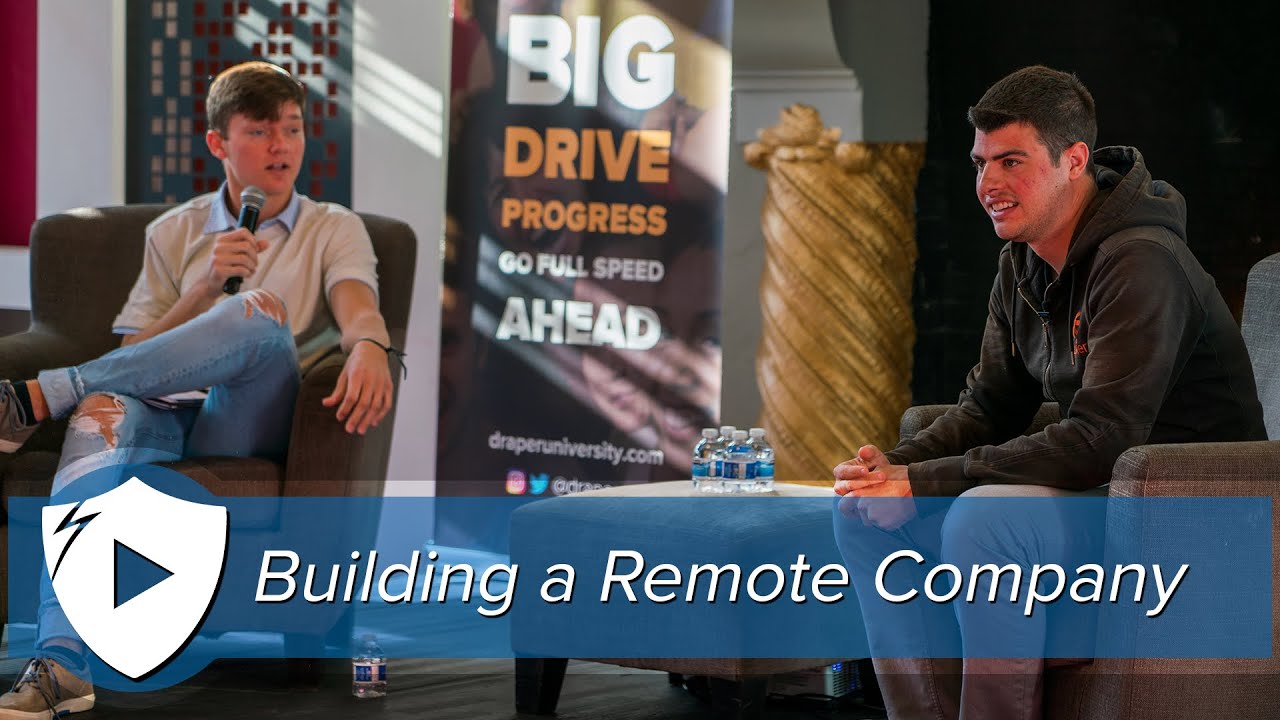
Zapier's Mike Knoop built a fully remote company by introducing formal structures early: core values like "default to transparency" and "default action" let people work autonomously. Weekly in-person retreats started when the team was seven people. Now 250 employees across 25 countries use public OKRs and Friday updates to stay aligned.
Chapters
The things that you have to do to run a remote company are like the same things you have to do to run an in-person company. The difference is you often need to introduce structure and process and formality just earlier in the company's life. I actually think this sets us up for more success over the long run though, because when we get to 500 people, we've already got the processes and playbook in place. It helps us scale much faster.
You touched on being a remote company multiple times. I want to get into that. Now, you know, so we have a superhero oath, right? You know, the principles and values that we live by here, right? So what are some— I know being remote is one of those for you guys. Can you talk more about that and how that has helped you throughout your journey, as well as maybe some other business principles that have worked out really well for you guys?
Yeah, so in the early days when we were first making those first hires in 2012, we had to sit down and think like, you know, what are the kind of like, what are the values of the company? What do we care about? The exercise that we did was we sat down amongst the 3 founders and one of our earliest employees and asked ourselves, what is it? What does it take to be successful at Zapier? And I think that at Zapier part is the really important part of that question. You know, at this point we'd been running for a year or so. So we kind of had some idea of like what it meant, what would set you up to have more success working with us as a founding team. We asked that question, wrote down a whole bunch of ideas, we kind of curated it back, and it turns out that a lot of the values that we wrote down kind of follow from being a remote company. Our number one value is default action. We really value folks who are capable, are able to, and have the kind of intrinsic ability to like see a problem and then go take action on it without having to go build consensus or make a, you know, or get blocked in trying to think, how do I actually get this thing done? Or— Yeah. Or hesitate. Like, we really valued folks who saw a problem in the early days and would go just run as far as they could and take ownership over that problem. You kind of have to do this as a remote company because you don't— you're not sitting over, you know, you're not sitting over someone's shoulder all day monitoring their work and making sure that they're on task for 8 hours a day. You kind of have to trust that, like, they're doing the right thing from their home office or wherever they're working from. So that value felt tied in very strongly there. And we would screen for that then when we were hiring for finding past examples of folks who had like, who had defaulted to action when they were faced with problems and didn't hesitate to get blocked by, by like organizational factors or something else. The second value we have is default to transparency. Again, this follows from a remote company. You know, how do you default to action if you don't know what everyone's working on? How do I, how do you default to action if you don't know what's important for the company? So at Zapier, like we have all of our, you know, internal metrics are all public, all of our goal tracking. We use OKRs, which is objectives and key results. All of those are public across the entire organization. Everyone at Zapier writes like a Friday update every week, which is basically a status report, a memo on like what you worked on and what you're planning on working on and things you've learned or decisions you've made. So Zapier is a very, very transparent company. I think it's important, it's needed and required to run basically a fully distributed team. Things would grind to a halt if we didn't. Asynchronous communication wouldn't work without having like a strong value transparency in place there. The other values we kind of fleshed out over time as well. But yeah, I think a lot of them followed from, again, just asking what do we think is success, or what does it take to be successful at Zapier? And a lot of them fell out at the end of kind of asking, yeah, what's the kind of company we want to work at? This is a remote company. There's a lot of individual autonomy. What does it take to be autonomous? What does it look like in practice? And those are the things we share with every new employee who starts. They don't guarantee you'll be successful at Zapier, but they certainly give you a big leg up, is how we think about it.
A lot of the founders here are just starting to build their teams, so what advice would you give for the founders that are starting to build teams that want to maybe either consider remote or want to definitely do remote? Like, I know you guys did the Airbnb thing for the first week and then the month, and so what are some— and then do you guys use dashboards? Like, what infrastructure needs to be there? In order for that remote team to be successful?
Yeah, great question. What infrastructure for a team for onboarding? I mean, the reality is in the early days, you don't have anything. Like, you're going to be flying by the seat of your pants. You're going to be creating a Google Doc with, like, just notes that you share with the person. Your expectations that you set are not going to be very clear. It's going to be like, I think there's a problem over here. I need you to go, like, figure it out and solve it. That's kind of the reality of the situation. I think as you mature, you can then start trying to do a better job of putting more process and things in place around it. One of the funny things about running a remote company, I kind of get asked a lot around how is running a remote company different than running an in-person company? How does onboarding differ? How does management differ? And The truth is it's actually not. The things that you have to do to run a remote company are like the same things you have to do to run an in-person company. The difference is you often need to introduce structure and process and formality just earlier in the company's life. I actually think this sets us up for more success over the long run though, because when we get to 500 people, we've already got the processes and playbook in place. and the decision-making frameworks and the clear expectations and the leadership and the titles and the comp bands, like all of that stuff is fleshed out and it helps us scale much faster and more efficiently than another company might be in our shoes. So, you know, thinking back to the earliest again, like what are the types of things we need to do for onboarding? It's not different for remote. It was the same thing that you probably do, would do if you were in person, which is like, I'm going to probably invite the person out to spend a bunch of time with them. I'm going to sit next to their laptop. I'm going to like, handhold them to get their development environment set up or whatever expectations I'm going to set. I think the one big key thing that we did learn running a remote company, that maybe this is slightly unique to remote, or maybe not obvious from the outside, is despite being 100% remote, I think there is a lot of value in getting in person from time to time. We run 2 company retreats every year where we fly everybody in the entire company into a single location.
How many people now at this point?
What's that?
How many people at this point now?
We started doing retreats when we were 7 people. So very, very early on. And Erlend, you mentioned the Airbnb onboarding. We had a similar philosophy in the early days where we thought it was very important to get people to hang out with us for a week, primarily to build trust. I think trust is one of those most important aspects of any kind of team you're building. You want to be able to trust that the person's going to be consistent, repeatable in how they execute and how they think. It's just a lot faster to build that trust if you can do it in person. The other thing you get advantage of from being in person is you get higher bandwidth. So remote companies have a bunch of different modes of communication that you can go through. If you think about a bandwidth spectrum, at one end you get in person. I can use my body language. I can use nonverbal communication. You have all these subtle cues that come only when you're in person with somebody. If you think about the other opposite extreme of that spectrum, it's no one's talking at all, right? And in-person companies kind of default to this in-person mode where I get the highest amount of bandwidth. I can ramp up all the way. I can use, you know, all those cues I just mentioned, but it's 100% interruptive, right? If I go tap you on the shoulder, I have your complete attention. You cannot— you're completely like focused on me now. I've interrupted whatever you're working on. Remote companies, on the other hand, There's no communication by default, but everyone's 100% focused on whatever they're working on. So you get that efficiency from focus. And the challenge of remote companies is figuring out, okay, what mode of communication do we need to be in for these different activities that we do? And realizing that in-person is going to start from this high bandwidth but high interruptivity, and remote starts from this low bandwidth or no bandwidth, zero interruptivity, and you have to work your way to the middle depending on— You know, what the job to be done is. So, you know, in the case of a good example of something that we run into is like in Slack. I'm sure you all use Slack. You see like the many people are typing a little message that sometimes shows up if there's like 3 or 4 people in the one channel typing. So for us, that's like a cue that, hey, you should like raise the bandwidth. You should go from, you know, text chat, which is closer to this like, you know, extreme end of not communicating at all, to jump on a video call together. And You could probably bang out this decision that you need to make in 10 minutes on a call as opposed to wasting a full hour just texting back and forth in a team chat tool. Similarly, in an office, you see people use the headphones or whatever as their social cue to try to lower their interruptivity. So we've developed those similar types of social cues within the company to figure out how do you increase the bandwidth when you need to. And onboarding and retreats are kind of one of those intentional decisions where We realized, hey, by default, we're not going to be together ever. We all work from different states, from different countries. But there's a lot of value in building trust. There's a lot of value in building network connections across the company that normally wouldn't happen. Those can happen much easier and faster if we get people into the same physical location occasionally. So that was kind of— it's another— if you want to think about it, it's another hack on our communication modes to— help us accomplish something that was important that we thought for the company.
Great. So how many total employees do you have now?
We're over 250 now.
Okay. From how many different countries?
What's that?
How many different countries?
I think we're in like 25 countries now all over the world and about 30 US states.
That's incredible.
Wow.
More from Tim


He Sold His Car to Build This Startup, Then Pitched It for $1M 😳 #Startups #AI

This Startup Moves Your Crypto BEFORE Hackers Can Steal It 😳 #Crypto #Cybersecurity




15 Months Without Refrigeration?! This Startup Thinks It Can Go Global 🥥 #FoodTech #Startups



