Andrew Whelan argues that networking works when you know who you are and attract the right people, not when you try to impress everyone. He dismisses the elevator pitch as Hollywood invention and stresses that a few genuine connections beat hundreds of shallow ones. He shares how a strong network drives hiring and business growth.
Chapters
How many of you have been to a networking event and felt like you had nothing to say? What do you do then? Grab the free food and run? Make up a bunch of stuff. Make up a bunch of stuff. What if somebody's in there and they're not in a good mood and they call you on it? What happens then? Do the same thing back. Do the same thing back and then grab free food and run. Excellent. I would suggest to you That if you actually start to build your base of knowledge, then you can pick and choose when you bring that into the conversation and people will start to hear what you have to say, right? And then the way that you have that interaction is much more confident. I'd rather have 2 quality interactions at a networking event than 6 that are like, look, I talked to people. The same way that I'd rather have 20 great connections on LinkedIn Than 500 I don't know, because those 500 I don't know do nothing for me. They utilize nothing for what I'm trying to get. But those 20 are working for me every day, and that's what I'm looking to do. Make sense? All right. So we're going to talk about building relationships. I talked about this briefly. I am a firm believer in this.
Ta-da!
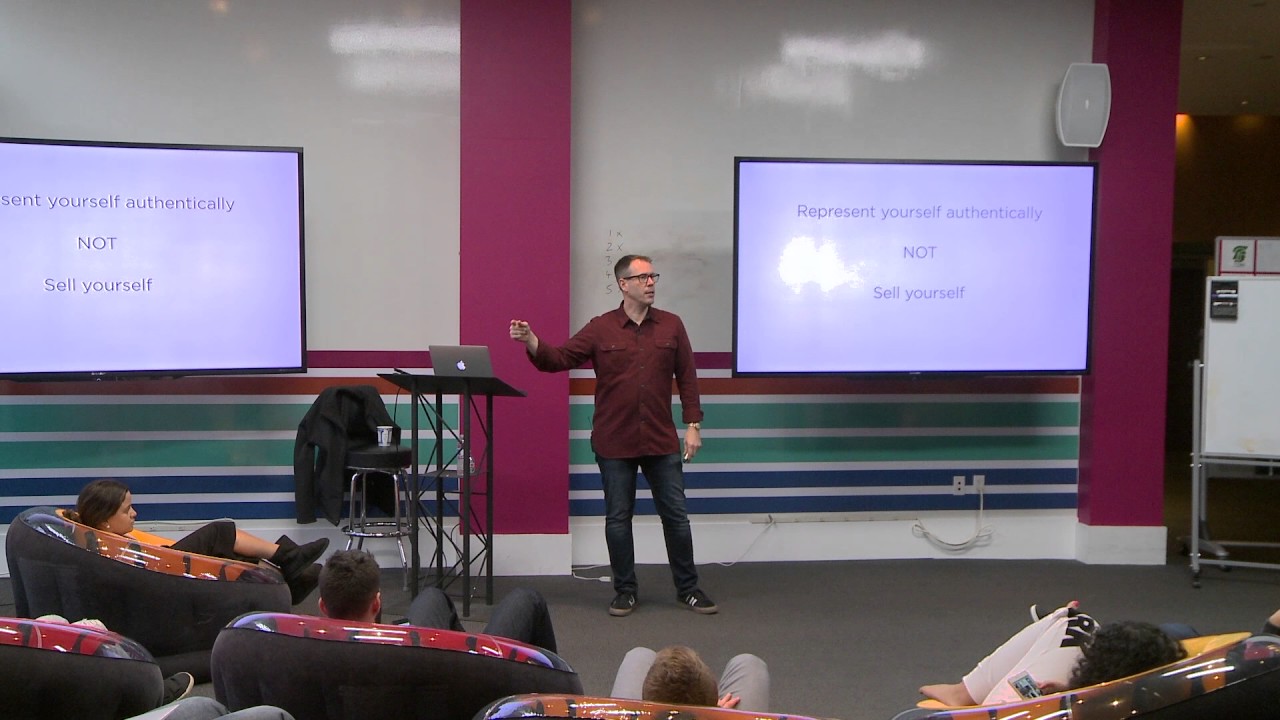
You all may say, well, we hear the word sell yourself, and it's in common language now. We're like, I got to sell myself. I got to win. I don't believe in selling yourself simply because it feels like used car salesperson. I've got a deal for you. What if we start to practice who we really are and get to know who we really are? Then you attract the people who are interested in that and you don't end up attracting the people you're not interested in, right? I work with— so right now, just to give you an idea, I'm working with About 150 people. Okay? That's a lot who are out there in the world job-seeking or building businesses. I would say about 30% are actually entrepreneurs building companies. Okay? The greatest thing that happens in the early process is because they're all out there trying to get to sell themselves to be picked, so someone goes, we like you, you're willing to represent yourself maybe not 100% as you really are. And what happens then is people come back and go, but they're not the people I want to work for or with. They're not the people I want money from because they're out there selling themselves and attracting the wrong people. So you've got to start to work on who you are and what you do, right? You were just in that last class, I'm guessing because Juan told me what you did, but you all stood up and said, this is what I want to do, and you got feedback from Tim, right? Yes. How'd that go? All right, you're great. Good. Who was at the end? Who was at the end? Well, to reinforce, you were all great. Okay. But here's the thing. So I get it. So what you have to do now is you have this idea of what you want and who you are. Now we have to figure out who you really are and how people perceive you because otherwise you get into this So, this phase of I'm doing this elevator pitch. Does everyone know what an elevator pitch comes from?
Yeah.
Where does it come from?
From hiding a minute in a— going up in a building.
Yeah.
And having the CEO of the company or whoever you want to pitch on your side and you have 30 seconds.
Exactly. So, you basically hide in an elevator until someone can give you a contract or a job. It comes from old Hollywood, which is like, I'm going to sell a script in 30 seconds, right? There is no one sitting behind a desk with a huge cigar looking at you saying, you'll never work in this town again. It doesn't happen. I mean, if any of you ever encounter that, you can write a blog about it and say, Andy didn't know what he was talking about. But here's the thing. If you start to learn who you are, then you don't only have those 30 seconds. Because you start attracting people who go, I want to be around you because you know what you're doing. Rather than feeling like you're always proving that I should be in the room, proving that I should have this conversation with you. Right. Very rarely. On occasion it does. Like, this is not— I don't want to generalize. On occasion people are like, oh, I met somebody and I was on BART with them and we started talking and now apparently they're going to give me money for my job. Like, that happens. You should be prepared every time you walk out the door to know who you are and know what you want because someone will ask you if you're open to that. If you go to a laundromat, if you walk down the street, especially in this area, you're meeting people in tech. Right? Be prepared for that. Every time you walk out the door, you should be prepared. Because if you really want this, you should be like, let's talk about this. Don't be the person that like, you know, every time you're out, your friends are like, oh my God, stop it. Can we just have fun for one night? But remember, when you're out in the world, you have an opportunity every time you walk out the door. Am I talking too fast?
No.
All right, cool. Okay, here's what I know. And when I talk about job, I also mean building your own company. It's probably higher in this market because nothing happens unless you know somebody. Here's what I know about starting a business or building a business. When you build a business, the first thing you do is you go to people you know to help you. And then when you hire your heads of talent, they source. From people they know, and they look at people they've worked with in the past. Then they go to strangers. So your network is critical to everything you do. If you don't start building it now, you're in trouble because when you need help, you're like, "Oh wait! Now I need somebody to help me with this. I've got to go find them and then get help." If you have those people lined up, you're going to be prepared. I would do this as you start to work if. Many of you may or may not, but if you start to be around people who've either built a business or are in a business you're interested in, ask them how they got there. Because a lot of times we skip that step and we go, tell me what you're doing right now. Tell me what phase, you know, are you adding a new feature? What are you doing? Right? Because we want to know the cool stuff. But ask them the beginning stuff because that's what you really want to know. I was saying this. to someone earlier, I don't remember who it was. When I started my business, I had some really good successes, right? And it grew fairly rapidly. I cannot tell you much about them other than like, oh, more money came in and more work came in and this happened and we hired more people. But when I made mistakes, I can literally tell you what shoes I was wearing. Like, I had some big ones. I had some mistakes that I was like, oh my God, what just happened? I can tell you where I was sitting, what I was wearing, and what office I was in. I'll give you one. I had an opportunity to take a contract with an incredibly large high-rise building, and I did not want to pay the elevator staff under the table to get my crews in and out every day, because it's a common thing in Manhattan. And I was against it at the time, because I was running a business that was all about running a business for good. Organic, environment, people, everything. And I was against it. And so, I really fought for it and they gave the contract to somebody else. And I can tell you, I was sitting next to one of our sets of washer and dryer machines for equipment and I was wearing black shell-toe Adidas at the time, because that's what I was wearing in the office, when they called me and said, we're not giving you the contract. It was a huge mistake for me because I had people that counted on me for business, and I chose not to take it because of what I thought was the right thing. Changes, right? Move forward, get another contract, build business, do whatever. It's hard to say. Could things have changed dramatically? Probably would, because I know what happened to the organization that took that. What's that? What do you mean? That's the industry that I was entering into. That's part of understanding the industry. So for me, I chose not to do it. Other companies were happy to do it. So that was a big issue for me. Happens.