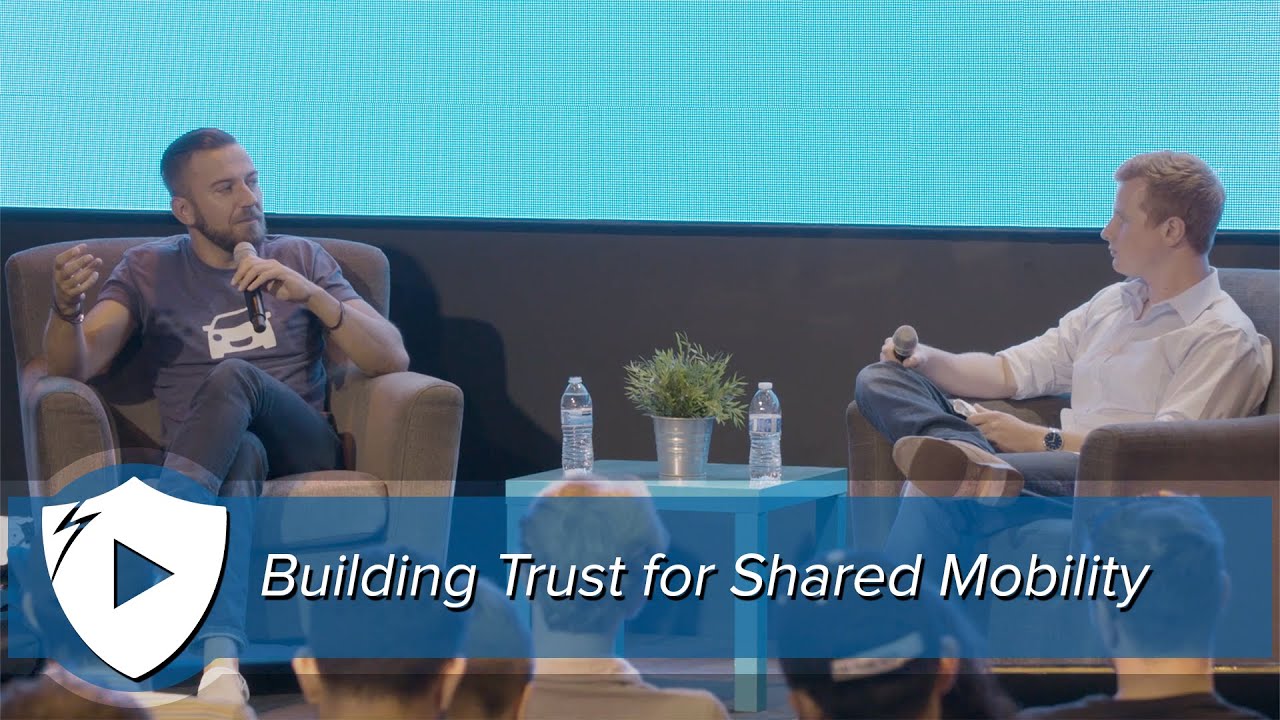
Sam Zaid, founder of GetAround, discusses building the car-sharing platform and why he built proprietary hardware for remote access instead of relying on existing car systems. He shares how co-founder Jessica personally recruited early car owners and the importance of not betting against technological trends.
Chapters
Awesome. So 360Pi is still running and it's profitable. I think it was recently acquired.
Yeah, it was acquired a year and a half ago.
Yeah, so it's not like that was a failure, right? But you still decided to pursue Getaround. So, and also marketplace sharing economy is quite different than what they were doing, right?
Very different.
What made you want to go after this industry and So this is a good example.
So 360pi originally, we spun it out. It had a different name at the time. It was— I don't actually remember what we came up with. It was called Gozaro. And the idea was we were building the next generation of comparison shopping engine, which was super real-time, predictive. As opposed to going to something that had a lot of latency, when you went on the page, we would in the background refresh all the prices and bring up the latest models and predictions. And we thought it was super cool. So we launched it, and we got some good consumer interest. Basically got to break even, and then like nobody was using it after. Well, not nobody was using it. We couldn't get any more people to use it. And so we thought about that for a while, and then felt like retailers really needed this technology. So if you were Best Buy and you were competing against Amazon, You needed to be much more real-time, much more predictive. And there was other things that they cared about around forecasting demand of a product, price portfolio optimization, like what products should I store, how many, et cetera. How do I maximize profit? And so we essentially pivoted the business into enterprise, working with retailers. And that was a point where I felt like, hey, I just did an enterprise company. I didn't really feel like doing another one, because I wanted to try something different. And I felt as though, for me, I enjoyed the— I feel like consumer companies are much higher risk, but you also get a different— And it's a different connection with the customer. And so that was my main motivation. We found a great CEO, and he came in, ran the company for several years, until we sold it to MarketTrack and Vista Equity. And now it's part of— basically got combined with MarketTrack, so they're one company.
And then as far as Getaround, was it— a solution that you saw to a problem in the market, or did you just see sort of a hole in the market, or what specifically about Getaround made you want to go after this?
So the original inspiration was we were listening to a conversation, or we were at a presentation by Sebastian Thrun, who was at the time the director of the AI lab at Stanford, and they had built Stanley, which was a self-driving car that won the DARPA Grand Challenge for autonomous driving, I think the year prior or something. And it was cool. We were talking about, you know, sort of how they built it, you know, the different systems on there, the different types of machine learning, machine vision algorithms they applied. And And then we were like, what is the world gonna look like? So just afterwards, myself and Jessica, we did this thought experiment of, what does the world look like when cars are almost, like you snapped your fingers and they're all self-driving and fully connected and sort of really intelligent? And came to the conclusion that it just really wouldn't make sense for people to park their cars for 23 hours a day, and that people would share cars. And like, in that world, everyone would've said, you know, if you ask somebody, hey, your car can now, you know, it's connected, you can see it on your phone, and it drives itself, would you let, you know, your friend use your car right now? And they were like, yeah. What about a family member? Yeah. Colleague? Yeah. Stranger?
I guess.
And so we were like, okay, seems like that's a distant future, but it seems the way the world is going. And so got a lot of conviction around the idea of shared mobility very early on, before shared mobility was really a thing. And then we looked at the present-day economics of ownership, and they were totally upside down. Everyone spends a ton of money. You're using the car 4% of the time. We have more— 250 million cars, more cars than licensed drivers in the US. And we were like, why aren't people sharing cars already? Because it seems like it's going to happen in the future. And then realized, hey, it's really hard to get the key from somebody, and cars don't drive themselves and move around. And so we started looking at telematics solutions for getting remote access to vehicles. Didn't find any that were really good.
Right.
And got stuff from Europe, China, the US, and I had done stuff previously with Trimble. And so I was like, screw it, let's just build our own. So we ended up writing a patent for it. And then I found a friend of mine who's a consumer electronics engineer, designer guy that I'd known. And we went for coffee, and I was like, OK, here's this patent we wrote. Can you build this? And think of it basically as the ultimate accessory for your iPhone. That was sort of the pitch at the time. And he was like, this is a stupid idea. It's crazy, but I want to do work on iPhone, so let me see what I can do. Comes back a week later, has a prototype built, completely rickety, but working on a BlackBerry phone, and unlocks his Toyota Sienna family minivan over Bluetooth while we're having coffee. And then he became our first VP of hardware, and then we started building.
Took us—
2 and a half years from then, actually build anything, but for real. It went through several generations. And anyway, that's how we got the idea and started it.
Awesome.
The one thing that I did learn along the way, which is an interesting tidbit, is I felt like in my first company, there were times where we bet against technology. never win betting against technology. And like, we'd have these internal debates whether we should go like cloud computing or not cloud computing, like early on when cloud was not, you know, a foregone conclusion. People are like, oh, enterprises are never gonna put their data in the cloud. Everyone wants everything on-premise, blah, blah, blah. And I would always be on the side of like, let's try the new thing. And a lot of the guys that I'd hired who were more experienced were like, ah, this is like, This will never happen. And for the first 3 years, they're probably right. But in the long run, it's hard to go against the wave of technology as it becomes more of a tsunami. You're just not going to swim against the current. So in this case, we felt that was the direction tech was going, so we should just swim with the current, even though at the time, there was very little power behind that.
So Kind of similar to one of my prior questions, I'd like to talk about your first 10, 20 car owners. And how did you convince them to allow not only a stranger to go drive their car, but to trust you while you were first just getting going? Did you lean on friends and family to get their cars up, or what was that process like?
This is interesting, because my co-founder Jessica did a lot of that. And one of the things about her is she is sort of a very good connector and human database type person. So she always remembers people's names and like some tidbits about them, right? So she'd be like, oh, this person, da da da. I'm like, what? And so she knew our first 100 car owners by name and their backgrounds, and literally would call them every time somebody tried to rent their car, and just be like—
Awesome.
Hey, someone's trying to rent a car, can you do it? It'd be really cool. And our product was pretty rickety, so it worked. Anyway, it worked. So for a while we actually built up a small sales team. It was a couple people in the early days just calling car owners whenever someone would say they wanted to rent their car, just to make them feel comfortable.
Do you think that Airbnb maybe helped change the mindset of people and allowing— strangers into your home or into your car, or did that play a role, or maybe not so much?
I think it played a role. It was very early, so it wasn't like what Airbnb is today. It was also the time when Airbnb was having tons of challenges with strangers in their homes. But I definitely think it helped. I mean, I think actually it was more the normalization of the concept of sharing economy, which at the time had multiple names. It was like sharing economy, collaborative consumption, Something else, I forget what it was called. And there was all these competing terms for this new thing. But the fact that it was something and it had been given a name legitimized it. And certainly Airbnb helped in that.