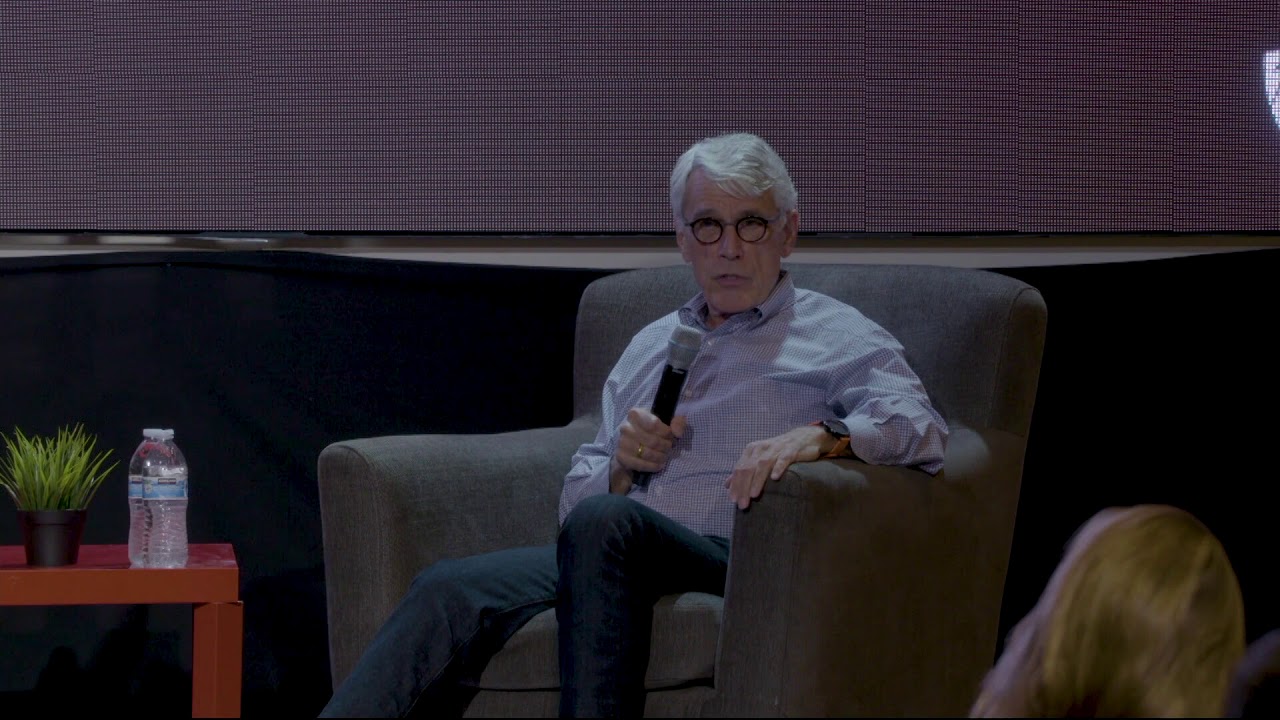
Jerry Baldwin bought Peet's Coffee in 1983 for about $4 million. He talks about early hires, bringing in Howard and Gordon, the challenges of integrating Peet's and Starbucks, and how he financed the deal through Wells Fargo with a debt-to-equity ratio around 13 to 1.
Chapters
So at this point, you're kind of leading. Gordon is helping out. And then you have a man enter into the picture named Howard.
Well, Howard's not here yet.
Is he not here yet?
No, but I had 2 things up on my wall that I think are— that I considered to be things to pay attention to. One is a quote from Branch Rickey, the The owner of the Brooklyn Dodgers, the guy who brought Jackie Robinson to the majors. And part of it, the only part that I saved, was luck is the residue of design. And the second thing was from Peter Drucker, which is that labor is not a cost, it's a resource. And those 2 principles rattled around a lot.
As you were leading—
I'm sorry?
As you were kind of leading and learning how to lead?
Well, and just, they're clearly guiding principles. Leading, I mean, at this point, the whole coffee thing, the whole food thing, bakeries, wine, other specialty foods were taking off. And the wholesale people may have thought they were geniuses, but all they had to do was answer the phone. I want your coffee in my restaurant. I want your coffee in my store, yada, yada, yada. And that became a significant business.
And then when did Howard come into the picture?
Well, the first hire actually was a genuine CPA CFO. That was in '81. Howard came in '82. He approached us. He saw how much of his products we were selling and said, Let's get together, introduced by our wholesale manager.
Do you remember meeting him for the first time and what kind of impression or vibe you got from him?
Well, very friendly, outgoing, personable. What became clear later on is that he was organized, Driven. When he was in college, he became the local rep for Spademan ski bindings. You know, he just was working. His first job out of school was at Xerox, and his entire territory was one building. But on Sunday, he'd sit down and figure out what he was going to do for the week and then did it.
Is that what impressed you about him and why he originally came on?
Well, he really, he just really wanted to do it. I mean, we were a little, you know, What's the word? I mean, frightened isn't the word. Scared isn't exactly the word. Apprehensive, maybe, about cultural differences. I mean, he was from New York and we weren't.
Yeah.
And there's very different—
There's clashes because of that mentality?
Speeds and—
Right.
So, but once he was there, I mean, he worked really hard at becoming acclimated, integrated himself into the culture. But, but like, like to be organized. If this is what we're going to do, then let's get on with it.
And then as he— as the company continued to grow and he was part of it, he started making suggestions about espresso bars.
Yeah, I don't know. I don't remember it, you know, quite that, quite that way. Yeah. But in 1983, I was approached about buying Peet's. Which I really wanted to do.
How did that come up? Where did that come from?
Well, when Alfred sold the business to Sal Bonavita, I approached Sal and said, you know, congratulations, great company. If you ever think about selling it, please call me. And he did. Unfortunate circumstances, his wife became gravely ill. With cancer, and he had 2 businesses and ended up selling them both. Pete's was one, and there was another business as well. And so, but it took about a year to get it done.
Had you been in contact with Pete throughout time up until this point?
Well, yeah, intermittently. I didn't know he was selling the business. He didn't put it up for For sale, right? Sal approached him; he sold it. So I'm sorry, I lost the the track of the original question.
No, this is it's good. So you were approached to buy Pete's. He was a mentor in the in the past, and you wanted to get it for strategic reasons, or was it a little bit of an emotional thing?
No, no, I was not approached by Pete. I was approached by Sal Bonavita.
Yeah.
And, but I can't even, I don't know. I need a psychiatrist to tell me why it is that I actually needed this business so badly. But Gordon told me years later that after my lunch, well, with Sal, I mean, I remember where it was. It was at Sinbad's on the waterfront in San Francisco.
Is this the lunch where he told you it was for sale?
This is the, yeah. He told me that he wanted to sell Peet's. And I was so excited I could hardly contain myself. I'm not kidding. I could have wet my pants. I don't know. But I went to the men's room and I just was exulting that we were going to buy Peet's. And what Gordon told me years later was that when I called him that afternoon, there were no cell phones then. I had to go find a payphone. He said, I didn't say, Pete's is for sale, I think we should buy it. I said, we're buying Pete's. And he said, well, thanks for letting me vote.
But he was for it?
Well, he was okay. I mean, he was, as I say, not active really in the business then. But he would let me lead it. But he would have appreciated just a little bit of Is this okay? Especially since we didn't have any money.
So how did you buy pizza without any money?
Debt. You couldn't do it today. Wells Fargo Bank at the time was really seeking mid-market lending, and they lent us the whole thing. When we concluded that, for those of you who are financial, our debt-to-equity ratio was 13 to 1. You're not taking that to any bank today, I can tell you.
How much was the acquisition for?
$4 million. But we owed them more because we owed them other money. I don't remember exactly how much money we owed them. Yeah, it was a lot.
And so you had just bought Peet's. You're ecstatic for some reason, just on the inside, needed to get Peet's. Howard had gone off and started his own espresso company?
No, not yet. No, Howard, let's see, Howard was part of that. Howard was going to move to the Bay Area, and Howard and Jim Reynolds independently figured out that Jim would do well in Berkeley and Howard wouldn't. New York and Berkeley, forget about it.
And what was the plan to recover after the buying from Peet's? Did you guys have a plan to—
Oh, it got dicey because In '80, hmm, I don't know, '85 or so, Wells Fargo decided they were gonna get out of mid-market lending and put it, although we were performing, they put us in their workout department where the rude people who think that you're going to default are, and it wasn't that much fun for the CFO, but we went on to Union Bank and, you know, always have your next banker Lesson from earlier. And we had a long relationship with them.
So then you guys have Peet's and Starbucks. How was it managing 2 brands at the same time?
Well, it took a little learning. At first, we thought we'd use the same collateral for both companies, and that didn't work at all. And some people, Howard and Gordon among them, wanted to change the name of Peet's to Starbucks. and keep going. And I threw my body in front of that one. And as things developed, I felt that Peet's had a lot. Starbucks had a lot. They were different. The strongest way would be to put them together. One of the things that happens in acquisitions is the acquiring company, all the people in it think they're geniuses because you brought the money. And it's And I can't say I did a fabulous job of integrating them, but I was absolutely committed that this was going to work. You were leading both of them? It was all on the line. All this debt was personally guaranteed.