Challenges to Values | Mike and Albert Lee
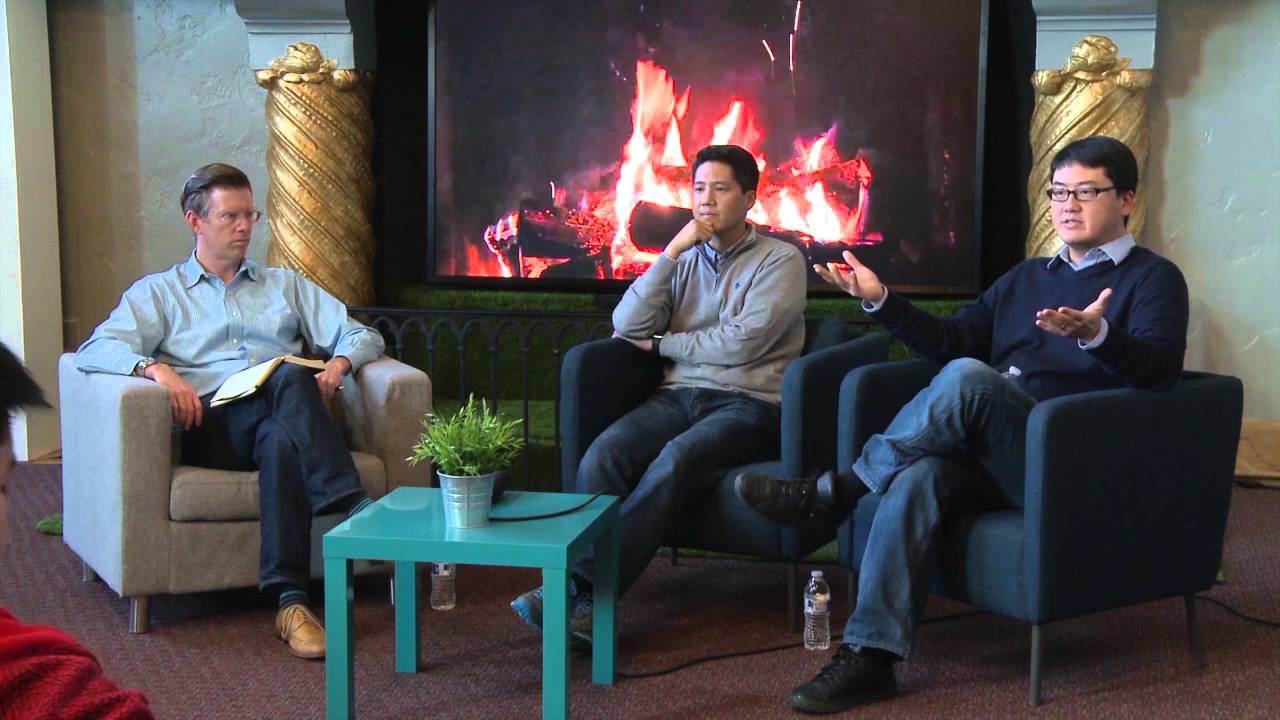
Mike and Albert Lee explain how MyFitnessPal uses core values like customer success and integrity to guide decisions on revenue, privacy, and product. They turned down data-sale offers to protect user trust and chose Under Armour as a partner because of mission alignment around making athletes better.
Chapters
More questions? Right there.
Over your time since 2005, could you tell us about a time where you had to make a decision that really challenged your values? Challenged our values, yeah. So business model, I think, is one of the biggest. So look, especially as a self-financed company, there is a lot of pressure to make money. And there's a lot of ways that we can make money that would not be very well aligned with our customer. So one example is selling data. Man, we had so many people that wanted to buy our data, and we kept saying no. You know, I think, you know, one of the things that I think we did right was we really tried to make sure, you know, especially as the team scales, it's really important for the company to know, like, what your values are, right? And values are actually— they're not— the way I think that we try to think about it, they're actually like these are strategic for your business. Like, we chose values that we think help our business succeed, right? One of them is when our customers succeed, we succeed, right? So like what we really wanted the whole team to focus on was how do we help our customers become more successful at reaching their health and fitness goals, right? If you do that, then if you have a product that works and that people love, then everything else is easier, right? It's easier to grow, it's easier to make money, it's easier to do all those things if people love your product, right? And so, you know, when we created that value, And so that value, you know, that really helped us along with a lot of these decisions because something like, you know, hey, we can make money this way. Well, you know what, like, that doesn't align with that value. It's actually like bad for the customer because then they don't trust us with their data, then they won't give it to us, then we can't help them succeed, right? So, you know, I think like finding that alignment is really powerful, right? If you can do that, everything gets a lot simpler and a lot easier. Simplicity is another thing that is like really, really helpful. You know, another thing that we've found is like the less complex our business is, right, the more focus we had. You know, things like you ideally want one revenue stream. You don't want like 10 revenue streams. You want one revenue stream that you think could be really, really big, right? And, you know, like when we set goals for the company, you know, we've struggled with this too. Like we would really like to have one goal, right? We have 100 people and we want We want one goal that the entire team is thinking about. That would be ideal to us. We got it down to 3, and we're unhappy, right? You know, and you would think like 100 people, you can do all these things, but you can't, right? Like, you— and especially as a small startup, like, you guys definitely should have one goal, like, and know what that is. What's the most important thing in your business right now to help you succeed? And do only that and nothing else, right? That focus is really, really powerful.
Is your business model still advertising-based?
So I said that you would love to have one business model. And that's, I think, from pain that we are feeling, because we have a lot more than one business model. So we have a subscription business, where— and that's actually the way that we would really like to make the bulk of our revenue, right? It's where people are paying us because they love our product and it's providing value to them. But we still have a really big ads business. We're also looking at how we can drive conversion shirts and shoes sales for Under Armour. So unfortunately, with the reality of our business, there's a lot of things that we're having to tackle. But we keep looking at, well, how can we get really this down to one that we think is the most powerful?
I think if you identify the right kind of business model, the benefit you get is that you have this really tight alignment between the things that you're doing to grow and the things that you're doing to make money. And I think there are actually a lot of circumstances where those things are actually different, which means that, like, essentially you need twice as much effort, right? Because you're doing one thing to grow, and you're doing another thing to actually make money from that growth. And so, you know, that's something I think is another thing that you have to really examine as you think about business models for the company is, like, what is that thing where once that's in place, all I have to do is, like, keep trying to get people to use my product, and the money's going to come in? Yeah.
I would also challenge you on that a little bit, because advertising is a tricky— business model, because it creates 2 divergent sets of customers. You have the people who are using your app, and then you have the people who are actually paying you to run ads in your app or on your site. And very often, those have very different interests. Like, the advertisers want data. They want tracking pixels. They want as many ads as possible. They want to say whatever they want. You don't necessarily want that for your customers, right?
That's right.
That's right. No, that's been a struggle for us.
Right.
You know, like, as an example, a lot of the advertisers that want to advertise in our app are companies where their foods are not really that healthy, but they kind of want to be associated with a healthy brand.
Yeah.
How do you decide? We don't do it. Right? That's another— it's hard. Like, the hardest— there's definitely ones that are clear nos. Right? Then there are others where, like, it starts to get a little fuzzy. And so we're like, okay, some of their stuff is healthy, some of it is not. So we actually have, like, guidelines that we've set where in certain parts of the app where the relationship is much more at arm's length, then we'll allow those advertisers in. In other places where we're endorsing them, so something like sponsored content or something like that, we won't allow those advertisers in there. But to your point, it's got to stay aligned with the customer. Ultimately, everything depends on your customer. If your customer isn't happy using your product, then you're only making short-term gains. In the long run, your business is going to fail. Customers don't love your product.
Yeah. Yes.
What's the plan for My Business Ball after being acquired by Under Armour? Are you going to keep working on developing the app, or are you going to just quickly jump onto another one similar to Nike+ or Nike Fitness?
So I can't talk too much about our product plans, but I can tell you that You know, one of the things that we really liked about Under Armour is they had actually a very clear mission too, which is to make athletes better, right? Which actually is really close. And they think of athletes very broadly, like everybody in this room is an athlete to Under Armour, right? And so, you know, that mission is very well aligned with ours. So we have a lot of, again, product ideas around how we can do that. And that's how we try to start every conversation, right, or every strategic direction. It's about first start with the customer. What does the customer need? What can we build to help serve the customer? Once you have that, then you can figure out business model. You can figure out marketing strategy, all that kind of stuff. But like again, at the end of the day, if customer doesn't like your product, it's really hard to to sell it, grow, whatever, right? So that's kind of everything. Everything comes from that.
Hi, I'm Tavon from Johannesburg, South Africa, and I just wanted to find out when you are looking for ambassadors for your company or when you did, what is it? that you are looking for them to add value to your company outside obviously having a large audience?
Ambassadors for a company, so do you mean like employees that we would have?
Well, people in the— like professional athletes who are endorsing your company. So obviously they must have a great reach, but what value are they adding? To your company, what exactly are you looking for? So, put it another way, if they were to send a proposal to you, what would you be expecting to see inside of that proposal?
Yeah.
You know, that's where I think the brand really comes in, right? So, like, if you look at all the athletes that Under Armour has signed, they're really good people. They actually have, like, a personality that is the right fit. You know, like Jordan Spieth, I don't know how many of you guys are golfers, but, like, This guy is like one of the most down-to-earth, like just super hardworking, super focused, not arrogant, right?
And like maybe Misty is even a better example.
Yeah, Misty Copeland is another one, the ballerina. Every one of these guys, Steph Curry, same way, right? You know, I think, I think, you know, obviously there's, you know, how popular the athlete is. Is it in a sport that we care about? Not that we care about that. It's like a priority for us, right? You know, their skill set on the field. But then, you know, at the end of the day, that are they a good fit with our brand, you know, really matters. There's an image that Under Armour really wants to portray, that Under Armour is about, and they have to align with that.
Yes, I'm Jason. I'm gonna ask some more fundamental questions. I think that you guys really nailed it when you guys launched the product, and that's like just building a great product. But nevertheless, there's gonna be some types of flaws in your product, and I'm really curious how you guys like—
First flaws?
How you guys have found out some of those flaws so that you can make the product better, that you use, like call your customers, that you— because they don't— Mixpanel probably didn't exist back then, right?
Yeah.
So it's probably hard for you guys to like know what exactly you're missing, like from some of the features that you guys Yeah, there's a lot of things.
So I think, you know, what Mike was saying earlier about kind of really understanding from a value standpoint what drives your business, and that idea that for us, since we did no paid marketing essentially for the first, I don't know, forever.
I don't think we— After that $20 a month of AdWords, like, we stopped. And we literally have done $0 in marketing since.
But this idea of customer success being the real driver of the business, it actually changed how we thought about, well, how do we understand what that means, and how do we make sure that we are attentive to what the customers need? So, like, one of the things that we did early on is we actually hired a customer, you know, support person as, like, one of the first 7 people or 6 people in the entire company. And I don't think that would have been something that other companies would have invested in at that point, but primarily because we wanted someone great who was obviously out there listening to customers, and we certainly wanted someone who could turn customers who may or may not be having problems with our product into advocates for the product. And customer support can really do that if it's done well.
Yeah.
The other thing is we actually spend a lot of time ourselves— like, I'll be honest, I probably answered— I used to spend 2 to 3 hours a day answering customer email myself. For probably 3 years I did that.
Yeah.
And it was one of the first things I would do in the mornings. I would just sit there and I'd go through all the things that customers would write us about. But it gives you a ton of insight into what are the challenges they have, What are the problems that they're seeing? And I think the big advice from a product perspective is to always think of it that way, because a lot of times customers will actually write in and they will try to provide solutions, but what you're really trying to understand is the problem, and it's your job to think about, like, well, how do I effectively solve that problem in the product?
Yeah.
They're really good at telling you what the problems are. They really suck at telling you what the solutions are. That's your job, right, is to come up with the right solution. But, yeah, even today, Today, we still have everybody at the company answer customer service emails. At least once or twice a year, they have to do that. You've got to stay in touch with your customer.
We have another thing that we did that was actually really awesome is we created these— essentially, we would have every quarter maybe 3 or 4 of our customers come in. And they'd actually talk to our whole company about their experiences using the product. And we might actually— from each session, we might actually focus it on a particular area. So one was like people who had lost more than 100 pounds. What were the ways they were using the product? What were the things they found hard about it? How did they even feel as they were using it? To people who were like, were once, you know, top-level college athletes, and what is their experience like? And it's funny because part of it is like getting feedback about the product, but a lot of it is just making sure that everyone in the company feels really connected to the customer.
Mm-hmm.
So it's less about the specific fix of that dialogue, because you're only talking to 3 or 4 customers at that point, of many millions of them that are out there. But just really galvanizing the fact that there are real people using the product, and you always need to be thinking about them.
We spend a lot of effort trying to bring the team close to the customer. So every single conference room that we have has an actual customer quote on the wall in big letters. We do these user panels. We're actually doing one this week. So we have a bunch of users coming in to talk to When we make decisions, we think about, and we make sure the team knows that we're thinking about the customer, what's best for the customer, right? And we have like these pillows with before and after pictures from all our customers. Like everything, I don't know, again, if you pick your values right, they're things that you live and breathe every day. They have to be things that like matter to you as a founder, right, that you want to matter to your team, and then you have to like make them matter, right?
Totally.
And so that's a lot of what we did. You know, there's stuff like we thought In the beginning, people were trying to figure out values. People were suggesting honesty and integrity. And we were like, oh my God, if we have to put those as values down, we're screwed. Your company is screwed if you have to tell people that they have to be honest. That should be obvious. So we just cut all that crap. And we figured out, what are the only things that we want people to think about?
Integrity.
Like, you know, we had like a list of like 20 things or something like that. We ended up with 3. So those 3 things are: when our customers succeed, we succeed. And, you know, speed. Our team is everything. That's another value for us. And then we go fast. That's another one, right?
That sounds like the same thing.
Yeah.
Yeah. Cool.
But like, you know, speed is another one. Like, you got to You got to go fast. A lot of these markets that people are going— you guys are all going to go after, they're winner take all. So if you're not first, if you're not number one and the best, you're going to lose, right? There's no second place.
I think some good advice that we got around thinking about values, there was 2 things that I thought were really good. One is like, I think to the question that was asked earlier, you want to think really hard about what you would not do if this was something that you valued? And that's actually like a way to test if you actually have selected a good value, is to figure out if there's a hard choice and what the decision would actually be.
Um-hum.
And so I thought that was actually a really helpful piece of advice that someone had given us. I think the other thing to really think about here is like, and this is really important to the people in this room, is like as the founders of these companies, no matter what you choose, like, a lot of what's going to happen is, like, people are going to follow your lead. So it doesn't really matter what you say, right? It's not like words you put in a frame and you stick on the wall. It's really about, like, well, how do you act? Are you somebody that, like, emphasizes speed in what you're doing? Like, are you always being— thinking about the team?
Yeah.
Above the individual? And, you know, if you're not actually able to really be an example of those values in the business, then, like, they're the wrong values for you, for sure.
Right.
More from Tim


He Sold His Car to Build This Startup, Then Pitched It for $1M 😳 #Startups #AI

This Startup Moves Your Crypto BEFORE Hackers Can Steal It 😳 #Crypto #Cybersecurity




15 Months Without Refrigeration?! This Startup Thinks It Can Go Global 🥥 #FoodTech #Startups



