Choosing a Field with Legs | Ray Zinn
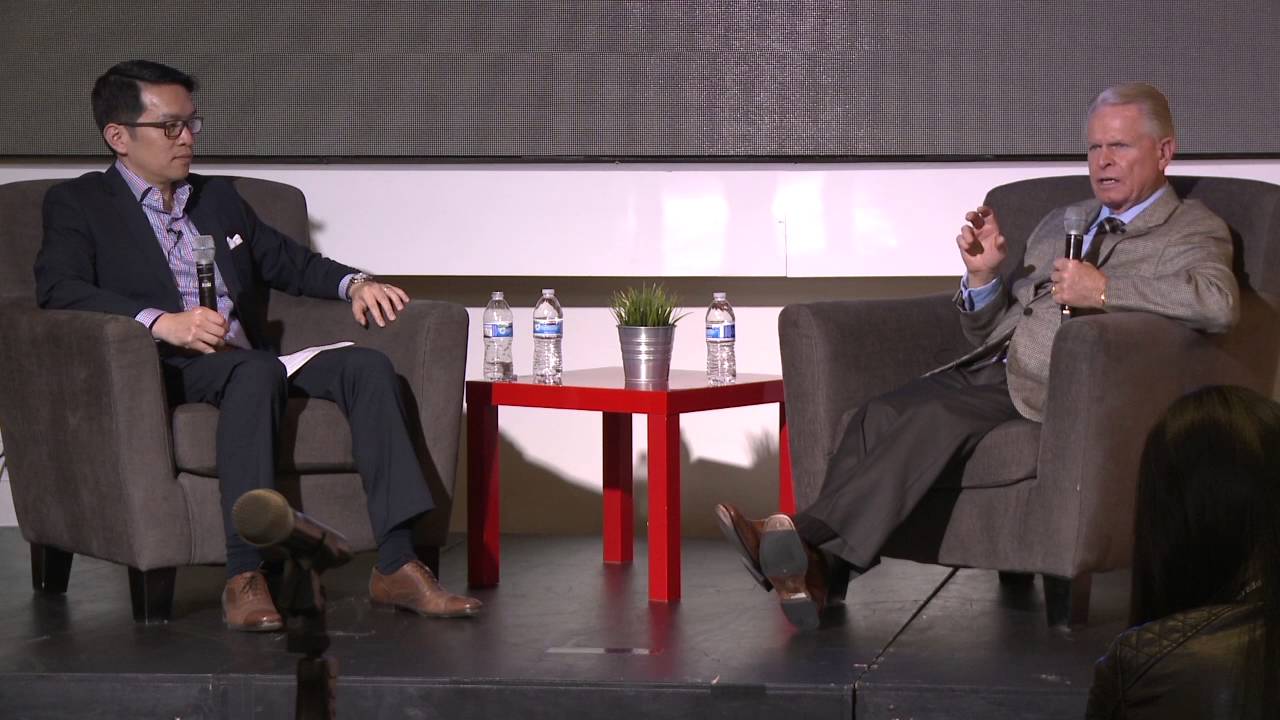
Ray Zinn, a longtime semiconductor entrepreneur, advises younger business founders to pick fields with lasting value instead of chasing fads. He favors practical sectors like IoT, security, health tech, and electric vehicles, and points to examples like Tesla and Fitbit that solved real problems rather than novelties like the Pet Rock.
Chapters
So, so, Ray, I guess turning a little bit to maybe some of the younger entrepreneurs here, I know that since you retired from MyKrell, you've, you've actually been investing capital as well. If you were, let's say, if you were 25 and could do it all over again, is there a— which, what kind of business would you start today?
I think it depends upon where you want to live. I mean, if you want to live in Silicon Valley, You know, the technologies we have here, of course, you know, HP, Facebook, Google, Apple, those are the kind of companies that are endemic here in Silicon Valley. Outside of Silicon Valley, of course, depends again. If you're in Texas, oil and gas, or if you want to be in the banking business, that's what, like, you're in. Investment area. There's those opportunities. There's boutique banking you can do. There's all kinds of opportunities. It depends upon what your expertise is. I started out actually as a ballistic engineer for United Technology developing rocket motors, and because back in those days military was very strong, and so that's kind of what I how I started, but then I could see the Valley was kind of becoming more of a semiconductor place. So I decided to go join a semiconductor company and I did that in '63 and built a career around semiconductors. So again, depends upon where you wanna live and what your, you know, what kind of business you wanna start. You should have that in mind. You should be thinking about that. When I was your age, I was thinking about being an astronaut. I mean, that's kind of what I was hoping to be. I didn't think much about what that meant as far as providing for my family, but that's kind of the glowing thing. Oh, I know. I'm going to go fly a rocket, you know. I ended up developing rocket motors because that was my love, was to fly. Thank goodness I didn't do that and went into semiconductors because it's an ongoing business, whereas military and aerospace has kind of dropped off. So whatever you think of, make sure it has legs. Make sure it can that's going to be sustainable into the future. Some of you may want to start a franchise of some kind, or maybe you're going to develop a computer app, or, you know, but make sure it has legs and make sure there's longevity to it. Because a lot of these companies that start up, they're fads, like the Internet of Things, IoTs. I don't know how— if those are familiar terms to you guys, but— The IoT is a fad and it'll burn out. And so it's gotta have legs. Look at the issues that GoPro's having right now, or Fitbit, even Apple on their watch. Apple can market the heck out of that watch, but it may not be sustainable, it may not have good legs. So, The Tesla car, I mean, that's got legs because, you know, we are concerned about environment, we're concerned about, you know, the use of petroleum fuels. And so electric vehicles sounds good, whether it be a bike or a hoverboard or whether it be a car, truck, there's future in that. So, We have to kind of look and see what the— see into the future, what the direction things are going and go that way. But avoid fads. Any of you ever heard of the Pet Rock?
No.
It was silly. People were selling rocks and calling them pets, you know, because— but it happened. I mean, the guy made a fortune on those Pet Rocks. But I mean, my daughter made me one when she was 5 years old and I still have it. I pet it, you know.
Sounds like that app called Yo. I don't know if you guys remember. So Ray, I think being an industry expert in the semiconductor industry, I'm sure you have seen a lot of kind of the foundation for other technologies. And you mentioned Internet of Things kind of being a little bit of a fad right now, but do you see any technologies today that you're excited about or that you would consider personally investing in? What are some of the areas that you're focused on right now?
Well, connectivity is fine. I mean, so I'm just saying the Internet of Things is a fad. The connectivity part is good. So, you know, it's just You know, like rocks are good, but not as a pet. You see? So, you know, it's— you have to look at what the legs are of that product. Connecting, you know, air conditioning to remote devices to be able to remotely control your environment. That's the Internet of Things, but it's not a fad. It's real. And it'll have legs. We're talking to a company that's doing sprinkler systems that have intelligence so that they, as the year changes, the sun moves to different spots and you get different shade and different things that affect your plants. And so if you have an intelligent sprinkling system that can now determine the, what, amount of water you can conserve on water. Those are just examples of what I'm talking about. You know, security devices to make us more secure, protect us better. Those are all important. Health. I mean, if we can have some way that a person— we could get emergency help to an individual having a heart attack, 'cause you know, you only have 7 minutes from the time you you have your heart attack, if it's a major one, until you can get help or you don't make it. So if you could have some way to measure some cardiac response, you know, and then it would either contact an ambulance or contact your doctor or something like that. Any way we can improve our health and our livelihood is good. So I think in the health area, I think apps and health are going to be good as long as they're not fads like Fitbit. If Fitbit could find a way now to look at more health-related issues, I think that would be a good thing. Or GoPro could find some way to use the camera in a more productive way as opposed just to watching cars go down the freeway. You know, make sure that whatever app or idea you have has legs. In other words, is it going to help the economy? Is it going to help the environment? Is it going to help, you know, health? Is it, you know, have it have value. Have it contribute to mankind in some way. You know, I use the Pet Rock as an example because it didn't help anybody except the guy that came up with that idea. It was a heck of a marketing strategy. But it really doesn't serve mankind to have a pet rock on your desk.
No, absolutely. And I guess, how long can you watch yourself ski on a GoPro, right? How many minutes can you watch? So basically having substance, creating a product that's potentially everlasting and not really a fad.
It helps out mankind. So whatever application that helps us out, you know, live better, Cheaper, you know, that's what we want to do. Something has value. You guys know what I'm talking about when you say value, right? You know, it has value. You know that it helps mankind in some way. That's what I think are the kinds of things that I'd like to invest in. So, you know, if you come trying to come up with ideas, think of something. How can we? How can help us live better, healthier, cheaper?
Right. So, Ray, I think we have maybe time for 1 or 2 more questions and then we can turn it over to Q&A. But what are you up to these days? What are you doing? I know you're still keeping very active and busy.
Well, I just funded a company yesterday.
Nice. Well, you're going to get a lot more pitches after this.
Yeah. Well, I mean, I just— this company has about 24 people roughly or 25. They're a SaaS company, S-A-A-S. They do a dashboard for certification of products. It's just, they're basically a software company. And they'll do roughly $2+ million this year. They'll be profitable in the next 12 months. And so I just funded that one yesterday and So I'm doing that. I look at about 20, and I guess 1 out of 20 is not too bad. But the problem I'm finding with companies that I'm looking at is that they have no legs. There's no— I don't see any future. They just, they're just, you know, kind of a flip, you know, just in and out, like flipping a house. And, or the management are not thinking about developing a company. They're just thinking about money, just Money, money, money. How can I make money? You know, we've heard that story when the TV program called The Apprentice, you know, it's all about money. And I think there's more to it than money. You know, I mean, I'd like to build people, build individuals. Better people make better employees, right? Would you agree?
Absolutely.
So I'd like to help people become better people.
Right. So Ray, how can folks— and you're on Twitter and you're actually, I think, I know you have started a podcast as well. How can people find you on the internet?
Oh yeah, we're supposed to hashtag this thing so we can live Twitter, right?
Okay.
I don't know what the live Twitter is for Draper. Do you guys have live Twitter here? Anyway, you know, we— I started a podcast. You can hear that weekly. And I forgot the hashtag of it, but if you go to toughthingsfirst.com, You'll see, you know, what that hashtag is to get that podcast in. And I can somehow get it to Draper. I can get that hashtag for our podcast. And I'd like to know what you think of them. We do them weekly. And might even invite Michael to interview me once on a podcast like he's doing now. And so those are really good. Those are great ideas. I have the thought of the day. I actually do, I post 2 thoughts of the day, ideas, not necessarily product ideas, but how you can improve as individuals. Those are posted twice a day on Facebook. Raise an Entrepreneur is the Facebook page. And then my, I have a Twitter account as well as a LinkedIn, and they're posted there as well as on toughthingsfirst.com is another place I post them. And I don't care to make a dime. All I want to do is help people. I want to help you guys become more successful as individuals. That's my goal. So if you go to those podcasts, you look at those, those thoughts of the day that I, that I give, they're really ideal for the people who go, who attend Draper, because it's things that you guys can grasp and say, I can use that.
More from Tim


He Sold His Car to Build This Startup, Then Pitched It for $1M 😳 #Startups #AI

This Startup Moves Your Crypto BEFORE Hackers Can Steal It 😳 #Crypto #Cybersecurity




15 Months Without Refrigeration?! This Startup Thinks It Can Go Global 🥥 #FoodTech #Startups



