Common Mistakes Founders Make When Receiving Funding | Startup Legal Advisor, Michael Hool
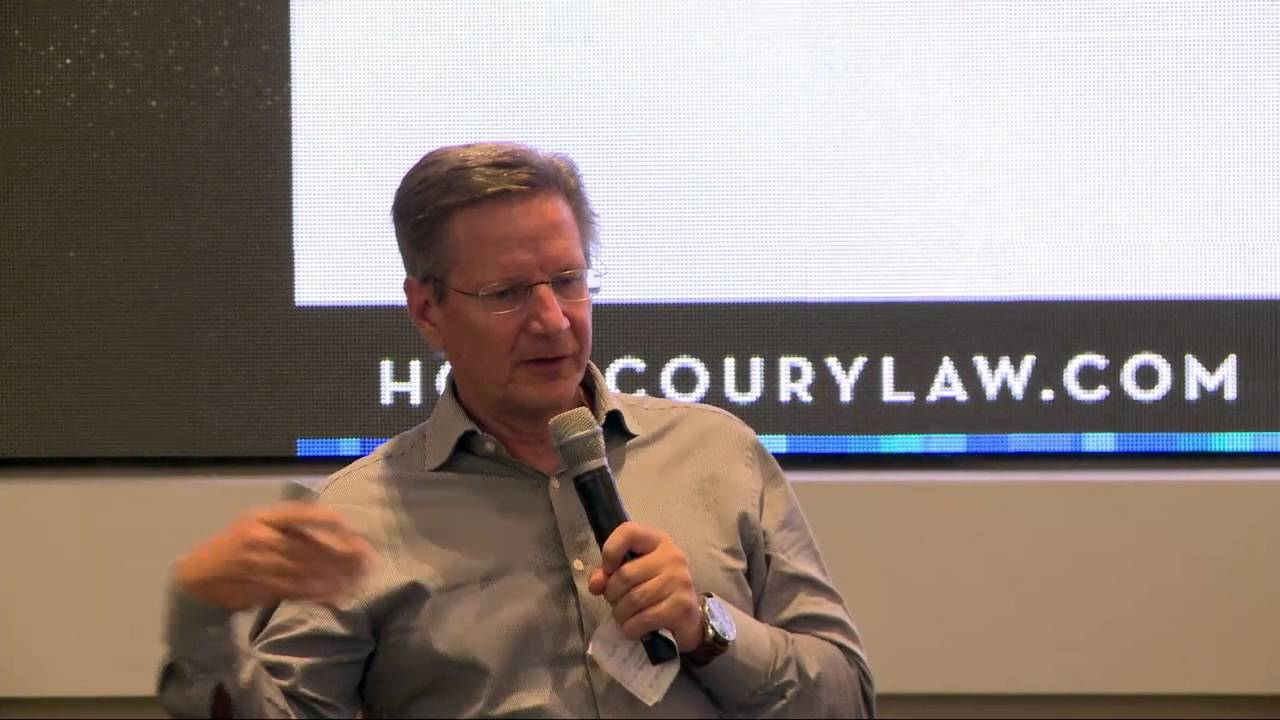
Michael Hool explains how cap tables work and why founders should take fewer sophisticated investors over many unsophisticated ones. Overvaluing early stock leads to painful down-rounds. Any equity raise is a security requiring registration or exemption, and control persons face strict personal liability for violations.
Chapters
Okay, so on the capitalization plan, the best way to probably describe it is this. Let me put this up here. I don't know if you can see that very well. Don't worry about the details. It's just kind of an example. But when we talk about a cap table, it really is just a picture. The first line is what is actually outstanding, what the owners own. And then the next lines, you see on the left it says reserve. It's a pro forma. It's saying— It's a projection. Here's what we're going to set aside, and that's the effect it'll have on our ownership. Okay? So in the beginning, the founders had 100%. If you see over there, it says ownership and this financing round, because we're actually issuing shares. Those 2 tied up into 100%. The rest hasn't been issued yet, but we're building it out and saying on the far right-hand side, That's the dilution that people will have. So instead of having 58.8%, after all this, the founders will only have 50%. And you just keep that active and alive. And in this case, it's pretty typical for future employees, team members, if you're going to be using equity, you reserve 15% to— in Silicon Valley, it's higher. It's 25%. I've seen as high as 40%. Okay. But in most places, it's like 15 to 20%. You set aside and you reserve it so that you can make grants, but you know in advance the effect that's going to have on everybody's ownership. Let me go back. Okay, so on the startup funding, to me, what I'm getting at there is If you have the luxury. I've had clients that start companies and then the dot-com bubble bursts. It's life or death. Do I take this crazy money from these 7 people who I would never take money from, or do I kill the company? Well, you're going to take the money. I'm just talking about the normal case where you have some selectivity on the type of investors you bring in. You need to think through This cap table. You think through who your real— who's your target partners for investment, for strategic partners? Who are those people and who do they want to be involved with? Do they want to be involved in a company that has a bunch of unsophisticated small investors that maybe you raise money from crowdfunding? I'm going to talk about crowdfunding right at the end. I reserved a couple minutes since now it's legal. Where you had 100— I have a client right now. Well, it's not a client. Someone who wants to be a client. They have 100 investors. They've got something that's really good. They're talking to a major investor, TV personality type, about a big investment. I guarantee you when that person's lawyer looks at the cap table, they're going to have a significant issue. So do you want to— will that person invest in a company that has 100 investors? No, they won't. So they'll require you to fix that problem before they bring their money in. And that's why lawyers get paid to fix problems. But we'll figure that out. But it's a hurdle. It could kill the deal, right? Because you weren't being selective on— If you have your choice, the best thing you can do is small number of investors, high investment amount. You just go from there and you do what you have to do. We'll take— I want to— Can you explain why that is? Why what is? That funding question you made earlier. Well, put it this way. If I am— I'll just— Tim Draper. No, Mark Cuban. I'll use another, someone who really is more on TV and stuff. Does he want to deal with 100 small investors when he's— what typically happens, no company ever pans out exactly according to plans. There's going to be hiccups. A lot of times they'll misjudge how much money they're going to need or they'll need more money because they're going to do a pivot. That's right. It's going to cost extra money. There's a lot of things that go on. If you have 100 investors and you have to make changes that require you to get their approvals, it's very difficult because you've got to go through a lot of legal process to reach out to them to try to get them to vote. If you're going to change— here's just a simple example. If you're going to bring in investor money that requires that new investor to have a preference, Meaning they can get their money back before earlier investors. That requires an amendment to the certificate of incorporation. To amend the certificate of incorporation, you need shareholder approval. So what do you do? You reach out to the 100 shareholders. It's just, it's not very efficient. And for the most part, companies that have shareholder bases like that, the shareholders are typically unsophisticated. It's my experience. that the ones that have the least amount of money are typically the ones that give you the most problems. Because they don't understand things. By the way, this ties into another point. I'm glad you brought it up because it made me think about it. One of the biggest mistakes that startups have when they're raising money in their early rounds is overvaluing the stock. Because in the early rounds, they tend to be the less sophisticated Because you don't have institutions ready yet for the most part. Some companies are different. There's this natural inclination, let's get the most money that we can possibly get. If they're willing to pay $5 a share, even in my mind, I know I'd never pay that. I wouldn't pay over a dollar. But if they're willing to do it, let's do it. That's a natural thing. The problem you have is if you do become successful and then you need that big capital from an institutional investor, they're going to come in and they're really going to value the company. They're not going to overpay. They're going to negotiate with you. Chances are it's going to be less than what the early investors paid. One of the worst experiences you can have as an entrepreneur or founder is having a down round where you have to go back and tell your investors, on paper, I've just lost half your money, but we're going to do great things. If you have that shareholder base that's unsophisticated, They're going to be complaining. There'll be people complaining. They don't even understand a down round. How can it be less money now? You've done all these good things. They just aren't going to get it. So it's that kind of stuff. You don't want to deal with it. Final thing is probably the most important from my perspective because I've lived through some bigger problems with this. I don't know why this is not the best. It's not working. There we go. It's very complicated, but I've gotten pretty decent at summing up, so let me sum up the regulatory environment around the securities laws. Anytime somebody gives you money to increase that money for them, you've sold a security. That's plain and simple. That's about as plain and simple as I can make it. So if they're giving you money based on your efforts to make them more money, you're selling them a security because they're expecting you to increase this. They give you $100. I don't care what you call it, a profits interest, membership interest, stock. They're giving you this money and it's going to go up in value. Well, there's 3 things that come into play. It's got to qualify for an exemption from registration. When you sell that security, the laws are such that you have to register it with regulatory authorities or it has to qualify for an exemption. So you have to qualify for an exemption, that's the E. Second thing is you have to give them full disclosure of all the risks involved. And the third thing, it probably won't come up, it's a licensing issue. If you're paying anybody compensation for finding people, those people require a license. There's some special nuances where you wouldn't have to, but it creates a problem for the company that if you've had an intermediary get compensation and they weren't licensed, the person that invested through that person can get their money back because you've just sold through an illegal transaction. And under contract law, an illegal transaction is voidable. So the investor can get their money back. That's a problem when there's no money. That— the third prong is the reason why all this is so important. And for you guys, I shouldn't be too broad, but I know when I was at your age, I didn't have any money. It's probably not as much that you think about, ooh, I could get sued personally and lose everything. But there will come a time where that will be very important. And you do— that's one of the reasons why you form entities is so you can have limited liability. Securities law violations are one of those categories of things that there is no shield. I don't care what type of entity you are. Under the securities laws, if you're what's called a control person, you're a director, officer, significant shareholder, there's a few other categories, but basically you're personally liable for any securities violations. If somebody, if you sold a security and it didn't qualify for an exemption from registration, let's say you just did a public offering on the internet and you didn't follow these new rules that are out there, You violated the securities laws. It's an unregistered security. And whenever this company kind of doesn't do well, the shareholder goes out and hires a securities lawyer. First thing the lawyer does is checks and looks at how you did your offerings. And if he can find that you didn't file, you didn't qualify for an exemption, it's strict liability. There's no defense to it. Guess what? If there's no money to pay that person, You have personal liability. They will sue you. All your assets are at risk. This is hugely important. You need to design, when you're raising money, design it. And like I said earlier, it's relatively easy with someone who knows what they're doing. Every time you're raising money, just recognize you're in an environment that's regulated. And there's some techniques we use. There's exemptions we rely on that are relatively uniform. It's pretty easy to do. It's efficient. But if you don't do it right, the consequences are enormous. So I can't stress that enough on the securities.
More from Tim


He Sold His Car to Build This Startup, Then Pitched It for $1M 😳 #Startups #AI

This Startup Moves Your Crypto BEFORE Hackers Can Steal It 😳 #Crypto #Cybersecurity




15 Months Without Refrigeration?! This Startup Thinks It Can Go Global 🥥 #FoodTech #Startups



