Crypto Megan Podcast | T.J. Miller Gets It – Bitcoin, Ordinals, NFTs, and the Future of Crypto
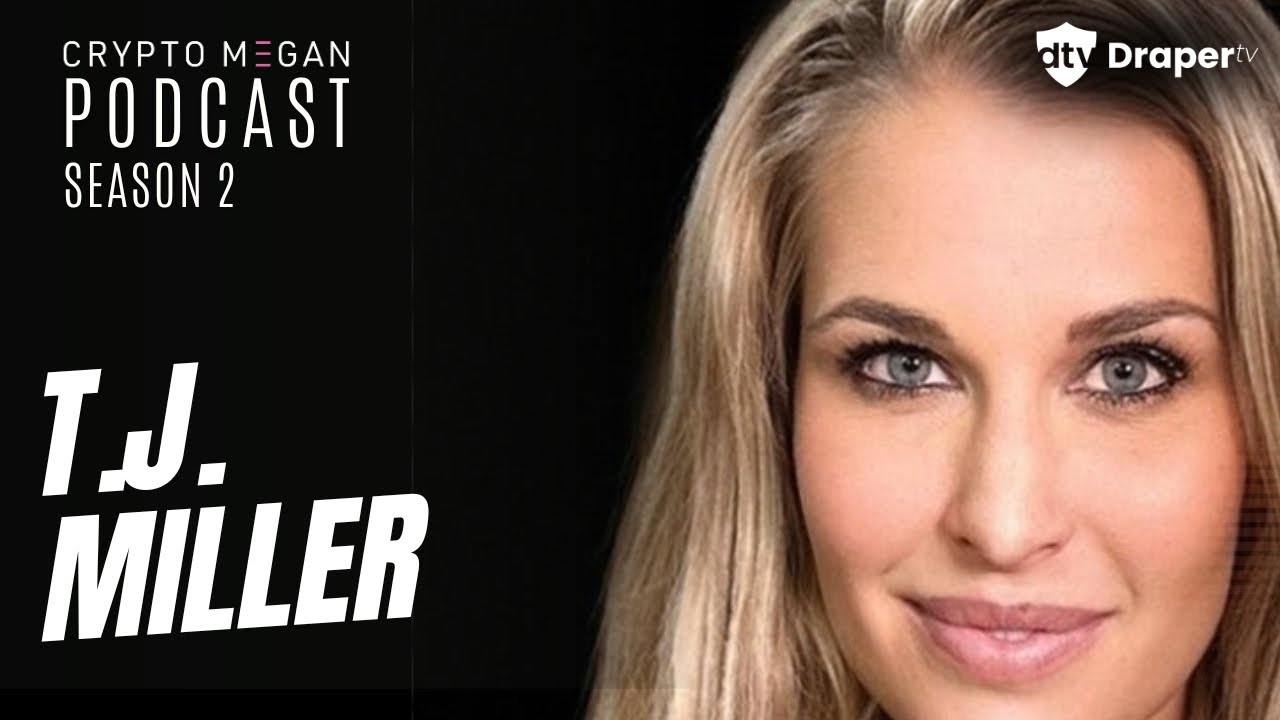
In this episode of the Crypto Megan Podcast, host Megan Nielsen interviews comedian and crypto enthusiast T.J. Miller. The conversation weaves through Miller’s personal journey in crypto, his investment philosophy, and his pioneering work at the intersection of comedy and Web3. Miller explains why trying to time the market or swing‑trade is psychologically draining and shares his long‑term, dollar‑cost‑averaging approach, citing early Bitcoin purchases around $55 and Ethereum buys near $680. He recounts selling some ETH to fund a summer vacation with his wife, describing the personal trade‑off between family time and portfolio performance. The discussion then shifts to Miller’s role as one of the first comedians to experiment with Bitcoin Ordinals and NFT stand‑up specials. He details the creation of limited‑edition Ordinal videos (1,000 copies at $1,000 each) and a forthcoming NFT comedy special, emphasizing scarcity, exclusivity, and the reinvestment of proceeds into future projects. Miller likens his Ordinal posters to “CryptoPunks of the comedy world,” positioning himself as a pioneer in a nascent market that most creators have yet to explore. Megan highlights the broader grassroots movement of crypto creators, the need for more mainstream visibility, and plans to feature behind‑the‑scenes content on Draper TV. Both guests acknowledge the current market slump but remain optimistic, viewing the early stage of Ordinals as a massive growth opportunity. The episode ends with mutual enthusiasm for future collaborations, including a “PubKey” podcast and additional rounds of conversation.
Chapters
An Ordinal is basically a $1 bill that says boner, and then you have this funny kind of piece of art. But if you go to a store or something, you can still buy something with that dollar. It's still the dollar. The reason people don't want to get into crypto or blockchain is because it seems too overwhelmingly complicated.
Yep.
And so what you need people to do, and what I think you're good at, and what I think I'm trying to do is say, look, this isn't that complicated if you just Start and go slow. That's it. That's all you have to do. Just learn a little bit, take a break. It is sort of the future and you kind of want everybody to get on board.
Did you study something to do with—
No, I studied psychology with a concentration in persuasion theory and social influence. And then I had a minor in theater.
Okay. Welcome to the Crypto Megan Podcast. I'm your host, Megan Nielsen. I'm a high-end crypto and NFT portfolio and Web3 strategy consultant. I'm currently on a world tour as a Web3 keynote speaker at all the biggest Web3, tech, and fintech events around the world as an industry leader to educate anyone from beginner to C-level executive, and of course, to advocate for women in Web3. My mission is to inspire new people to get involved in the crypto and NFT space with quality, entertaining information they can trust. As pioneers in this cultural and financial revolution, a paradigm shift. My name is Megan Nielsen, aka Crypto Megan, and I'm here live in New York with a very special guest today, a man whose comedic brilliance has lit up the screens both big and small around the world in box office hits like Silicon Valley, so many, Ready Player One, You're looking at me like you're—
I'm trying to— no, you said New York and I wish I would have brought this out.
I saw your case. Oh my gosh. So this is the first time that we've taken a pause in the middle of my, of my intro because TJ Miller—
Where's my camera, Wolf? Here it is.
Woo! Megan! Crypto Megan! That's amazing. This is the first time actually that I've been distracted in my intro because you're just that funny. Thank you. This is amazing.
Because you don't live in New York, right?
I don't. I live in Europe, and everybody loves New York in Europe, and they all wish they could come. And this is this is really cool, actually.
New York's great, so you can put that anywhere you want.
I will. I'm gonna I'm gonna put that in my studio, actually, in Spain.
That would be great.
Yeah.
Where you live in Spain? Yeah. Me encanta España.
Te encanta? Wow! You speak Spanish? Hablas español?
Sí, castellano.
Porque yo viví en China por un tiempo, casi un año. Qué buen acento tienes.
Gracias. Che, ¿qué te pasó cuando llegó?
Vaya, vaya.
That's so cool. You lived in Spain, though.
Yeah, 13 years.
I studied there for a while back on the Dizzy. Where was I? I went to Sevilla, but then Madrid. One of my best friends lives in Madrid.
Really?
His name is Jose Fuentes.
So your Spanish is actually Joe Fountains. Joe Fountains. Well, his— your Spanish is the best of all any guests I think I've ever had.
Well, I'm fluent in Spanish, so that would be a big.
Why are you fluent in Spanish?
I just told you in Spanish.
Yeah, you told me that you have a friend that's called Joe Fountain.
Yeah, but viví en Argentina por casi un año más o menos.
Okay, entonces háblame, dime un chiste en español.
¿Un chiste? ¿Una broma?
Sí, una broma.
Pero sobre Colombia. Okay.
Vale. Vale.
Y es la única broma. Que tengo en español, ¿ok?
Ok. Nos reímos de los colombianos hoy.
No, no, por favor. El Salvador es lo que me preocupa. They have Bitcoin. It's true, it's true. Okay. Personas de Venezuela se llaman venezolanos. Personas de Chile se llama Chileanos.
Sí.
Y personas de Colombia se llama peligrosos. Son muy peligrosos. ¿Entendés?
Verdad.
No vas a Colombia.
Ahí está. Ahí está la broma. There it is.
That's the joke.
There it is.
There it is. Swedish boy, does he understand that?
Of course he does because he lived, vivió en Venezuela. Really? Caracas.
So when when there's Venezuela in the room, I wish I had known that. I change it so that it's Venezuela.
Yeah, no, actually, probably that's the dangerous one. That's the more dangerous one. But he survived.
And then when there's a Chileano, somebody from Chile in there, I don't change it at all. I actually ask them to leave the room.
It's a great joke.
I call them chili peppers.
Red hot chili peppers.
Yum, yum, yum. Wolf, the producer, is like, it's going to be a long hour.
Oh, yeah. And I'm loving this, man. Nobody's ever spoken Spanish on the podcast.
Well, you got to do it. I'm a little bit different from most employees. It's inconspicuous.
So you don't— you don't— yeah, you're not the typical Bitcoiner. I mean, you know, you've got to— you act, you're a comedian. I don't know that there's very many people that have the kind of platform that you do that are doing something as meaningful as you are in this space.
Thank you. Well, I feel really passionate about this space. I always feel stupid saying passion, just like I don't like it when people say they're on a journey. I mean, this is my fitness journey. I'm on my fitness— that's what he probably says. Now that you're looking at him, I'm like, yeah, he says fitness journey. For sure.
He's done with the journey. He's been there, done that.
He has reached the end of his fitness journey. Uh, so I— yeah, I mean, he weighs like 350 pounds now.
He's a beast.
Uh, so I, um, I kind of got into Bitcoin because the Winklevoss twins, they did a, uh, cameo on a show he did called Silicon Valley. And so I sort of met them there but didn't really talk to them or anything. And then I ran into them with my wife, who I'm 11 days older than. I think they liked that. And they sort of— you see them, you're kind of like, I think those are the Winklevoss twins. And Kate's kind of like, yeah, those are the Winklevoss twins, TJ. Nobody looks like that, certainly not twice.
Wow.
And so they were so cool. We talked for a second. They were like, do you live in Los Angeles? No, I hate Los Angeles. I live in New York. Do you guys live in San Francisco? They're like, no, we live in New York City.
Ouch.
So that was interesting.
I'm from West Coast. I don't know if I—
Well, they didn't have anything against it. It's just they were so excited that I was in New York because they love New York.
Because they're New Yorkers. It's like a special kind of bond.
Yeah, I think so. And so we decided— we went out to dinner, and then we kind of— a friendship sort of built with the 4 of us, actually. We went to King Kong. Together, the musical, because Cameron plays guitar, and his guitar teacher was in the pit in King Kong. And that was so cool. We got to go down into the pit. I'd never done that.
That is cool.
And then they came and see me do stand-up comedy. And then when they started their band, they sort of— we came and saw their first show. And then we actually saw their last show. Mars Junction is the name of the band. And so we saw their first show, their last show, and kind of— I just thought it was so cool that they were doing that because that takes a lot of balls. Am I allowed to cuss on here?
You are.
That takes a lot of couple round fuckers downtown.
You're really painting the picture, the feeling of it. Right.
So it's— he loves the cockstick jokes. And so I just so I was really like, I know it sounds weird, but I was really proud of them. And they and Karen said they come to see me do you know stand up live, and that kind of intrigued them. And what would it be like to do live stuff live? And so as that friendship grew, they kind of told me about Bitcoin. But they did something that was really I thought was really cool. They didn't really orange pill me in the traditional sense. They sort of said. There is this thing. We think you would like it or should know about it or whatever. And I said, okay. And then I started to study it, and I just went right down the rabbit hole, just went straight down. And so it started with Bitcoin. I started buying Bitcoin when it was at $8,000, which at the time I was like, I'm in too late. It's useless. This is never going to be worth—
What year was that around then? 2020?
2019. Late, late 2018.
Okay.
And then kept sort of buying, never selling, always hodling. And then do you say hodling? I say hodling.
I say hodl. Yeah.
Some people say hodl. And somebody told me it's pronounced hodl.
No, I almost don't listen to them.
I almost slowly pushed them away with my, my foot.
Good move. Good move. I say hodl. I say, yeah, Tim Draper says hodl. He's a big Bitcoiner.
I know. I think Yeah, Michael Saylor, who I just met recently. That was insane.
How did that go?
This is HODL. Well, I met him at the Bitcoin conference where the two of us were, where we had that kick-ass— yes, Crypto Megan fucking event at Topgolf. That was awesome. That was so fun. That was the best party that I went to.
Really?
Was the one that you threw. It was pretty awesome.
There you go, guys. Like, that's—
that was amazing. Thank you. It was so fun. And there were good parties there. PubKey did a party that was really cool with a mariachi band that they had on. radio that they would say mariachi, and then they just start playing no matter what people are saying. But ours was sort of the most fun one.
Yeah, it was.
So after I really got into it, then I started to learn. And then strangely, another pair of twins, we call them the Michigan Twins, Brandon Plasters and Brian Plasters, who are fucking geniuses. Sorry to keep cussing. Those guys are fucking geniuses. And so Brandon, who's a very close friend of mine, we met working at Radio Shack in Chicago when I started comedy. They're ETH maxis. So the way the, um, Winklevoss twins are about Bitcoin, they are that way about Ethereum.
Interesting.
And so I began to learn about Ethereum through them. The Winklevii, you know, were into Ethereum and told us what they thought about it and how much should be in your portfolio, etc. So I started buying Ether. I mean, my wife and I started buying all this stuff, and that was just how it started. And I hold— no, I had like Cardano for a second. I had Doge as a joke for a second. These are infinitesimal amounts. And then now, just, just like in the last week or two, I bought a little Solana because I like, um, proof of history.
Okay.
That's really, really interesting.
That's an interesting way to put it. Yeah. Yeah.
I mean, it's, you know, there's sort of proof of work, Proof of stake, and then historical proof. What would you call that in terms of Solana?
Solana, you know, there's a lot of things about Solana, but I would say it's the one that brings the culture on-chain, like all the memes and all the things. It's like the easiest for people to get into. It's not the one that I first got into, but I think nowadays it's the most accessible.
What did you first get into? Yeah, because it's sort of— they say it's Ethereum 2.0, but it's still sort of in the layer 2 world. So I Solana, I only bought because I really just bought it because I like that concept of sort of proof of history.
Right.
Because proof of stake makes sense. Proof of work obviously makes sense. And I just never heard of anything else that was a way to confirm blocks that was that. And so really within just reading about that, understanding that, I was like, that's pretty exciting. But I bought, you know, nothing, just a few tokens.
Just enough to get your feet wet, just in case.
Well, no, not just in case, but maybe I think almost enough to sort of say, okay, I've started here, let's see. But I had Cardano and it was a similar situation.
That was my first investment.
Really?
Yep.
Do you still hold it?
Went big into it. I still hold about half of it. Half. Yeah, I bought it. It was my very first thing. I just— I was looking into all the hype. There weren't many YouTubes at the time, and I just went down the rabbit hole like you did. But that's why I found it interesting that you, you started with Bitcoin, because I started with altcoins. And then went to Bitcoin.
Yeah. And I think, yes.
And actually, we were just in Vegas with Charles Hoskinson, the founder of Cardano.
Oh, really?
I don't know if you've like had the privilege of meeting this guy, but he is one of the coolest people in the entire space. Like, you would absolutely love him. He just did a fireside chat with RFK Jr. there in Vegas. That is such a trip, man. And he's just like, he's such a cool guy. Like, he is, you would absolutely love him. So we gotta get something going there because—
Oh, for sure.
He's a visionary.
It is interesting because I sort of wish everybody started with Bitcoin, but that's probably deep down I'm a Bitcoiner, right? Because I feel like when people come into the altcoin space, a lot of those people are drawn in by meme coins. And a lot of the altcoins that sort of bring people in is just with this promise of it exploding, right? And maybe it pumps, you get out before it dumps. Those— oh, I hope that I'm trying not to get rugged, but I—
Mm-hmm.
So they learn all of that jargon and that world. And I wish they would start with the thing that all of this started with, which is Bitcoin, right? And then come to understand Ethereum and then move on to the altcoins. But really, it doesn't matter. The only thing that matters is that blockchain is the future. It's happening right now. And it is so bizarre that, like, the majority of the population not only doesn't understand that, Doesn't even know about it. They're just not even—
it just doesn't want to know. It's, it's kind of like when you tell somebody, hey, have you heard about crypto and whatever? It seems like such a monumental task to them. They kind of just go, oh yeah, I've been meaning to get it. I've been meaning to get to it.
So now I'm not— I'm not going to talk shit about Russell Brand, but I'm going to say one of my frustrations at the Bitcoin conference, which I'm sure you're doing in Vegas, and so I'm going to be there in Vegas.
Oh, yeah, we'll be there.
Yeah. So that's going to be so fun. So Russell Brand came and he spoke, and part of Russell Brand's humor is sort of sounding like he's the smartest man in the world. He's sort of almost talking the inconsistencies contextually would find themselves into sort of a bevy of other institutional dichotomies, which can't be even seen as anything other as the antithesis of their own axiomatic proof. And the problem with that is— that was a pretty good impression.
That was pretty good.
The problem with that is, is that the reason people don't want to get into crypto or blockchain is because it seems too overwhelmingly complicated. And so what you need people to do, and what I think you're good at, and what I think I'm trying to do, is say, look, this isn't that complicated if you just start And go slow. That's it. That's all you have to do. Just learn a little bit, take a break, whatever. I have another theory, which is that after somebody graduates from college or whatever, anything, high school or graduate school, it is incredibly hard to get them to study.
Yeah.
And blockchain, cryptocurrency, or even just Bitcoin takes at minimum 50, 5-0, 50 hours of Study is what I think.
Oh, yeah.
And it can be more, but it really can't be less. And so to tell somebody, I want you to study something that's kind of academic, it's almost computer engineering, but unless you do that, you won't understand this thing that is going to happen no matter what. It's really tough for them to say, geez, that sounds like 3 days straight worth of hours. So that's why it's really, I think, important for all of us to say this isn't that complicated. I think The Bitcoin Standard is a really good way to hand— and I didn't read that forever. I like finally read it, listened to it on audiobook, and I was like, why didn't I read this earlier? But it was kind of fun to sort of know everything about it, but then read the theory.
Right.
And I must have listened to that on tape. Like, I mean, I'm not joking, probably 10 or 15 times. I just kept listening to it. I was so fascinated by it.
That's amazing. That's really fun to hear.
Yeah, I think economics are really interesting. And I think economic theory is really interesting. But again, some people would say I'm kind of academic, especially for a comedian. I sort of am interested and I'm an intellectual. I've read all of Nietzsche's works. I like Nietzsche.
Wow.
Yeah. And so I think it was easier for me than it is for other people. But we'll talk about how that intersects with mine.
Did you study something to do with—
No, I studied psychology with a concentration in persuasion theory and social influence. And then I had a minor in theater.
Okay, so that's—
The Swedish tradition of theater.
Is it Swedish tradition?
I'm making fun of her— My Viking husband. Husband person, boyfriend guy.
I don't call him Viking, but yeah, my Viking husband.
Viking person. Viking husband? Yeah.
Married in Vegas.
Really?
6 years ago, so it works.
You guys, Elvis. So, yeah, so it's tough to get people in. And so you should take it slowly and just start with Bitcoin as digital gold and then kind of build from there. But that's the other thing, I'm surprised you went into Cardano because that takes more— you're reverse engineering your understanding of blockchain.
Well, I kind of sat there and like, I'm a very visual person. So what you described about going down the rabbit hole is exactly what I did. And my mom calls them benders. Like, I'll just disappear for a couple of weeks and come back up and she's like, are you finished yet? If I have a new concept I'm studying, I just go just deep into it. And I think that's like what a lot of people's experience is when they get introduced to this world and they actually start to get involved, because you really can't stop once you get started. It's really amazing.
It's really fascinating and it's so futuristic. I told Tyler Winklevoss once, the same for Cameron, but I told Tyler, I said, you know, I don't think you guys are like crypto people. I don't think you're Harvard men. I don't think you're investors. I don't think And I named all these things. I said, I think you guys are futurists. And I think that's true. I think they talk about and think about things in a very futuristic way. And that's how they got to Facebook first. That's how they got to Bitcoin almost first, or early adopters. I want to say I'm really proud of myself for when you said you go on these benders and you go so deep on a subject. I'm proud of myself that I didn't mention your Viking husband's penis.
Well, you did now, so you can't be proud of yourself. I'm still proud.
I only mentioned to talk about how I didn't see it.
Wow. I mean, it's really hard to focus when you're bringing up jokes like that, but I absolutely love it because it just shows, like, you have a God-given gift. Okay? You're very funny.
I'm a nihilist. It was just really given to me by me.
All right, so let's rephrase that. You have a given gift by—
I like given gift.
Given gift. You have a given gift. Okay.
Old G and G. Music therapy.
Actually, somebody called. I had a meeting with one of the higher-ups in this, an industry leader. I don't remember who it was, but in crypto. And I was talking about our event in Nashville and they said, hey, that's all good, great. Like, I want to hear more about it, but I just want you to know TJ Miller is my favorite comedian in the world and his scene in X, Y, and Z was the funniest thing. He's just going on and on and on. So you have—
Low standards.
I mean, I don't even remember what he said.
That's like you.
No offense. But so, so you have this intrigue to people and now you're taking them on the journey into Bitcoin because you're funny and people want to listen to you and they don't want to listen to the average person who makes it seem like complicated or just like they'll never understand. And this is what I love about Charles Hoskinson. He says, don't assume that everyone's too stupid to understand. People figured out iPhones, they figured out electronics, they figured out email.
For sure.
Right.
So, yeah, I mean, I think that is the right way to look at it. And meeting with Michael Saylor, he sort of said, well, tell me your Bitcoin journey. I just realized he used the word journey, but I thought it was interesting because then as I talked about it, I said a lot of what I've said. And then I realized pretty quickly that, you know, the Bitcoin turned into me learning about Ethereum, turned me learning about other coins, but still being sort of a BTC/ETH maxi. So I was still sort of just Bitcoin, Ethereum. That's why I think it's pretty crazy that I looked into Solana.
Right.
I was surprised you bought a little bit also. But again, I liked that concept. And so my real question was, is this ever going to become more than an investment to me? Will it ever intersect with my job and my vocation? And then NFTs. And so all of a sudden there became a way to mint art on the blockchain. And, uh, the Winklevoss twins had acquired Nifty Gateway, and Nifty Gateway was, um, just a great marketplace early on. These other marketplaces, OpenSea and, um, a bunch of other ones were kind of just really big, and Nifty was more of a, um, They were more curated. It was a smaller marketplace.
Right.
And then the twins sort of said to me, you should make an NFT. And I hadn't totally thought about it. I understood that there was— when they said that, they said, you can put it on Nifty Gateway. I went, okay. And so I made the first NFT by a comedian, by a comedian or actor or anything. It was 2, and I'll put links to it, but it was 2 sort of 3D motion pieces. One was a Rubik's Cube with all of my different— or a couple of different roles that I had. And then it turned into my license, which is the punchline of a stand-up bit. So my stand-up bit is the audio during that.
Cool. Was that a collectible or were they able to— It's a collectible. Okay, cool.
And then the second one was a slot machine that it pulls and it puts different movies that I was in. So it does Yogi Bear 3D, The Emoji Movie, and then Deadpool, maybe one other one, and I forget which one. And then the winner is Yogi Bear 3D. And there's a big Bitcoin payout and all these Bitcoins kind of come jump out at you.
That's cool.
And so that was really interesting. And we did well. We did $100,000. in volume. And I split that with—
That was your first endeavor?
The kid that made it. Yeah, it was just the first NFT. That was in 2020 during kind of the height of that cycle and the height of NFT excitement. And it was pretty crazy to see something like that happen because I remember right beforehand I was like, oh my God, you know, is this going to totally bomb?
Yeah, you don't know.
Does anybody know who I am or what I'm doing in this space?
Well, you know, you've got a platform, but a lot of people, you know, they just put themselves out there and They build themselves up brick by brick by their 1,000 true fan base, which we talk about a lot here. It's really changing artists' lives.
Yeah, I think for sure. And that was the thing about NFTs that I thought, I go, this is totally— if it's built into the smart contract that you get residuals, which don't even really exist anymore in Hollywood, right? You know, this could be an opportunity for people to— if there's 10 people in a movie and it's built into the contract that whenever the movie is sold or traded to other people, they get that kickback, that residual. That's pretty amazing because it's trustless.
It's mind-blowing. It's like the first of its kind, right? It's completely transforming the industry.
Yeah, because it's completely transparent. Yeah, but there aren't NFT movies yet. Kevin Smith made one, um, and that was good, but I think it's sort of too early to do that. And then now I've kind of, you know, on the Bitcoin blockchain, I was at this bar, PubKey, which is the Bitcoin bar here in New York City.
I didn't know there was a Bitcoin bar here.
There is. I'll take you, in fact.
We're gonna have to go for a behind-the-scenes show.
Maybe we go after this.
Maybe we will. It's never too early.
We gotta set it up to do a whole, um, a whole night. Yeah, we'll do something there.
Cool.
Um, depending on when you— how long you're here and when you're here. But, um, I, uh, so PubKey was sort of a place where they are all Bitcoin maximalists. And they don't do anything on the Ethereum chain. And I recently just shot the first comedy special as an NFT.
Wow.
And so I thought, well, maybe I could do it at your place. They go, no, it's not on brand. It's got to be on the Bitcoin chain. I said, well, you can't do NFTs on the Bitcoin chain. And he said, that is where Ordinals— and I said, what is that? And he goes, well, they're really, really new. This is a while ago. He goes, they're really, really new, like crazy new. And I think they can only be 30 seconds long, or the longest one is 90 seconds. And I thought, okay, that's pretty cool. But what do I do with that? You know, it seems like what I've already done on the NFT. And then Ordinals started to, you know, see major inflows. People were buying more Ordinals than NFTs.
Huge boom happened.
Yeah, huge boom. And so then I still was kind of like, well, what would you do with this? And then to figure— because also the question is, what is the appetite? Uh, what, you know, what is the market appetite? What— who's buying these? What are they buying? Everything, right? And so to test it, we went to, um, uh, the Bitcoin conference, and I minted— I had Ordinals to be minted, and they were 3 limited edition posters of mine, 3 tour posters. And one's an Andy Warhol style, one's a Simpsons style, and the other one is just me disco dancing with a bear. That's all.
That's all.
Yeah. And so we sort of put those out there. They're still available at tjmiller.cred. K-R-E-D.
We'll link those in the description as well.
tjmiller.cred.
Yeah.
I kind of put them out there and we wanted to see how many we could sell and what the— and it was with the CRED guys who run NFT NYC. And, you know, it was just really interesting to kind of see what the appetite was, how many were minted there. I didn't do a panel. I was supposed to do a panel, uh, and I was also supposed to do, I guess, the CoinDesk, you know, livestream.
Right.
But I met Michael Saylor instead. I had the option of the two.
I'd take that option.
I got to meet him. He wanted to meet me. I got to meet him. So what was interesting and what I hadn't thought about, because I find that happens a lot in this space, is you just don't know. You kind of just said this, so I'm going to steal it from you. You just don't know. You have absolutely no idea if something's going to work. If it's not, were you right to choose this thing? Did they build this out correctly? You just don't know. Everything is in beta testing until it just actually happens.
Yeah.
And so the thing that I realized after doing the Ordinals was that you're dealing with heavy-duty Bitcoin people.
Maxis.
Yeah, maxis. Right. At the Bitcoin conference. And those people don't sell Bitcoin.
Well, that's actually quite an astute observation. I hadn't thought of that before.
So I hadn't thought of that either.
Got to sell your Bitcoin to get the Ordinal, right?
Exactly. So if you're selling the Ordinals, in Bitcoin, then all the people that care the most about Bitcoin are not going to buy those things in Bitcoin. And if they were to buy Bitcoin to use it to buy my Ordinals, once they— I really believe this— once they buy the Bitcoin, they're like, uh, I just want to keep the Bitcoin.
That's a really good point.
So I had no idea about that. Now, that being said, what, what you can think of, and this is what I don't think people have been thinking of, Yes. Okay.
Okay.
That is that unlike NFTs, I don't think that Bitcoiners are thinking about Ordinals in terms of— you could literally think about them as Bitcoin because they are. These are Satoshis that have been inscribed. They're stamped, right, with whatever, with the image, with the very small amount of video. Um, and so it's still Bitcoin.
Yeah, it's a little bit different from an ETH NFT because it actually is Bitcoin. That's—
and most of the NFTs are off-chain. There's also—
The images aren't on-chain, so they're not— if the company goes dead, what happens?
Yeah, they can just take them or shut down, or they just—
there's no image attached then, you know?
Right, exactly. So once the Satoshi is inscribed, it's inscribed, and if you have it you have Bitcoin. And so I, I don't know how long it's going to take, but I think it'll be a little while. And that's why I have another Ordinal that I'm going to make and kind of just wait on, right? I think it'll be a little while before Bitcoiners understand that if you buy an Ordinal, you're basically exchanging your Bitcoin into the same currency but sort of different. It's almost like If I— wow, I've never thought about this before.
Yeah, you're hashing out this idea, building out in the open.
This will be helpful. So do you ever get a dollar and somebody wrote something on it like, I love Melissa, or Megan, you know, did a deep dive on a Viking, or whatever it is? Viking— actually, the Viking is the one who should be doing the deep dives on Megan.
Yeah, I like that combo better.
But a, um, you know, I, I saw a, uh— this is so juvenile. That this makes me laugh, but it really does.
Let's hear it.
Um, okay, so have you ever seen a $1 bill and then using the 1, they put a B and an R on either side?
I have not seen that.
So it says boner.
I gotta get out a dollar. I actually have a dollar bill, so I'm gonna have to look at that.
Maybe we can do that. Now that's a federal crime. So I've never boned it up that way. But that's what this is. An Ordinal is basically a $1 bill that says boner. And then you have this funny kind of piece of art. But if you go to a store or something, you can still buy something with that dollar. It's still the dollar.
Right.
So I think that in some ways—
Just pimped out.
This is why. Yeah.
Pimped out Satoshi.
Yeah, sort of.
Right.
And so I kind of Yeah, I never really thought about that. That is sort of exactly what it is. That's the exact analogy, is that you still have this thing that is Bitcoin. The difference is it can be worth more Bitcoin. So let's say—
There you go.
You did the boner one.
You hit it.
And then it was signed by TJ Miller. Then you have that boner bill. You're like, I'm going to keep this. And then somebody might be like, hey, I'll give you— Give me $2 for that. Oh, okay. Yeah, maybe. It's also another way of putting it I think is interesting, again, that I just thought of, is that it would be like somebody had a $2 bill, which is pretty rare and really cool.
It is cool.
Like if somebody had a $2 bill and then you were like, yeah, I like that $2 bill, I'll give you $2 for it. And they're like, nah, it's like my lucky $2 bill. And they're like, all right, I'll give you $5 for it. And then the person's like, Okay, yeah, I made three.
Yeah, so you're paying more for the actual currency.
You're paying more money for the currency that is worth two dollars because it's cool, because it's different.
So it's essentially currency and a collectible at the same time.
Exactly. That's what a two dollar bill is. So an ordinal is sort of a two dollar bill or one dollar boner. There you go. That's my contribution to the ordinal culture today on Crypto Megan Presents.
Never before heard.
Fuck it, Nantucket.
So there you go. Now you understand what an ordinal is from TJ Miller himself. This is your talent, you see?
This is my talent. But it's so— what's funny is the fact that we're talking about this and I'm like, yeah, I've never heard that analogy, because I've read a fair amount about ordinals, right? The fact that I've never really heard that analogy and I just made it up is a testament to how early we are In that whole thing, like what I'm going to do with these guys Ordinals bought who are great.
Oh, yeah, I love those guys.
Toby. Toby. Yeah, everybody loves Toby.
Yeah, they do.
Everybody loves all of them. But boy, does everyone love Toby. And Toby and the guys are sort of— they're at really the forefront of this whole thing. And they made the largest video file that you can make. And the most that you can do is take up an entire mining block, right? You know, and otherwise you can't combine— you can't combine 2 mining blocks really. So the most you can do is get all the way, all the way, almost— can't do it completely, but all the way almost to the entire mining block. And what I'm going to do is a video project that will be the biggest video on the blockchain network of all time.
Wow. And that's ambitious.
I know. And it's related to, um, my work in film.
So cool.
And so something like that. So I can't really talk about it, um, but it's almost like we're gonna make that and have it, and then we have to wait until this cycle gets to a bull market level. And by that time, I think people will be— the novelty that was NFTs Golly. 2021. I was gonna say—
I remember it vividly.
I know, but I was like, was I gonna say like 4 years ago, 3 years ago?
It feels like forever ago. It's when I was convincing my husband that he should buy 2 monkey JPEGs and why. And he stormed out of the room and he said, this is ridiculous. And I went back and I got my nails done mutant green. All right, I got in the mood. I put like jungle sounds on. I'm not kidding you. And I made this whole presentation about why NFTs were important, why we had to get in this club. And it was well before all the celebrities got in and stuff. And he's looking at it, he's like, all right then. Why don't we buy 2? You know, like he went from, fuck you, basically, this is weird, to, oh, this is really, really amazing, because then he finally understood. So it's what you're saying. It's like, how do you frame this in a way that people understand and want to get on board? And once they do understand and it clicks, it's like, this is a no-brainer, right?
In my NFT special, I have something, and you'll, you know, people will be able to buy that and understand it. Um, again, we have to wait till the bull— you know, we're having a really like strange pullback moment. Um, but, uh, I, I explained in the NFT special how my father is like, um, you know, can't you just take a screenshot of that and then I have the NFT?
Yeah.
And I have this whole thing. I'll just— I'll truncate it, but I'll, I'll sort of— I'll just paraphrase it. It's, um, I explained to him, it's like, imagine going to somebody's house And they have, like, a poster of Salvador Dalí's Persistence of Memory.
Right.
So that's cool. They have the same taste as you, but you don't care. You can get a poster like that.
Right.
You can get the same poster. Yeah. Then imagine you went into someone's house and they had a lithograph, a limited edition lithograph of Persistence of Memory, the melting clocks. And you'd be like, that's pretty cool. What's the deal with that? Oh, there's only 300 in the world. It's signed by Dalí himself. You're like, oh my God, tell me the story.
Right.
Right? You need the story for that.
Yeah.
Imagine if you went to somebody's house, there's a painting of Salvador Dalí's Persistence of Memory. You'd be like, that's weird. Did you pay someone to paint that? And they go, no, no, that's actually one of one. That's Salvador Dalí's, like, Persistence of Memory. You'd be like, what the fuck? How did you— what? Jesus Christ, where is that? That must be worth— what is it? It's worth— you don't have to tell me, but like, that must be worth like $10 million, right?
All that.
So that's an NFT, right?
That is the other stuff. You just took me on your favorite word. You took me on a journey.
Jesus Christ.
I had to drop it. You took me on a journey right now.
Give me that license plate back. I want the plate back.
You're getting the plate back.
I'm leaving you with the chips. Uh, no, it's— but you're right, that is what it is. And if you can explain it like that, then it's the same as like when you're at a museum and you take a picture of a painting. And you show somebody the picture, they're not like, oh, the painting. You've got the painting. They're like, okay, cool screenshot. That's it. And in their minds, the only thing the screenshot is doing is making them want to be like, I wish I could see the real painting.
Interesting.
And it's very difficult for someone to understand that something that looks almost the exact same as something else and one is the actual thing and the other is a copy, it's really hard to make that sort of jump. You know what I mean?
Yeah.
But if there's a giant photograph, right, at a museum, you take a picture of it, even without the frame, you know, or you crop that out.
Zoom in.
Yeah. And then you say, look, this is that famous photograph. People are like, no, it's not. That's a picture of the photograph, even though it looks identical.
Identical.
And so that's a really difficult concept to hear. So now that I'm talking out loud, I think the hard thing about an NFT was to get people to understand individual digital ownership.
Right, which is the North Star of Web3, by the way. True digital ownership. I mean, that's the bread and butter of this entire space.
Well, and it's going to be, it's going to be interesting to see. Yeah, you're right. I didn't really think about it that way. It is sort of the bread and butter of Web3.
We've never been able to own anything like that before in that way, right? To have to, to really have true digital ownership is, um, is a product of Web3 because it's the free transfer of value, whereas Web2 is the free transfer of information. We've never been able to exchange value in that way.
Well, and the component that's decentralized, which really only Bitcoin is completely decentralized, but an attempt at decentralization Also tells people, you know, this— you would say, okay, this is my website, I own this website, I have a trademark on this website. Well, really Amazon owns it because it's on their cloud.
It's borrowed land.
Exactly. Yeah. And so you're right, to really be able to own something outright and have a Web3, this chain that proves ownership, that anyone can see who owns it, All of that stuff. You don't have to go to get the land title from the bank to show the person to— Right.
Essentially, blockchain technology enables you to prove your ownership in a way that we've never been able to do before. So revolutionizing trading cards, all of the traditional things that have such antiquated methods of proving that they're real or that they're a one-of-one or that they really originated from XYZ source, right? For brands.
Yeah. We've been living in a Xerox world. Since, like, I mean, even a facsimile on a fax machine is— facsimile is like a carbon copy. It's like, this is similar to these. It's a— it is almost an original. It's an identical copy of the original, but it's just a facsimile. And, um, and so we've been living in that world since the 19-whatever. It would be '50s, honestly, Xeroxing and stuff like that. So We've been living that copy machine world, and then now we finally got to a place where I couldn't have said it better myself. That was really cool the way that you put it. We're now to a point where maybe we're going to almost be able to digitally get back to before that. So that's a really cool way of putting it because, Megan, there's also not a lot of people that enjoy simplifying this stuff because a lot of people in this space—
They want it to be exclusionary almost.
Yeah, they want it to be exclusive.
Which is strange because we want people to come in.
Not everybody. I think a lot of people are kind of these nerds that— I mean, you and I are sort of closeted nerds, but—
That's true.
Are nerds who sort of— this is their way of being better than people, being an exclusive club.
Finding their edge.
Looking down at people. Yeah, kind of. They— the knowledge, the complex knowledge of this Web3 pioneering form of digital ownership And transparency for all, that digital, that value that they're talking about and know so much about, by not including other people, gives them social value.
Yeah, that's very interesting. They've been left behind in other areas.
In real life, they kind of— people have kicked them out of the club. And so now they're in this club where a lot of them are making crazy amounts of money.
Right.
kicking the other people out.
Yeah.
So it's, you know, it is— it's a strange, strange time. And I still can't believe that now when I say to people, you know, I got in Bitcoin in 2019 or whatever, and they go, really? Oh my God, see, now it's too late. You were in so early. And then everyone thinks that. And then I wish— you can't because everybody's journey is different. But I wish that I had really listened to the, uh, Winklevoss twins who just say it's always a good time to buy Bitcoin. Anytime is a good time to buy Bitcoin. I still tell people that and they just have a tough time understanding. I have one guy that I work with, this guy Brian Plum, who's so fucking funny. He's a comedian. And Brian Plum, he's the only person I've been able to really orange pill, and he's dollar cost averaging. So he does—
That's right.
Whenever he has a little bit of money, Buy $10 worth of Bitcoin, buy $100, and then he has fun because he doesn't sell it. Well, there's been a pullback, it's good. And when the market crashed down to $50 or $55, he said, oh boy, rough time right now. And I go, yeah, it's the perfect time to buy.
Exactly, you double down, right? Like that, actually, the dollar cost averaging is one of the only ways I've been able to reach the boomer generation. I said, hey, just think about it, like, just zoom out. If this is— if this technology— it's either— this is what Tim Draper said, right? He's a Bitcoin, you know, OG himself. And he said, either it's going to work or it's not going to work. It's one or the other. And if it does work, then it's basically infinite possibilities.
Yeah.
Right, for this technology too. So that's his— so when he bought 30,000 Bitcoin from the Silk Road back in the day, he bought it at $600 and it went down by half, 50% in a matter of 2 weeks. And that was his thought process. I'm buying this with a long-term vision of this is either going to succeed or it's not. And clearly it is succeeding. BlackRock has now adopted it, which is, you know, to many of the boomers and financial traditional people, the seal of approval, even though to us, That's not something that necessarily changes our viewpoints or even something we want, but to the outside world, and they start to pay attention. And then people like you come along with a massive platform, a big celebrity on all the screens. Everyone's favorite comedian is now talking to them about this new technology in a way that makes them laugh, relate, and they're like, wow, this is actually really cool.
Yeah, and it's frustrating because I talked a lot about Bitcoin, and then we had sort of we had an attempted kind of hack. We had pretty, um, advanced hackers, or pretty intricate, or forgetting what they would say right now. But it was a pretty sort of— yeah, they were very advanced. I'm forgetting the word right now, but basically they were very good hackers.
Mm-hmm.
And so then my wife kind of said— Kate, that's why Kate said, you know, you can't really talk about Bitcoin online anymore. And so now we're too— people couldn't really hack us. But it's really— I don't know. It's really hard not to talk about it. I've kind of gotten to a point where I sort of want to talk about it because I want to help people understand it.
Right.
And it is sort of the future. And that's— you kind of want everybody to get on board. It's like, and not just for— but you want people to sort of, here we go, let's all, you know, let's be a part of this. And Bitcoin is its own thing, uh, sort of. And then blockchain is kind of a completely other thing. But blockchain is kind of the future, and Bitcoin will remain so important. And what I was going to say is, when that ETF passed, the Just world change, and I actually know Ophelia from 21 shares.
Oh, I interviewed her in Paris.
Isn't she great?
She's amazing.
Yeah, I love her so much. So you know she was one of the people that said, and she actually found out about Bitcoin from her mother. Oh, is that crazy?
My mom loves it too. I think there's something to say about that.
Like there really is, but she found out about it. Her mother, Lavinia, who's my Uh, wife's— was Kate's friend and mentor. Uh, and, you know, when the ETF passed, we were so excited, and she'd been working on it for so long. And then I remember, and I'm going to be vulnerable right now, Crypto Megan.
Okay, let's do it.
Uh, I remember when the— it's— it got sort of the all-time highs, just rocketing, which was soon after the ETF passed, I think, right? Or was it before?
Um, it was, it was right after. So when the Bitcoin ETF was announced, It kind of crashed a little bit, just like gold did when it was announced, and then it went on its tear.
So, and so when it went on the tear, I remember I like, I was at home by myself and I like started crying, and I was like, why am I crying? And it was because for so long when it, when it was in the $20,000 mark and everybody said, oh, crypto's over— I still have people all the time, I will say, oh yeah, cryptocurrency And, uh, and people will go, is that still a thing? That's— have you ever heard that?
Oh, I've heard about like, why are you still here? We figured you'd leave after all the crashes happened. Why are you still here talking about crypto and Bitcoin and all this? Why didn't you just disappear with the rest of them?
Like, it's, it's really crazy. So people will say, is that still a thing? I go, uh, yeah, is that still a thing? And in my mind I'm going, good Lord God.
So it impacted you in such a way, like a full circle moment.
Well, it's— oh my God. It's this moment where you're like, see, I was right. And you're vindicated where for a year or 2 years or however long, I had sort of become— I mean, I think I was not the laughingstock of any— I think my parents, anyone who knew anything about me was sort of like, Let's just not talk about it.
Yeah, I feel you, man.
But I did. I've, of course, never sold anything.
Right.
So now I'm kind of— we're back in the arena that I was before.
When you're now a hero again. When before you're like, what's this big thing?
Oh my God, what's the deal? And I think, though, this next cycle, because now it's become clear to a much greater populace that there are going to be these crashes and I think these cycles, but I think it's going to be less. So I don't think— I think we're going to reach the top and then instead of $20,000, our bottom will be closer to like $50,000 or something like that. I'm not exactly sure.
Well, the hash ribbons, that is like traditionally like one of the biggest buying indicators long term. They fire off and usually it doesn't go back below that indicator. It has like 3 times out of all its iterations. It was right around $50,000. So, um, you're—
I know exactly who was right.
No, but seriously, like, you know, all these long-term convergences and indicators and, um, you know, stuff that shows like where Bitcoin could head in the next cycle. You're absolutely right. I think it'll become less and less volatile.
Yeah, exactly. Especially because of the, uh— and as BlackRock helps teach people, you don't really sell this. It's like an investment like Apple stock, right? Just keep hold of Because although somewhat volatile, it will continue to increase, especially for younger investors.
Yeah.
And I think the problem with the Ethereum ETF is like they still have to teach people what is Ethereum and why would you buy that and it's worth less money. And I thought erroneously that really early on, um, people would buy ETH really quickly because they would say, Well, I can't afford a whole Bitcoin, but I can afford a whole Ethereum token.
Right.
But instead, Bitcoin has this brand name and it's, you know, you know, almost infinitely fractional. Uh, so I think people are still going, well, why don't we get like $3,000 worth of Bitcoin instead of why don't we get one ETH token? So I actually think it's going to take longer than I ever could have imagined Which still should hopefully be only a year, right?
But it's still going to take feels like light year long time in the crypto space one year, huh?
Yeah, but it's it it would take it might take a while to get people to understand Ethereum. But you know, then it's almost like they're trying to do a Solana ETF right now. Yeah, and it's like nobody that buys ETFs understands what the fuck Solana is.
Yeah, they barely understand Bitcoin.
Bitcoin, and I was going to say Ethereum, but you're right; they barely understand.
Bitcoin. Yeah.
Do you— can I ask you a couple questions? Do you trade?
I do sometimes swing trade, but mostly I'm long-term investing.
Because it seems like you at least are looking at indicators that I don't really pay attention to because I don't really sell cryptocurrency. I, I had to sell some cryptocurrency because, you know, I was thinking about this, yeah, 2 days ago or yesterday, and I was like, God, it was so painful to sell Ethereum even though We sold at $3,800. So boy, was that lucky. And my wife Kate goes— Kate is so funny because she just doesn't spend as much time as I do in the space. But Kate was like, because then Ethereum crashed, and she was like, oh geez, you know, I, I thought that maybe we should sell the entire amount that we wanted to sell, not just, you know, a smaller amount then. But I was afraid, you know, if it went up, then you'd be upset. And I was like, Okay, why are we— I don't understand why we're talking about this. She's like, well, I thought that, you know, we could have sold a whole chunk of Ethereum when it was at $3,800 and we didn't. And now look, it's crashed. I'm like, okay, this is a gambler's fallacy, which is not actually the case. But the gambler's fallacy is you go, if I had sold, if we had— if I had done that bet, then I would be so much better off. It's like, well, you didn't do that bet, so why are you talking about it?
Right.
Yeah. And also, the fallacy is if we had gone back and sold the amount that we wanted to all at $3,800, it could have just as easily gone to $4,500 and then stayed above $4,000.
Right.
So then we would have been like, fuck, why did we sell it all? It's this Norm Macdonald bit, which is so funny.
You can't time the market.
No, you can't time the market. And so you shouldn't try. It'll make you go crazy. So I kept saying, you got to stop talking about that. That's a complete waste of your psychological energy.
Yeah.
And so sometimes swing trading, like, that doesn't really work either.
I dabble in that, but that indicator that I told you about, actually, those are long-term indicators that I look at to where I can buy and get better buys. Like, I'm mainly a long-term investor. So it's the hash ribbons and it's also the weekly stochastic RSI. I'm looking for momentum. Like, when are we going to have these swings up and when is it going to be like the lowest point before it starts that swing to kind of like go further in my dollar cost averaging?
Yeah, because I would buy— I bought when it was like $55 or something, just a little bit of Bitcoin.
Right.
And then now it's like, I don't know, it's been all over the place.
But phenomenal buy, in my opinion.
Yeah, I think so. I mean, all of it's a phenomenal buy. Yeah. But yeah. And you think it's like even $100 at that point is like, that was a really good investment.
Yeah.
I want to tell this Norm Macdonald joke really quickly. So Norm Macdonald has a joke where he says that because he was a gambling degenerate and he said, he goes, sometimes they'd play a casino and then they'd pay me in chips, which I think is really mean. That's a really unkind thing to do. I think there's a cruelty there. He goes, so sometimes I'd go and I'd go to the roulette table and I'd take all of my money, you know, And I'd put it on black, you know, and then the wheel would go around and the ball and slowly it would stop and it would land on red. And I would be like, fuck, I almost bet that. And so, so that's like the gambler's fallacy is this amazingness of what is the point of that? And so that's what I encourage people to do is it's good for everybody. Just don't Invest money you can't lose.
Right.
Don't think that you can time the market. Don't expect to make money by selling, because eventually you have to. But all this is to come back and say I did unload some Ethereum because— and at the right time— but I did unload some Ethereum because I wanted Kate— I wanted to spend some time with Kate this summer and not, um, uh, and not travel as much. So I took a little time off from stand-up. And it was the greatest thing I ever could have done for my marriage and the worst thing I ever could have done for my pocketbook. So it was the greatest thing ever. I loved so much of it. I love her so much. We met in college, and so we've been homies for years.
That's awesome.
And, uh, and it was financially catastrophic. So the thing that you have to say is What is that ETH for? What is this thing for if it truly is an investment?
Right.
And so I'm quite pleased with, you know, being able to do that. And if I didn't, if I hadn't invested in Ethereum early on when it was like, I don't know, $680.
You're a real OG, aren't you?
I really am. I mean, I, you know, my average buy on Ethereum is like $1,200, and my average buy on—
That's fantastic.
Yeah, Bitcoin is like I think $17K. It's pretty good.
The lows, that was the lows like in December 2023.
Yeah.
Went back there. You had one last chance to buy it at that.
That's right, boy.
I remember calling my dad and being like, Dad, this is your chance. Like, get in, come on, everything you got, let's go. And he's like, yeah, maybe, okay, I'll think about it. And it's like the moment passes you by and it's like, it's still there. But the further we get into, you know, the decade, let's say, 'cause I'm long-term thinking, the less and less opportunity there is. But it's still there, it's still there.
It's still there. But my father's a really smart investor And he made a really good point, which is he was like, you know, I think Bitcoin's an excellent investment for people who are not our age. And so that was sort of— that made a really good— that was a really good point, that he would rather dollar-cost average Apple stock or a blue chip, um, and try and make that happen. Thank you. Yeah, come on camera, we want to see how big you are. Look at him. Um, a few more.
Because we can, uh, I can pay for another hour if you have it. Okay, okay. So we'll, we'll wrap it up then, even though I could go all day long.
Um, well, let's do another one.
Yeah, you know what I mean? A round 2. Um, because we've gotta, we've gotta hit the Bitcoin Bar.
We gotta hit the Bitcoin Bar.
Uh, that's a must because I didn't know that existed.
They, you know what, they have a podcast studio.
That's cool.
Upstairs. So we could even maybe use theirs.
Yeah. We could do a whole, like, behind the scenes. That's one of the things we want to bring to Draper TV is, you know, like, showing all the beautiful moments of this, like, grassroots movement because it almost is aggressive. I mean, it's like people just doing their thing in these communities worldwide, but it's not really recognized on a mainstream scale yet. So, so I think that'd be cool.
No, I'd love to do that.
And so the second part of my intro was going to be before I got distracted. Now I'm going to do my intro as my outro.
I don't want to distract.
No, no, no, but you— I mean, you're funny guys. You're just distracting. You're just sitting there. Do you see how impossible this is? Okay, so I believe I was searching for your 3rd movie, which for some reason I couldn't remember. Deadpool.
Deadpool, that's right.
And these— I don't know what you're eating.
This is in Nantucket.
Nantucket, that's right. This is how we started the podcast.
South Wharf cocktail sauce crisps.
That is really strange. We don't have this in California, so, or Spain. España.
What do you think? Cocktail sauce.
I can taste the extra something that it's had from being open and crunched up in a few days. It's really good. Is that a New Yorker taste?
I take it in the shower with this bag specifically.
It's pretty good, actually. Those Nantucket, what did you call them earlier? Nantucket.
Nantucket crisps.
Oh no, but the people?
Pretentious white assholes.
That's not the word I was looking for, but.
Oh, sorry.
Nantucket.
Nantucketeers.
Okay.
That's not true.
That one works, but that's not the one either. I believe it was something like Nantucket fuckers. So, the intro.
The old Nantucket Crisp. Nothing better.
I was going to talk.
I know you don't want any more.
Okay, I'll have one more. I'll have one more because this is such a weird flavor.
It is, right? It's so good.
We don't have this in California. So Deadpool, from there, although he is one of the most sought-after comedians in the US, he's also on the cutting edge, bleeding edge of this new tech and this frontier as a pioneer, um, in Bitcoin, in Web3. It's really cool everything that we've talked about, your Ordinals. Like, you're the first comedian, I think, anyone I've interviewed—
djmiller.cred for the Ordinals.
djmiller.cred will be in the description.
And those are also those posters are not just cool collectible posters of mine. They're the first originals by a comedian. So you'd sort of— they're the CryptoPunks of the comedy world because other comedians will do that. And I, I think I'm interrupting again, but I, I do want to say this because I think this is really interesting. So I did this NFT special, which is going to be available probably, I don't know, in 6 months or a year or something. And I was talking to other comedians all the really good New York comedians. I think it was Marc Norman and Richie Redding, Ari Shaffir, a bunch of those guys. And I'm talking to them and they go, so what are you going to do? Because I just filmed the special the previous night. And I go, well, what are you going to do with the special? Do you put it on YouTube? Are you not going to put it on YouTube? I'm like, no, I'm not going to put it on YouTube. Of course not. So then what do you do with it? I'm like, I sell it to people, like editions of the special. And they're like, so then do they own it? And I'm like, yeah. Like, so you don't own anymore? Well, if I keep the one of one, then I guess I own one of them, the original, right? But I'll probably sell them. Like, and then you don't own anymore? And I was like, no. And then they go— But what could stop them from putting on YouTube? And I was like, well, they could, but it would devalue their asset. And then their minds just melted. You just— you could see them being like, because you've got this issue of— I'm talking about doing something the exact opposite. Before, it was free, free, free exposure, right? Then ticket sales.
Really?
This is Costs money, costs money, costs money. Exclusivity, scarcity. You don't necessarily sell more tickets, right? But you're gonna make money from the NFTs.
The live—
And I didn't talk to them about it, but like this video Ordinal that I'm trying to do, we will mint 1,000 and they might be $1,000, but that's it. And with that money, then I go and make the next Ordinal. Same with the NFT, but the money from the NFT special, then I use that and go make the next NFT stand-up comedy special. No one is doing this.
Huge disruption, too.
Literally, no one is doing this.
Yeah.
And so, and I was trying to explain it to them, but you can just feel they're like, I don't want to understand a different way of doing this. And, um, and, and so that's the challenge, you know. The only way you can do it is just be the first.
You're first. You're first. So it takes longer for people to catch on, but you are the first. And I like what you said about CryptoPunks. That's essentially where we are, right, with Ordinals, is when CryptoPunks started being— I mean, this is, this is the CryptoPunk.
And everybody, when everybody had, um, when everybody had CryptoPunks, everybody was like, dude, what the fuck is this?
Nobody got it. Nobody understands.
Why are you buying it? And then because it was the original thing, then it gained value.
Exactly.
I think that that's what happened with these 3 Ordinals. So if you want to buy one of these 3 Ordinals, you will see that it will ascend in value immensely because it's the original, because it has that narrative.
It seems very fitting for you because you've never been in the box, so to speak, and you've always done things in your own way. You're not only the first comedian in the world to do this, but you're doing it on Ordinals, which most of the people in the Web3 space haven't even transitioned to. So you are truly a pioneer in this space.
Thank you so much for saying so. Yeah, I, I think that's why the Winklevoss twins like me and my wife, because I'm a futurist.
Yeah.
And I also just, I love kind of, yeah, I love the futurism of all this. I love the community of it. Yeah, it's been so awesome to, like, get to know you and throw parties with you.
Yeah, it's been great. Actually, we got to know you shooting our docuseries in New York. Yeah, NFTs Are Dead. And you're right, which evidently they aren't, right? They're thriving. They will thrive. Right now we're having a pause for people. We're waiting for people to catch on.
We're in a slump in the market, the same as the crypto market is happening. And then Ordinals are just at the— I mean, they are This is like the very beginning of it. And so you're right, I'm more likely to say, okay, when are there going to be more NFTs than I am— or when are NFTs going to heat up, even though I made this NFT special, compared to— I'll do that. But at the same time, what are Ordinals? How do I have them be a part of it? What do I do the first video? What is that first thing on the biggest block? And so I have this NFT stand-up special, I have this Ordinal You know, film project. I'm going to keep doing this stuff, and I just love it. So thank you for inviting me on here.
Oh, it's been so special to talk to you. There has to be a round 2, round 3. I mean, we've got to do this again.
We'll do the PubKey podcast. Let's do all of it.
Cool. Well, thanks for being on today.
All right. Thank you.
More from Tim


He Sold His Car to Build This Startup, Then Pitched It for $1M 😳 #Startups #AI

This Startup Moves Your Crypto BEFORE Hackers Can Steal It 😳 #Crypto #Cybersecurity




15 Months Without Refrigeration?! This Startup Thinks It Can Go Global 🥥 #FoodTech #Startups



