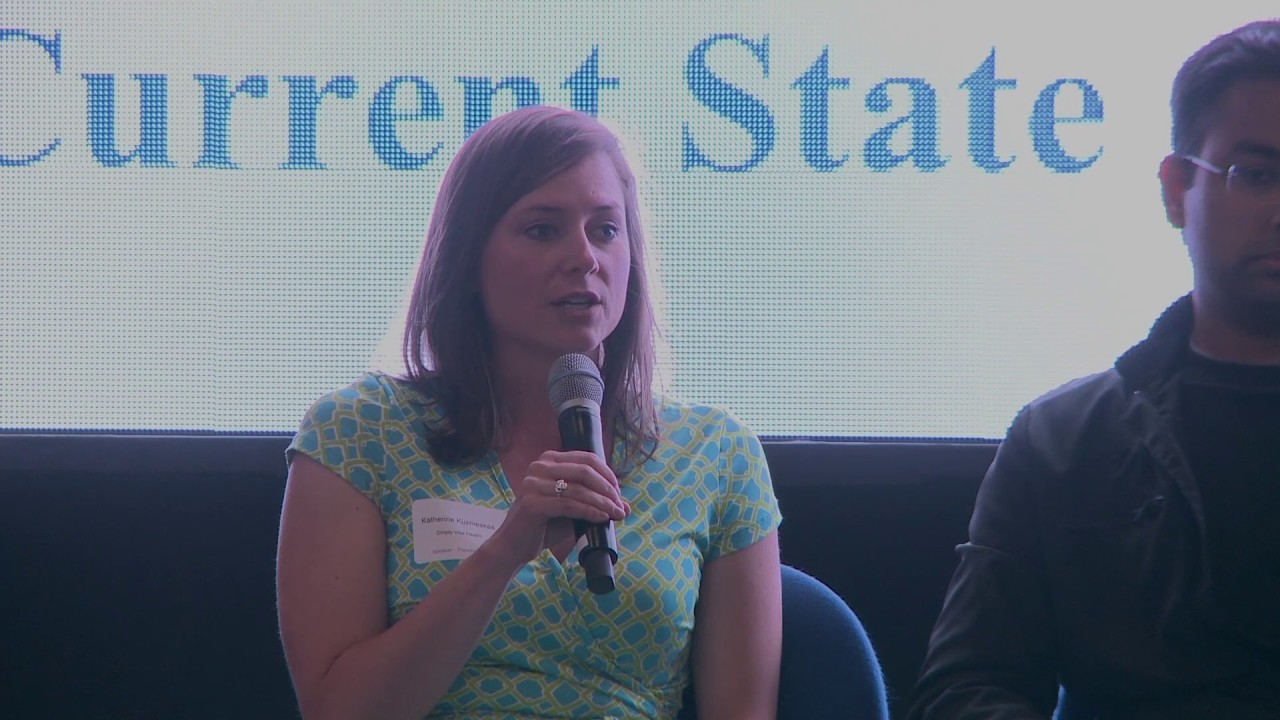
Five blockchain founders pitch their 15-year visions: Storj's autonomous storage marketplace, Lightning Labs' peer-to-peer payments without intermediaries, Bitwitch's instant wage platform for freelancers, a decentralized exchange for small-business equity, and blockchain-based healthcare that meets HIPAA requirements.
Chapters
Before, uh, this panel is going to be about the, uh, current state of development of the technology and the limitations of trying to start a startup with it. So to understand that and the limitations, let's understand where you guys are trying to get to. So if you can introduce yourself and then tell us what the world will look like in 15 years when your startup is successful.
Sure, uh, my name is Hi, I'm James Prestwich. I'm the COO and CFO and architect at Storj. So in about 15 years, if Storj is successful, machines will, without human interaction, autonomously negotiate and arbitrate storage contracts. So rather than paying Amazon, your machine will just go out into a distributed network composed of any machine anywhere and any hard drive or SSD connected to it and purchase exactly the space and bandwidth that it needs. And if it has extra storage space, it will generate its own revenue by selling it.
Hi everybody. My name is Elizabeth Stark. I am CEO and co-founder of a company called Lightning Labs. We're building the protocol Lightning Network. And we are scaling and speeding up Bitcoin and other blockchains, so I'm sure we'll have a lot of fun discussion about scalability issues, as this is a hot-button topic in our community. In 15 years, when we succeed, we will have eliminated a substantial number of financial intermediaries because our protocol is decentralized and you can transact or exchange assets and send value without having to rely on, say, a broker-dealer or a financial institution.
Hello.
Alright, cool. So my name is Jonathan Chester. I am a contributor of Forbes as well as the founder and president of Bitwitch. Which is an international wage payment platform that is built on top of the Bitcoin protocol. So about half of our users will use Bitcoin as a way to move money faster and cheaper into bank accounts, converting on both sides. The other half will actually keep it as Bitcoin because the currency will act as a better store of value than their own local currencies in a lot of places in Latin America, for instance. You guys And one of the key attributes of our platform is we allow the workers to receive their wages without the companies needing to sign up. We provide collections accounts per se so they can get paid from Google, Facebook, Yahoo, Philips, and so on. And so in 15 years, what we're seeing is the growth of the decentralized workforce, so to speak, right? International workers working together, connected both from a decentralized payment platform as well as communication protocols like Slack. And right now, just today, right, last year, $1 trillion was paid to freelancers from US companies. And as this number continues to grow, we're going to see that these freelancers are going to be realizing they can be from anywhere in the world. And we're going to be an operating system for this platform where people are able to receive their wages faster and cheaper. Than other protocols, but also in addition to this, because the payments will be on an immutable and indispensable ledger, the blockchain, you will actually be able to carry around with you an indisputable resume from whatever country, whether you're in a war-torn country or you're in just a country with bad infrastructure, you'll be able to keep that resume, that verified resume with you wherever you go.
Hello everyone, this is Neeraj Shivaslam. I'm the Chief Blockchain Architect for San Francisco Stock Exchange. And what San Francisco Stock Exchange is, it is NYSE, New York Stock Exchange, for the startups or the small business. The way I see my company next 10 to 15 years is, as Draper has already mentioned, we will not have standalone बैंक्स और स्टैंडअलोन लेजर बुक्स इन कमिंग डेज़ वी विल हैव अ सेंट्रलाइज्ड लेजर एंड ऑल योर मनी अराउंड द वर्ल्ड विल बी ऑन दिस जस्ट वन लेजर बुक एंड व्हाट वी विल डू इस वी आर गोइंग टू क्रिएट एन एक्सचेंज वेर योर मनी विल नॉट बी सिटिंग इन योर अकाउंट बट योर मनी यू क In the same manner, you will be able to invest money in some of the small business or some of the startups which is around you, around the world. So that's what a stock— that's what a central stock exchange is.
Thanks.
Hi, I'm Pat.
I'm the CEO and co-founder of Simply Vital Health, and we're using blockchain technologies to make healthcare more efficient. So in 15 years, our vision of using blockchain is much more robust than what we are using right now, and we'll spend some time talking about that. Right now blockchain actually offers the most secure way to attain HIPAA requirements because none of the data can be deleted. It's the immutability, which is what they talked about. I always like to use the example of Edward Snowden when I'm speaking with hospitals. Anyone can come in and delete your data. So we're starting very simple. Where we want to go is we want to use blockchain technology to completely transform value-based care. Value-based care is this new paradigm in healthcare where we're shifting from physicians getting paid for every single transaction that they do, where they're getting paid based on quality. Hospitals are actually sharing savings with physicians, and there's a lot of ways that you can use blockchain for efficiency and improving the entire transactions between hospitals and physicians and insurance companies.
Excellent.
Thank you guys very much for the introductions. So, Jonathan, we'll start with you. What challenges did you face initially that other startups— because you're using the blockchain— that other startups may not have faced?
Sure. So obviously the big elephant in the room is regulation, right? And regulation is the first thing that you have to think about whenever you're entering into this space, how are the regulators going to deal with the regulators. Some people will build technology to avoid having to deal with the regulators. You see non-custodial wallets doing exactly that. And then others will make sure that they build technology that will interact with them. So for instance, Bitwitch actually participates in conversations with the Blockchain Alliance, which works together with the Secret Service and several other government agencies in the United States, as well as working with the European Commission on helping to create regulation that's fair in the European Union. But on the flip side, an interesting element that is special to Bitcoin that was touched by the Drapers was the idea that when the industry was very early on, there were a lot of people hungry for information, a lot of news media hungry for information. And so they would actually help push your content out and actually It helped you get your brand out to many users being an early innovator in the space. You basically just had to exist and not screw up, and people would find out about you. And because Bitcoin relies on the companies that push it, all the users of Bitcoin end up helping promote your company to non-users. As well. So you end up getting this sort of marketing benefit because people in their own self-interest want to help you. Makes them benefit.