Dark Energy and the Runaway Universe with Astrophysicist Alex Filippenko
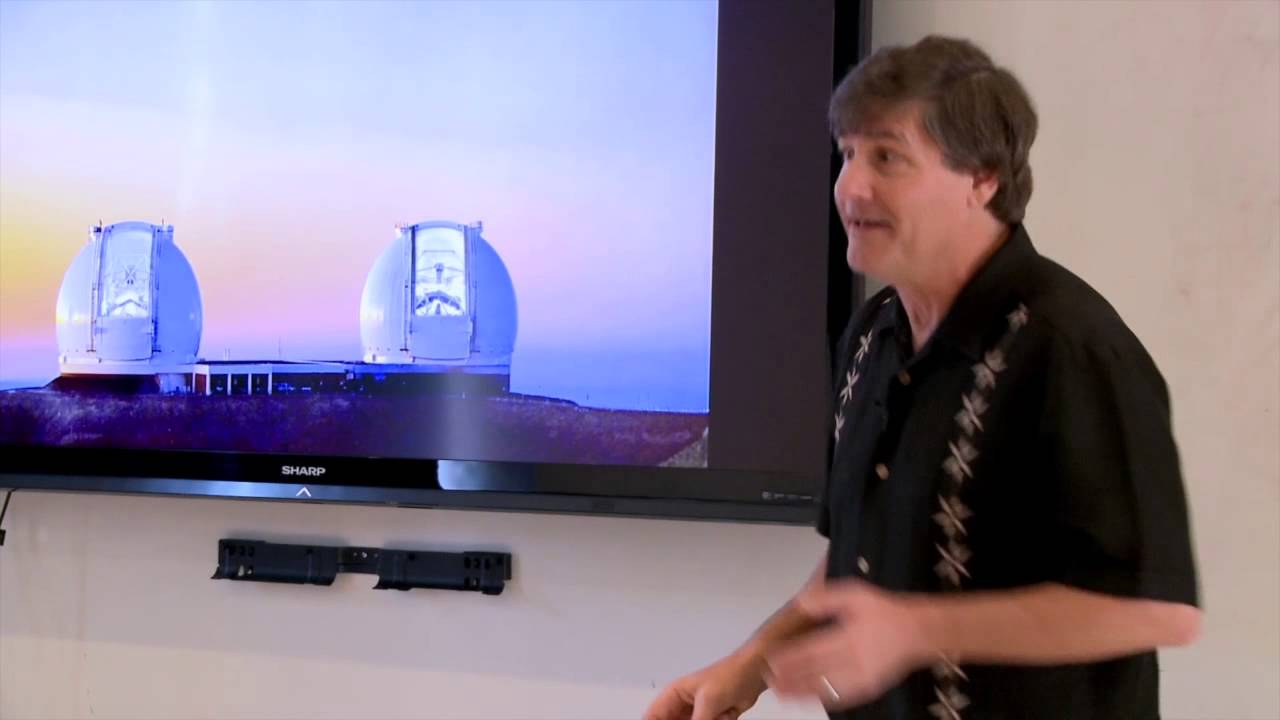
Alex Filippenko explains how Type Ia supernovae revealed the universe is accelerating, driven by dark energy. He covers the observational techniques that won a Nobel Prize, the Pioneer spacecraft anomaly, and quantum entanglement. He argues physicists should pursue bold, high-risk ideas while staying financially stable.
Chapters
I want to show you how many of the things that I talk about today will be applicable to your lives as entrepreneurs, in business and commerce and technology. I want to show you how the methods of science actually apply in so much of life, and especially in successful entrepreneurship. So let me just start by saying that the process of science is to gather and assimilate data and to come up with a better understanding, a better model of how the world works. How the universe works, how do things within the universe work, all right? And we do this by obtaining and analyzing data and by formulating testable hypotheses. And we test them with new observations, with experiments. And to the degree that the observations and experiments verify our predictions, we pat ourselves on the back and we say, okay, our model works so far. But there could always be some experiment or observation That does not conform with your predictions, and that would be then a chance to either revise one's hypothesis or, in some cases, come up with a completely different hypothesis, a revolutionary thing, kind of like Einstein's General Theory of Relativity, which says that gravity is due to a curvature of space and time. You know, a wacky idea that, in fact, appears to be true. And Even the GPS system depends on physicists' and engineers' understanding of this weird curvature of space and time. All right? So, this has broad applications. The scientific method is a model for strategic thinking and execution in business, technology, for entrepreneurs. So, these are the kinds of things I hope that you will take away from this talk. I will show you specifically what we did, and I'll show you how the this can be applied more generally to other walks of life, especially the kinds of things you guys are interested in. Because this whole process incorporates general principles that, indeed, can accelerate your career in the corporate world. All right? So, the thing I'm going to be talking about is this discovery that the expansion of the Universe is accelerating. We made this discovery in 1998, but it took about 13 years for it to be confirmed and verified to a sufficient degree by other scientists that the Nobel Committee decided to give the Nobel Prize in Physics to the discovery. It takes years to make sure something is correct. And although 51 people contributed to the 2 research papers that announced this discovery, the rules of the Nobel, other than the one in the Peace Prize, which can be given to corporations and even the European Union, I guess, The ones in science can only be given to 3 people, and so they are typically given to the leaders of the teams. And the 2 teams were led by Saul Perlmutter, a professor of physics at UC Berkeley. He led the Supernova Cosmology Project. He's in the middle there. And then Brian Schmidt of the Australian National University led this High Redshift Supernova Search Team. And then my postdoctoral scholar, at left there, Adam Riess, now a professor at Johns Hopkins University, He led the analysis of Schmidt's team and correctly, in my opinion, was also recognized with the prize. So, you know, it was really great that they were so honored, but these gentlemen understood that without the rest of us working in the trenches, they wouldn't have made the discovery. And so they spent a good fraction of their prize money flying the rest of us out to Stockholm to participate in Nobel Week in December of 2011. And so that was really fun. Here's Schmidt's team right after the awarding of the Nobel Prize. I actually was the one person who was a member of both teams at one time or another. But I couldn't be at 2 places at the same time, so I couldn't be in both of the team photos. But anyway, here we are right after the prize. And we like to say that, you know, we participated in all the parties, all the celebrations, just about everything except receiving the gold medal and the million bucks.
But, okay.
Oh well, you know, that's the way it goes. So the way one makes big discoveries, of course, is by focusing on the big picture. Think great thoughts, be ambitious, and you guys already have a great start because you're attending Draper University. Details are crucial, you know, to get it right, the devil is in the details, but don't get lost in the minutiae. Keep the big picture, keep the forest in mind at all times. Throughout the time that we were doing the research that led to this discovery, though we were embroiled in the various details of trying to get the measurements and the analysis right, we never lost sight of the big picture, our goal. And that was to determine, really, what the fate of the Universe would be. Now, you might wonder, what do you mean by fate of the Universe? Well, it turns out we've known for the better part of a century That the Universe is expanding. And this was a discovery made by Edwin Hubble in 1929. Hubble studied these giant collections of stars called galaxies. We live in one such galaxy, the Milky Way Galaxy. This is not a picture of our galaxy, but it looks something like this. It's a couple of hundred billion stars gravitationally bound in a gigantic structure, like 100,000 light-years across. Light travels at the speed of light, 6 trillion miles a year. And it's 100,000 of those 6 trillion miles across this galaxy. These are giant structures, okay? Island universes, in a sense. And he noticed that they're all moving away from us. So here we are. There we are, right here, the Milky Way Galaxy. And all these other galaxies are moving away from us. The Universe is expanding. And there's something a bit strange, before I move on, you know. What looks a bit strange in this diagram?
The middle?
Yeah, we're in the middle. Exactly right. You know, why would we be in the middle? You know, do all the other galaxies not like us? Is it something we said? Or do we smell? Or are all these other galaxies lactose intolerant? Get it? Milky Way Galaxy, lactose-intolerant galaxies. You know, when I talk to my students in my introductory class on astronomy, when I tell them about the expanding Universe and I show them this diagram, I say, what is it? Are we from Stanford or something? A fine institution, but, you know, in fact, a truly outstanding institution, but not quite as outstanding as Cal. Okay, so anyway, major rivals. No, we don't think that we're in any special privileged place. We actually think that the Universe is a uniformly expanding Universe, and that no matter which galaxy we happen to be in, we would see all the others moving away. And let me give you a simple analogy. Here's a 1-dimensional Universe with a bunch of ping-pong balls. Those are the galaxies. They don't expand; they're gravitationally bound. But the space between them expands. And so, if we're on this orange one, and we look out, we see all the others moving away. And we call up our friend over here and we say, hey, we're in the middle of the universe. But this friend says, well, I see everyone going away too, so I'm the middle. And to break the tie, we call up our friend in some other galaxy, and they say, well, no, we're in the middle. So which one is right? None of them are right. None of them are at the unique center. They all think they're at the center, but there is no unique center, at least not in the dimensions that are physically accessible. Okay? So this is a nice analogy, all right, for an expanding Universe with no unique center. And don't worry about the finite rubber band. The Universe is either infinite or it wraps around itself. But this, I think, is something that allows you to wrap your mind around this expansion. A 3-dimensional version of this, a 2-dimensional representation of which is shown here, is an expanding loaf of raisin bread. The yeast uniformly fills the dough. You let it bake for an hour. Let's say it doubles in size. That raisin there, marked, sees all the others moving away, so it thinks it's at the center. But all the other raisins see all the others moving away as well, right? So there is no unique center. Our Universe is kind of like that. And again, it's either an infinite loaf of bread or it wraps around itself.
Alright?
So in astrophysics, we deal with some pretty abstract concepts. We need ways to explain them to people and to wrap our own minds around them. And this is a good lesson for life and business overall. Clarify with analogies and examples. You know, you might be discussing something brand new, you've got some hot idea, and your colleagues don't understand what the hell you're talking about, so you might have to clarify with examples and analogies. Simple analogies can illustrate difficult concepts, OK? Give familiar examples from real life. I tell my students they can go home and make one of these things for their parents. and explain to them about how, in an expanding Universe, each galaxy thinks it's at the center.
All right?
Yes? Just a quick thought, that if you're looking at all the galaxies that were spinning around, couldn't it be just that our perspective is constantly changing? So, if one galaxy is over here, one is over here.
Yeah.
This is here, and suddenly we're going to be over here. Right. So, we are spinning, but we take that into account. So, we take— we know the rotation of our own galaxy quite well. So, indeed, we do have to take this— our own motion around the center into account when we measure the apparent speeds of other galaxies. So, good point. You were thinking. Maybe this analogy even helped, you know? Okay, so, with today's big telescopes, we know the current rate at which the Universe is expanding. It's just some value. But the— that's not the end of the story, and this goes all the way back to Newton. Newton supposedly saw an apple— come on, computer. There we go. Newton supposedly saw an apple fall from the apple tree and wondered whether the reason it falls is related in some way to the orbit of the moon around the Earth. And indeed, they are related through gravity and the laws of motion. And, you know, so everything acts upon everything else, and if you toss the apple up, Okay? The gravitational attraction of the Earth slows it down in its upward journey. You can't give a talk about gravity without using the proverbial Newtonian apple, right? So, here it is. Alright? So, and eventually it stops and then comes back down. Now, if the Universe is really dense, then all bits of the Universe will be pulling on all other bits a lot and slowing down the expansion. Alright? So, the expansion should be slowing down. And maybe, if it's dense enough, it'll someday stop and then implode on itself. It'll collapse. So, in that case, in a dense Universe, you start with a Big Bang and end with a Big Crunch. Or you could say, Big Bang Gnab Gib, which is Big Bang backwards, right? So that's one possible fate of the Universe, to recollapse someday. And so, although we see an expanding Universe— so if you were to live billions of years, and you're lying on your back, and you're looking at all these galaxies moving away and getting fainter, you'd say, oh, that's good, that's good.
And then?
You'd notice something a bit strange, and right around now you're getting kind of nervous, and then, ah, you know, goodbye cruel world, right? The Universe implodes in on itself, becomes this hot, compressed Big Crunch. All right? So that's one possible fate for the Universe. But there's an alternative. Had I eaten my Wheaties this morning, and if there weren't the technical difficulty of a ceiling here, I could in principle heave this apple at a speed greater than or equal to Earth's escape speed.
What?
In that case, the apple would continue to slow down, but it would never come back. Okay? It would either never come to a stop, or if, even if it does come to a stop, that would be at time equals infinity, but it would never come back. So that's like what a rocket does, right? Rockets are launched at a speed of around 7 miles a second, so that they can get away from Earth's gravity. And they keep on slowing down, but they don't stop. And in a similar way, then, if the density of the Universe is low, then the current expansion will be forever slowing down, but it'll never turn back around. And so, this would be an eternal Universe that keeps getting less dense, darker, colder with time. Not more dense, more compressed, brighter, and hotter, like the Big Crunch. So, that would be a very different fate.
Okay.
Well, we would like to know the fate of the Universe. What will happen to the expansion? A way of doing so is to monitor the history of the expansion. Let me go back to this analogy. Again, it's really useful to think of analogies. If I measure the speed of the apple at many times during its motion, and I find that it's been slowing down a lot, Then I can calculate that it'll someday reverse its motion. If it hasn't been slowing down a lot, then it'll keep on going away from the Earth forever. So, in a similar way, if we examine the past history of expansion, we could predict the future. The way we examine the past history is to look back in time, and the way we do that is to look at progressively greater distances. Because light doesn't travel infinitely fast. It travels about a foot per billionth of a second. Alright? So, what's your name? You asked that good question.
Oliver. Pardon?
Oliver.
O—
Oliver. Okay. I'm seeing Oliver as he was about 12 billionths of a second ago. He may not even exist anymore. Oh, he does. Okay. But he need not have. You see the Sun as it was a little over 8 minutes ago, because it takes 8 minutes, 8 and a third minutes, to traverse 93 million miles. The light does. The typical stars you see in the sky are some tens, hundreds, or thousands of light-years away. So, you're seeing them as they were tens, hundreds, or thousands of years ago. So, if you look at galaxies that are, say, a billion light-years away, and 4 billion light-years away, and maybe that little blob is 9 billion light-years away, you're seeing them as they were 1, 4, 9 billion years ago. And encoded in their light Is information about the expansion of the Universe as it was 1, 4, 9 billion years ago. So you can look back in time by looking at progressively greater distances, all right? But you need to know the distances of these galaxies. You know, this— is this galaxy 4 billion light-years away, or pi billion light-years, or 2? What is it? So, the way we determine distances of galaxies is by finding stars within them Whose properties we recognized. So, let's say, in this galaxy here, there's that star right there. Let's call it Tim, just for kicks, okay? Because I just saw Tim walk in, from my peripheral vision. And let's say you study Tim, and you know that Tim is just like this star, Betelgeuse, in the left shoulder of the great constellation Orion, the great hunter Orion. So, Betelgeuse is a luminous, powerful, magnificent star. You might think all the stars are the same, but they're not. They come in different categories, okay? So, this is an amazing star. And you can see how bright it looks, and we know its distance, so we can figure out how powerful it really is. And if Tim is exactly the same type of star, then you can figure out how far away Tim must be in order to look as faint as he does. Alright? And that's, then, the distance of the galaxy. And you might do this for a bunch of stars, To gain confidence that you got the distance correctly. All right? You use this technique all the time when you judge the distance of an oncoming car at night. You've calibrated how bright the headlights are of a car of known distance, like 6 feet away. Ooh, that's a pretty bright headlight, right? Then you look at the headlights of more distant cars and they look fainter. And so you determine the distance. Almost intuitively, almost instinctively, right? I mean, if you're not very good at doing this, then you shouldn't be driving at night, right? So, cars, stars, it's the same sort of thing. Find a type of star whose true power you know, look at how bright it appears to be, and thus determine the distance, all right? Now, that may work, you might say, for a nearby galaxy, where you see individual stars pretty easily. But what about these galaxies that are billions of light-years away? The individual stars can't be seen. They're too faint. They merge with one another. So it sounds like you're hosed. And back when we said, over 20 years ago, that we were going to start on this project, people said, well, there are no stars that you can see in galaxies that are sufficiently far away for you to be able to trace the expansion history of the Universe. But— and this is now coming back to lessons for you— Accept new challenges, okay? Have the courage to pursue your lofty goals. Find ways to solve the problem, okay? People said, oh, you know, all the stars are too faint. You're not going to be able to tell the distances of distant galaxies. But we thought strategically and creatively in order to solve this problem. And you can, too, in whatever walk of life you choose to—
To pursue.
To pursue. Alright? We realized that we could use exploding stars, okay, to judge the distances of galaxies. A small minority of stars explode at the end of their lives, becoming billions of times more powerful than the Sun. So you can see them and distinguish them from their neighbors, even at distances of billions of light-years. So we decided to use this type of star. Forget about the naysayers and all the people with negativity that say that you can't do it. You can do it. There are these types of stars that become billions of times brighter than the Sun. They take several weeks to brighten and some months to decline. I've sped up the process here so as not to bore you. Now, if our Sun were to do this, which it won't— okay, it's not going to do this— but if our Sun were to do this, then sunblock of 50 just wouldn't cut it, folks. You'd need sunblock, or supernova block, of a few billion to protect yourself. But don't worry, be happy, okay? Our Sun isn't going to do this. So the idea is, find a bunch of these things in galaxies whose distances you already know, because you've measured the brightnesses of normal stars, like, you know, Tim and Noelle and other people. Okay, so, you know the distance of this galaxy, you measure how bright the supernova appears to be at its peak, That tells you how powerful it really is. That's like the car that's nearby, in the analogy I gave you before. But, you need to find a bunch of these things to make sure they're all the same. There might be different kinds of cars. There might be bicycles. There could be giant trucks with different headlights, okay? So, you have to find lots of them. And that's hard, because in a given galaxy, a star might explode maybe once every 30 years or so. So, if I were a really cruel advisor, I would have each of my students staring through the eyepiece of a telescope at one and only one galaxy, preferably at night. You see more stars and galaxies at night than during the day. Until they find a supernova, okay? And then we let them graduate and move on to greener pastures. Meanwhile, I will have had decades' worth of slave labor from said student, okay? Well, there are some crimes that are so egregious that even a tenured professor can and should get fired, and that would be one such crime, right? I can't— take advantage of students this way. I mean, suppose you were here for 30 years before you got to move on and become an entrepreneur. You would say, Draper, dude, you know, this is no fair, okay? Got to get us out of here faster, dude! Okay? So, that wouldn't be fair. But there's power in numbers. Instead of looking at just one galaxy, look at hundreds or thousands of galaxies. Each of them is occasionally going to produce a supernova, so, you know, you improve your odds by looking at lots of galaxies. And with modern technology, in fact, we have a simple technique. We attach CCD cameras, like digital cameras like what you have, to the back of an— end of a telescope, and we take photographs of lots and lots of galaxies, and we simply look for arrows. And where we see arrows, we see exploding stars. You see it happen once, twice, 3 times, 4 times, 5 times. By rigorous mathematical induction, I conclude that this technique works every time. Well, it might not be so simple. Yeah?
Yeah, I had a question. Because you said before you had to know the type of star.
Yeah, you have to know the type of star. Good point.
So, if it's really far away and you can't see that type of star until it explodes into a supernova, how do you know that supernova is stronger or less strong?
Good question. How do you know you've got the right type of star? Okay? You know, Tim rather than Bill or something like that. You have to study that star in detail. And in this short talk, I'm not giving you all the details, but in particular, You spread the light out into a spectrum. The spectrum provides, like, a fingerprint. It tells you what kind of a star it is. Okay? We use a type called Type Ia supernovae. You can look them up later. But you could still say, well, what if the Type Ia supernovae 4 billion years ago were less powerful or more powerful than today? Then you might get the wrong distance by assuming a standard power and measuring the brightness. So, there, that becomes more tricky. There, we have to look at details in the spectrum, and how fast it brightens and fades. And the idea is, you know, walks like a duck, looks like a duck, smells like a duck. The more variables you can measure that look the same as for nearby supernovae, the greater is your confidence. But you are still never sure. And that's why, in science, it's particularly important to verify results, especially important results, With completely independent techniques, because we are still worried about whether the supernovae back then might be different from those now. They're clearly not different enough to affect our overall conclusion that the Universe is accelerating in its expansion. But they might be sufficiently different to affect, quantitatively, just how much we think the Universe has accelerated. So, good points, okay? Anyway, we have developed a telescope, an innovative telescope, just an hour and a half drive from here. I encourage you to visit Lick Observatory. It's in the hills east of San Jose, all right? This telescope is not big by today's standards, but it was programmed to take photographs of thousands of galaxies each week and to automatically compare the new pictures of a given galaxy with the old pictures. And usually there's nothing new, but sometimes there would be something new. And this was all done just beautifully by my associate, Weidong Li. He just did a masterful job at getting this system together. And here's an example of a before-and-after picture of a galaxy. And in the one on the right, you see that new thing, the arrow. Well, the arrow was put in with Adobe Photoshop or something, but the new thing is this little dude right there. And that's a supernova candidate. It might not be a supernova. It could be a charged particle that hit the detector and is masquerading as a supernova, or it could be some asteroid with Earth's name written on it heading for us. Someday, scientists, astronomers, together with engineers and entrepreneurs, will find a way to save the world, because we're going to find the asteroid decades before it hits, and then, you know, others will figure out a way to deflect it.
So—
Be kind to astronomers. Anyway, we would find maybe a few dozen candidates each night out of 1,000 images, and then I would use slaves— I mean, students— who, with their superior eye-brain combination, would examine the candidates and determine which ones are likely to be genuine supernovae worthy of follow-up observations. And I would get, you know, freshmen, sophomores involved in my research group, in a few cases, even a high school student or two. And I would offer them real incentives, okay? They would really participate in the research. They would find these supernovae, confirm them. Their names would go on the telegram that was sent out to other astronomers. So, you know, this is an important point. Build and nurture a first-rate team in anything that you do, right? It takes teamwork, generally. It's very difficult now to do things completely alone.
Clearly communicate.
The roles and responsibilities of the team members. Give even new team members some significant role. Make them feel worthy and that they're really contributing in a material way to your project. Provide leadership positions, of course, to the more senior people. Right now, my senior supernova checker is about to graduate, so I've asked him to recommend to me who among the junior students should be the new—
Leader.
Senior leader, okay? And the baton, the torch, gets passed from year to year. Motivate them with important goals. Provide real value and career development, okay? And give them public recognition, okay, and incentives. They would be associated with these supernova discoveries. They'd write home to Mom about them. They'd say, look, Mom, I found this supernova. So, gave them a real feeling of participation and discovery. All right? Okay, going back, then, to the overall picture, We would find these ones, we'd calibrate them. We've been working on this for decades. The technique was known, you know, several decades ago, and just that we've been refining it with our telescope recently. The challenge then is to find these little explosions— well, they're big explosions, but compared to a whole galaxy, they might not be big. And when they're really far away, they're hard to find. So, you know, here's a picture of the sky taken with a big telescope, and there are literally thousands of galaxies there. Thousands of them. If you take a bunch of such pictures, you will have the mugshot of maybe 100,000 galaxies, all right, during the course of a night. 3 weeks later, you take pictures of the same galaxies, and some of them will have produced a supernova. The challenge is to find the needles in the haystack. How do you do that? People said, we're not going to be able to do that. You know, no way, folks. Well— We developed a way. We digitally subtracted the old images from the new images and developed a lot of software to do this subtraction really, really well. And here's the subtracted image, okay? There's a bunch of noise. That's okay. Any measurement process necessarily has some noise associated with it. But here, cleverly placed in the middle of this square, is something that looks like it might be real. And a Hubble picture of it a few weeks later confirms it. And then I would take spectra and I confirmed them. So we did find a way to do it. But there was a chicken-and-an-egg problem. We would apply for time at observatories, saying that we would find these faint little supernova candidates. And the committees that would evaluate our proposals would say, ah, no, you can't. That's too hard. And they wouldn't give us the time. So if we don't get the telescope time, how can we demonstrate that we really can do it, right? Give us the time. So, I had time for other projects and stuff, and we snuck in some observations and showed that we could find supernovae. And then, we were able to apply for time and get it on a regular basis. But this then, you know, is another lesson. Innovate, take risks, achieve the first steps of your goals with resources that you already have. By hook or by crook, by clawing and scratching, you know, find some resources with which you can demonstrate success and convert from skeptics to supporters, right? Suddenly, all sorts of people were saying, oh, man, these guys are the greatest thing since sliced bread. They can find these distant supernovae. Let's give them the time to do so. Maybe we'll learn about the fate of the Universe. But for years, they were all naysayers, and so we had to find some way to get the job done without yet having the approval of the community, right? Okay, so again, this is something that you can take away for whatever walk of life you choose to pursue. All right, so we found these candidates, and then we have to go and, you know, take their fingerprint, so to speak, with the greatest telescopes in the world, to which I have access, all right? And one reason I have access to them is I've— I've worked hard and established my credentials using some, you know, doing some smaller projects and kind of work your way up to the, to being the top, the top person and being given access to the world's best facilities. You know, start by doing some smaller things and get them done well, and then, then you can, you can move on to the big things. But these are the big guns here. These are the Keck 10-meter telescopes in Hawaii. Just fantastic things to use. I love Being up there and using the telescopes. And when I get really great data, then I'm a very happy camper. And now you see the real reason we build observatories in Hawaii. I find Bay Area waters to be too cold for swimming without a wetsuit. But there's good scientific reasons as well. Anyway, I would bring my students, you know, and we'd show up a day or two early, and hey, you know, we'd go to the beach, right? We're human too. We want to relax. We're going to be working hard the next few nights. Provide some incentives for your coworkers. You know, those students who did really well and were doing a good job and working really hard normally in Berkeley, hey, I'd take them to Hawaii with me and we'd spend a few days relaxing on the beach. So again, this is the kind of thing, additional perks, additional incentives can significantly improve morale and team productivity, right? And again, this is not just restricted to science. This is true Overall, right? You give people some incentives to work hard, and they will. Give them the perks. Alright. Well, so here they are, some distant supernovae, and here's the punchline. Here's what we found. They're faint. They're really, really faint. And you might say, well, big deal. They're in these scrawny, pathetic-looking galaxies. These are obviously very faint. I mean, this one, you can't even see the galaxy before the supernova exploded. It's really faint, obviously. So, we expect the supernovae to be faint, as well. And that's true. But they are fainter than they have any right to be. The implied distances are too big. Let me give you an analogy. Again, it's the analogies to get the tough concepts across. You're— you've got some new idea that you're presenting to coworkers. Give it to them in ways they can understand. All right. So, suppose I've got a Big Bang. And let's say the Universe is just 1 second old, just for kicks. All right? So I measure the distance of the apple from my hand after 1 second. It's some distance. But the apple has been slowing down due to the Earth's gravity, right? If Earth's mass were less, then a given toss would take the apple further in 1 second, because it wouldn't slow down as much, right? Now, I can't make the Earth's mass less, but I can do the next best thing. I can throw the apple faster. It has the same desired effect. It goes to a greater distance in 1 second. So far, so good? Now suppose the Earth weren't present at all. And forget about Jupiter and the Sun. No gravity. I toss the apple. Does it have any reason to slow down? What's your intuition tell you?
No reason to slow down.
No reason to slow down. Yeah, no forces, no deceleration. So in 1 second, it would get to an even greater distance if it's not slowing down, right? But that's it. In a Universe with gravity or with no gravity, You can't get to a distance greater than the distance you reach going at a constant speed. I mean, if you're slowing down, you'll reach an even smaller distance, right? Yet we found that the apples, the supernovae, the galaxies in which they're located, are at a greater distance than they could have achieved even at a constant speed. So unless something weird is going on, and, you know, we have to take into account many possible things that could be biting us in the butt, We concluded that instead of slowing down, the Universe is doing what? Speeding up, right. Because if you've got rockets attached to the apple and it goes zhoop, then in 1 second it can reach a greater distance than it would have had it been going at a constant speed, right? So, acceleration rather than deceleration. That's really weird, you know. Yes? I have a quick question about the speed of light. Yeah, speed of light, sure. Is it possible that during a supernova, light particles actually exceed the speed of light during direct collisions.
Yeah, yeah.
My logic being that if I can throw the apple 50 miles an hour, and if I'm traveling on a truck that goes 20 miles an hour, if I throw it at the direction I'm moving, for a second it's going to be 70 miles an hour in relation to the ground.
Yeah, yeah.
So you should become an astrophysicist. You're thinking the right way. Turns out several things. First of all, light— Does not become faster when emitted by a moving object. The speed of light is the same in all frames of reference. This is an experimental fact, and it was an assumption made by Einstein in developing his special theory of relativity. Light is the one constant. What gets messed up is the passage of time and our perception of lengths. They get messed up so as to keep the speed of light constant in all frames of reference. And again, this had to be taken into account by people who developed GPS, for example. They had to take into account relativity. What an amazing thing, right? Some abstract, weird thing, and, you know, now it has this enormously huge commercial and military value. The second thing is, is that you might think that the speed of light perhaps has changed billions of years ago. That was sort of the second part of your question. And there, we've made measurements, and we see no evidence for the speed of light changing. Independent techniques you can use to test the possibility that the speed of light is changing. So, anyway, we had to rule out a bunch of things before we came to this conclusion that the Universe is accelerating. But we did come to the conclusion, and the headline that came out was, Astronomers see a cosmic anti-gravity force at work. And we use this term anti-gravity hesitantly, because people ask us, can we attach this stuff, whatever it is, to our cars and levitate over Bay Area traffic jams? And the answer is no. It's either a property of space that cannot be harnessed, or there's so little of it that, you know, you'd have to go out light-years before you had enough of it. So, it's not harnessable, but it does have kind of anti-gravitating effects, all right? And one of the people greatly credited with the discovery was this youngster, this postdoc, Adam Riess, in my group.
Hi.
Here he is, you know, in Time Magazine before the Nobel Prize, Adventures in Anti-Gravity. But, you know, he persevered. He got us moving faster than we would have been. He kept on saying, hey guys, come on, make the measurements. I've got to analyze them. Let's all work as a team. Let's do it. He kept pushing us, and he did it very carefully, very correctly, very enthusiastically. Yes, he was at the right place at the right time, but he also took advantage of an opportunity that landed in his lap. So sometimes you have to be ready to take advantage of opportunities. I've known plenty of people who had all kinds of opportunities. They just sat around on their butts. Not like you're— I mean, kind of like what you're doing now, but what you're doing now is useful. You should be doing that, right? But I've known people who should have taken advantage of opportunities and didn't. They didn't do anything. So take advantage of the opportunities. Jump on leadership opportunities as well. I'm not sure I'm ready. Often the official team leaders are just too busy organizing the whole thing, right? I mean, they're busy. It's not like they're not doing anything. But they're too busy to do the nitty and the gritty work that leads to an actual discovery or an innovation or getting the venture capital or something, right? You sometimes have to jump into the position and take advantage of an opportunity that exists. Be alert for chances to play a leading role in whatever it is you do. Well, by the end of the year, the editors of Science magazine proclaimed this to be the single most important discovery in all areas of science that year. And we were very pleased with this, but, you know, we still weren't sure we were right. But 2 teams had the same result, and, you know, that meant that other people had to take us seriously. And this is actually an important point. There were 2 teams. There was a lot of competition. And that was good. Both teams wanted to be first. So it accelerated progress, if you'll pardon the pun. If there were just one team, we'd all just kind of go to the beach all the time and not do anything. But we knew that the other team was there. So it accelerated progress. It improved the quality. Both teams wanted to be best. Is taking into account some subtle effect, like a possible difference in the speed of light, and the other one is not, then that other one would look bad by comparison. And thirdly, with 2 teams, people had to take notice, because both teams came up with the result at about the same time. So the competition was actually good, and we weren't always at each other's throats like this, although, you know, sometimes it wasn't perfectly friendly either, but nevertheless, it was a good thing. So embrace competition. It accelerates progress, it improves overall quality, leads you to become more careful, more thorough in your work. The agreement in results increases the credibility. Sometimes people tell me about a result and I'm all, well, who else has a similar result? If no one else has anything similar, then hey, it's probably wrong. Others will take you more seriously. So again, this is something that can be taken that applies to many, many walks of life. And ultimately, it's this competition that led to this result, now 15 years ago. It's amazing how time flies. And over the years, enough people were so interested in it that they confirmed it using other techniques. And that's why the result was recognized with a Nobel Prize. You know, the highest accolade possible in science. So you might wonder, why is the caricature of Einstein surprised here? You might think it's because he's blowing universes out of his pipe. See that? There are multiple universes and they come from the pipes of theoretical physicists. Well, maybe the first part of the statement is true. There may well be multiple universes, but we don't think they come from the pipes of theoretical physicists. He's surprised because this one universe that he blew out of his pipe is expanding faster and faster with time, rather than more and more slowly, as would have been anticipated with normal gravity. Okay? And he's doubly surprised because he has a sheaf of papers here where he has an equation, the Greek letter lambda equals 8 pi G, Newton's constant, times the density of the vacuum. And you might say, density of the vacuum? Why was this bozo from Berserkley invited to speak after all? You know, I mean, you were taught on your mother's knee that the vacuum is zilch, nothingness. How can it have a nonzero energy density? Well, this was Einstein's idea, not mine, and he was a lot smarter. He came up with this possibility of a repulsive energy of the vacuum in order to maintain what he thought was a static Universe, one that is not collapsing or expanding. Gravity, acting between galaxies, should tend to make them move together. But at the time, in 1917, it was thought that the Universe is static. Neither expanding nor contracting. And so Einstein came up with a weird thing called lambda, the cosmological constant, which acted in the direction opposite that of gravity and with exactly the same magnitude. So gravity is pulling down on this apple, the lambda thing is pulling up— here it's my hand. If the net force— excuse me— is zero, then the apple doesn't move.
Okay.
If the net force is not zero, then it accelerates. So, you know, Lucas kind of got it wrong. He said, may the Force be with you. No, no, no, may the net force be with you, right? The Force may be with you, but if some other force is against you, you're going to lose. So Lucas maybe, you know, needs to go back and study freshman physics. But whatever. May the net force be with you. Here, the net force would have been zero, and the Universe would have been stationary. But when Hubble discovered the expansion of the Universe 12 years later, The whole physical and philosophical motivation for the cosmological constant vanished. Einstein renounced it as having been the biggest blunder of his career. Had he not introduced it, he would have predicted that the Universe is in some motion, some dynamic state. He could have been famous. You know, Einstein could have been famous had he not introduced this. So, here he is, sort of sad that he ever introduced the idea. I don't know that that's what he's thinking, but it might be. You know. What have we done the better part of a century later? We've reintroduced it, not to have a static Universe, but one which, over the largest distances, is accelerating. So here in this room, the down arrow dominates. In our solar system, down. In our galaxy, down. But as you get out to tens or hundreds of millions of light-years, the up arrow dominates, and the Universe accelerates. So rather than being the biggest blunder of his career, which is how he called this, it could have been his greatest triumph. The idea of this anti-gravity. And if he were around right now, maybe his reaction would be something like what was on the COVID of Science magazine. Well, so, you know, the lesson here is, think outside the box, all right? The biggest breakthroughs often require this. You know, this idea of a weird repulsive thing sounded completely repugnant at the time, and when we reintroduced the idea, people said, oh, you know, the cosmological constant has reared its ugly head in the past. You guys are making it come back. the same mistake that Einstein made, but in a different context. And we said, well, this is what our data appear to tell us. We need a way to explain the data. Here is a way to explain the data. And, you know, we checked and rechecked our measurements, our analysis. We couldn't find any mistake. Maybe there was a mistake. But at some point, you've got to be bold. You know? If you've checked and rechecked your work, you've had a bunch of independent minds looking at it, and you think you're right, Go for it, right? Make the announcement. If you're wrong, well, that's the way it goes sometimes in life, right? And if you're wrong for some subtle reason that ends up telling you something interesting about the universe, well, then that's how science progresses anyway. There's no shame in that. If you're wrong because your computer program added 2 and 2 and got 5, that's a little bit more shameful, OK? But it's not the end of the world, all right? So just at some point—
Right.
Don't be sloppy. Don't be sloppy, but at some point, if you're pretty confident, but it's a weird result, go for it. If you've got some idea for an innovation, a new gizmo, and you think it'll work, go for it. Get the venture capital, make a big splash. Do it. Don't be timid and reluctant to go forth with your most innovative ideas, all right? So finally, you know, what is the stuff that's causing this acceleration? It's not the visible matter in the Universe, because it pulls, and there's stuff called dark matter, it pulls too. It's not antimatter. Antimatter, it turns out, has positive gravity. So, for want of a better term, we call it dark energy. It's some new form of energy. We don't see it, it's dark. We don't understand it, it's mysterious, it's dark. Alright? So we call it dark energy. Perhaps regrettable, because a lot of people know the equation, or at least have heard of E mc². So they ask us, is dark matter—
E mc²?
and dark energy, are they the same things? They're not. Dark matter pulls. Dark energy is what's doing the pushing. And, as a consolation prize to the rest of us, my wife, Noelle, who's in the back of the room there, came up with this T-shirt: Dark Energy is the New Black. Limited edition, but you can find it, I think, on her website, piezone.org. So, anyway, just to finish off a little bit, you might say, okay, you know, this— This technique might be wrong. The supernovae might be messed up. So, you know, you should use other techniques. And we used other techniques to verify the results. And then we also used this technique to ask ourselves and measure, what was the universe doing early on? Was it decelerating? Was it accelerating? Well, to do that, we needed a lot of resources. We needed a lot of time on the Hubble Space Telescope, and one team couldn't get so much time. But we really needed to find distant supernovae, okay? So what we did— and this applies to much of life as well— is that we piggybacked. We joined forces with another team. We wanted to search for extremely distant supernovae, so Adam piggybacked on a project being done by another astronomer, where they were going to take lots of data with the Hubble Space Telescope anyway, to study galaxy evolution. And Adam and I and others said, well, look, just take your data in chunks— one week, then another week, then another month— and we'll look for supernovae in those images. Don't just sit there with a telescope, you know, for a couple of days consecutively. Spread your observations out over months, and that'll give you the data that you need, but it'll allow us to look for supernovae. So that was a great thing, okay? Consolidate resources. Sometimes you must combine resources from several projects to achieve your goals. Capitalize on innovative opportunities. These other guys were doing an approved study anyway, so hey, piggyback with them. Join forces. Synergy, cross-fertilization, all improve projects, typically. Well, we found that the Universe, in fact, was slowing down for the first 9 billion years, and then it started speeding up. That transition is known as a jerk, and so the headlines that came out were, a cosmic jerk that reversed the Universe. And here's my old postdoc, Adam Riess. So people started calling me up, hey, who's this jerk you work with who reversed the expansion of the Universe? And, you know, he didn't do it. He just, you know, he just made the measurement, okay? He didn't do it. But anyway, you know, to do this even better and better, we have to study the supernovae more. We have to make more precise measurements. For years, I tried to compete with the other team and make measurements of the nearby supernovae, and I kept applying for Hubble time, and I kept being rejected. So one year, I finally said, hey guys, look, you know, the community clearly will not support all of us working individually anymore. It's just too demanding of the resources. So instead of competing, it is now time for us to collaborate. And I put together a big team that put in a big proposal for the Hubble, Together, in unison. And lo and behold, it was approved. So, at certain times, you need to recognize when to collaborate, not just to compete, okay? Some projects are just too big for different teams to do them from start to finish. You need to collaborate in order to free up resources for other astronomers. And so then the committee that allocated time said, okay, these guys are working together, We'll give them a bunch of time that still, you know, allows time for other astronomers to do their worthwhile projects. And so, this was a great recognition, and it led to, you know, a better understanding of supernovae and stuff. So, you know, how will the Universe end? Well, if the dark energy continues to be repulsive, then the Universe will expand faster and faster and faster with time. A runaway Universe. So if you want to see galaxies with your very own eyes through a telescope, you'd better go to your local observatory or planetarium soon, in the next few tens of billions of years, because beyond that time, those galaxies will have been whisked away to such great distances that you won't be able to see them. All right? But there is one other possibility. Since we don't know what the dark energy is, it's conceivable that, although it's repulsive right now, someday the sign will change and it'll become attractive. In that case, it's still conceivable that the Universe will someday recollapse into a Big Crunch, and ending in fire, rather than eternal expansion and ending in ice. And Robert Frost might not know— well, he certainly did not know about anti-gravity, but he was at least sufficiently well-educated to know that the Universe could have one of these 2 possible fates: an implosion— Or an explosion. And ending in fire, hot, or eternal expansion and ending in ice, cold. Because he wrote this famous poem, right? Fire and Ice. Some say the world will end in fire. Some say in ice. From what I've tasted of desire, I hold with those who favor fire. But if it had to perish twice, I think I know enough of hate to say that for destruction, ice is also great and would suffice. So you see, Frost would prefer the recollapsing Universe, ending in fire. But if the Universe and he had to perish twice, then eternal expansion and an ending in ice would be okay with him. And that's perhaps appropriate, given his name, Robert Frost. So that summarizes the science. To summarize just things that you can take away with you, applying to your lives, Focus on the big picture. Clarify with analogies and examples. Accept new challenges. Build and nurture a first-rate team. Innovate. Take risks. Give additional incentives. Jump on leadership opportunities. Take advantage of any opportunities that fall in your lap. Embrace competition. Think outside the box. Consolidate resources. And recognize when to collaborate. So those are some of the things I've learned through my research over the years, and especially on this project. And I hope you found not only the astronomy interesting, but something to take away that will apply more broadly in your careers. Thank you very much. How about a question there?
Yeah, okay.
That was great, Alex. Thank you, Tim. Thank you. I'm wondering, have you also measured the— our existing solar system? What about our own solar system, which is closer to us? And is it also spreading further out? Right. So our own solar system is not spreading apart because it's sufficiently tightly bound, due to the mass of the Sun, to overcome any tendency of space to expand. Even our own galaxy isn't expanding. Even our own local group of galaxies isn't. So what's actually expanding? I didn't want to get into the technical details, but since you asked, this is good. The vast spaces between clusters of galaxies are what are expanding, okay? And local things are like these ping-pong balls that I had. They're not expanding. It's the space between the clusters of galaxies, which these ping-pong balls, in a sense, represent. That's what's expanding. Yeah, yeah. Question right behind you there, right? Thank you so much. This is really fascinating.
Thank you.
I was wondering if you could please talk about How dark energy connects with the idea of the Higgs field in string theory? Yeah, yeah, that's a good question. So, you know, dark energy is this weird stuff in the vacuum that spreads the Universe apart. It can be thought of as a field, a new substance in a sense. The Higgs, over which there's been a lot of hullabaloo in the past year in the Large Hadron Collider, is a similar sort of field. We think it's different from the dark energy, but its purpose in nature is to give mass to the fundamental particles. You can think of the particles going through this substance, in a sense, and they feel a different resistance, a different viscosity, kind of like if you drag your finger through water versus honey or molasses. Okay? And the ones that feel the most viscosity, the most resistance, acquire the most mass. Another analogy might be, you know, the President of the United States walks into a party, Just really wants to go to the bar at the end of the room, but, you know, he or she gets totally surrounded by people, so they make very slow progress. Whereas, someone who's totally unknown to the people at the party walks in, waltzes right down to the bar at the other end of the room. So, different resistance, okay? So, the Higgs is responsible for particles having mass. And, though it's a highly technical, complex interaction in the end— I don't really understand it, I just know which end of the telescope to look through— Okay. But, here's a joke that you can tell your friends, your spouse, or whatever, that epitomizes the importance of the Higgs particle. So, the joke is this. A Higgs particle walks into a Catholic church. The priest says, what the hell are you doing here? Get out of here! Higgs particle replies, you can't have mass without me. So, there you go, right? And that— that's the essence of what the Higgs is all about. So, they're related, but the Higgs is thought not to be responsible for the accelerating expansion of the universe. Question there?
Yeah? I was wondering if— I was talking to someone—
I'll repeat the question.
Yeah, sorry. I was talking to someone recently, and there was this idea that I was kind of hearing and thinking about, which was the idea of virtual particles, because they exist in and out of space-time, and in fact, they're everywhere. The idea of potentially every billion and a Half of these virtual particles somehow collides with the real particle and actually becomes out of the virtual into the reality of particles.
Right.
Which then would add more energy, potential energy, into the Universe, which potentially could expand it.
That's right.
Over a period of time.
That's the leading idea. The leading idea, the one I think is probably most likely to be correct, okay, although a lot of theorists don't like it for certain technical reasons, is that there's an energy associated with the vacuum. There's particles and antiparticles, virtual ones they're called, flitting into and out of existence all the time. They're virtual because they come from zero energy. Suddenly there's a positive energy, both of these guys. Then they annihilate each other and there's zero. So in a sense, they're virtual. They don't really exist. But they do, because they affect the energy levels of the hydrogen atom, for example. And you can measure those energy levels and— Like with the 2 metal plates. Yeah, and the Casimir effect. You've done some reading about this. Exactly right. Casimir effect. Good job. So, in a sense, they're virtual, but they have real effects on the Universe. Well, it was always thought that, though there is this vacuum energy, in a sense, for every positive energy fluctuation, there's a negative energy one, so that they cancel perfectly, and the total net energy density of the vacuum would then be zero, even though it's fluctuating all the time. Well, what if the positive energy fluctuations have a little bit of an excess over the negative energy ones, then they don't all cancel out. So, it's not quite what you said, that they collide and become real. It's more that the positive energy virtual particles outnumber the negative energy virtual particles, and so there's a net positive virtual energy. And remarkably enough, that has the desired property that it expands space faster and faster. So, in fact, that is, at the quantum level, what Einstein's cosmological constant is, even though he himself did not have a mechanism, and, in fact, didn't even believe in quantum mechanics, in fact. So, that's the leading candidate, I would say. But there are other possibilities as well. And it's often said that the nature of dark energy is the number one problem in physics right now. Because it turns out, this dark energy, makes up about 70% of the total matter plus energy density of the Universe. Not in this room, we're obviously dominated by matter. But when you spread stuff out and you consider volumes that are a billion light-years across, and you just add up everything you can see or infer, 70% of everything is this dark energy, and we don't know what it is.
Yeah? There's this other— I forget what it's called right now, but there was this other effect that happened when I think it was a telescope or something was traveling really far away from Earth. It was just continuously going. And then they measured how far away it was. And then they realized that it was supposedly closer than it should have been.
The Pioneer anomaly. Right, right, right.
So I was thinking, would it be possible for that thing to be hitting actually these virtual particles? Going through all of the nows?
Yeah, yeah. So this Pioneer— this spacecraft, you know, it was predicted to be at a certain place, and then you can observe where it is, and it didn't seem to be conforming to just regular gravity. So, could it be hitting these things? We don't think it could be hitting the dark energy and slowing down. In fact, most of us don't even think the Pioneer effect is due to any modification of gravity. I'll tell you what I think it is in a minute. And the reason we don't think so is that If it were affected this way, you know, Uranus and Neptune and the outer planets and things would be affected as well. And yet, they are exactly where they should be. So, the Pioneer anomaly is probably caused by not quite uniform emission of energy, right? We're warm, we radiate, we radiate at infrared wavelengths. In fact, that's why, you know, with infrared cameras you can see you or tanks or things at night.
All right.
So you radiate light. And anything that's not at zero temperature radiates light. If this Pioneer spacecraft is radiating light in a way that's not spherically symmetric, but a little bit more in one direction than another— and you can have that sometimes when you don't have a spherically shaped object, like the Pioneer spacecraft is not spherically shaped. So if you radiate more in one direction than another, then conservation of momentum, one of the great principles of physics, tells you that you're going to go in the opposite direction. That's how rockets work, right? They shoot out a bunch of exhaust. And it's not that the exhaust is hitting the ground. That's not what's propelling the rocket out. Because rockets then wouldn't work when they're far from Earth. It's the fact that shooting gas out one end of a rocket, to conserve momentum, the rocket has to go in the opposite direction, right? And so, In a similar way, we think the Pioneer spacecraft is shooting radiation out not quite uniformly, not quite isotropically is the word. And you only need a little bit of an effect to explain the Pioneer anomaly.
So you could potentially do the math on that?
You could do the math and figure out, yeah, in what direction it has to be doing this anisotropic emission. And it turns out to be like, I forgot the exact numbers, but If, let's say there's 1,000 watts of power coming out every second, you know, joules per second, basically. You only need an anomaly of something like 5 watts. I believe it's a half a percent effect. Alright? So it's not big. And, you know, Sagan used to say, extraordinary claims require extraordinary evidence. Before you start saying that gravity in our own solar system is acting in some anomalous way, You have to rule out the simpler hypotheses, okay? And so most of us, though it has not yet been proved that it's this anisotropic emission, most of us think that that's what's going on. Other questions that you might have? Questions so far have been great. Yeah, go ahead. Einstein talks about the spooky action at a distance. Oh yeah, you guys are good. You sure you're not physicists? Okay, anyway, go ahead. Spooky action at a distance. So particles are connected at what seems to be faster than the speed of light.
Yeah.
Does dark energy account or explain for this quantum entanglement? Gosh, you know, you tell me and we'll both win the Nobel Prize if we publish it together. So, you know, what's your name?
Ari.
Ari is saying there's this spooky action at a distance. Here's the point. You can have particles that are quantum entangled, okay? If they get created in a state, And they go flying out from one another. And the overall sum of the properties of the particles have to equal what you started to begin with. But you don't know, for example, whether one of those particles is spinning clockwise or counterclockwise. Particles can have an effect called spin. Okay? And your original particle was— had zero spin, but then you have— it breaks up into 2 particles, one of which is spinning clockwise and one of which is spinning counterclockwise. Well, it turns out that each one is a quantum superposition of states. There's a probability that it's spinning clockwise and a probability that it's spinning counterclockwise. And it's not that it really is spinning one way or another and we just don't know, and there's a certain probability that if we made the measurement, it would end up being one way or the other. The particle itself does not know which way it's spinning. It's a quantum superposition. And the other one doesn't know either. But when you make the measurement of one of them, you force it to decide which way it wants to be, clockwise or counterclockwise. And that immediately dictates what the other one is going to be. Immediately. Einstein hated this, because it appears to violate the— this special relativistic speed of light barrier that you can't overcome.
Okay.
So this is not understood. I mean, quantum mechanics is not a classical theory, and relativity is a classical theory. In other words, there's no probabilities involved. It's all completely deterministic, okay? So, quantum mechanics just has these weirdnesses that we do not yet understand. And then, to the point of your question, can dark energy help us understand that? You know, maybe. I don't know of a way, but if some young physicist were to have this idea, as long as they have a stable job and they've done some good work that has established their credentials in the eyes of their peers, right? Because you want to get tenure and stuff, right? In other words, this wouldn't be the first project I would suggest a junior person do. But if they've got tenure or something, I would say, hey, go for it. Examine the possible implications of that hypothesis and how to test it. Because this goes along with what I was saying. Be bold. Be innovative. pursue interesting new ideas. You know? So, I don't know, and I don't know that anyone knows, whether dark energy could help explain that. But it might be a way of doing it. How about a question in the back, and then probably I need to let everyone go off to lunch. And as I'm putting things away, I'll be glad to answer a few more. Right?
Yeah.
Yes? I'm curious to know your perspective about what drives the force of gravity. What drives the force of gravity? My perspective. Great question. Okay, so, the Einsteinian view is that it's a curvature of space-time. of space and time. So the Sun's presence makes a dimple in the shape of space, and then Earth simply follows its natural path along that dimple. And I have a little gizmo that I didn't bring today, but you've seen these things in places like the Chabot Space and Science Center and other museums, where there's a curved surface and you flick a penny or a ball along it and it goes spiraling around. In fact, eventually it goes inside. That's because it's— It's a spiral. losing energy due to friction, okay? But that's what gravity would be. In the quantum interpretation, gravity is a continuous exchange back and forth of virtual gravitons, particles of gravity, so to speak. These are different descriptions of reality, and in science, in physics, we never know what the ultimate truth is. We just have better and better models or descriptions that are consistent With the quantitative measurements of progressively more experiments, okay? And this is why we had to, in a sense, abandon Newtonian gravity. Not because it doesn't work for baseballs and airplanes and rockets, but because there are certain circumstances where it's not quite right. So you need to replace it with a theory that explains not only baseballs and rockets and airplanes, but also these subtle things that Newtonian gravity— What is the difference between Newtonian gravity and general relativity? Did not successfully explain. Is the Einsteinian view the final word? No, because it doesn't take into account quantum effects. That's what people are after now, quantum theories of gravity, you know. When we have that, will that be the final word? Probably not, because someday some observation or experiment will be found that's ever so slightly inconsistent with our quantum gravity view of the world. And so— What's the point of all this? Our work never stops. But by learning laws of nature that apply pretty well to more and more phenomena, we can then use science, not just to excite kids and stuff, but those kids then become, you know, computer programmers and engineers and applied physicists and people who are more immediately useful to society than astrophysicists are. But the hook was this cool stuff they learned, and the cool physics that appears to apply to the real world can then be transferred to technology. The quantum physicists a century ago had not the slightest practical application in mind when they were developing quantum physics. Yet you look at your laptops, your iPhones, lasers, everything these days depends on a quantum understanding of the world, of the microscopic world, right? There's a trend— There's a trillion transistors on the head of a pin nowadays in these chips. Now, that required an understanding of nature on the smallest scales, something Schrödinger and Bohr and Einstein wanted to do simply because they wanted to know. They couldn't have conceived of computers and cell phones and lasers and things like that. So I'll put my stuff away. I'd love to stay all afternoon, but I know you guys have other things to do, and I have a class to teach at Cal. Thank you.
More from Tim


He Sold His Car to Build This Startup, Then Pitched It for $1M 😳 #Startups #AI

This Startup Moves Your Crypto BEFORE Hackers Can Steal It 😳 #Crypto #Cybersecurity




15 Months Without Refrigeration?! This Startup Thinks It Can Go Global 🥥 #FoodTech #Startups



