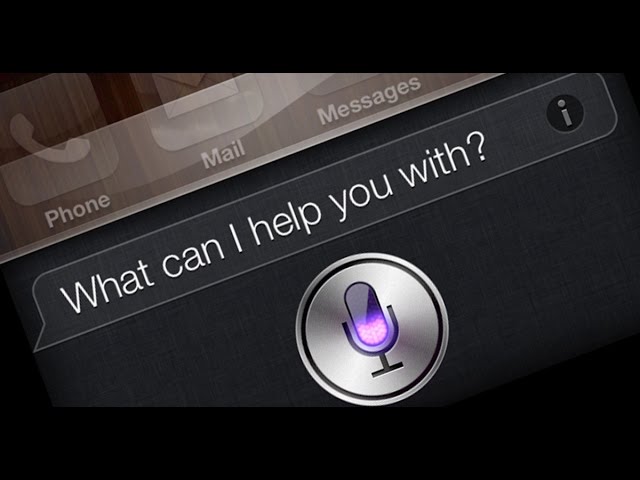
Adam Cheyer built Siri over decades, starting with 1993 prototypes at SRI and a DARPA project with a $250 million budget. Apple acquired it after the App Store launch. He discusses how shipping a product meant cutting features and prioritizing robustness over research ambitions.
I imagine much of the work that you've done around creating Siri and some of the sort of concepts that continue is one of those sort of long-term themes. It's been more than 20 years, as I understand it, since you began working on what became Siri. Do you want to go ahead and tell the story of how you came to— was it SRI? Was that how it was pronounced? How you came to SRI and the birth of Siri?
Sure. So I sometimes tell this story, you know, and I think it's really important for young entrepreneurs like yourself. You know, many times people see Siri emerge overnight, and there it is. It's like, wow, came out of nowhere, and wow, isn't it incredible? And they say, well, tell me, how did it happen? And I said, well, you know, we started this little company, and we launched a free app in the App Store. It was one app. Out of I think there were 350,000 apps at that time, and two weeks later, two weeks later, Steve Jobs calls the office. I mean, this is this is a moment. Talk about instant success. Make an app, boom. You know, and I kind of joked. I go, "Man, you know Apple is such a great company. Every you know any developer launches an app, and the CEO calls you himself personally." I just don't know how he finds the time. Right? So, in one way, it seems like instant success. But I'm like, well, it actually took 2 years of hard work by a team and a company to build that app that was inspiring enough to make Steve Jobs call the company. So, you know, it's not instant. It took 2 years to build that technology. But actually, it didn't just take 2 years. Before we started the company, I led this research project called CALO. It was the world's largest AI project in US history, funded by DARPA, $250 million. So for 5 years, with 400 people working on all aspects of AI, that was kind of the predecessor to CALO. So it wasn't just the 2 years. There was a lot of learning that had to come into it first. But that actually wasn't the start of it either. In the late '90s, I was building Siri-like systems with— we had TVs you could talk to. Apple finally just came out with one this year, I guess. And we had 3D virtual models of San Francisco, so when you're driving around, an assistant would project information, what you needed to know, on a virtual reality screen. And on and on and on. And that wasn't the start either. And so the end story was the first prototype I had for Siri was actually in 1993. 1993. This is before I ever saw a web browser for the first time, just to set that. I saw that in 1994 when Mosaic really became popular. And I had this vision for this world. We started out, and my first prototype, we had a tablet PC that looked a lot like an iPad, a little thicker. And it didn't have the touch aspect, but it had handwriting recognition, so you could manipulate the screen and do handwriting, and you could speak to it. And on— through this interface, you could control services running on many different computers, and pretty much everything you could do on the iPhone in 2000, when it came out in 2011, years and years later, we had on that system. So those same kinds of queries. But it had some really interesting perspectives that actually never made it into the Apple version 20 years later. And so I did this talk recently at AAAI, which is the largest AI conference. And I told the story of Siri Back to the Future. And in it, I took each version of Siri and said, this is fantastic. It does these great things. Well, let me tell you about this version that happened a few years earlier. It did these things that never made it in. And let me tell you about the version that came before that. And we went through 9 versions of the system, and each version got more advanced in certain ways. You know, there's always things that get left on the cutting room floor along the way. But it— so it's really been a lifelong— not lifelong, but a career-long project for me. I had this vision. I still have a vision that's not achieved. So what am I doing now? I'm working on a new company. And it also is another take on this vision that I've been working and trying to push forward. I feel like I've learned so much more that maybe now I'll get closer to what I was imagining. But yeah.
So it sounds like you were describing in many ways how, as you were advancing Siri, you were identifying the core functionality and pushing aside some of the other features that may have seemed brilliant at the time that you conceived of them, but for whatever reason didn't make the cut. How do you move forward with confidence as you're trimming features from your product, your design, and not be concerned that you're cutting away the heart of what you were trying to build in the first place?
Yeah, that's a great, great question. So when you're trying to do an AI system, but probably many other types of systems as well, you've got constraints and goals. So when I was building this research prototype at SRI International, which is kind of a think tank, you have different goals than trying to ship a piece of software to hundreds of millions of people in multiple languages, etc. They're just different. concerns. In the earlier days, you're trying to explore the space. In the later days, you're like, this has to work well enough, and it has to be robust and scalable, et cetera. So you always, when you're coming to a product, you have a list of features that are prioritized by your current goals. And you say, well, we have to make it scale, and we have to make it fast, and, you know, for the Apple You know, the mass market case. And you kind of work your way down. And now we'd like to get this, and we'd like to get that, and we'd like to get that. But if it doesn't scale, nothing else matters, or what have you. So I would say in my explorations over the years, I had different requirements, different end goals. And you can never solve the whole problem. You just don't have time, or it's just too hard to do perfect AI. you know, as you imagined it. So you have to pick and choose and iterate and improve. And I think we've done that, you know, pretty well along the way.