DFJ & Draper University of Heroes | Interview with its Founder - Timothy Draper
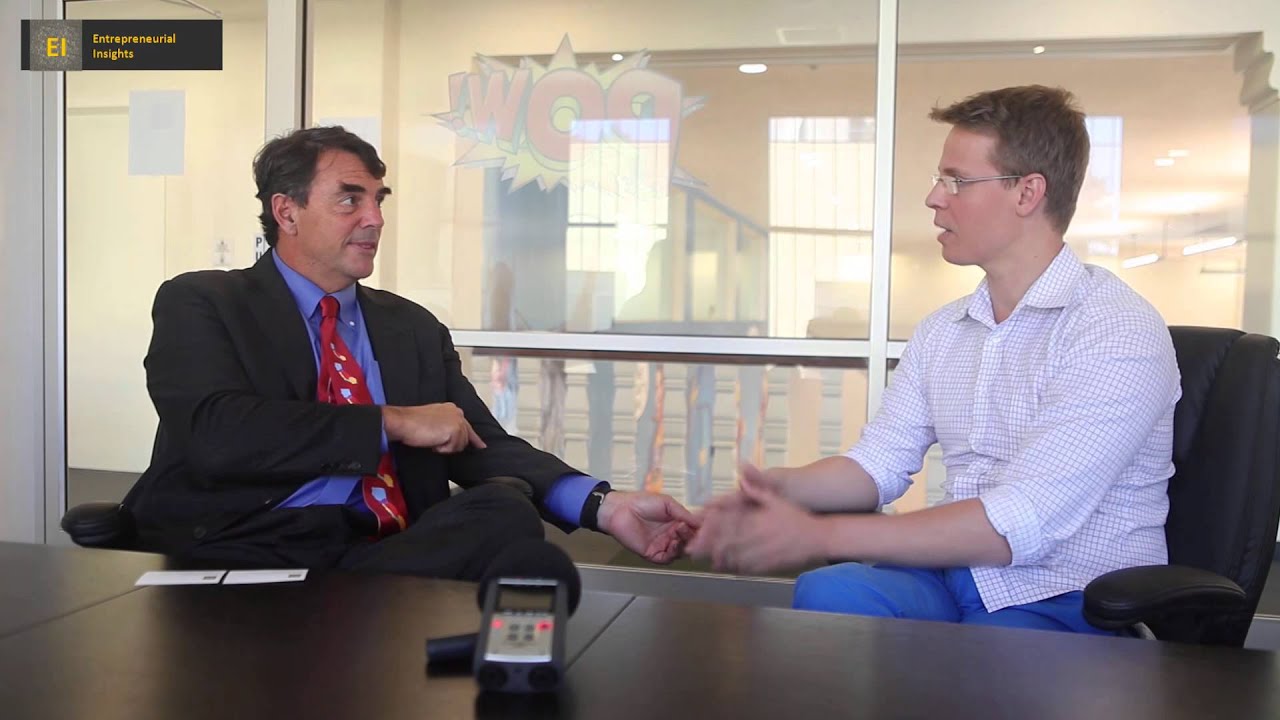
In this extensive interview, Tim Draper, co‑founder of DFJ (Draper Fisher Jurvetson) and founder of Draper University of Heroes, discusses his roles as venture capitalist and headmaster of an unconventional entrepreneurship school. He explains Draper University’s experiential curriculum—egg‑drop challenges, urban/rural survival training, and a final pitch to VCs—designed to spark creativity through risk‑taking and teamwork. Draper outlines the structure of his investment firms (Draper Associates for seed, DFJ for growth), their partnership model, fee structure, and typical due‑diligence criteria (uniqueness, market size, disruptive technology, and founder enthusiasm). He highlights current sector focuses: Bitcoin/blockchain as a transformative financial layer, telematics in autonomous electric vehicles, disruptive opportunities in education, and challenges in Big Pharma and the FDA, citing Theranos as an example. Draper provides a layperson’s explanation of Bitcoin, private/public keys, blockchain verification, and smart contracts, contrasting Bitcoin’s low‑cost, decentralized infrastructure with PayPal’s centralized model. He then advocates splitting California into six smaller states to foster competition, improve government efficiency, and restore local representation, drawing parallels to historical state splits and examples like Estonia’s digital governance. Finally, he offers advice to first‑time entrepreneurs: think bigger, pursue bold ideas, and act decisively. The interview blends conversational storytelling with strategic insights, reflecting Draper’s optimistic, entrepreneurial, and reformist outlook.
Chapters
Hi, today we are in Hero City in San Mateo and we collected all the great heroes of San Mateo. One of them is Tim. Tim, you are one of the founders of DFJ Venture Capital. Who are you? What do you do?
I started Draper Fisher Jurvetson and then I started Draper University of Heroes, which is this new school. And it all came from my venture capital work at Draper Associates. So there are sort of 3 entities, but they're all moving forward and they all do great things. So I guess I'm a venture capitalist and I'm a headmaster.
What does a headmaster mean?
A headmaster is someone who runs a school. And so I run this school, and it's a great school for extraordinary individuals who have a little bit of a spark to them. And we want to ignite that spark, and we want to turn them from ordinary citizens into heroes.
OK.
And the way we do that is we go through a real process. We go through— we teach future. We don't teach history. We teach future. We teach business in a very modern or advanced way where marketing is crowdsourcing and viral marketing and social media. And in design, we do very odd design work. We do an egg drop where they drop an egg from the 8th floor and they have certain materials that they can use.
Okay.
And they have to protect their egg or they don't get breakfast. And then we have survival training where the students have to go through real survival, both urban and rural survival training.
Out in the forest?
The rural part is out in the forest. The urban part is a thing like this. We say, okay, you have 4 hours, go get a job offer on paper and bring that paper back. That sounds fun. And so we do those kinds of things. Survival training is with real U.S. military special forces people who take them through maneuvers. And it's quite exciting because we want an entrepreneur, a hero, to understand physically, emotionally, and intellectually where their limitations are and where there are no limitations, particularly where there are no limitations. And then at the end of the 8-week period, we have them do a 2-minute presentation to a panel of venture capitalists. And so then they can air their brilliant idea to a panel of venture capitalists. And some of them get funding, some of them start businesses, some of them start revolutions. They do a little bit of everything. It's a very unique school. We also operate just as a team. Everything's team-based. So in school, normally you get an A, a B, a C. You get an A for not making any mistakes.
Mm-hmm.
But we encourage people to make mistakes. So our team-based approach gives— we give points to to teams who are— who do extraordinary things, either positive or negative.
Okay.
More points for positive than negative. But if something they try fails, that's still okay. We encourage that kind of behavior. And I think that that high volatility or the vicissitudes of activity generate more creativity and spark more intellectual power than just sitting in a classroom and falling asleep. So we've got a new school. And it's a school that I started because I— it is something I knew something about, which is entrepreneurs, because I've been funding them for 30 years. And that's how— That's where I got started is as a venture capitalist. I built up my business and we've had some great success with— our best successes have been when we have industries that are getting fat and lazy and bureaucratic and then an entrepreneur comes into that industry with just a new idea and they create a wedge in that industry and slowly but surely they grow to be the leader in that industry. That happened with Skype.
Mm-hmm.
And it happened with— it's happening with Tesla. It definitely happened with Hotmail. Hotmail eliminated the need for the post office to send messages to each other. And so we've had a lot of great success where Tim, let's talk briefly about DFJ Venture Capital.
How is the fund basically structured? What are the key investment criteria and segments?
It all started with Draper Associates. Draper Associates is the seed investor group that continues to operate as a seed investor. And then I brought on partners, John Fisher, Steve Jurtsen. We created DFJ. And Draper Associates still operates independently of DFJ. So we do both. DFJ does more venture work and Draper Associates does the early-stage work. So just to get that straight.
That's great.
We are— we operate as a It's a series of partnerships, and those partnerships are set up with investors who we call limited partners who have limited liability. They put their money in, but they're not liable for anything beyond that money. And, and then we take that money and we pool it with other investors and we invest it in a variety of different companies. As many as 20 or 30 per fund.
Mm-hmm.
And then we help manage those companies. We help— we sit on boards of some of them. We guide them in different directions. And then as those companies evolve, sometimes they get acquired or they go public, in which case then we can usually generate a really good return for our investors. And that's how the system works. And the way we're paid is we're paid a management fee and carried interest and interest in the profits of the business.
What are some kind of industry segments that you're focusing on? I'm pretty sure you're not investing in everything, but maybe you're focusing more on healthcare or on some kind of hardware or software or something like that.
Sure. My key focus right now— I mean, my focus continues to evolve because our business is, is really one where, where being a good generalist with a lot of narrow foci is, is generally better than being just focused on one thing. But what I like the best right now, I like Bitcoin.
Mm-hmm.
Because I think Bitcoin could do for finance, commerce, credit cards, what the internet did for media and communications and information. So I actually think that this technology is one that we can, as a, as a world, ride for many, many years to come. And so I actually love Bitcoin for a lot of reasons. One is For all the merchants in the world who've been paying 2.5 to 4% to credit card companies for all this time, they won't have to do that. For all of the people who send money to another country to take care of their family and pay 10% to Western Union, they won't have to do that anymore. The money will just go. The wealth of a nation, the wealth of a society, is always tied to the speed at which the money moves through— The system.
The system.
And Bitcoin moves through the system faster than any money anywhere. So, I think Bitcoin could end up being a major transformative industry for all of us. It could really make our lives a lot better. So that's number one, Bitcoin. Number 2, I actually think that with the advent of these electric cars and the self-driving cars, I think there are going to be opportunities in telematics where you, you add more and more software to the car, and then I think that's going to be quite valuable. I also look at industries where they are getting a little bit fat and bloated and bureaucratic. And I would say that education of youth— we call it K-12 education here, I don't know what it is in Germany— but it's from 5 years old to 18 years old. That education is operated very much by by a monopoly, combination of the teachers unions and the textbook manufacturers and the states, the departments of education. They operate as a monopoly. The great things that are happening in education are all around MOOCs, which are the online schools. The— The new kind of educating that is tied to search engines and to social networks and to other ways to educate people. That's all changing things very quickly. So I actually think that there's some great opportunities in education.
Mm-hmm.
Another big bloated oligopoly is the Big Pharma. Anytime they say big anything—
Accounting.
So big accounting, big Pharma, pharmaceuticals. Whenever they call it big anything, you know that it's an oligopoly that needs to be challenged by an entrepreneur. So all of— so I actually believe there are going to be some great opportunities in medicine. We have Big Pharma and the FDA here in the U.S., and they have sort of a relationship that's a little bit too comfortable.
Mm-hmm.
And any new drugs that come in— and you could cure cancer tomorrow.
Mm-hmm.
But by the time— you might be dead by the time anyone ever allowed your cure for cancer to go through FDA. It often takes hundreds of millions of dollars, like multiple hundreds of millions of dollars. To get a drug from, hey, this cured cancer, to into somebody's body legally.
Mm-hmm.
That's clearly not going to be something that lasts forever. I think entrepreneurs will be able to go after both sides of that equation. I think there could be an entrepreneur that challenges the FDA.
Mm-hmm.
And there could be an entrepreneur that challenges the drug companies, both. And I know one called Theranos is one we invested in, and she has figured out how to challenge the blood test market. The way you normally get a blood test is you get a needle in your vein, and then they keep putting more and more test tubes into your— into the— To get the lead. To get more blood out. Well, what she can do is with a prick of a finger, she can drop 2 drops of blood into a microfluidic chamber and bring back 50 tests.
Okay.
And not only can they— does she bring back 50 tests, but each of those tests then is logged in. So if you go and you get your blood tested today, and then you get it tested in a year and in 5 years and in 10 years, You're going to have a line drawn for each of those blood tests to see what's happened to your body over time. So, it's amazing research and it's amazing opportunity for people. That one's called Theranos. Very exciting.
Great. Let's talk about the venture capital fund again. How is the typical investment due diligence process working?
The investment process is different every single time. But there are some things that we're always looking at. When I got started in the venture capital business, I was knocking on doors and saying, hey, are you looking for money? And any new construction where they had something software, I was trying to knock on their door and find out what was going on. Well, now we've built a brand, and so Draper Associates and and DFJ have big brands and we get lots and lots of business plans.
Yeah.
So now we have a process where we filter those business plans. The things we're looking for are uniqueness, market size, and then are you riding a new technology that looks like it's really going to change an industry, and is the industry fat and bloated and bureaucratic?
Mm-hmm.
Once it's gone through those 4 checks, then we'll meet with the entrepreneur. And we'll— and the way we judge an entrepreneur is really all on how enthusiastic are they and how well do they get along as a team. And we're looking for more of the softer side of how a business is run. How passionate are they about their business? They all say, I'm really passionate about whatever. You know, watching people cook, or I'm really passionate about whatever. But just saying it doesn't present it. And I think if they show incredible enthusiasm and great knowledge of their business, that usually pushes us over the top and we'll fund it. Now, that's at the seed level. That's at Draper Associates level. If it goes up to DFJ, then it really has to have sort of gotten to the point where it's— the product is just about out. It looks like it's really going to work. Customers are starting to ask for it. There's some benefits like that. And for DFJ growth, it has to be to the scale where there are many customers using it and the business is scaling up and it looks like it's going to be a huge market. So then we do, you know, of course before we write the check, we do background checks on a lot of people. Not every time, but most of the time. We run Checks on customers to see whether they would respond well to something like this, and then we negotiate terms, and we just work it out and get to know the people as well as we can in a very short time.
Tim, let's talk about two major trends. One you just yeah shortly acknowledged, which is Bitcoin. Yeah. And the second thing. Which is also very visible shown on your cravat.
Yeah, 6 Californians. Yeah, yeah.
Yes, yes, yes. So let's start with Bitcoin. Can you briefly explain to somebody who is quite new to this topic how it works? How the Bitcoin system is distributed, how the information is stored and then exchanged when a transaction happens?
So Bitcoin is— turns out to be the most efficient safest, most stable currency in the world today. People just don't recognize it yet because it's had so many troubles getting to this point. But my Bitcoin is safer than my money in Smith Barney and Morgan Stanley. The, um, and the reason is that the technology is so advanced and, uh, in the way they've set up security is so advanced that, that you are— your money is actually safer in the form of Bitcoin than it is in any fiat currency anywhere in the world.
Mm-hmm.
The idea generally is that you have a private key and you have a public key. The private key you keep to yourself, and the public key is the one people send money into. You need the private key and the public key in order to send send money out of your Bitcoin wallet. So, it's more secure. It's much faster and much more efficient because if I owe you money and you're in Germany and I'm in the US, I have to get the money translated in marks. Is it still marks or is it euros?
No, no. German mark, we had something like 15 years ago and now it's euros.
Now it's euros. That's right.
But next time I go over there, I can pay a beer for you.
Yeah, I'll buy you something with a mark. So you turn it into euros, and in that translation, you lose money to the bank over here, and you lose money to the bank over here when it converts to—
Another currency.
Yeah. So it turns out that that can be done much more efficiently and much cheaper When you do it in Bitcoin. You, if you have Bitcoin, you just— I just send you Bitcoin and it's done.
Mm-hmm.
And you have Bitcoin and you can do whatever you want with the Bitcoin. You can buy things, sell things, whatever you'd like. And there are lots of new businesses. There's one called Snapcard that makes you— makes it so you can shop on Bitcoin and shop with Bitcoin on any site in the world. So you go to the To the checkout, and as soon as you check out, they say, would you like to pay in Bitcoin? And with SnapCard, you can just do that. The other thing you can do is you can just swipe a credit card. We have a company called Atlas where you swipe a credit card, but it's really a Bitcoin debit card, and you can pay for things.
Mm-hmm.
And it comes straight to the— straight from your account To the retailer and the retailer gets the exact amount of money. They don't— there's no 2.5% to 4% transaction fee.
Yeah.
So, Bitcoin has all of these great opportunities. Now, the other thing Bitcoin is, is a technology. There's something called a blockchain and it gets checked By all these people out there. So every time there's a transaction, the blockchain is being checked by many, many people so that the blockchain is always stable.
Mm-hmm.
What, what that also means is that you can use the blockchain for something called a smart contract. So we could have a smart contract. We could make a bet on the outcome of this Germany-US soccer game.
Okay.
Okay. And we, we make a bet of 1 Bitcoin. So you bet a Bitcoin and I bet a Bitcoin. We put those Bitcoins into a, into a secure escrow. And then when the, the game comes out, the outcome of the game is, let's say Germany wins, suddenly Both of those, you can— both of those Bitcoins go right to your account.
Mm-hmm.
And so that anytime there's an event, the smart contract can actually disburse to whoever it's supposed to disburse to. So, if we're all shareholders in a company, it can all disburse to the shareholders. If it's Tied to anything that's tied to an event can be done without lawyers or accounts or anything. It's just done in the blockchain and it shoots out to the people that deserve the money.
If I compare Bitcoin with PayPal, what drives the cost advantage of Bitcoin in terms of infrastructure costs compared to PayPal?
Well, the good thing about Bitcoin is that it's It's the crowd. It's an open source. So, there isn't some company with a bunch of overhead charging us for that extra overhead.
Because I have my own device, which is part of the infrastructure, and that's why I don't have this overhead cost. But I bear it anyway, but with my own device.
Yeah. And PayPal is now accepting Bitcoin, as far as I understand. I think they are. So they understand that this is a much better way to go. PayPal, when you use your PayPal account, you also have to pay your credit card guy. PayPal is kind of expensive. I think there are a lot more efficient ways to move money around.
Okay. Let's talk about the second trend. You are one of the proposers of separating California into 6 substates, I guess.
Yes.
Can you tell us a little bit more about the background and the reasoning behind it?
Well, it's— we're actually dissolving the existing California and creating 6 new states.
Yeah, yeah, yeah.
So technically, that's what's happening.
Okay.
Okay, there's nothing new here. Massachusetts turned into Massachusetts, Maine, and Vermont. Ohio left Pennsylvania. West Virginia left Virginia. South Carolina and North North Carolina split. We accepted Hawaii and Alaska at the same time into the United States. It's just nothing's happened for a number of years. We haven't— I think our democracy's gotten a little complacent because we haven't done anything because we're just thinking, oh, everything works, no problem, we don't have to worry about it. Well, it doesn't really work. A lot of things have gone wrong. First of all, government spending as a percentage of GDP is now almost 50%. So that's a big problem. It means that the incentive of most of the people are to create more government, and then they will be supported by less and less of a private sector. So you need a big private sector to generate them. A real positive appetite to come for government. Well, in California, it's even more insidious than that because 45— I grew up in California. So 45 years ago in California, California was the number one in education, the best state in the union for education, and in the best country for education in the world.
Yeah.
And we're benefiting from that. We've built an incredible Silicon Valley. We've benefited from that incredibly good education system that we had 45 years ago. Well, in that 45 years, the education system has gone from first to 47th.
In the world?
California's first— now the 47th. They're the 3rd worst in the U.S. And the U.S. has gone from first 1st to about 18th in education. That's a bad sign because education drives everything else. During that same 45 years, the number of prisoners we have in California has gone from— has quadrupled. We have 4 times as many prisoners.
Mm-hmm.
And we have much more recidivism, which means they keep going back to jail because They can't get employed.
Yeah.
We have huge job— we have big unemployment here, particularly in the rural areas. Big unemployment. And we're almost pushing jobs away because 45 years ago we were number 1 as the best place in the world to do business, and now we are ranked number 50. We are the worst state in the country to do business, and the country is getting harder to do business in.
Yeah.
So we, we're looking at that and saying something has to change. First of all, governments have to innovate just like every other sector of the world. They have to think in terms of how do we move forward, how do we become more efficient, how can we provide better service, to our constituents? How do we do it for less money? All those things that all the other businesses of the world do are not happening in government because they have these monopolistic fiefdoms. Well, if we have 6 Californias, it's set up so that those governments all have to—
Compete.
Compete for us. the constituents. So they have to improve. If something's not being done right, they have to improve. It's interesting, in California we also have all these other issues that are where there are different value systems if you are inland versus whether you're on the coast.
Mm-hmm.
And there are, and there are many other issues. So people are enjoying the idea of 6 Californias because They've got a— they'll get a choice.
Mm-hmm.
And they'll feel better about the choice. The thing I want is I want a government that is innovating, competitive, driven, and I want the value that I deserve as a constituent or a taxpayer of that government. So I look and I say, I'm not getting the service. We pay the most here and we get the worst service in California. So it's time. And it has to come from this state because it is the, the one that is operating the most like a monopoly because they've got the nice weather. We got great weather. Nobody wants to leave.
Yeah.
But it is a huge state and it really needs— we need to be closer to our consumers. I mean, we need the government to be close to its constituents. We are feeling more and more distant from the people in Sacramento who make all the laws for the state.
I totally get the point that once you have more countries, that they compete and maybe innovate, because if they are monopolistic, they don't have an incentive, and if they are more, they compete for it. But this would have, I think, yeah, One implication and one question. One implication would be this should apply then to all other states, not only the US but also abroad as well. So maybe having smaller kind of political entities. This is the one implication that you would agree, I assume.
I think it is better to at least have it so that people feel represented, so that they are, they are attached to their government. Here we call it we the people.
Yeah.
We are the government. But I feel in California it's gotten to be a little bit we-they.
Yeah.
So that we're the people and they're the government, as opposed to we are all the government. I think you only feel that if you are close enough so that you are— you're feeling like you're being represented, you're being heard. And we're clearly not being heard here. Now, will this spread around the world? I hope so. It's interesting that competitive governance is already starting to happen.
Hmm.
Singapore, 45 years ago, was one of the poorest countries in the world. Now they're one of the richest because they created this platform for growth, and that platform made everybody much more successful. Same thing in Korea. Korea was a very poor country after the war, and now it's a very, very wealthy country. China is looking the same way. Japan after World War II was a very, very poor country, and now it is a very wealthy country. And that's all because of the platform that the government laid out for growth. Russia was a very wealthy country And then the Bolsheviks came in and they made business illegal and it became a poor country. And now only now are they starting to realize that a free market is going to improve their situation. So, oh, in Estonia, Estonia has— there was— the president of Estonia lived in Silicon Valley for 9 years. He then went back to Estonia and And he made— he created a whole new government with— that's the most efficient government in the world. It's all digital signatures. It's all digital voting. It's— I can set up a European bank account in 24 hours through the Estonian government.
Mm-hmm.
I can become an Estonian virtual resident and have the benefits of being a part of Estonia.
So we talked about the implication of this, having more and more and more states compete for the voters. The other question that arises from my point of view is, how do you manage the different political levels? What I mean by that is like in the US, state law, federal law. In the European Union, for example, you have this kind of very regional law, then you have the German law or country law, and then you have the European law. Law, whereas more and more laws are generated on a more European level, which will then not help the competition.
Yeah, I think that's one of the— well, that highest level is also competing. They're competing with the United States.
But I cannot move that easily.
It's harder to move, yeah. But as we can move more easily, the governments are going to have to recognize that that and realize that they're going to really have to compete for us. Having those levels, I always believe that the best government is the most local government.
Mm-hmm.
The one who is your neighbor saying, you know, please don't build that thing because it's going to be looking right into my bathroom window. I think that's the most— that's the best form of government. Or, you know, please smoke outside, or please don't smoke around here. I think government is really important for when something you do affects something I do, or— and we are in each other's way. Some sort of a set of rules, set of laws for that, it's very important. Beyond that, it should all be put locally. The information should be spread globally, but the, but the actual application of the law should be local. And, and I, I see with the EU and with the US both seeing more and more power centralizing on the central governments and not being pushed away.
Mm-hmm.
The genius of George Washington was that he was in effect the king of America and he pushed power away.
Mm-hmm.
He said, I don't need to be the king. Let's have the king rotate.
Mm-hmm.
Let's have it be a president. We'll call it something else and let's have it rotate. The greatest leaders are the ones that are able to push power down away from themselves. Gorbachev did that, and so did Deng Xiaoping. Deng Xiaoping said, okay, it's okay to have a free market here, it's okay to make money. As soon as he said that, a billion Chinese were freed up to be entrepreneurs or to be business people, to make great things happen. That's an amazing— that's like releasing a whole pile of people from jail or whatever.
Mm-hmm.
It really freed that country. And he did that by, in effect, pushing the power down to the citizens and allowing the citizens to do the right things for themselves. I believe that that is absolutely mission-critical for any great country. It's for the leader to know what the issues are that they should be leading on and what the issues are that should be pushed down to the local level. Great.
Tim, we always try to help first-time entrepreneurs make less errors so they become more successful when starting their own company. What would you advise them to do, imagining that the first time they start their own company, If an entrepreneur friend comes to you and asks for advice?
Well, I think my advice to most entrepreneurs is you're not stretching far enough. You've got an idea, so do 50 other people around the world. They all have that same idea. They're all building that business. Why aren't you stretching to something a little higher than where you I think some entrepreneurs think, oh, if I'd only done a better sales job in the meeting, I would have gotten the money. I don't think that's usually true. Most venture capitalists, angels, they're looking and they're saying, how big is this idea and how good is this person? And I think they're looking beyond the sales. So I think that'd be the advice I'd give. Also, go for it. I mean, you only live once. You ought to do what you can with your life. And if you are— if you know this is your mission in life, you know, why are you waiting?
Great. Tim, thank you very much.
Great. My pleasure.
And the next time you want to start a company, think about what Tim said. Stretch yourself and become a hero. Thank you very much.
All right, good. Okay, thank you very much.
More from Tim


He Sold His Car to Build This Startup, Then Pitched It for $1M 😳 #Startups #AI

This Startup Moves Your Crypto BEFORE Hackers Can Steal It 😳 #Crypto #Cybersecurity




15 Months Without Refrigeration?! This Startup Thinks It Can Go Global 🥥 #FoodTech #Startups



