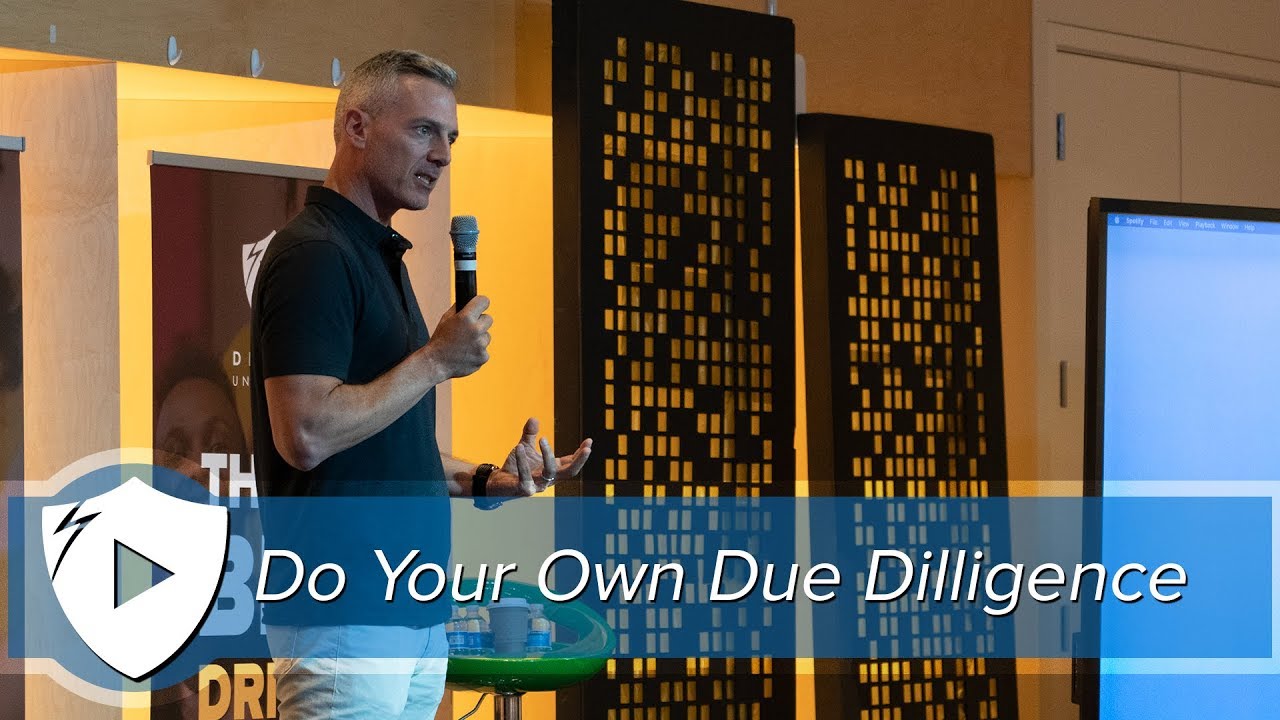
Randall Kaplan, co-founder of Akamai and founding partner of Jump Investors, warns entrepreneurs and investors to do their own research instead of relying on others' due diligence. He recounts his experiences with Akamai and Global Crossing, and emphasizes the importance of spotting red flags and trusting your own judgment.
Chapters
A lot of my family office friends, they all said, you're nuts, this is never gonna work. And again, be your own judge, do your own research. These financial firms had 20 people, Harvard MBAs, Stanford MBAs, all way smarter than I was, and that's okay. I did my research, I liked what I saw, I made the trade, and we made 10 times our money on that deal. Hi, I'm Randy Kaplan. I'm an entrepreneur and a venture capitalist. I am the co-founder of Akamai Technologies, and over the last 20 years, I have invested in more than 70 early and late-stage companies. To become an entrepreneur, please enroll at Draper University. I started my firm, Jump Investors. I wanted to be an investor. I thought I found this opportunity at Global Crossing, Gary Winnick's company, which by then had a $44 billion market cap. It had no value when I would have joined that company. That would have been a very good financial outcome for me, and as well an experience that would have been phenomenal. And I found the Akamai opportunity as well, no help wanted ads. The Sun America job, no help wanted ads. So I felt if you do your research and you're thorough, I could find good opportunities to become a venture capitalist. I started my own firm, Jump Investors, in August of 1999. We're about to celebrate 20 years in business, which is pretty good. The fact I've had a job at the same company for 20 years, being a restless person, always looking for something new and fun and challenging to do, has really been phenomenal. We've invested in over 70 early, middle, and late-stage companies. Some of them have worked out really well. Like Google and Seagate, and many of them, most of them, don't work out at all. And I use only my own capital. I don't have a fund. And when you lose money, it's a very bad feeling. You're depressed. You feel really stupid. You're excited to make every investment. They're all going to go great. And then 7 out of 10, or 8 out of 10 if you're having a really bad year, and sometimes even 9 out of 10 will go to zero. And it's depressing. You think back, what did I do? Look back, and what are all the mistakes? Can you really analyze them and come up with some methodological approach to figure out what worked and what didn't work? Sometimes you can, and sometimes you can't. One of the things I want to say to everybody, if there's any red flag at all, even if you love the deal, you love the product, don't do it. If you have any reservations about the people, something rubs you the wrong way, You're not really sure, something that person said that was a little off, exaggerated, don't do it. Because we look back and I think about, God, I do remember that conversation. I was feeling a little weird. We had done a lot of due diligence. They had other great investors, people better than me, bigger firms. They wanted to do the deal, and I overlooked a whole bunch of things. Do not substitute someone else's due diligence for your own either. One of the big mistakes I made when I started my firm in 1999, I was getting a lot of deal flow. Akamai was a hot company. People like listing founders of cool companies on their cap chart, so you get a lot of opportunities. And I relied on other great, well-known VC firms. I'm not gonna name them. They have typically as many companies fail on a percentage basis as we do. Not all firms, but many or most do. And so that was a mistake as well. I've been involved in a bunch of different things at Jump over the past few years— real estate, private equity, hedge funds. Those of you who here knows who John Paulson is? Okay, John Paulson made one of the greatest trades on Wall Street of all time at the peak of the housing bubble. He basically shorted subprime debt secured by risky real estate housing investments that were— the debt was divided into 7 different tranches. He shorted the bottom tranche at a point where the housing boom showed no signs of going down. He had done the research. He predicted the dire consequences. He started a fund. It was very hard to raise money for this. People looked at him like he was crazy. I thought, that's really interesting. I had known the team a little bit, because I had an investment in one of their other funds. I always like, as an investor, to get to know my managers. I flew to New York to meet with the team. Very impressive people. I thought, what a unique idea this was. And I did my own research on it. And I thought, the way they had structured the trade, you could make 10 times your money. There was a 3-year lock and a 1-year cost on the trade. And so, the most you could lose was 33%, and the most you could make was 10 times your money. And everyone thought he was crazy. I showed this deal to SunAmerica, which had an $8 or $10 billion hedge fund portfolio. A lot of my family office friends, they all said, you're nuts. This is never going to work. And again, be your own judge. Do your own research. These financial firms had 20 people, Harvard MBAs, Stanford MBAs, all way smarter than I was, and that's okay. I did my research, I liked what I saw, I made the trade, and we made 10 times our money on that deal. The best advice I have for any wannabe entrepreneur is to believe in yourself, don't listen to anybody else, and to just go do it right now.