Empowered by technology | Dan'l Lewin
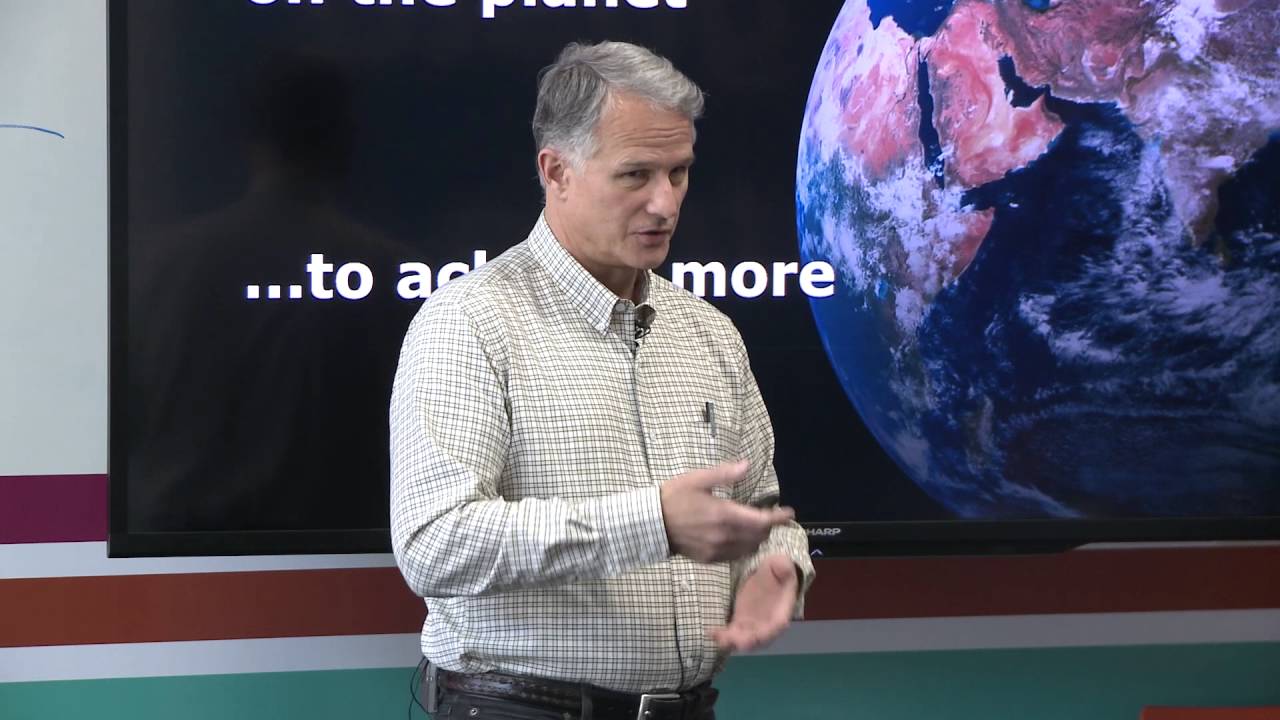
Dan'l Lewin, a Microsoft veteran who worked on the Macintosh and early web, argues technology will become invisible infrastructure like electricity. He sees opportunity in civic tech, mobile devices as identity sensors, and privacy-focused services replacing ad models, though warns of regulatory and ethical challenges ahead.
Chapters
So how long have you been here? 3 weeks. 3 weeks? Okay, good. And you've had 1 or 2 of these a day is my understanding or so? Okay, cool. We'll make this one fun, all right? All right, great. So I'll do my best to entertain you and tell you some stories, but maybe try and provoke some thought and then ideally invite you into a conversation. Give you a little sense of how things are going in the industry as I see it. I'll do that through the lens of what I do at Microsoft and what we're doing as a company, but I think it's consistent with sort of the industry direction in general. And so I'm not gonna make this a pitch. It's really a conversation for all of you, okay? Okay. As my introducer, I'm sorry I didn't catch his name, pointed out, I spent my first 13, 14 years at Microsoft focused on the startup and venture capital community here in Silicon Valley. I moved here in 1976 when I finished college, so you can do the calculation, that was 40 years ago. And I bumped into some interesting people when I arrived in Palo Alto. One of them was working on the protocols which became part of the DNS server architecture of the internet. This is before the internet. And the other one was working on algorithms, cryptography, which if you witness the current international strife and issues around encryption and things of this ilk, he's the best guy on the planet on crypto issues and they run an institute here in Palo Alto. So I ran into these people 40 years ago, And long story short, sort of stumbled into Apple Computer in the very, very early days and got to work on the Macintosh when there were about 10 people in the group. And I was there for several years prior to that as well. So I've kind of been on this ride of microprocessor-based activity, and a lot of what you experience today, I'm guessing— I see a lot of Apple logos in here— the operating system that's inside of that machine and the phone is NeXTSTEP. And I was one of the founders of NeXT. We built that operating system, and that company was then sold to Apple. I was long gone before that, doing some other things, running another company. But so I've sort of been party to piecing together operating systems and underlying technology issues from the vantage point of, as you see, a degree in politics. So one could argue that I must be a politician because I'm not an engineer. But I've been around engineers for a long time, and like most of you in the room, I'm sure at some point in your life you were probably the smartest kid in the room on math issues. And I was pretty good with math when I was young, and that served me well. I had a 2nd grade teacher who taught me how to deal with binary and add and subtract bases when I was in 2nd grade, so that was helpful for me. So if you haven't— I'm sure most of you are good enough at math to get by these days. But anyway, so that's kind of where I come from and where you'll hear this talk. hopefully where it emanates from in terms of my interests and sort of my roots and why I'm doing what I'm doing. Because it's an exciting time in the industry. You're all doing amazing things, no doubt, or you wouldn't be here, or at least have the opportunity to do amazing things. And what you'll experience, I think, around town and with the presentations that Tim and the team here will organize for you is a sense of overarching optimism that technology can make the world a better place. And of course, like any technology or technique, it can be used for good or bad. And the challenges ahead are a combination of what you build in terms of your products and services, but also the world in which we live and the regulatory and legal regimes which are emerging around the world. That include the borders by which this data is gonna flow in and out, but also personal issues, privacy issues, security issues. So I'm gonna talk about a lot of those things for you today. So again, the Microsoft lens is that we rebooted the company, in your terminology as a startup and an entrepreneur, we pivoted about 2 years ago with a new CEO. The old CEO is the guy that hired me to do my job. The new CEO is the last guy that I worked for. So I've had license to help shape some of the things that I'm gonna talk about. And the most exciting thing of all, we've tried to encapsulate into our sort of corporate mission now, which is that everyone, every person on the planet can be empowered in a much more interesting way using technology. It's not necessarily that everyone's gonna naturally have a PC because Microsoft comes from the PC era. It's not naturally that everyone is automagically gonna have a cell phone and that's gonna make things happen. In this time frame during which you're building your companies and technology is going to evolve in the next 5 to 10 years, technology is gonna fade into the fabric. It's gonna be part of the woodwork. It's gonna be a lot like electricity. It's just, it's gonna bring things to you. And so part of what I'm going to talk about is the way we see things and where we think the industry is going, again, at a macro level. And the goal through all of this is about human potential. You know, so many amazing things have happened in the last 10 years with the web blossoming. How many people know where the World Wide Web was built? Where? CERN. It's CERN. In Switzerland on a NeXT machine, right? It was done on a NeXT machine that we built. So NeXTSTEP, Tim Berners-Lee, we got him a NeXT machine. He built the web, an application layer on top of transport, the internet. So the opportunity since that moment in time is really about unleashing the data. So the web standards are about describing data into smaller payloads, XML, and the transport layers, and all the protocols, which are now standard fare. You get to use for free. Everybody's agreed on the standards. It's really, really good. So the whole idea is about moving data and information. It's not about, although it's important to our business and it's important to you, I'm sure, using a word processor, you gotta put your pitch together, so you're gonna use a spreadsheet, you're gonna calculate things, so you're gonna use, you know, whatever, a database. Those are contentless applications that are really good for automating rational tasks. People are still gonna do a lot of rational tasks. They're gonna do a lot of stuff. You're gonna compose words. You know, you're going to write music, you're going to do whatever you're going to do with those kinds of applications. But the real power is bringing data and information to people and organizing in a way that will hopefully again lift people up. And we've seen an immense amount of that just occur naturally with cell phones where people can start to think about market pricing with SMS. They can do authorization for prescription validation of delivery of different capabilities, again whether it's a drug is automating and releasing and All the interesting things that can be done in real time today are particularly exciting, but it's just the beginning, as you all know. We've thought a lot about where do we start from. Again, you've got all the other big companies that within which you kind of have to navigate your companies and your business ideas. You've got to play within the big ecosystem. Within that context, having a little view about the way we would think about things at Microsoft is really best described in this simple little diagram, which is that at the end of the day, there's gonna be a big set of machines in the cloud that you're gonna go use, and they're available effectively for free. You know, what used to cost $1 million, you can rent for, you know, 5, 10 cents an hour now at the most, right? I mean, so it's just— it's there. You all know this. It's at your fingertips. And there are gonna be all these devices like I just was describing. And you know well, probably better than I, because you grew up with them. But the idea of a mobile device that can do amazing things, that is your identity, you are the market, you are present on the network, things come to you, you can control and reach out to different people, but you are the market, you are the target. There are, as you know, and you are probably thinking about this in some of your businesses, just an immense amount of idea formation, Industrial, public-private partnerships, which is my area of what we call civic tech. Just the whole idea of thinking through public and private information, blending it together, placing sensors in the environment, and starting to instrument the world around us, whether it's self-driving cars or all the things that you're all aware of. The whole idea here is that devices, sensors, and the phone is nothing but a very sophisticated sensor at the end of the day that can carry transport of all kinds of stuff. They're gonna help you in what we'll consider a digital life and a digital work framework, right? And so the work framework is what I just described. It's a strong position for our company, and it's where we will come from, and we'll work from that. A lot of that has to do with the identity systems, right? 'Cause you're known as an entity on the network because of your phone and your phone ID. If you work in an enterprise, You've got a logical ID as well, which is typically an email address. And then governments like that, because if you're working for an enterprise, a company of some sort, and you've got a .com email address, Microsoft, Dell, Foo, whatever it is, dfj.com, you're a taxpayer, right? And that's what feeds the whole system. On the other hand, if you're using your Gmail account or a Live account or Yahoo account and you're floating around Out on the web, right, you're the market and people are monetizing clicks, but they don't necessarily— although down at the root level and through the carriers and transport, they know who you are and where you are, of course. But the monetization process, the business model in the market, is really just your transit, where you're going, what you're doing, what you accept, who you engage with. And so this work-life balance is this blending of this phenomenon that's emerging around privacy and security. security issues, which is particularly exciting, and that's where the opportunity is. And I'm guessing that a lot of you are thinking about businesses that are at the juncture of those 2 things. But if you're not thinking about it, you should be aware of it, because on the work side, people are willing to pay directly. Real— they pay money, not ad clicks, not on use and behavior, but they pay money for security and privacy-oriented capabilities. And Again, if you're thinking about your business or your business model, if you have a hook to something like that, it can give you a more aggressive hook into creating a revenue model for your company. Again, it depends upon what your thinking is. You may have the next best thing or best idea from sliced bread, which is all about becoming the next Foo, the next Facebook, or something of that ilk. But if you're thinking that your opportunity lies more in something that's more of a commercial or not necessarily enterprise but a commercial-oriented service, then you have to factor that into your thinking. And then you see these new interesting disruptive layers like around transport, whether it's with Uber or things like that. As a company, we partner with the likes of Uber. We've done some mapping things with them. We have an investment in the company. We see these things as important bridges between work and life. And that's the way we're thinking about the world. Thank you.
More from Tim


He Sold His Car to Build This Startup, Then Pitched It for $1M 😳 #Startups #AI

This Startup Moves Your Crypto BEFORE Hackers Can Steal It 😳 #Crypto #Cybersecurity




15 Months Without Refrigeration?! This Startup Thinks It Can Go Global 🥥 #FoodTech #Startups



