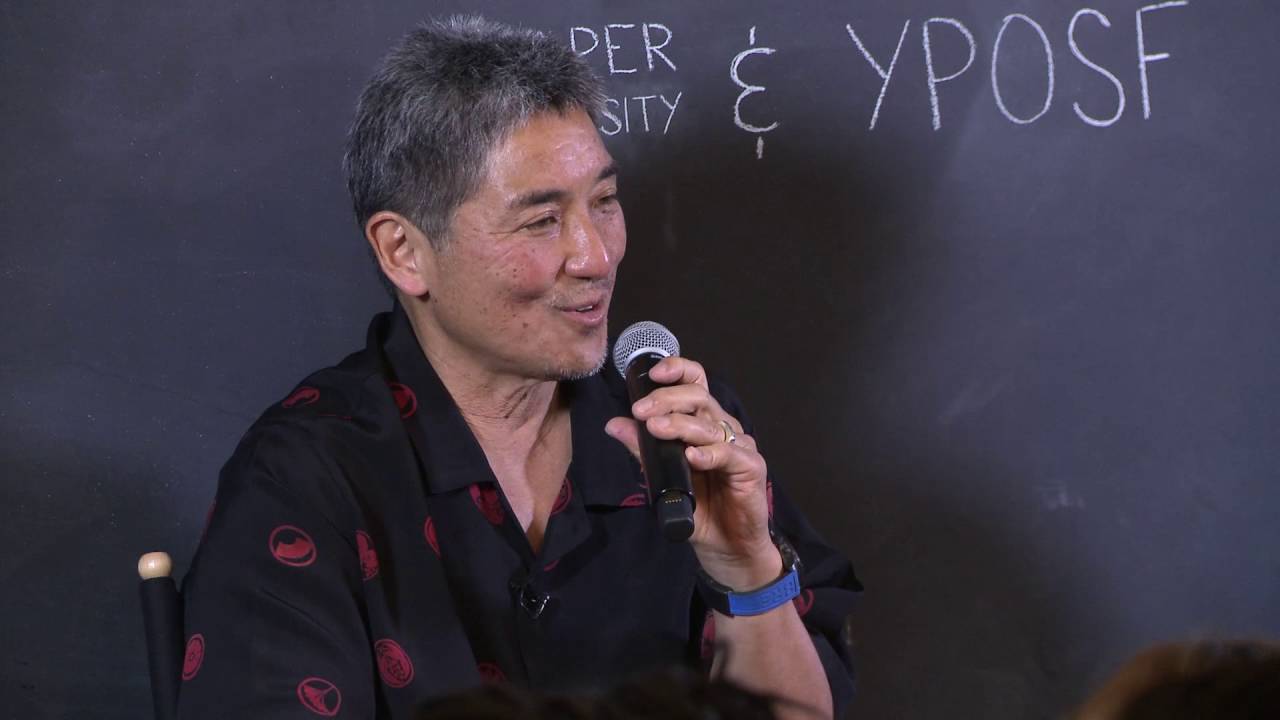
This content was created by Tim Draper. This content was uploaded by Tim Draper. This is a YouTube video titled "Entrepreneurship today | Guy Kawasaki" (created 2016-07-18). It is an interview-style conversation between an interviewer (Speaker A) and Guy Kawasaki (Speaker B) about the current state of entrepreneurship: that it may be the best time for tech founders due to free/cheap tools, cloud infrastructure, social media marketing, and crowdfunding; the downside that anyone can start a company; Silicon Valley's advantages (ecosystem, tolerance for failure) and disadvantages (competition for talent); and observations about international entrepreneurship and consumer similarity.
Chapters
So let's talk about entrepreneurship today. Do you think the environment has shifted or has changed?
Yes.
Okay, so talk about that.
I think this has got to be the best time ever to be an entrepreneur because for tech entrepreneurs anyway, if you go down the list of all the things you need, they're either cheap or free at this point, right? So tools are free. I mean, who buys tools anymore? Everything is It's a free tool. Infrastructure, you used to have to buy servers. Now you call up Amazon Web Services or, you know, you—
That's true.
Rackspace or somebody and you don't buy hardware anymore. I mean, you buy MacBook Airs, but you don't buy big iron anymore. Most teams are virtual, so you need less commercial real estate. And marketing, thank you God for social media because social media is fast and free and ubiquitous. So, you know, I would make the case that the more you spend on social media, the worse you do. So you should spend nothing on social media. So now we have free marketing, we have cheap infrastructure, we don't need much commercial real estate, the tools are free. And if you still need some money, we have these things called Kickstarter and Indiegogo. You don't need to suck up to venture capitalists anymore. Life is good. It's not going to get any better than this. Now, the downside of this is that any schmo can start a company.
And so every schmo does.
Yeah, so every schmo does, but I would make the case that I would rather have a meritocracy where every schmo can try than a system where it depends on who you know to become an entrepreneur.
Do you think there's still a geographic advantage to Silicon Valley though?
Yes and no. There is some advantage in that there's certainly critical mass of services and venture capitalists and the expectation of entrepreneurship. Also, I think what's really important here is that it is okay to fail in Silicon Valley.
Hmm.
It might not be so okay to fail perhaps in Europe, right, where— or in Asia. In Asia or Europe, if you fail, you kind of condemn your family for the next 3 generations. It's true, right? On the other hand, I mean, take France as an example where you can't send email on the weekends. In France, you could say, well, my father's uncle's sister's grandfather's grandfather's grandfather fought with Napoleon. That's it. You live off that for like 5 generations, right? So I think that's one of the keys to the success in Silicon Valley. So yes, we have advantages here. On the other hand, we have a disadvantage, which is in Silicon Valley for talent, you have to compete with Facebook, Google, Apple, Cisco, YouTube, Pinterest, Twitter. Maybe not Twitter so much. Twitter. I'm a Twitter shareholder. Hey, I'm a Twitter shareholder.
Points for honesty.
Yeah, yeah, yeah. I just want to see if Twitter gets back at me for saying that. So it's a war for talent here. So the good side is there's all this infrastructure, there's expectation, there's like entrepreneurship in the air. The bad news is it's very competitive for talent. But my experience, and I go all over the world, that entrepreneurs are much more similar than they are different. And everywhere I go, they're almost, you know, obviously languages are different and accents are different, but basically 2 guys in a garage, 2 gals in a garage, a guy and a gal in a garage, anywhere in the world, they're very, very similar. I just came back from a conference called Campus Party in Guadalajara, Mexico. Okay.
Okay.
Get this, get this. There were 20,000 high school students there, okay?
Wow.
And they took over something like Moscone, and they all had 2-person tents, pop-up tents. So they slept in tents, and they brought in these portable showers and portable sinks, and 20,000 high school students did that. And, you know, then you come to Stanford and they're like all these Stanford entrepreneurs, and they got to have, you know, like gigabit Ethernet to their room, and then they need to have ping pong tables, and they need sand volleyball, and they need mentors, and they need, you know, healthy snacks, right? Right, right, right. They need vegan non-GMO snacks, and these 20,000 students are in Guadalajara in tents, and I'm like, shit, you know, any one of them could kick Donald Trump's ass, and it's just I was just so happy to see that. I mean, we should build a wall around America to keep us out of there. Anyway, don't get me started on it. You want to know how I really feel?
Let's talk about the international aspect, because the crowd is so international. And we've already started talking about that a bit. In terms of international marketing, or going global, or going international, Like, do you have any observations or lessons or things that you learned while you, you know, in the course of your career?
I know I work for Canva. Canva started off in Australia, English version. Now it's in 9 languages. And again, other than this language issue, I really think people are more similar than ever. They have similar desires, similar needs.
Not just entrepreneurs, but consumers. Yeah.
Like, you know, somebody wants to create graphics. in Croatia and someone who wants to create graphics in Santiago, they're not that different. It's amazing. For all the commonality I see, I don't know why we're at war so much. It's hard to wrap your mind around that. I basically think all the politicians and governments hate each other, but the people get along. I think if you just got off a plane in Iran, you wouldn't feel hated as an American.
No.
If you're, you know, if you're the government and the military, maybe, but I think people—
Yeah.
I think we're more similar than we're different. I really do.