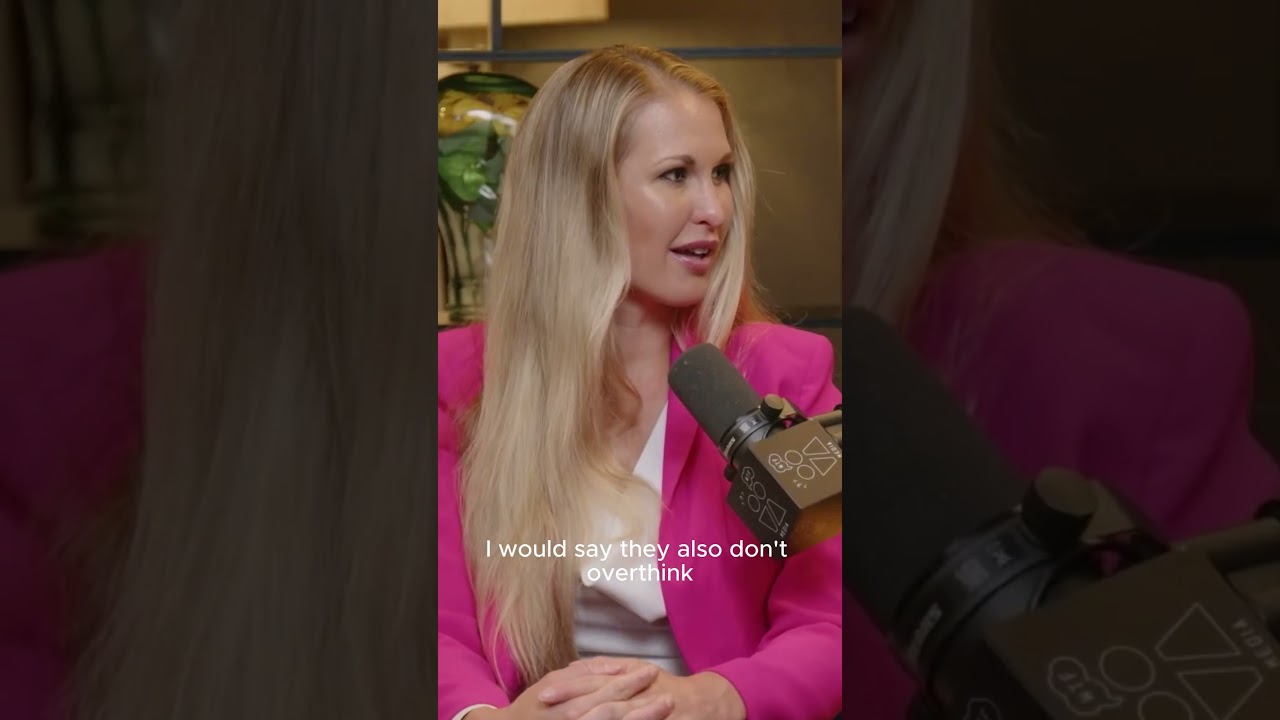
In this interview, Mark Hollander, Chief Marketing Officer of OpenSea, argues that NFTs are far from dead, positioning them as a foundational technology that will power a wide range of industries—from gaming and art to real‑estate and tokenized collectibles. He outlines OpenSea’s transformation from a pure NFT marketplace into a comprehensive, non‑custodial, on‑chain platform that supports major cryptocurrencies, meme coins, tokenized assets (e.g., Pokémon cards, Rolex watches, digital tickets) across roughly 26 blockchains. Hollander details the upcoming OpenSea mobile app, which aggregates multiple wallets (MetaMask, Phantom, Ledger, etc.) into a single portfolio, offers instant fiat‑to‑crypto on‑ramps via Apple Pay, and abstracts away traditional onboarding hurdles such as seed‑phrase management, bridge navigation, and chain selection. He emphasizes the importance of removing friction to enable mass adoption, citing concrete user‑experience scenarios like converting USDC to ETH for a $20 tokenized Pokémon card. The conversation also covers OpenSea’s strategic push to treat AI agents as first‑class participants on‑chain, providing an MCP server and API that let agents buy, sell, and trade assets, with the expectation that agentic trading will dominate future markets. Finally, Hollander reflects on OpenSea’s role as a potential “everything app” that could attract users traditionally tied to centralized exchanges, highlighting the value of unified ownership, verifiable digital assets, and a seamless, consumer‑grade experience.
Chapters
I think we will see another major time for NFTs. It's too powerful of a concept and a technology. It has too much potential for a variety of industries for it to not take hold. But when it does, I think we will see success in a very different way than we did back in 2021 and 2022. People will start to really understand that there is power in taking ownership over digital assets in a verifiable way. Absolutely. provable way and that it will affect things like gaming or the tokenization of, you know, art or collectibles or, you know, real estate or a variety of other things in this world. And OpenSea is building the rails and the marketplace so that anything that people want to do in a non-custodial way on-chain, that they can do it all here, all in one place with a seamless experience between mobile and desktop.
Mark Hollander, the CMO of OpenSea. Wow. We're going to have An incredible interview today. It's powered by AIBC, one of the biggest events in Rome coming up in November, which we can't wait to invite OpenSea to, actually. And Adam, how are you feeling today?
I'm stellar. How are you?
Yeah, no, it's great. I mean, I'm so excited to catch up with you because it was just such a powerful moment in internet history when OpenSea came onto the scene, right? And it was sort of like the front door. I think you've referred to as the front door to on-chain culture, essentially, or somebody has. That is what— that's how I felt about OpenSea at the time. And it was taken over as the on-chain marketplace, right? Like the NFT marketplace of all marketplaces. I think at the peak it was doing about $5 billion in volume, right? And it was a crazy time. So it's really cool to catch up with you now to see how OpenSea has evolved and what you guys are working on.
Yeah, of course.
So tell us a little bit about these times and now how things are shifting and how they're evolving and what OpenSea is today.
Yeah, so OpenSea, is most well known, of course, as an NFT marketplace. If you ask most people at this conference, they would say, oh, OpenSea is the NFT marketplace. That being said, we've evolved a lot over the last year. And so you can come to OpenSea now on our new platform and you can trade major crypto, you can trade meme coins, you can of course trade NFTs, but not just the NFTs in the way that people knew them in 2021. But, you know, you have things like tokenized assets, you know, Pokémon cards, Rolex watches, digital tickets and the like. And you can do it all in one place. You can do it seamlessly across 26 chains. Right.
Right.
And so what we are evolving into is a single one-stop shop, best place to do and trade and discover anything on-chain, and to do so in a non-custodial way where you really have ownership over your own assets. And so in our new mobile app that's coming out very soon, you can take all of your wallets. And so, you know, you can have the wallet that we provision for you in the app, but then you can add your MetaMask wallet, your Phantom wallet, your, you know, cold storage Ledger wallets, and you can have one singular portfolio of everything you own all of your assets. And so you have your NFTs next to, you know, your Ethereum and your Bitcoin next to all of your meme coins. We're adding perps very soon. And you have one singular consolidated view of everything you own across all of your chains, across all of your wallets, all in one place, all in your pocket. And that's something that nobody has done particularly well to date. And the other thing that we're doing that we're very focused on is abstracting away all of the complexity that makes it really difficult for people to onboard into crypto.
Oh yeah.
And so, you know, traditionally in the past, you know, you had to get a wallet, you had to learn what a seed phrase was, you had to figure out, you know, what you wanted to do for security. You then have to figure out which blockchain you're on. You have to figure out how to actually onboard your fiat into crypto. Then you want to move it from chain to chain. You're dealing with bridges and different apps. And so what you can do in OpenSea Mobile is you install the app, you have a wallet within seconds, you double-click Apple Pay, you convert your fiat into any crypto that you want, and then you can take that crypto and you can do anything you want with it. And so if you buy USDC on Base and you want to turn it into Ethereum on Arbitrum, you can do that. If you want to then take that Ethereum on Arbitrum and use it to buy a mainnet NFT, you can go and do that. And so everything is easy, it's seamless, the complexity is completely abstracted away. It feels like a consumer application of crypto, but it's extremely powerful underneath the hood, letting you to actually transact on 26 different chains across all these different asset types, across all of the different wallets, whether you are in our ecosystem or bringing something in from the outside.
I mean, this sounds truly amazing coming from me, who's an avid NFT collector, and I've been through the whole experience, right, of the bridging and the multiple chains, and it's It's just so difficult. It's been so difficult. I didn't see that as a viable way to get mass adoption, right? It's not. It's just not. And so those were the early days. We were experimenting. We were hoping for that next product that would allow people to come in seamlessly. So at the conference, we've been asking— I mean, 4 years ago, I was on stage at a conference with Kevin O'Leary and Anthony Scaramucci. And we were saying, how to onboard the next billion users? What will that be? And the theory was maybe brands, potentially wallets. And that was sort of the theory then. There's a lot of talk about AI agents now being the bridge to that mass adoption, but user interface is of course 100%, and the, the ease of use and access, 100% what's gonna enable that.
You have to remove the complexity, you have to remove the barriers. We believe in the AI agent narrative as well. We have taken a lot of steps in the last 6 months to make sure that agents are viewed as first-class citizens at OpenSea. On-chain. And so that means that, you know, we have our MCP server, we have our API, which allows agents to do virtually anything a human can do— buy, sell, trade— whether that's NFTs, major crypto, meme coins, perps, or otherwise. Um, we have skills that we are building. We're building, um, out standards that we hope that get adopted. And so we do think that a lot of trading in the future, potentially even the majority of trading in the future, will be agentic. And that's really important.
Absolutely.
That will act as a portal for adoption. But the reality is that if you want the average person to be able to bring their assets on chain, and whether that's, you know, coins, whether that's, you know, NFTs, digital art, tokenized assets, Pokémon cards, whatever it is, you need to make the experience for them something that is easy and relatable and something where within a minute or two of installing the app, they have the experience that they expect. And even taking smaller steps like You know, I mentioned tokenized Pokémon cards.
Right.
Let's say you have a $20 tokenized Pokémon card. People don't expect— the average person in the world doesn't expect to see that as 0.002 ETH.
No, absolutely not.
And that would confuse a lot of people, especially if they just onboarded and all they have is USDC. And then they're wondering, well, how do I convert my USDC into ETH? And am I on the right chain? That is an experience that to the average person, the next 100 million people that need to come into crypto, would feel very daunting and complicated.
A lot more friction.
It would create friction. It would create drop-off. And so we need to give creators the tools necessary to abstract away the complexity and create the experiences that people expect from any kind of marketplace that they want to engage with. And just because it's crypto doesn't mean that you need to slap people in the face and say, this is crypto. You just want them to be able to take their money and buy the thing that they want and— And pretty much— get digital ownership of it. And I think that OpenSea Mobile is taking huge strides forward in that direction. I think people are going to be surprised and delighted when they use this app and recognize that we've built something that people are actually going to love using and something that is really powerful underneath the hood for the folks that have been here for a long time, but is simple and easy for anybody else to use in a way where it's not going to feel daunting. They're not going to have that level of friction, um, hurdles in front of them. I, I think it's going to mean a lot for our space as a whole.
Oh yeah. And even for an avid user like myself, that means the world. Just having everything aggregated all in one place saved me so much time, headache, effort to be able to see all of my assets right there. Simple. I don't have to go and check 100 million wallets that I have. It's very nice that we're going to have that experience as well as users in the crypto space. So you were once and still are the gateway to digital ownership and collectibles and culture on-chain. And you were doing, I think, in 2021, 2022, as much volume as a lot of exchanges out there.
Sure.
So do you see a shift that may happen in that users who traditionally go on exchanges and use exchanges might migrate over to OpenSea as the everything app?
So look, there's a lot of value and a lot of power in taking real non-custodial ownership over your crypto and your digital assets. And, you know, you mentioned culture. You can just do a lot more when you have ownership and you're not in a closed-off ecosystem. It's something that we strongly believe in. And I think more and more people over time, as they start to truly understand the power of digital on-chain verifiable ownership and the impact that that can have for a variety of different markets, I think that people are going to want to own those assets. And I think that OpenSea is going to play a real role for allowing them to do that in an easy way without barriers and friction. I think that