Evolving in an Unpopular Career Path | Richard Liu
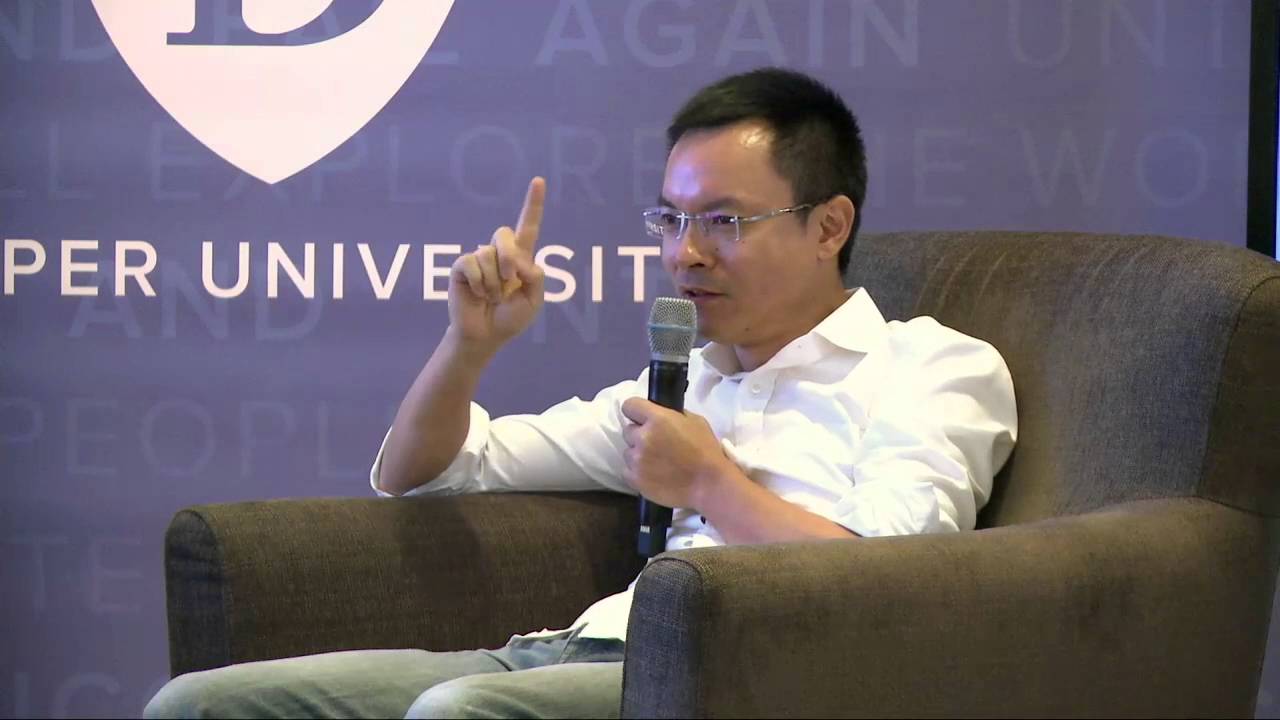
Richard Liu left electrical engineering for venture capital in late-1990s China, when the field barely existed. He took the risk because he was single with no better options. He learned that Chinese internet companies needed different strategies than US copycats, and that street-smartness mattered as much as an MBA.
Chapters
Okay, I think I will try in English, and in case I cannot handle that, I will invite Jenny to take it over. Thank you, guys.
I will also try to do it in English because there are a lot of things that Richard has and I have talked about in the past, they're all in Chinese. So to refer back to some of the old conversations, I will probably break into Chinese and you can translate.
Okay, sure.
I will start. with maybe how we have met 10 years ago.
Yeah.
You were in my office when we were talking. This was 2005. So can you tell us what happened in 2005? You know, things have really changed since then, but maybe you could paint a picture of what it was like in 2005 and leading up to 2005, maybe from Your school, right? You were going to school, you graduated college, how old you were, and maybe just give our students a background. What was Richard Liu like in 2005?
Okay, I think that question is quite interesting. I try to introduce myself not from the venture capitalist. I try to describe myself from some nobody in China. And how I change my career path and choose myself as the you know the job as VC, and I perceive myself not just the investor but the entrepreneur as well, like you guys here. So I I grow up in in Wuhan, the city in the center of China, similarly like Chicago in in the United States. It's a seven million population. big city. And I graduated from the University in Beijing Science Technology, and then my major is EE. I graduated in 1993. I was very young at that time, only 20 years old, has no idea what about my future. China is fundamentally changed significantly from 1990— from 1993.
1993.
So I started my career as an engineer, like maybe a lot of you guys, programmer for 4 years, and have no idea whether I can be a venture capitalist at that time.
Did you know what a venture capitalist was?
No, totally have no idea. I'm not lucky like some Chinese here. It's my— when I, you know, begin my career as an engineer, I have no concept of the career, but I begin to think about that. What's my interest? What's my passion? So I gradually realized my passion is not working as a programmer. I have quite, you know, the broad interest about a lot of things. So I think I need to take some break to rethink myself. was my real passion. Fortunately, I got, you know, some news from newspaper. I got first time to understand there's a concept of business school in China. That's in the year 1995, something like that. So I prepared some examination and then went to the Shanghai-based business school. So I'm 100% local boy in China. I have no working experience and education experience in the States. That international business school is in Shanghai, you know that, the China Europe International Business School.
CEIB, which is associated with INSEAD.
Yeah, that's the first international business school in China, and all the professors come from, like, you know, the INSEAD, London Business School, Harvard, Columbia, worldwide. So I'm lucky I get, you know, the go to the school in the year 1997, 1998. So after I change my— take a break, change my career from a programmer to become the business school student. At that time, actually, I speak very shallow English, not like today I can talk to you guys. And it's very hard to survive. Basically, all the professors cannot speak Chinese. So even today, I got pressure to speak English, right? So basically, you have to survive in very tough environment and have no time to sleep. Very intensive, like B-school, regular, like Harvard, other international B-school. So I guess survival. Honestly, in the year 1999, year end of 1999, we got graduation. That just behind, just after the financial crisis in 1998. The job market is very tough. I sometimes go back to my B-school, share with my experience with the other students. I told them honestly, I'm the job loser at that time. It's very tough to get a good job. Compared with my peers in the B-school, they have very good education background and working experience. From that angle, I'm not a very strong competitor for the job. But I'm lucky, in that year, internet just emerged and gradually become booming. And I was just 26 years old after graduating from the B-school.
So you graduated college at 20?
20.
You worked for 4 years?
4 years as a programmer, and then 2 years, you know, the B-school, and 26 years old. The lucky thing is that I, I'm— I can lose— to lose something for me is not meaningful. I have very low opportunity cost.
You were not married, you were by yourself.
Yeah, I'm single. I can raise myself very easily. I can, you know, change my— any big decision easily without too much, you know, the burden. So the first lesson I got is low opportunity cost. Even though sometimes you have a lot of something you want to lose mentality, you have Keep you remind remind yourself with low opportunity cost is very important. Then you can take risk. So I have chance to really follow my own heart to say I have the passion about you know the the technology and innovation. And another very interesting opportunity is that I get my some consulting project in the B school for private equity firm. At that time, it's a very new concept. Honestly, at that time, VC, by the end of year 1999, I think in the whole industry, maybe have only 50 people, very small industry.
New Margin.
Yes, like Intel Capital, SoftBank, IDG, Morningstar, that's 4 brand names. New Margin, Something like that. Few brand names at that time just emerging and continue to survive today, and a lot of them just gone.
But then the PE consulting project, that's probably— maybe describe to us what kind of— what's a sexy job for business school students?
Yeah, I think from that question, I want to say B-School give you the exposure to really give you a chance to think about yourself in the context of the business environment. And the B-School give you a lot of, you know, the opportunity to be accessed to some very diversified industry and different people. And this give you some kind of the opportunity to rethink about rethink about yourself. What's your real passion and what kind of people you are? And also, you need that context to get more inspiration. So, I get one inspiration from that consulting project to work for that private equity firm. That private equity firm, very interesting. That's not VC, it's a $400 million private equity. In 19— they are the early adopter, early pioneer in PE industry in China. $400 million is a big fund at that time. But they're very interesting. They come to China. It's an American guy, and he wrote a book, very famous, as the Miss China.
Oh, I read that book.
The book actually is all the failure, failure experience in China. Michael Conney, the guy. I remember that name.
You know, I actually know one of the investors who invested in one of the businesses. And now he has a share certificate of that auto parts company.
Yeah, exactly.
In the frame.
My intern job, my consulting partner actually go to the third-tier city. You never know that name. Small population. And I went to the manufacturer. the auto part manufacturer. I think they are— that's the disaster. But we try to give them the Chinese way to read their investment, because they are foreigner, they have no idea. So, that's why I would like to share my second lesson is that in China, sometimes you have to be— you guys are very smart academically, but you have to be street smart. To understand that's the real world. Sometimes it's jungle rule. You need to distinguish and deal with different type of people with different value. But at the same time, you need to, you know, hold your discipline. So I think the PE I mentioned that they got very troubled investment in China because they joint venture with a lot of, you know, the people without the same shared They didn't share the vision. They didn't share the same value, and they behave in different ways. So, but that's my first time get inspiration. Oh, that's the these that's the investor industries quite interesting, very challenge. Okay, so I almost finished my my story that you know I choose to be. not join some multinational company. I choose to join a startup company.
So the multinational in Shanghai at that time is probably the goal, right?
Very attractive.
It's the most sought-after job.
Yeah, exactly. So I'm the loser from that standard.
So then FYI, when I went to business school, I got declined. I don't know if you recall, there's investment banking.
Investment banking, consulting, multinational company. That's the 3 top, you know, the employer. very attractive for the business school students. I think only few, just a few, you know, people like me, we don't follow the market say that's an attractive job. I think we follow our own heart to see I really enjoy working with a very dynamic and innovative industry.
Yeah.
And that's something because I don't have too much high opportunity cost. Some of my classmates, they probably got high payment in the job before they go to the B-school. And the lesson also, the lesson 3 is that—
I think these days programmers get a lot of pay, right? Compared to when you were going to school.
Well, compared with them, I think I'm the low-pay guy. So that, that's in China. But basically, if you are entrepreneur, you need understand you have to hold what we call the risk-reward profile. You must be the risk-taker. Versus like venture industry, at that time, it's not a very attractive industry at all. Only few people know that industries. So I have no idea what I can be in the future. No one give you guarantee. And after the year 2001, the internet bubble burst, right? Similar like in the States.
Yeah.
A lot of my peers in the industry, they left. And because I really love that, so I stayed in the industry. And then I think in the year 2004, the market rebound. I met Andy. But still, at that time, VC is a very new concept.
Yeah.
And I remember at that time, a lot of, you know, the VC, they travel from Silicon Valley to China, take 3 days, 5 days, meet several companies, make a quick decision, and go back. And totally have no idea what's happening on the ground. People make judgment and make decision based on their experience here. And they just make a simple conclusion that, okay, if, for example, Yahoo is successful in the States, there will be similar business, like copycat business, will be successful in China. That's a very popular model.
Initially, it worked, right?
Initially, quite, worked very well. But honestly, since the year 2006, as the local people, I realized Yahoo cannot beat up the local player Sina or Sohu. Google cannot beat the local player Baidu. Amazon cannot beat up local player Alibaba and Taobao. You just see all the very powerful company in the US, they just cannot beat up those competitor. And from US investors' perspective, they are the copycat model. But as a local guy, we realize they make a lot of local innovation. So you describe them as the Chinese Google, but actually, if you look at it in deep, go deep to see all their product line and the strategy, it's very different. So I think at that time, Andy We had a very interesting conversation. He complained to me, why in China the website looks so ugly and so noisy and so many, you know, the color, right?
Yeah.
So I respond to Andy, I think that in China, if you look at it, I go to restaurant here, quiet, nice people speak in the very small volume. If you go to Chinese restaurant in China, You are in a free market. And people enjoying that. And that's the way for Chinese people to engage with each other.
More from Tim


He Sold His Car to Build This Startup, Then Pitched It for $1M 😳 #Startups #AI

This Startup Moves Your Crypto BEFORE Hackers Can Steal It 😳 #Crypto #Cybersecurity




15 Months Without Refrigeration?! This Startup Thinks It Can Go Global 🥥 #FoodTech #Startups



