Facebook Ad Auction vs Other Auctions | Chidi Erike
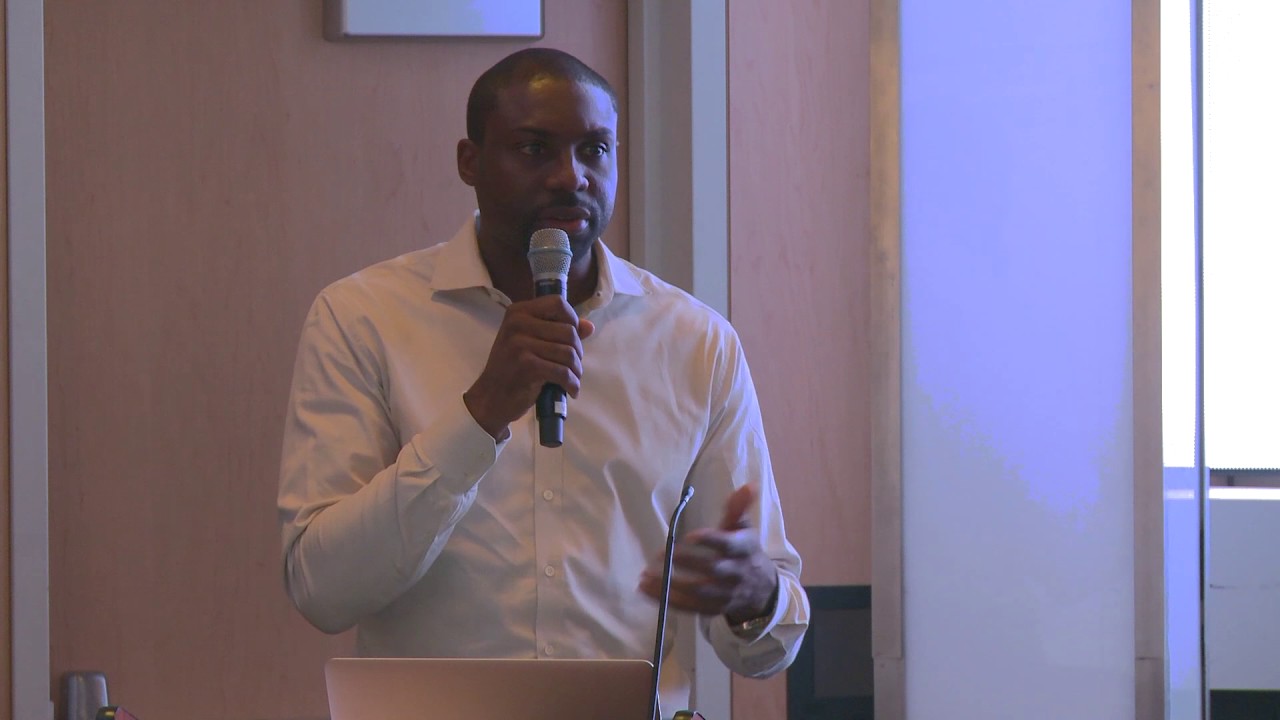
Chidi Erike explains how Facebook's ad auction works and why it differs from other platforms. He covers the role of creative and engagement, how the Facebook pixel optimizes campaigns, and why audience size and seasonal timing like Black Friday affect your actual costs.
Chapters
Right? If your creative is not good, then you're not going to get that much engagement because we're not going to show your ads to anybody because your ads are not good and it's going to sacrifice the quality of the experience that people are seeing on Facebook's platform. But let's say you do a cookie shop and it's amazing milk cookies in the picture and everybody likes them and you're getting a lot of engagement, then what's going to happen is we're going to show everybody your ads for a really low cost. Very good. Right? So that gives you an example, that's a simplified example of it's not everybody's the same, right? It depends. So if you're seeing that you have a small business and a lot of people like your small business and you're not that profitable, a lot of times it's because of your creative, right? So most of you guys know what this is. When you go into Facebook and you try to start up a marketing campaign, you see this. These are the objectives that we offer to any given advertiser. So just real quick, awareness, for those of you guys who don't know, is what we call brand awareness, upper funnel, right? Awareness is when you're trying to tell somebody what you produce or what your service is. On the other side of things, we have what we call conversions. That's lower funnel. That's actually trying to sell something and trying to get profit. There's a lot of people in a lot of different communities that I speak to that they don't focus too much on conversions. Why? Because conversions require you to have a pixel. A pixel is real simple code that goes onto your website. It's extremely important if you have a business on Facebook or Instagram to have a pixel. Because if you don't have a pixel, then we can't tell you who's most likely to buy whatever it is that you're selling, right? So for us, it's more of a guess. It's like, oh, okay, well, we know the demographic you're looking for, so we'll show it to this particular person. But if you have a pixel, we'll actually optimize towards that individual person, right? So let's just say that you're selling hats, And you think that the person buying your hats are people between the ages of 30 and 50, and 90% of them are women, right? That's what you think from your market research, maybe because you were using Twitter's platform to get that research. On Facebook, we have a different demographic. Somebody asked a question earlier, okay, how do you know what platform to use? Well, each platform has a different demographic, right? Twitter's platform oftentimes is skewed to a younger audience. Facebook, a slightly more mature audience. Instagram, a more visual audience, right? So those are the things to think about. So these are obviously important things to know when you're actually DBing up your marketing. So these are some of the things that we calculate. As I mentioned, it's all about engagement. It's what we think your engagement is. Once we find out what your engagement really is, then we fast— fastly adjust what that number is, right? So we could be wrong. We could say this ad sucks, it's not going to get that much engagement. Once we show it to everybody here, everybody's engaging, then we'll put it up to the top of the list and say, well, we should be discounting this ad to show it to other people. This ad is real similar, to organic ads that people would naturally see in their feed. So what does it mean by organic, right? Let's just say you have a Facebook account and it's your birthday. Usually when it's your birthday, 5 times more people engage in your profile to say happy birthday or to see how you're doing, etc. Well, as somebody who's an advertiser, you want to make sure that you're getting to people while they're actually looking at one's platform for their birthday, right? Because— so we're going to charge that advertiser more. We're going to charge that advertiser more because we know 5 times more likely that somebody's gonna look at that person's profile and say happy birthday, right? That's actually extremely important to understand because if you have— you're selling pretty much anything, right? You're selling cakes or hats or whatever the situation is, it's all about numbers. It's a numbers game. Let's take a step back. Facebook has 1 point— I believe the number is 1.7 billion people on the platform, right? So there's a lot of people here that they might have a small business, brick and mortar. That's a different situation because obviously you want to focus on that specific area that your business is in. But for everybody else, we have 1.7 billion people on the platform, which means that you should be opening up your target market to other countries, other markets, etc. And I'll talk more about that as we kind of go through this deck. All right, so how does an auction work, right? So let's just say you're an advertiser, you're trying to show your ad to everybody in this audience. You're competing against 10 million other advertisers oftentimes, right? So every dollar counts. But like I mentioned before, what you actually bid in our auction is different than what you pay, right? So what you're bidding is just to win the auction. What you pay, that's based on a lot of math that goes on behind the scenes, which I can go over a little bit more later. But it's important to know that just because you say that you're willing to pay $10 doesn't mean that we're going to charge you $10. Right? So some people say, okay, well, if I put in a $10 bid because I want to make sure that I get 1,000 advertisers or 1,000 users seeing my advertisement, is there a chance that I might pay too much? And I apologize for the vertical axis right there, but somebody might ask, is there a chance that you're paying too much? You'll never pay too much, right? If you put in $10, we're always going to make sure to give you a discount bid and you're going to pay lower. So maybe $5. or $6 or $7. We'll make sure that it's never over that. So what this chart is trying to tell you is that usually when you're trying to target literally everybody, and everybody as in, let's say you're in San Francisco, San Francisco has about 800,000 people, and you have a new store opening, so you want everybody in San Francisco to know that new store is opening, that's going to be relatively cheap, right? However, if you say, well, I want everybody in San Francisco between the ages of 30 40, only women, only college-educated, only people making a certain amount of money, that's going to be a lot more expensive because now you've limited the size of the audience. We just went from 800,000 to maybe 20,000, right? You pay more for that. Now you might say, okay, well, it's better targeted, so it leads to more sales. You have to understand your business model, right? Because just because somebody buys something once doesn't mean that they're not likely to buy something a second time or a third time. So understanding your long-term value per customer Is extremely important, right? We can talk more about that offline, like how you actually calculate long-term value or lifetime value, because a lot of people say, well, this customer purchased something in quarter 1, but you might not actually realize the revenue in quarter 3. So how do you actually understand that math? Because that's what you need to actually understand what to bid in our auction. So this is a good one right here. So a lot of people think it's all about clicks. Clicks, clicks, clicks, clicks. That's what we've been telling people in the past, actually. So I want to challenge that statement for a little bit. If you just get clicks, clicks are extremely expensive. Why? Because not everybody clicks on given advertisements. If you want action, actions could be like this person actually purchased this item, right? So if you actually get clicks— I have a little sister, she clicks on everything, but she doesn't buy anything. That's my sister. doesn't have a credit card, AKA she's never gonna buy anything, right? If you pay for clicks, you are paying to get her, right? But if you pay for actions, those are people who are likely to actually purchase something, right? They show intent. It's a big difference. So we can talk about that more offline, but there's still too many people— there's some business cases to actually use clicks, but for most people, they should be doing actions. Why? Because you're trying to generate revenue. That's why you're even opening up the business in the first place. So most people, most people don't know this, so this is actually a pretty sensitive slide. So you have Black Friday, you have Christmas in here, you see a spike in CPMs for Black Friday and for Christmas. So that means for the whole entire year, if you say you're only willing to pay X, you're going to lose out when it comes to Black Friday and Christmas. You're not showing anything to anybody, right? Because things are getting more competitive, which means that if you're not adjusting your price, you're going to start to underdeliver, is what we call it. So what do you do? However, even though things are getting more expensive, and there's a reason why there's a lot of information not here, because some people are really quick with the cameras and stuff like that, so I just decided to delete it. But if you, if you say, okay, well, I don't want to actually be a part of this Black Friday uptick in CPMs. What happens though is usually ecommerce businesses make most of their money during those time periods. So even though you might experience a 20% increase, In what we call CPMs, which is cost per 1,000 impressions, you're actually gonna lose out on 3x, 4x revenue, right? Because that's the time period, or that's the period of the year where people are making the most of their money. So it's important that even though you might receive 20% higher prices, most people drive 3, 4, 5 times more sales during that period of time. So AKA, if anything, you should be doubling up during that period of time when it comes to budget.
More from Tim


He Sold His Car to Build This Startup, Then Pitched It for $1M 😳 #Startups #AI

This Startup Moves Your Crypto BEFORE Hackers Can Steal It 😳 #Crypto #Cybersecurity




15 Months Without Refrigeration?! This Startup Thinks It Can Go Global 🥥 #FoodTech #Startups



