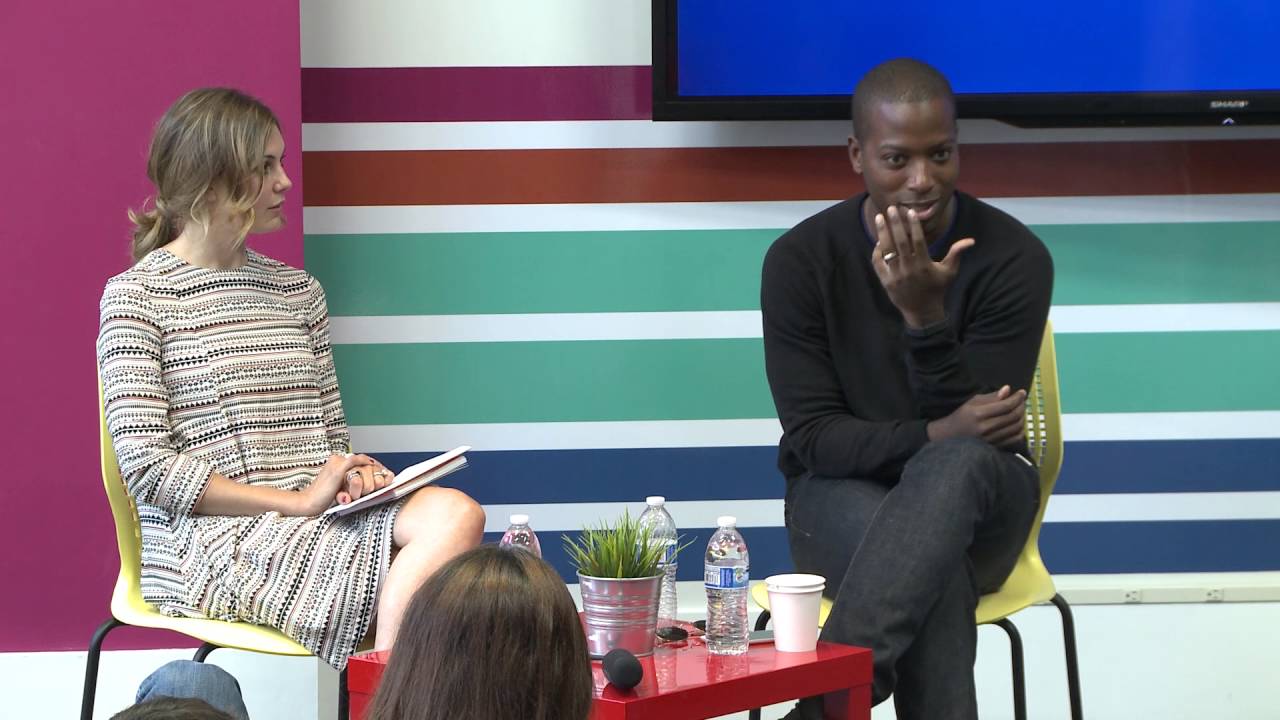
Tristan Walker talks about raising $33-34M for Bevel and the skepticism he faced, including a VC who dismissed shaving irritation as trivial compared to acne. He shares lessons from Ben Horowitz and argues founders should embrace ideas others reject, pointing to Airbnb and Facebook as examples that seemed bad at first.
Now, struggles. Some of the struggles that you had from the very beginning and then some of the struggles that you're facing now. Can you kind of tell some of the students what you did to kind of overcome that?
Yeah, they're all the same. So we've raised roughly $33, $34 million in our company to date or something like that. And it— well, I kind of don't like cheering for it because just as it came in, it can go right out, right? I want to be a good steward of that capital, like it's hard and I raise that point because that shit was not easy.
Uh-huh.
As much as like I have the pedigree for it, as much as I chase the 10x ideas, quote unquote, et cetera, et cetera, it's still 90%, 99% of those people turn me down. And these are the same people who said after Foursquare you can start a toilet paper company and I'm in. They're full of it, right? And I'll give you like a perfect example to this and this kind of hits at the question a little bit more deliberately. So when we were first raising money, the first person we met, woman VC who I always respected, one of the types of people who said, you know, I'd invest in whatever you do. So our first brand is a brand called Bevel, so it kind of eliminates the shaving irritation issue, men and women, blah, blah, blah. And I always used kind of Proactiv as like an analogy to this company because they eliminate the acne issue, et cetera. So I got to this slide and she looked at me dead in the eyes and she said, Tristan, I'm not sure issues related to like shaving irritation, razor bumps, etc., are as big a societal issue as issues related to acne. Now, on the surface, like I kind of get it, right, like you just think in your head, yeah, a lot more people with acne, whatever, right? But I'm just thinking, all that she had to do was get on the phone with 10 black men and 8 to 9 of them would have said this is the worst thing ever. And not only that, this is an issue I have to deal with my entire life, right? That's all she had to do. The only thing that got her to say that was her own lack of context and her inability to change her context. It was no different from every other VC I had to speak with, right? We had to prove to them why this is a problem, but her saying that actually showed me I had a good idea. And the reason I kind of bring that up, Ben Horowitz, I mean, I quote that guy ad nauseam. He always says, Tristan, usually what looks like good ideas are bad ideas and usually what looks like bad ideas are good ideas. Now, to the former, a lot of folks think, hey, wouldn't it be cool if we did a food delivery service that only served organic food? Let's just— random idea, right? Sure, on the surface it's a great idea, but there are other, like 30 other people doing the same exact thing. And when that's happening, there's no value to be captured and created as a function of it. Now you look at the reverse, bad ideas. I'm pretty sure when Airbnb went to someone to pitch that idea, they thought it was the worst idea ever, right? Putting strangers like in my house and charging them for it and like being okay with it? Now they've created tens of billions of dollars of value, right? You look at Facebook, who would have ever thought that people would put all their information of themselves online on the internet for people to consume? Like hundreds of billions of dollars of value. So when I think about kind of my idea, when I go around Sand Hill Road talking about banking or childhood obesity or trucking, they say, do it, I'm in, let's go. And when I talk about this idea, like, nah, I don't know. But I go to Ben and I talk about banking, trucking, and obesity, he's like, don't, that's stupid, right? And I tell him about this idea and he's like, that's a good idea. And that's when I knew I had something. Right? Because other people most likely are one, not going to work on it, and two, I'm probably one of the few people who can raise money for it. So that's a comparative advantage in and of itself because all these other VCs will be like, well, let's see if Tristan's thing works first before we acquire the context that we need to do it. So how do you overcome it? Number one, not giving a shit. Two— And I really mean that, right? Because it's easy to consume that. and think it, it's harder to do, right? And it took me 30 years to figure that out, right? So you got to like not care. And 2, even if people tell you no and they think it's a bad idea, there's probably brilliance in that bad idea. So like embrace it, because the fact that it's a bad idea makes it probably a good idea. Thank you.