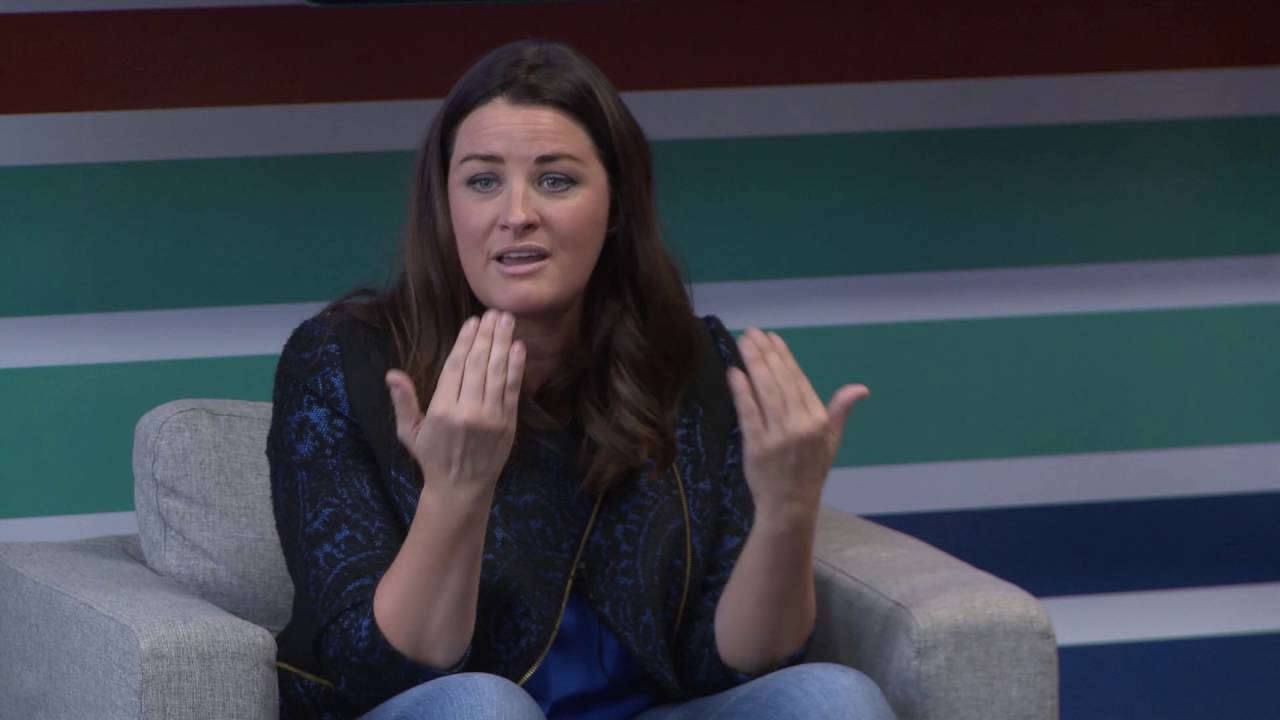
Christina Stembel, founder of Farmigo, shut down her Los Angeles delivery operation when it became unprofitable, then scaled nationally instead. She bootstrapped rather than take VC money, used bank lines and outsourced developers to keep costs low, and talks about ego, fundraising, and surviving financial struggle.
Chapters
I heard your pledge that you guys did at the beginning about failure. Yeah. Yeah. There's a lot of that. OK. A lot. I like that that was included. So I opened Los Angeles last year. I thought originally we were going to open in 8 major cities, do on-the-ground operations like we did in San Francisco that grew pretty quickly. It was a mess. It was horrible. So we were bleeding money. When I stepped back and I was like, why can't we make this work? Is it just that it's too early? It's like I don't have enough saturation in every market, so that way in every neighborhood. So once I do do that, if I just hold out longer, if I just keep bleeding money for a while longer, it's gonna make sense. No. And then I realized, just doing some data analytics to figure out what wasn't working, it was the delivery component. And it takes 2 hours to do each delivery. in LA, and there's no way to make that work because no one's gonna spend $50 on delivery, right? $15 is kind of the cap that you can do on a delivery. So until I could take 50% of the cars off the road, which I'm not God, that will never happen, or until there are really fast, effective, cheap, that I can afford drones with cute little flower crowns on, that's not gonna happen for a very long time too. I just decided, okay, well, pull LA where our other competitors are stuck Still in LA, bleeding money. And I pulled it 4 months later because I'm like, if our national shipping is growing like 300% faster than what I thought it was going to, but I have LA that's bleeding money and I'm losing $30,000 a month there, why don't I reallocate that $30,000 a month to marketing for national shipping, get that to grow even faster? And I can make that decision. And all I do is go down there, lay off people, move the operation, and you're done in a span of a week. Whereas, if I had investors, I would have to go vet it with them. I'd have to make sure they're on board. I'd have to listen to all their feedback about why it's probably too early, and I haven't given it enough time, and you gotta try it for at least a year, and let's bleed another, you know, I don't know, $300,000 down there. And it just gives me so much more freedom to not have investors. And so, I know it's not the sexy answer. sexy thing to talk about here because everyone here is about— you're working on your pitch decks, and I get that. It's the thing that everybody wants here is to raise capital. But a lot of companies, it doesn't really make sense to raise capital if you look at it, if you think about it. Some companies, yes. If you need to build this really expensive piece of software and then sell it a million times, you're gonna have huge margins on it and be able to give that— the money times whatever percent they're gonna want back very quickly, then it makes sense. But if you're doing something which a lot of people now are doing, more of the actual product companies, it might not make sense to raise capital, and there are other ways to get capital that don't put you in that position. Mm-hmm. There's so many different companies now. I mean, banks, we have bank lines of credit and loans if we need them that we can use under 2 years. I know that's more difficult to get, more challenging to get, but there's companies if yours has a social bent, there's capital companies that are that give you bank-type loans under 2 years, and also offer the guidance that some people are looking for when they're bringing in capital. So, there's a lot of financing options out there that aren't traditional VC that might be the better thing. They just aren't as sexy, and they don't give you as much street credibility. And you kind of have to get your ego out of it, which is what I had to do. I had to get my ego out of it. When I go to those networking events, and as soon as I start talking about how we're bootstrapped, and people ask, and they look over my shoulder to find somebody more important to talk to, I don't— no longer do I qualify by trying to be like, hey, but we're growing 300% year over year, and blah, blah, blah, because I don't have to. You don't have to. These people, if they're just looking for the more important person to talk to, I like to be that person that kind of flies sly under the radar. And then they're going to be like, bam, billion-dollar company, own 100%. That's a lot better than when they're like, oh, they own 2%, and they actually lost money when they sold, which actually happens a lot if you look at it. So getting my mindset shifted really helped me. It helped me get back to my focus of growing my business instead of spending 60% or 70% of my time trying to pitch to VCs that made no sense for them to invest in us anyway, and made me a lot happier. I was a lot less worried, getting that fear out of my head of, am I going to be the Friendster to these guys' Facebook? No, because you know what's happening? I'm so excited about this. So they're all trying to raise their third round now of capital. And the climate's definitely shifted now. It's much more difficult to get capital now than it used to be. And so they might not be as successful as they were in the first 2 rounds. Which is really good for me because I've built a very good, sustainable, standalone business that is actually profitable. So I don't— I'm not so heavily reliant on having to have that capital in order to keep going. I've met with a lot of startups lately. Ironically, they wanted my advice on how we've been able to do it when they only have like 3 months left of capital left. And when I looked through, like, what are we doing differently from these other companies? The biggest thing is our payroll. We don't have 12 engineers on staff. We outsource that, pay by the hour, and pay a lot less than the people that have in-house developers. But it's not as sexy again. When people are like, I have zero developers. I did not recruit anybody from Google. I did not— nothing like that. But that's the biggest difference. I have 77 team members now. And our payroll is about 25% of a lot of these startups that have, like, 12 to 15 people on their team. Because we're actually doing the work and then outsourcing the areas that make the most sense. So it's just being really smart about how you're spending your money and not having to have your ego in it again. So— So that's my thing. Success does not equal funding. You can do it bootstrapped. $49,000 in my bank account. far less money than if I went and got an MBA. And not that I'm saying don't go get an MBA or anything like that. But it's the best MBA program I could have ever taken. I've had to learn every single facet of the company. I've had to fail. I've had to cry a lot. I got down to $411 in my bank account at one time. I did not tell my husband that. And so it's a lot of fear, which drives entrepreneurs, I think. Just perseverance. That's it. So, questions? Yeah. I'll do hand me the mic. Oh. Thank you. Thanks.