Failing to protect your IP | Kathryn McCall
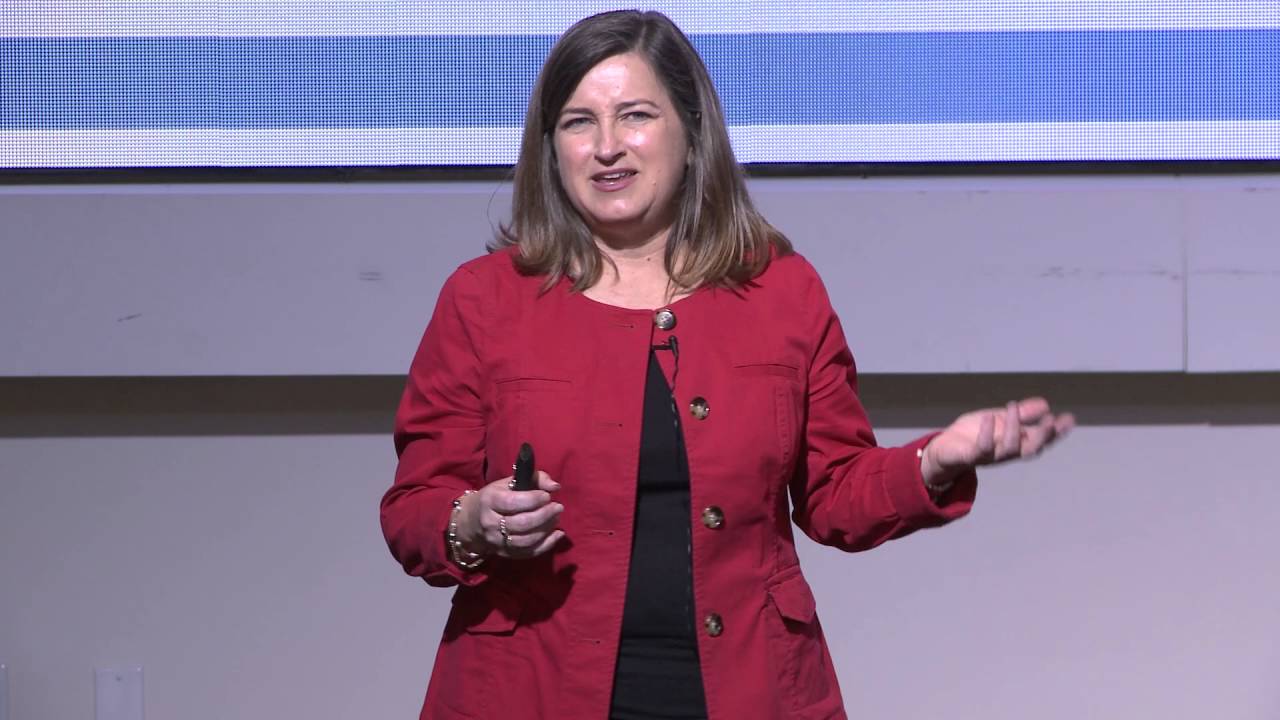
Kathryn McCall walks through how startups lose intellectual property rights and how to keep them. The Winklevoss-Zuckerberg dispute shows what happens when founders skip IP assignment documents. Investors expect 100% ownership of all code, trademarks, and patents before they fund you.
Chapters
So mistake number 2. I think we killed that one to death. Failing to protect the intellectual property. And I know a lot of people are like, what? Like, how could you fail to protect your intellectual property? That's the most important thing in your whole startup. It's all about the IP. You'd be surprised. So we've got what I call the moonlighting problem. Then there's the Zuckerberg issue. There's missing and disappearing founders. Failing to sign documents, and holding back on your IP. So what are all of these? So everybody does moonlighting. We all know the story. Guy toiling away in his garage at night after work, you know, working on his idea, working on his idea, then he forms his company and goes public and he's an incredible success. Everybody does this. And even on the California Labor Code, it recognizes this. And it says that any provision in an employee agreement shall not apply to an invention that an employee developed entirely on his own time without using the employer's equipment. So again, you're in your garage at night working on your own personal idea, your employer can't grab it. Your employer can't claim it. The problem is, what if that idea is close to or related to the state So you've got, does it relate at the time of conception to the business of the employer, or does it result from any work that you performed for your employer? So you've got to be really, really careful if you're moonlighting. I tell my clients, don't even use a pencil from the workplace. If they want to call me about something, I'm like, call me at night. Don't call me from your office phone. If you have a cell phone but your company issued it to you, get a personal cell phone. Call me on your break. Don't use your office email. Don't use that account. Get a Yahoo account. Don't use any resources from your employer. Don't use your laptop that you use at work. Set up totally independent and complete resources to work on your startup. Because what happens is there is the contamination issue, which is one thing, which is IP from your employer creeps into the IP for your startup. Now you got a problem. Your employer might try and claim it. So carefully review any agreements that you have with your employer. Make sure you don't use any of the resources of your employer so that your employer can't later come and try and claim portions of your IP. That's one of the ways that you can fail to protect your IP. Another thing is— and there was a movie about this, big lawsuit— is people who fail to assign their IP over to the corporation. So, how does this happen? Startups, you're very fluid. You're running around. You're operating at a breakneck pace. Pre-incorporation, you're out there creating IP. You've got people consulting with you, various different founders and all. And then it comes time to incorporate. Well, when you incorporate, what you want to do is make sure that all that IP that you've been developing for the past couple of years gets assigned to the corporation. It's generally pretty easy with the founders because they're going to get stock in the company and what we usually do is we wrap that all up. Here is your stock, you assign the technology to the company as payment for the stock, that's how it works. But be careful about developers that you might have worked with, people who helped you out. Maybe you were 4 founders, now you're 3 because you voted somebody off the island, you didn't like them. Well, you better believe that when you become really successful, that guy is going to come out of the woodwork and all of a sudden the IP that he developed is the linchpin of your entire organization and he is suing you. So, you want to go out and find all of those people or track them down, get them to assign their IP over to the corporation because it will be a lot easier to do in the beginning stages than it is later when you are looking at a big acquisition or trying to go public and they are seeing dollar signs. And they've got leverage over you at that point. In the beginning stages, for most people it's like, what is it, 9 out of 10 startups fail or what are the statistics? They're like, yeah, yeah, whatever. But it's like, oh, you're doing a financing and your investors want me to assign my IP.
Oh.
I mean, the guy is probably thinking, I didn't even do anything, but maybe I want some money for that. Or you're going public or something else. And this was one of the issues that Zuckerberg had— not— well, it wasn't his issue, but it was the Winklevoss twins' issue where they didn't get him to assign the IP that he was working on over to them. So he split off on his own and they came back later and said, hey, wait a minute, what's going on? That was our idea. I don't see anything in writing for that and what I'm doing is a little different. So make sure that you Get that IP assigned over to the company. And what will happen a lot of times is I'll have clients who don't sign this stuff and they're constantly like, God, Catherine, leave us alone. We'll sign it. You know, I'm like, sign it now. Just get it signed. Get it signed. Get it to me. We'll file it away. You don't have to think about it anymore. Yes.
How do you do the first or the final report? How do you get people to assign IP?
Pre-incorporation?
Yeah.
Because there's nowhere to assign it to, right? You've got to have an understanding or agreement with them. And they can assign things to you as a person. But generally, you know, what happens is you're a startup and you're working on a ton of different ideas and then you're finally ready to launch and you form your corporation. That's when you get everything assigned. But keep track of who those people are. If you're working with developers, do enter into an agreement with the developer and it can be just between you, and the developer. Your other co-founders might be like, he's entering into it with him. What if he goes off by himself? But that's an issue for you and your co-founders.
What do you mean, like what would that document or agreement state for the first one?
It could be an IP assignment agreement. Generally what we do like for co-founders is you have a stock purchase agreement and then you attach an assignment of technology. to that. If you work with consultants or developers, you enter into a consulting or development agreement, and part of that agreement is an agreement to assign all of the technology over to the company. And then post-incorporation, you've got to make sure that everybody that's creating IP for you signs an agreement in which they're assigning their IP over to the company. Yes?
Can you Can you explain the Mark Zuckerberg case?
I don't know the details of the case. I haven't looked at it other than the movie and hearing about what's going on, you know, anecdotally. But essentially, you know, the Winklevoss twins hired him or were working with him on an idea that they had. And they had a parting of the ways and he created his own idea that sort of sprung from that. and created Facebook. And then, you know, these things never become problems until you're successful. He became successful and they were like, our idea, that was us. But they didn't have an IP assignment. Mark Zuckerberg never assigned or agreed to assign that IP over to them or their corporation.
So it's pre-corporation?
Yeah. Yep, yep.
Is that why some companies usually will give you a computer and so forth? They'll assign you a computer when you're working for them so they don't have to worry about that?
It's not really the reason. I mean, they'll make you sign an agreement. Like if you're working for Cisco, they'll make you sign an agreement where you're gonna sign all of the IP that you're creating over to them.
Yes?
About this IP agreement you told us about when you split with partners and like that, Can it be an NDA document that says about IP?
It can be, yeah. It can be part of an NDA? Yeah, it's just a provision in an agreement. So there's a lot— can be a lot of other provisions in that agreement, and part of it is an IP assignment.
Thank you.
Had he signed one, there might not have ever been a Facebook, you know. And I don't know all of the facts of the case. I just know that the core issue was he'd never agreed to assign his IP, the stuff that he was creating and working on, over to them.
So if he signed it off, then probably he cannot found the Facebook.
Possibly not.
They hired him to build something else on his computer, and they came up with the idea for Facebook. Because his computer IP wasn't signed over to their company.
Yeah, he.
But you'd be surprised at how many people aren't careful with this. I'm always amazed. Like I'll sit down with clients and and we'll be talking about we're going to set up a corporation. We need to assign all the IP over to the corporation and da da da. Who are the founders and Who's created IP for you? Well, there was that guy 2 years ago. We had a couple meetings with him. We think he went to Fiji. We don't know where he is. But yeah, he did contribute some ideas to us. But he's not important. It really doesn't matter. So you know what? It doesn't matter until you're successful. And then he's going to be— this guy in Fiji or wherever he is is going to be like, hey, I created the best IP. Like, all that company is based on my idea. All me. I want— give me my portion of the pie. So that's when it becomes a real issue. So your best chance of resolving that is resolve it in the beginning stages. Don't let it wait. Don't— I call it an asterisk problem. You've always got a little asterisk next to your IP because there's that guy out there who never signed over. Is he going to come out of the woodwork or not? Is he— you know, does somebody else out there have a claim? Yes?
So what about the people that come out of the woodwork that, like, are lying about contributing intellectual property?
Then you get into a court case. And you're—
But how do you know the difference between somebody that actually contributed or a liar? Like, because there's no—
Evidence. It depends on what evidence and what sort of proof they're able to put up.
No matter how minimal the contribution was, but what if it's just like advice that never got recorded or anything? Uh-huh.
Even—
you know, I mean, you get into the old he said, she said, how strong a case do they have, what sort of evidence do they have, do they have anything at all? The thing is, it's going to be a lot easier for you to reach out to those people when your startup is a little baby than it is when you've got some traction, when you might be looking at an acquisition because then there's real money on the line. If it's just the beginning stages and you're just, hey, you know, look, hey, we're setting up our corporation and we understand— you know, we met a couple of times. You can downplay. We met a couple of times. You gave us a couple of ideas. We didn't really incorporate any of that, but hey, we value you as a person. We want to give you some shares. Take some shares and assign that over to us and all good, everything's great, let's have coffee sometime. That's a lot easier than, oh gosh, we're going to be acquired by Apple or Google and they've just discovered that there might be this possibility of this guy out there who might have a claim on our IP and they want us to resolve that issue. How are we going to resolve that issue? We don't think it's an issue. We don't think it's anything at all. We don't think he has any claims. We don't think it has any evidence. But it— you know, whereas before it might have cost us 1,000 shares or 2,000 shares, now it might cost us significantly more than that and a lot of time, effort, angst, anxiety. You never want to have what I— that little asterisk next to your IP. I had a client that they had one of the guys who literally did disappear to Fiji. And every time we did a financing on the IP section, we had to have a disclosure about this guy. And it was a page long. We met, we did this, we did that. We don't think he had any da da da da da. We can't find him. And most of the investors were like, yeah, yeah, yeah, whatever. And this company did have an acquisition, but it wasn't a big huge public splash, so it never became an issue. But it was always out there. There was always that little like oh out there that you've got to cover, and it could be so easily dealt with in the beginning stages. So easily dealt with. I mean, it's not going to stop them from later saying, well, you only gave me 1,000 shares and gosh, your whole company is based on my IP because it was so valuable. But at least then you've got that document saying, hey, you assigned that over to us, you know, end of story. And then this is one of— ooh, we're going to have to speed up. Don't hold back your IP. This is what I call hedging your bets. I'm going to license my IP over to the corporation. Or I want an agreement that if my startup goes under, I get my IP back. Investors will not like that. They want your— 100% of your energy devoted to that corporation. If you're hedging your bets by licensing the IP or getting a holdback provision in there, they're wondering about your commitment to your startup. Just don't do it.
And—
Think about the longevity of IP these days. How long of a shelf life does it have? Is it really going to be valuable in 2 to 3 years if your startup goes up in flames? Probably not. Is it really worth it to go to this time and expense and have investors question your dedication to your startup to get this IP back? In a lot of instances, if your IP— sorry, if your startup is going under, You can generally negotiate with the corporation and buy that IP back, you know, for minimal fee. But don't give your investors any reason to question your dedication.
Is it because all the rest of their stuff is on it usually, like all the rest of their personal stuff, so they really don't want to like—
Sometimes people get very attached. It's, I— this is my creation. I don't want to— I can't give it up. It's my creation.
Can you transfer those files to another IP and then just sell that IP off? You get what I'm saying?
Like all the Photoshop files, all the raw files.
Well, generally you want every single bit of intellectual property, all the code, trademarks, patents, inventions, everything to be assigned over to the corporation. And your investors want the whole bundle. They want the whole bundle because you might go out to them with idea A, which then segues into idea B. Or you might go out and think, well, we have idea A and B, C, D. And your investor is like, D, that's the one. That's the one that's going to work. So they want it all. I mean, they're giving you $5 million to play with. They want it all. Give it to them all.
Right.
Don't hold anything back.
More from Tim


He Sold His Car to Build This Startup, Then Pitched It for $1M 😳 #Startups #AI

This Startup Moves Your Crypto BEFORE Hackers Can Steal It 😳 #Crypto #Cybersecurity




15 Months Without Refrigeration?! This Startup Thinks It Can Go Global 🥥 #FoodTech #Startups



