Failure Isn't an End, it's a Stepping Stone | CEO at Brigade Matt Mahan
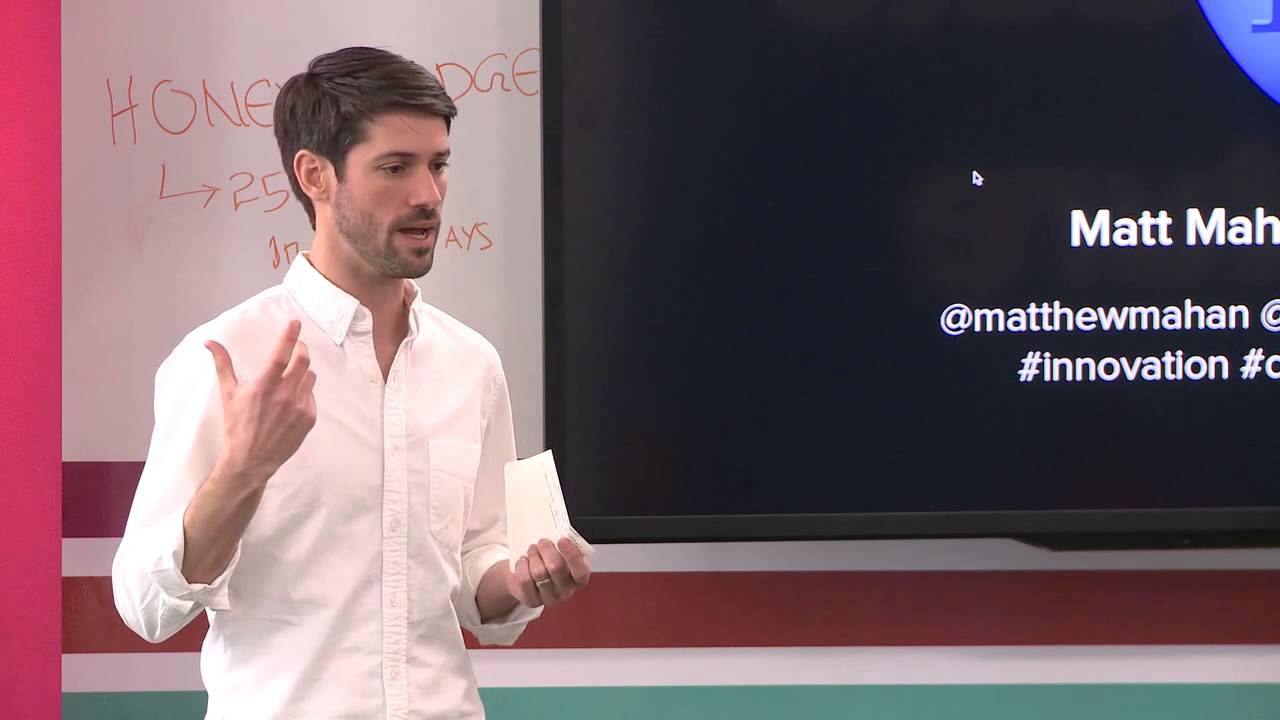
Matt Mahan, CEO of Brigade, discusses how failure teaches entrepreneurs to build better. He explores using social networks and mobile phones to organize local politics, the importance of open data, and a founder's core job: keeping the vision clear, focusing on the MIT (most important thing), and holding the line.
Chapters
So that's sort of theme one, is drawing on personal experience to have a really strong sense of the vision of what you're building. The second, which I already touched on, was about Causes, the last company I worked with, and how much comes out of failure. I think as I've seen— I grew up here in the Bay Area, and as I've seen Silicon Valley grow and evolve, I actually think I've seen a greater fear of failure in a lot of ways. I think we need to keep reminding ourselves that The entrepreneurs who break through have had a series of projects that have not achieved what they wanted them to achieve, and they've learned primarily from mistakes and from failures, and my own experience is certainly testament to that. I thought I'd share a little bit about, just quickly, some of the opportunities that we see and that we're focused on at Brigade. So we think the first, which was the one that got me started in this path 7 years ago or 8 years ago now, is the power of online social networks, and that's sort of an old kind of thing, right? Like, anybody saying they're building a social network today, it's like not very cool 'cause that's what everybody was doing 6, 7 years ago. But I actually don't think we have taken full advantage of the power of being connected online to all of these different people. And I think we're actually just starting to see the power of being connected locally. So of those 515,000 elected officials, 40% of them are elected by fewer than 1,000 votes. So when you think about whether or not you can have power in the political system, if you and maybe 20 or 30 other people in your neighborhood or in your city decided that you all cared about the same thing and you wanted to have an impact on it, let's say having to do with school education reform and school districts, it is very, very plausible if the technology was there that you could quickly come together, recruit other people in, pool your money and your votes and actually change the outcome of a local election. 40% of the 500,000+ offices in the U.S. are decided by fewer than 1,000 votes. That is a very small margin. But again, there's no technology that makes that obvious and transparent and makes it easy for people to have an impact on those races. They're kind of buried. You get to your ballot and you look down and you're just like, you're just confused. It feels like paying your taxes. You have no idea what's going on down there. So the reason I bring up social networks is that The only way to make the political system work better is through collective action. That is really at the heart of it. And the only way to tap into collective action is to help people form connections around basically 3 things. Who do they know offline? Social capital. Who do they live near? Because all politics is local. And then what issues do they care about? And that's really what our network is trying to do is draw those things out. What do you believe in? Who else around you believes in those things? And who else do you have social capital with? We think that's really the basis for collective action and for changing the political system. Thank you. The second, which is also a no-brainer, but I think is an interesting theme, is these super— these always-on, always-with-us, location-aware supercomputers in our pockets that can send us real-time notifications and allow us to communicate through text, video, and other mediums with other people. When you think about it from an organizing standpoint or a governance standpoint, being able to be connected with your elected officials, the phone opens up opportunities that just were never— were not there even a few years ago. So we're very focused on what does democracy look like in a world that— in which everyone has a supercomputer in their pockets at all times. And with the demo, I think you'll start to get a sense of that. And then we're also building on what is now well over 10 years of really hard work in the space around transparency and open data. And so a lot of people have come before us and started to lay the foundations around opening up government data, putting it in formats that are usable, and really increasing the amount of transparency in government. So we're building on that, and that includes Google with their Civic API, the Sunlight Foundation, Code for America. There are a number of other players in the ecosystem that have helped get us to a place where you could actually start to understand who represents me, what issues are they voting on, what's happening at city council today, who else around me cares about this, and answering those sorts of like very fundamental basic questions for citizens. So those are some of the opportunities that we see in the space. And then finally before we do a quick product demo, I thought I'd also just say a little bit about what it's been like to build Brigade. So I came into Causes not as a founder but about a year in after it had been founded and I ran business development for the company, opened an office for us in D.C. And I don't think I fully appreciated at the time the difference between being an early employee, I think I was the 7th hire, and being a founder. And I've thought a lot about that over the past year. I think being a founder, and particularly being a founder CEO, is a very unique role, and I think until you're in it, no one can really tell you what it's like or why it's challenging. I recently read a great post on LinkedIn by Noam Bar-Din, one of the founders of Waze, And he talked about what it is to be a founder CEO, and he basically said that there are these 3 kind of big things that you've gotta do, and I've just found this very thought-provoking, so I'll quickly share them with you. So the first is you have to be the keeper of the vision. You have to be able to clearly and consistently articulate the vision of the company, and it has to be compelling, and you've gotta know why you're building what you're building and why your approach is unique and better, what your differentiators are, et cetera. You've gotta have a very strong grasp on the vision. That's essential for closing other candidates, for keeping the team motivated, so on and so forth. The second big thing that I keep coming back to that he talks about is the most important thing, the MIT, the MIT. And I've found this to be really interesting as we've scaled. So our team is now about 50 people, which is a lot for a startup, as I'm sure you all are aware. And as we've grown with each new person, it has gotten harder and harder and harder to stay to stay focused on the most important thing. And a really important role for the founders of a company are to know what are all the things that we shouldn't be doing, right? It's actually harder to say no, but it's maybe more important than saying yes. And so saying if this is our vision, we're really clear about where we're going, and we have a plan of action, what is the most important thing that's gonna unblock us? Is it making these hires? Is it making this product breakthrough? Is it doing this deal? Is it closing this funding? There's an endless litany of things that can distract you and scare you and overwhelm you and keep you up at night, and believe me, I stay up with cold sweats every night, but knowing what the most important thing is and trying to really focus on that and letting other things go and being okay with dropping other things is really critical, at least I've found. And then the final thing he talks about is holding the line, and it's related to that last one, the most important thing. It's being okay with being unpopular. It's being okay with saying no. It's being okay with letting people go who aren't aligned with the vision. It's about making the really tough choices to hold the line on where you're going. And I think those things are interesting because they sometimes fly in the face of what I think is maybe an overcorrection to lean methodology. I believe a lot in lean methods, but I also think it's important to have a vision, to have an intuition, and to be willing to make some bets and to follow through on a strategy. And sometimes I talk to startup founders who are like, well, we have these ideas, there's this interesting trend out there in the world, and we're just gonna throw some stuff out there and see what sticks. And I don't tend to see those companies succeed. So I think there is something to be said for having deep experience and a deep conviction. We like to say within our company that we let vision guide and we let data refine. And so we know generally where we're going. We have a strong intuition. We have a strong strategy. We have a sense of the things we want to test. But certainly we will adjust based on data, and we will refine the vision based on that. But we're not going to wildly swing from thing to thing, because it's easy to— It's easy to run out of time and money and people's patience and team morale real, real quick.
More from Tim


He Sold His Car to Build This Startup, Then Pitched It for $1M 😳 #Startups #AI

This Startup Moves Your Crypto BEFORE Hackers Can Steal It 😳 #Crypto #Cybersecurity




15 Months Without Refrigeration?! This Startup Thinks It Can Go Global 🥥 #FoodTech #Startups



