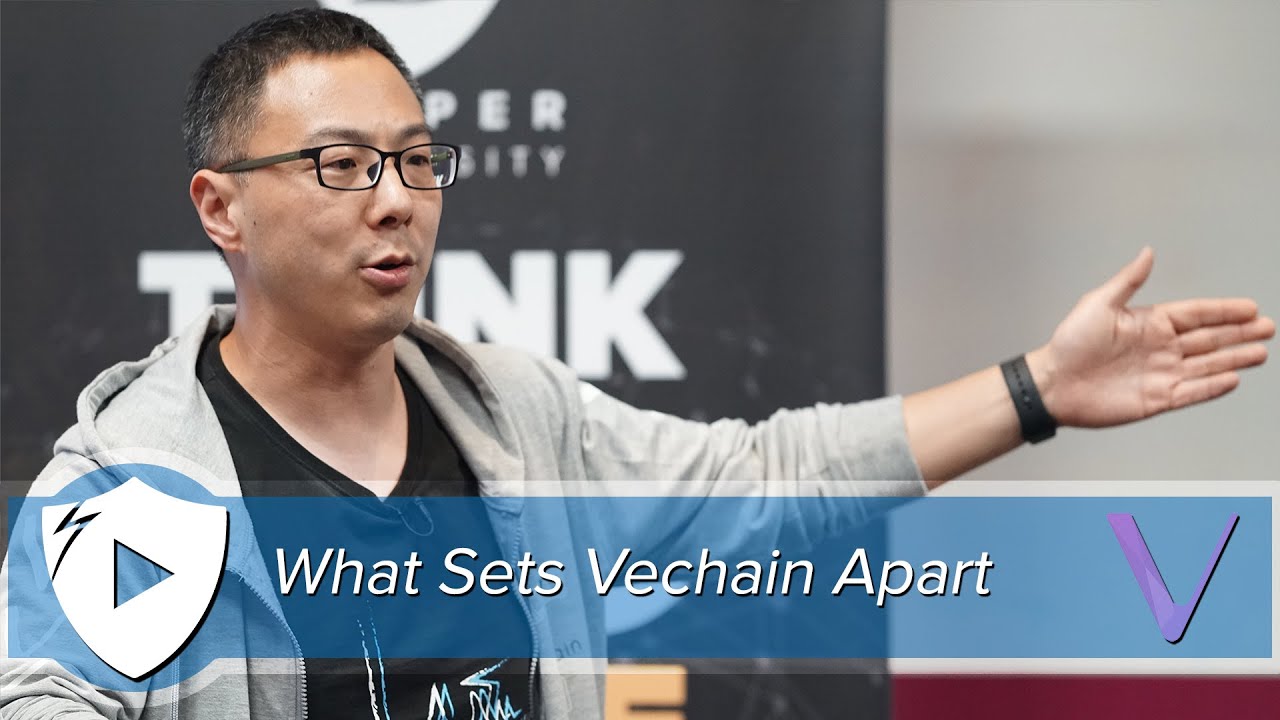
Sunny Lu, VeChain co-founder and CEO, explains the blockchain's enterprise features: multi-party payment protocols let sponsors cover transaction fees for companies that can't hold crypto, while multi-task transactions batch payments to multiple recipients to cut costs for supply-chain operations.
Chapters
So I'm going to show you some technical features uniquely on VeChain, which is really user-friendly for enterprises. The first one is what we call multi-party payment protocols, so we call MPP, which is pretty simple. So right now, if you want to either pay some crypto assets or tokens to someone, you got to own your assets. Or if you want to run a smart contract, you have to have some crypto assets, whatever VET or VSOR, right? So we design here is we create, we call sponsor. So if I want to, if for example you want to execute a smart contract, but you say I don't have crypto assets, which right now is the situation for most enterprises, because enterprise lack of regulation or legislation, They cannot own the crypto assets. So how are you going to do? You can choose me as a blockchain startup, be your sponsor. So you link your smart contract address to my sponsor address, so whatever you use, I pay for that. For sure we can set up some kind of like monthly threshold or weekly limits, and we can do the offline settlement. So by doing that, we kind of kill the barriers for now, you know, enterprise are able to build up application very easily on this. As a matter of fact, there are several use cases we have done with different enterprises, including BMW is doing like this. So it's MPP, it's like a third-party payment in crypto, okay? So that's the first one. And second one we call multi-task transactions. So we have a different, model, let's say enriched transaction model. Right now in most of the blockchain networks, if you want to pay the transaction, what are you going to do? You got to pay like, I pay to you, I pay to you, I need to initialize multiple different transactions, right? Or you can use a script, but it's a different way. So naturally on VeChain blockchain, we can create what we call clause. and can contain multiple different transactions in one clause. So, you can just issue one transaction, but paying to multiple different recipients. That's pretty common in like supply chain use cases, right? For example, when you, let's take an example, when you receive a carton of milk at your home, and you pay the money to who? You gotta pay to like a delivery service guy, You've got to pay to the commercial guy, you've got to pay to the platform manufacturer, even a commercial, like marketing guy. You can pay multiples and, or you can, for most of enterprise, you can run batch. You can run in a batch and it's kind of low down the unit cost of the transaction and make it like very friendly to enterprises. So those 2 honestly, I think it's pretty simple, but we are the only one to do it. So that's, I think for the entire blockchain space, we need more people not only about the technology, but also with business sense, to think from enterprise point of view, to think from business owner point of view. At the end of the day, blockchain is just a tool, right? If these tools are not able to generate the value for business, why do you need it? Right?