Figuring out the product | Salesforce
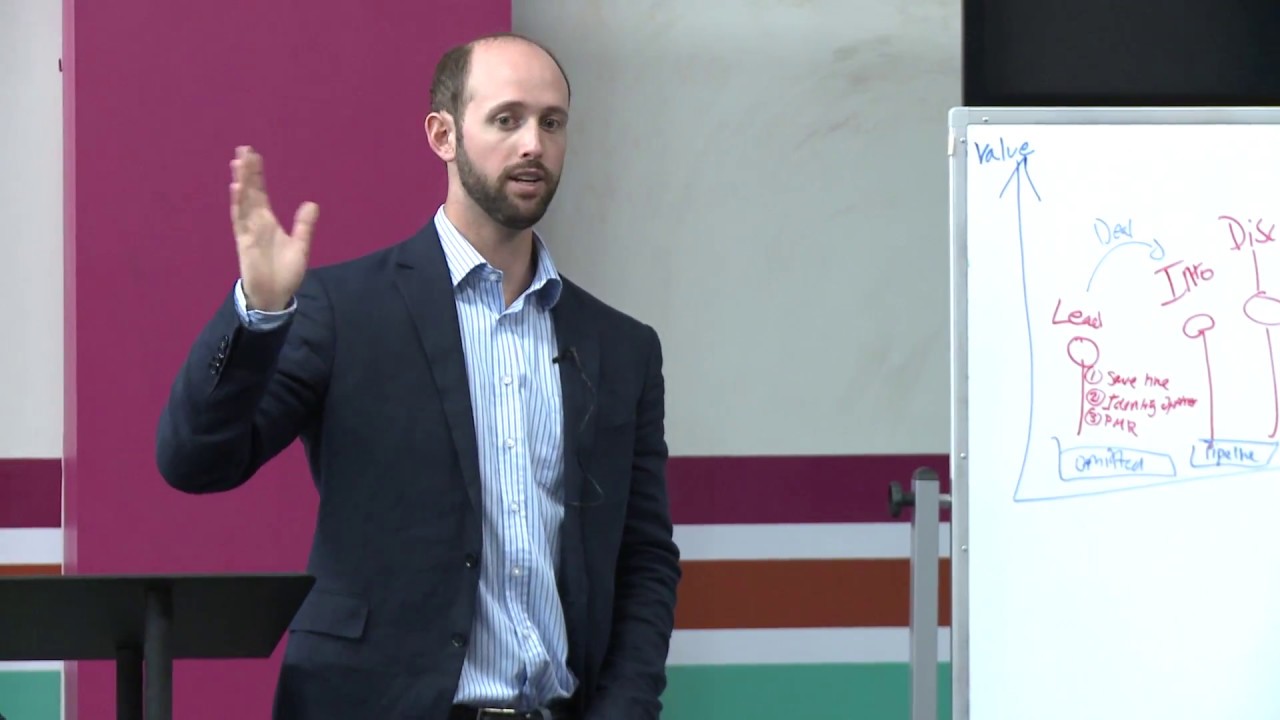
Tim Draper advises founders on product strategy, covering customer onboarding, automating support alerts, handling downtime, engagement scoring, and pricing. He discusses CAC, scalability, and when to raise prices based on customer value.
Chapters
These are the types of things that you can really do once that closes. The thing is, for all of you, you're going to be the salesperson, the support person, the customer onboarding person all at the same time. When you think about how that works, you need to think about extending it not just to the sale, but I need to get them up and running. Then what you want to do is you want to make your life easier. The thing that you can do that you want to do is automate a lot. So you need to be able to understand what parts of your product need to be used for it to be useful. And if it's not, your product should be alerting you to reach out to that customer proactively. You shouldn't be waiting around for them to complain. It should be one of those things where, I mean, let's think about it. Has anyone had a product that you've had, that you've used that you've had an issue with? Yeah? Okay.
Right.
All right, well, someone give me an example.
My web hosting company.
OK. And what happened?
I ditched them. I moved to another company because they wasn't responding to my tech request.
OK. And what was the tech request?
It was downtime for 2 hours.
Downtime for 2 hours. Great. So if someone had downtime for any of your products— this is a good example of something you could build potentially— you'd want to be able to— one, you'll know it because you're probably going to be scrambling to fix it, but two, You should be proactively thinking about what is our comm strategy. And this can happen before it's down. But everyone is going to have a down point at some point. No matter how good your product is, something's going to happen regardless. It just always does. It might— hopefully it takes a long time. And Bala is way better talking to this part of it than I can. But having a strategy to the customers is critical, and having it done beforehand. And it doesn't take long. It could literally be an hour meeting. OK, let's talk about— If this goes down, what we're going to do. And it could even be automatic if you can build triggers that if something goes down, you automatically email the users and say, hey, we're down. We're on it. If you need anything, call us at this number. Would you have stayed if you had at least known that they were working on it?
Yes.
OK.
It goes 2 hours, and I'm going crazy, and no reply. No, guys, I'm not going to work with you. Not because it was 2 hours down, but because they didn't get the feedback. They didn't say that we are working on it.
Exactly. And the beautiful thing is you can build some of these— some of these things you can automate. So I'll give you another quick example that you might be able to do. In your products, there's certain things that people could use that are very valuable. Ideally, over time, once you see usage, you'll be able to come up with a score of some kind to say this person is a 10 out of 10 or a 1 out of 10 or whatever you want in terms of how they use the product. What you can do though is if there's certain things that you really want them to do, build a trigger to notify you that if someone goes below a certain amount of usage of a certain part of the product, and a very easy start is login. If people aren't logging in, you're probably going to lose that customer. If login drops below a certain percentage, then you should probably get notified and do a hands-on approach. So to your point, as you get more and more customers it gets harder, but you can create processes that will automatically notify you when to engage at scale. Does that make sense?
Yes.
OK. Do you have a— I mean, we talked a little bit about sales. We talked a little bit about marketing before that. Now we talked— yeah, go ahead. How to make the proper price of your product. Yeah. How do you make the right price of the product? What do you guys think?
You calculate the cost of— so you calculate the cost of marketing, of development, of everything, and you make a plan on when you scale to— when you scale in certain amount, how much the cost will drop. And you can price strategically now for future scalability. Yeah.
And that works until your customer tells you they don't want to pay for that.
Yes, exactly.
Right?
So I think the reason— that's a great answer. But the reason I wanted to give him that answer to that is because the reality is that, look, even us, we're 24,000 people now. And we just changed our pricing for the first time in 12 years. But we changed everything. And what's even more complicated is us, you, you're pushing releases every week, every 2 weeks. You're putting in new features that should theoretically be more valuable. The problem is there's things that are going to be of value, and then there's things of I will pay more for that. A good example is everyone here will pay more to have a car requested from your phone drive you somewhere than they would for waiting on the street in the rain right now for a taxi. Am I right? Okay. So like this is just an— like what will people pay more for is part of that. So some of it you might— you get— there's the academic approach and then there's this process that's going to teach you how to evolve that.
Right.
The academic approach is critical because— and I'll get you in a second— is critical because if you don't do that you might have a very lopsided situation where you're paying way too much to acquire a customer and unless you have a bunch of VC funding Or backing, you're basically going to have such an unmanageable burn that unless your growth rate is through the roof, you're going to have a situation where your company's not going to be valued much and you're going to eventually run out of money. And then you're going to have to go get more funding, and then when that happens, you're going to lose the control of your company.
One important way to look at it is earlier in the conversation we spoke about strategic marketing and market strategy, and we went through a framework that you could use. So that is really hard to do. It's very easy for me to put it on the board, but it's really hard to do. If you do that, you'll at least get a baseline of, you know, what you want to charge.
Yeah, go ahead.
So is it fair to say that if I'm building something entirely new and I'm entering a blue ocean market, I cannot underestimate the price of the software or anything, or the product that I want to bring to the market, and then see how customers react to that price, and then I can change as I go along. If I use the academic way of getting my pricing right as a guide, is it fair to say that that's—
Yeah, that's it.
The academic way is just a way to set a price initially, then the market will tell you what's the right price. Yeah.
A good example is a company we acquired called RelateIQ. They were pricing their product Extremely high. What they— but, and I'm not gonna go into details 'cause I don't think I'm allowed to, but like the amount what they actually sold it in was way low. And it was, if you look at the customers, the first customers got it for almost nothing. And then as it became more feature-rich, as it evolved, that price started, they started meeting the price point. You don't have to get it right. What I will say is it's always better to err on the side of more expensive than cheaper. Unless your goal is to complete, unless your strategy, to Bala's point, if you're saying like my brand, my thought is that we are gonna be the cheapest on the market. So that's how we're gonna win the market. If that's the case, then it's a different story. But if it's more blue ocean, then something I would consider and think about is it's easier to discount than it is, you can't go up, but you can go down really easy. And you can go down during this process. If you start getting a situation where you're not getting these in, people aren't showing interest, or you can't find people with interest because it's too overpriced, that's when you do have to lower it. But if you at least get them in the door, then you can start talking. I mean, so Salesforce since its existence has always been overpriced according to people. They say it's overpriced. Yet when we actually walk through this process and show the value, then they all of a sudden say— like one of the most common objections we train everyone on is people say Salesforce is too expensive. Then we walk through this process and they're like, oh, now we get why. And then they're willing to pay for it. So if I don't have that conversation at all, then it's too expensive. But if people are telling me it's too expensive, I'm cool with that.
More from Tim


He Sold His Car to Build This Startup, Then Pitched It for $1M 😳 #Startups #AI

This Startup Moves Your Crypto BEFORE Hackers Can Steal It 😳 #Crypto #Cybersecurity




15 Months Without Refrigeration?! This Startup Thinks It Can Go Global 🥥 #FoodTech #Startups



