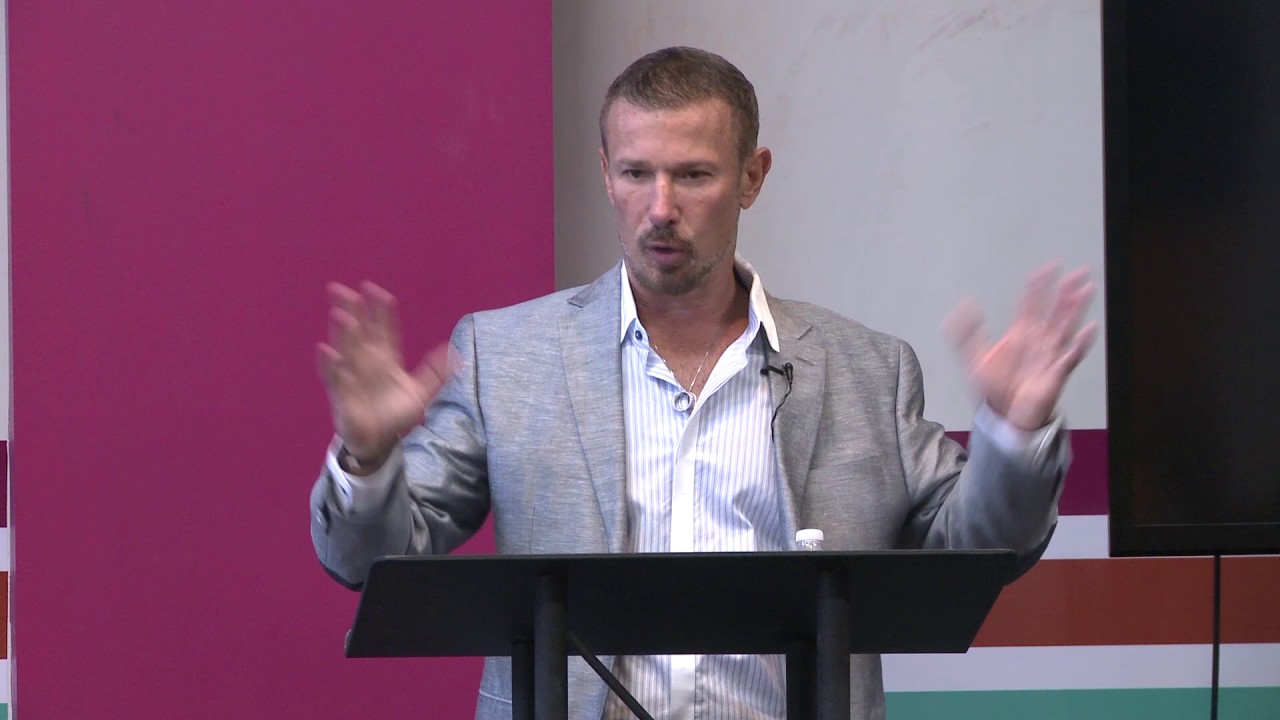
Mike Palumbo founded Third Millennium Trading, survived a ruble crisis loss, then built trading capital through technology. He invested in Getco, a high-frequency trading firm, and exited in 2007 at a $1.7B valuation while retaining roughly 12% equity.
Chapters
So I want to talk a little bit about some of the book's most important topics and then a bit about the future of FinTech in particular. But first, I want to give you a little bit of a background of me personally. I'm a serial entrepreneur myself, just like many of you guys, and I started my first company in my 20s. It was a trading company called Third Millennium Trading. I started with $250,000, as was said, and even back then that was not a lot of money. I took no backers because I thought I could make it without them. I will talk about the importance of investors later, but for my case, I took none initially. The reason why I took no financial partners was I believed at the time that I could build the firm quickly without any new money. It was a risky bet, but But I was young and felt like the risk was worth it at the time. But looking back at my particular case, it was worth it. But that does not mean the road was very easy. So I know this room is filled with driven, bright individuals, some colder than others after jumping in that pool out there. But I bet you, no matter how smart you are, there's probably a voice inside of your head That says, I can't do it. I know it's been in my head before. Let me guarantee you one thing. Everyone who has ever accomplished anything of real value in their life has heard this voice too. So here's where I tell you a bit of my big moment that I had to take on that voice and overcome it. So just 2 years into my trading company, My company took a huge loss when they devalued the Russian ruble and the US stock market dropped 10%. We became insolvent and I was forced to suspend operations for 4 months. If I had more capital, that would not have happened, but I still believed I could go it alone and didn't take any further money from VCs or other investments who were offering to help dig me out of this hole. The voice kept telling me I couldn't do it. And now it added, and I told you so. So the thing to remember is everyone hears this voice. The ones that can tell it to go to hell are the ones that will succeed in life. I think things would have been much smoother had I taken on partners, but the amount of equity I would have had to give up was close to 50%, and to me at the time, it wasn't worth it. This decision proved right as I was able to build the firm to over $100 million in trading capital over the span of the next decade. Now, most situations, I think having a VC backer is extremely important, and we go over this in my book, and I will talk about this a little bit later. But in my case, I felt there was a a way to use leverage, and as long as I was a good enough trader and had a good enough system, the odds of failure were actually quite low. I knew I had a competitive advantage in my technology, which was spreadsheets and computer programs that helped me better manage my risk than what some of my competitors had, and also better analyze trades as well. So this is the early— or late '90s, early 2000s, so the use of computers at the time was pretty much in its infancy in trading. I used the computers to help me quickly analyze trades on thousands of different stock options when 99.9% of my competitors were trading in a physical pit and limited themselves to only trading the stocks in those pits. So I had a huge advantage. I could trade pretty much the whole country. Once brokers realized I would give them quotes on so many names, my phone rang constantly. And I became known as one of the biggest liquidity providers in the country, all because I knew how to use technology better than my competitors. This was a significant competitive advantage and one that would be very hard to overtake. And in fact, it took even greater use of machines to actually execute the trades quicker before anyone could beat me. And so this advantage lasted for over a decade. During that time, I made over $150 million. What it shows is that no matter what business you're in, technology can always give you a significant competitive advantage. This has been true for hundreds and even thousands of years, and it's still true today. So you must ask yourself, what is my competitive advantage? How do I leverage this to beat my competition? And you also have to be honest with yourself. Do you have a competitive advantage in the firm you have? And how are you going to gain market share in your industry? Mine, I knew, was a significant advantage, and I also knew at some point it would no longer be the case. So this brings me to the second phase of my career, which was when I started to become a VC. I knew trading as it existed in the late '90s would not go on forever, and I had heard of a firm that used computers to trade directly with the marketplace. Back then, that was unheard of. It soon became known as high-frequency trading, which is HFT. Maybe some of you guys have heard of it. But in 1999, I was offered the opportunity to back a firm called Getco, which was also headquartered in Chicago, where my firm was. Getco stands for Global Electronic Trading Company. It would go on to become one of the biggest HFT firms in the world. And what they were trying to do was groundbreaking. They had developed computer models that could trade stocks and eventually stock options without any need of humans at all. What that did was cut the time it took to make a trade from seconds down to milliseconds and down even shorter than that. If the models worked, I knew it meant the end for trading as I knew it. So I spoke with the founders and we agreed on a deal, which I would take 20% of the firm for about 3/4 of a million dollars. But I had one— I asked for one guarantee, and that was that I would not be diluted in my stock holdings for 3 years. I knew that they would be hiring a lot of partners and a lot of technology experts, and they would want to lure these people with stock. So I didn't want to be diluted at the beginning. This dilution provision was important for me, and it became extremely valuable when we exited 8 years later and still owned 12%. of the company. So here are the takeaways from this story. If you're on the VC side, don't be a pig. If you bet on the right horse, 20% of a huge deal is gonna be plenty. But who cares if you own 80% of a company that goes to zero? So don't be a pig. I knew I was competing with others to back this company, and I had to prove not only I could help them grow their business. I also had to give them a very competitive bid because I was competing against others for this company. I was confident in their potential and did not want to miss this opportunity. Another takeaway is as an entrepreneur, at some point, even if your business has a big technological advantage, eventually that's going to go away. Always keep pushing the envelope in technology and other competitive advantages Because I guarantee you, your competitors will never stop trying to beat you. And when you see a competitor with something better than your product or service, either learn what they're going— what they're doing, or honestly try to buy them. I was fortunate. I developed a very good system that kept an advantage for a decade, and then was able to see the next big thing and invest in that as well. But it was only because I was constantly surveying the landscape around me and networking with other people that this was able to happen. Never get complacent. Never think you are untouchable because even with a company like Facebook or Apple, which currently owns considerable advantages, someday those are gonna be gone and they will only remain relevant if they continue to innovate. Absolutely. One last note on Getco. We exited in 2007. And still had 12% of the equity, as I had said. The valuation of the company at that time was $1.7 billion. So it shows, don't be a pig as a VC, and one winner can make up for a whole lot of losers. I wanna make sure you guys get one more takeaway from my story. I wish I worked harder when I was younger, not less hard. I wish I put in more time preparing for each trading day. I would have done much better. So don't buy in for a second this myth of a balanced life being ideal. It may be for some people, but if you want to be successful, you better be ready to outwork everyone you are competing against. If you want a balanced life, don't be an entrepreneur.