Finding a Need in the Market | Margot Micallef
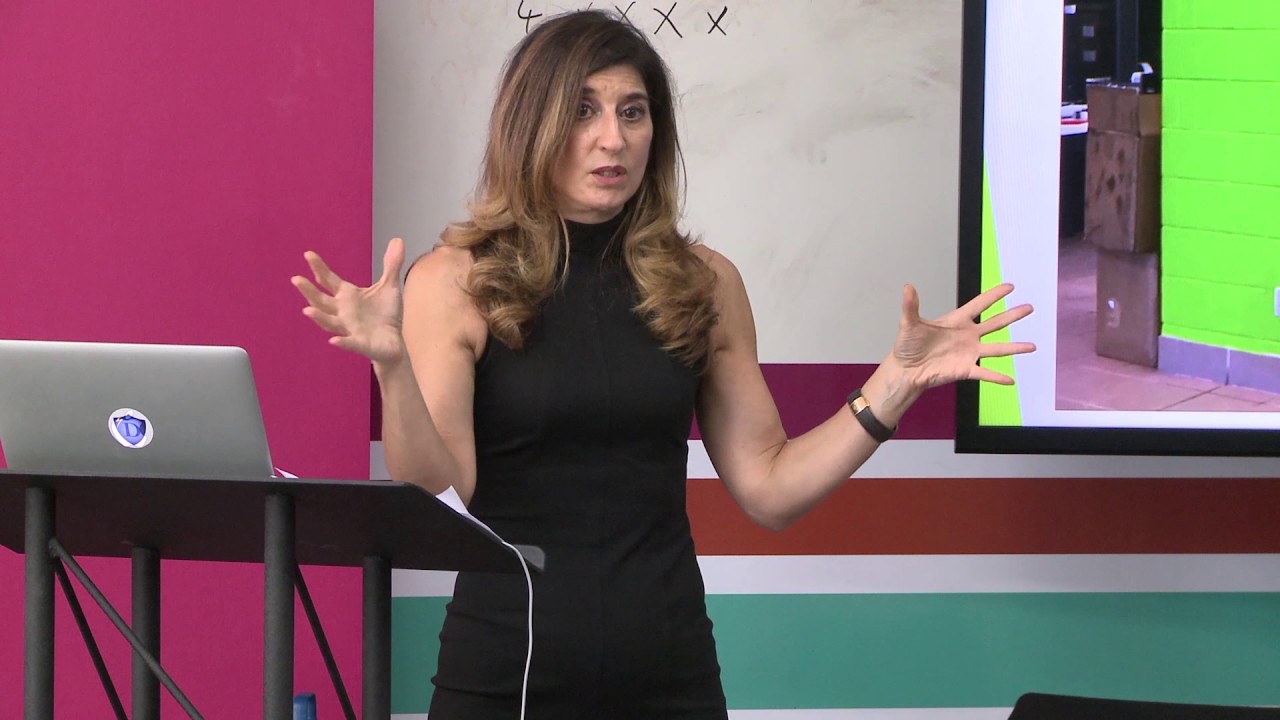
Margot Micallef created Skinny Pasta with her sister Gabriella after struggling to find healthy pasta that tasted good. When Gabriella was diagnosed with cancer, Margot shifted from a diet product to a wellness brand, eventually expanding to 2,000 retail locations across North America and renaming the company in her sister's honor.
Chapters
I am an entrepreneur. I've started and sold a number of different businesses, and my latest venture is one that's really near and dear to my heart, and it's called Gabriella's Kitchen. And we make a product called Skinny Pasta, and we have a number of different SKUs and different recipes and different variations of the Skinny Pasta brand. Today is my sister's birthday, Gabriella, who I'll tell you about her. So it's kind of special for me to be here talking about our story and about our So I guess I have to use this. There. So I'll tell you how we got started, and then I'll tell you how we got to market. So we started in Canada a few years ago, and we started as one of those things where it was really just for ourselves. So I had stopped eating carbs, or cut down on carbs. My sister was a runner, and she had cut down on carbs because they didn't make her feel good. And we're Italian, so giving up carbs giving up pasta, which was really hard to do. Right. So we tried that for a couple of years and we were fine with it, and then it just got to the point where we thought, well, this is ridiculous. We're not going to give up pasta for the rest of our lives, because if you're Italian, and I know Joe is, pasta is not just food, it's part of your culture. It's, you know, part of your being. So I said to my sister, okay, I am going to find a pasta that we can eat that's healthy and delicious. And I searched everywhere. I tried every single pasta I could get my hands on. They all tasted terrible. And so, you know, being an entrepreneur, I always see the beginning and I see the end and I forget how hard the middle is. And so I said, we have to do this ourselves. Hi. Hi. So we hired a chef and we gave him the parameters. We wanted a healthy pasta that was nutritious, had to be delicious, and had to be convenient and easy to make and affordable for everybody. So he came up with a recipe and we tested it on my mom. My mom is Italian and she used to make her own pasta. And she thought it was crazy, like, you know, you can't make pasta that isn't real pasta, you can't make pasta that doesn't have all of those ingredients that normal pasta has. And we kept prodding her and trying different things and she kept saying, no, this tastes like garbage. And eventually we found a recipe, she tasted it, and she actually said, okay, this is good. And that's the product we went to market with. So these are pictures of my sister, she was a runner, my mom tasting and eating our pasta, and my sister with her daughter. Shortly after we launched the company, my sister got diagnosed with cancer. And it changed the nature of our business. Originally the business was about finding an alternative to carbohydrates because of vanity and other reasons. We really came to realize really quickly that there wasn't a lot of really good food on the market that tasted delicious. And so what we came to appreciate through her illness, because she started cutting out more and more foods, what we came to appreciate was that well-being is not just about physical well-being, it's about emotional and social and spiritual well-being as well. And one of the ways that we ended up develop our overall well-being is through sharing of food. And as she got sicker and sicker and she became more and more marginalized in what she ate, fewer people would eat with her because the food didn't taste good. So while it was healthy physically for her, it wasn't really nourishing her being as a whole. And so we came to realize that there was a need in the market for a better-for-you company that made food that tasted delicious but that also happened to be healthy so that everybody could eat it and everybody could share it regardless of your dietary preferences. So So my sister passed away a couple of years ago, and I took over the business at that time. I renamed it Gabriella's Kitchen after her, and my mission now is to honor her through building up this company. When we first— when I first took over the business, we were in 300 stores, and over that 2-year period, we've grown to about 2,000 locations. We've expanded into the US market from Canada. We've expanded all across Canada, and we're due to make about $8 to $10 million next year. So not bad for a company that came up with really was just an idea for our own selfish reasons. One of the important things to identify when you have an idea, and I know some of you are in business and some of you I think are just developing your businesses, so you might already have identified this, but because we identified the higher purpose of our company, it wasn't just about making a low-carb pasta, but it was about really feeding people so that they were nourished spiritually, emotionally, physically, and socially, it was important that we convey that culture. So one of the things that we did was we identified with our team, why do we do this? So why do we wake up every morning and work our butt off to deliver these products that we make? And the purpose that we came up with was that we want to, and we inspire and empower everyone to celebrate and nourish healthy living. So it's about celebrating and nourishing healthy living. So much broader than just eating pasta. And we felt that— and Simon Sinek, you might have heard of him, he advocates this as well— that if you have a higher purpose and if you understand the why of what you're doing and you convey that why of what you're doing, you can relate to your customers and your partners much better than if you're just making something. So that's our why statement. We inspire and empower everyone to celebrate and nourish healthy living. Our how is by bringing together people who are passionate and brilliant, who believe in the impossible, and who push boundaries through innovation. I'll talk about some of our products in a little while, and you'll see that we are in fact quite innovative. You know, the idea that we can make pasta that has 30% of the calories and 20% of the carbs, that's gluten-free, that's high in protein, that's great for celiacs, it's good for vegetarians, good for vegans, you know, good for diabetics and a whole slew of other people, you had to push boundaries in order to actually accomplish something like that. And what we do is we create delicious and nutritious, better-for-you foods without compromise. And the without compromise is really important because what my sister gave up when she started eating food that was healthy for her body was a number of different things, including sharing food with other people and sharing and missing out on that joy of sharing. So the fact that our food is without compromise is really critical. So I'm going to talk about our marketing strategy and how we actually got from zero to almost $8 million in sales and what the tactics were that we actually employed. So to start off, I mentioned, you know, that our products really appeal to a very broad market, you know, vegetarians, vegans, Vegans, diabetics, celiacs, athletes, moms with kids, people who are looking for protein sources, etc. But what the very first thing that we had to do is we had to narrow our focus. And being an entrepreneur, I struggled with that because I want to have something that appeals to everybody. And I kept feeling like if I narrow my focus in terms of our marketing effort, that I was going to miss out on opportunities. And entrepreneurs, that's the worst thing that you can feel as an entrepreneur is I'm going to miss out on an opportunity. But what I learned was that if you try to be everything everything to everyone, you are nothing to anyone. And that's really, you know, even just as an entrepreneur generally, when you're starting a business, what you have to do is get focused, more and more focused, and honing in on what you're actually delivering. So that was the first thing we did. So we identified our 3 target markets, and we called our first target market Chief Health Officers. And those are generally moms who are in the ages of about 35 to 45, and they care about the food that they serve their children. They do research. They will They will pay a premium for good food, good products. They look at ingredients, they don't want chemicals. They do look to validate either through common sense or through research the decisions that they make, but they do spend the higher amount to feed their families well. And that's our primary target market. Our second target, primary target market are what we call the Young Forevers. And what you'll notice is that we don't identify our demographics based on age or gender, we identify them based on lifestyle. So the Young Forevers are oftentimes men. And they are people who eat healthy, who care about themselves, who are very athletic, who care about how they look, where they fit in the world, who care about the backstory, who care about who they do business with. And they want to make sure that they're not just feeding their souls, but they're also taking care of the world in the process. And then the last target market is really one that we get by default. And it's not really a market that we target. We don't advertise or market specifically to them, but because of the marketing that we do and the attributes of our product, they find us. So they're called 4 out of 5 doctors. These would be people who would either listen to dietitians, listen to their doctor, listen to health professionals, who would follow statistics, who generally don't want to pay too much of a premium unless they're convinced this is really good for them. And so because of the specific attributes of our products— low carb, low calorie, vegetarian, high protein, celiac, all of that— they will find us. So that's our target market. So our goals in in our marketing strategy was to build brand awareness. So we were a complete unknown. We came up with this idea. We put it in the market. And the hardest thing to do is to get everybody as passionate as you are about your products or your services. So the first thing we have to do is build brand awareness. The second thing we have to do is minimize spending and maximize value, because we didn't have very much money because we were a startup, which I'm sure you can all relate to that. The third thing we wanted to do was create demand for the product. So we had a great product. Nobody knew about it. We wanted to build awareness, but we also wanted to build demand. We also wanted to attract retail distribution because we had to get on shelf in order to satisfy that demand. If we had created it in a vacuum, it would be useless to us. And then the last thing is, of course, turn that demand into sales. So those were our marketing goals. And the tactics we employed that I'm going to talk about today is listed here. And I won't go into them because I'm going to get into them in more detail as we go along. So we're going to talk about the
More from Tim


He Sold His Car to Build This Startup, Then Pitched It for $1M 😳 #Startups #AI

This Startup Moves Your Crypto BEFORE Hackers Can Steal It 😳 #Crypto #Cybersecurity




15 Months Without Refrigeration?! This Startup Thinks It Can Go Global 🥥 #FoodTech #Startups



