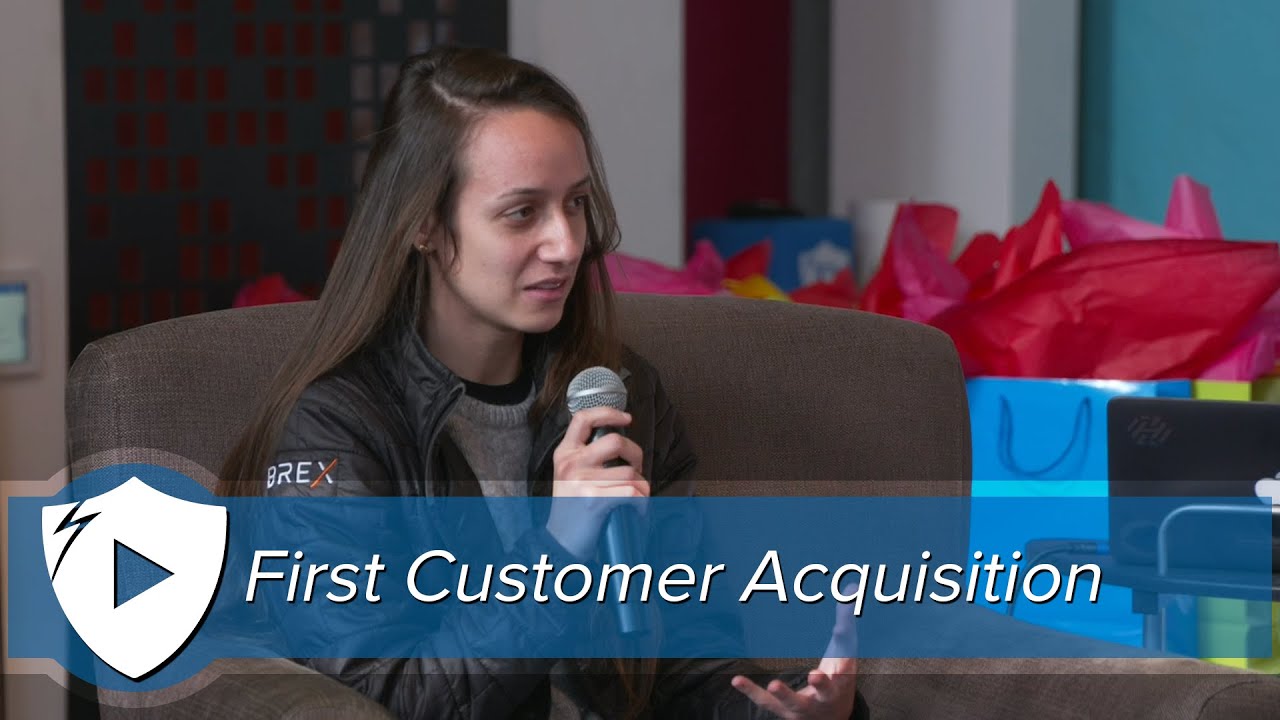
Larissa Rocha, Brex's first employee, explains how the company acquired its first customers through friends and friends-of-friends, then built credibility by landing First Republic Bank and AWS credits. The breakthrough was using Finicity's API to approve credit based on company cash balances instead of personal guarantees.
Chapters
For sure, the first 10 customers were all friends and friends of friends. Then we ended up getting some super important partnerships. Don't underestimate the power of a big logo because it's easy when you get your friends, right? But then once you start getting people that you don't know by name anymore, you need kind of things that will make them trust you as a brand new company, as a brand new product.
So one other thing I always wondered about is in the first— I know you joined before your first customers. The first 6 months, and you've mentioned that you sought out expertise, asked other people how to solve problems or how they solved similar problems. But how did you deal with mistakes or failure in the first 6 months? Something broke down or things didn't work or you felt like, oh my God, I never realized I didn't know this. How did you as a team and individually and personally treat failure?
So the first thing that we would always focus on was the customer, 100%, because it's financial services, right? It's very easy to get a bad reputation, and we just wanted to make sure whatever we did would fix the problem for the customer first and foremost, and that we would be available At any time of the day to help if anything happened. So that's number one. But we would, you know, within our value of seek truth, try to really understand, okay, why did this happen and how can we do it better next time? And there was so much stuff going on and so fast that we didn't have time to be extremely upset. Once something happened, we would just use that to turn it around and not let that happen ever again. We have been very good at if one thing happens, we will get now a team to stop for a week and make sure that that will never happen again, instead of overlooking and fixing with some glue and et cetera. This could be in processes, in the sales process, and everywhere. We take this approach of understanding deeply why it happened and spending a lot of time and resources preventing it from ever happening again.
At that time, who were your first 10 customers and how did you get them?
Our first 10 customers were all our friends. Actually, our very first customer was one of my best friends from school who at the time had a company and today he works at Brax. He's a software engineer at Brax and he's very— the dashboard wasn't even a dashboard. Because it was so close to us, it was just willing to use the card and test it out. So for sure, the first 10 customers were all friends and friends of friends. Then we started like that. Then we ended up getting some super important partnerships. Don't underestimate the power of a big logo. It makes a big difference because it's easy when you get your friends, right? They know you. But when you get a big company, But then once you start getting people that you don't know by name anymore, you need kind of things that will make them trust you as a brand new company, as a brand new product. And we got 2 partnerships early on that were really, really important. And they took a long time. It was long hours writing and rewriting decks, tons of meetings, meeting every single person. on their end, but we're just like very, very grateful that they happened. And one was First Republic Bank. Early on, we weren't even publicly launched yet, helped and still help a lot with traction with customers because they couldn't, they didn't have a card for startups. So startups would come in, would bank with them, but when it was time to get a card, they couldn't offer one. So sometimes they would lose the customer because the customer They wanted a one-stop shop, right? So now instead of losing the customer, they were referring Brex and we were of course treating the customer very well and just getting tons of FRB clients as well to use Brex. So super, super important relationship to this day. And AWS as well. We actually, our very first reward was $5,000 in AWS credits, Amazon Web Services. And we got them also early on to offer through us that to our customers. So, you know, from there we started getting traction from FRB and et cetera and growing from there.
So I want to reiterate something very important you said. The first set of customers were your friends, people who trusted you, and you didn't have a perfect product, and that's okay. And they didn't. So these folks were okay to try out a new product even though it wasn't perfect.
And a lot of the times they were like our friends, right? International founders who also couldn't get a card. They couldn't even personally guarantee a card. So for them, it was a card that worked and that didn't require a personal guarantee and that they could have. So that was solving a big problem for them as well.
So that's a very good test for us when we're looking at seed-stage startups, that the product needn't be perfect, but if the problem is If it's crucial enough, people will use even the most bare product because—
100%.
Yeah. And you're obviously solving a major problem for a lot of founders and companies. So what in your opinion, looking back, was the first big breakthrough for Brex? As you guys were building this company, you were 4 people in a little like office or like an apartment. What was the big breakthrough?
So when we were able to approve our first transaction, and it was a transaction from ourselves to ourselves, but just a test transaction, and we were able to develop this card that didn't require a personal guarantee, it was huge because nobody else had that in the Valley. So as you said, it wasn't a perfect card in terms of rewards. and airport lounges and all of this, but it solved a very specific problem of a card for founders who are growing, who don't have time to deal with bank bureaucracy, and are now getting a card that is giving them a limit based on how much they've raised instead of arbitrary financial history things. So that was like the big breakthrough. And the way that we were able to do that, we use an API called Finicity, which is the same one that QuickBooks Online uses. We connect with the company's bank account, and based on their cash balance, we're able to give them 10 to 20% of that as a monthly limit, which is, you know, how we are able to give much higher limits and not require collateral.