Focus on the Product, not the Company | Phil Libin
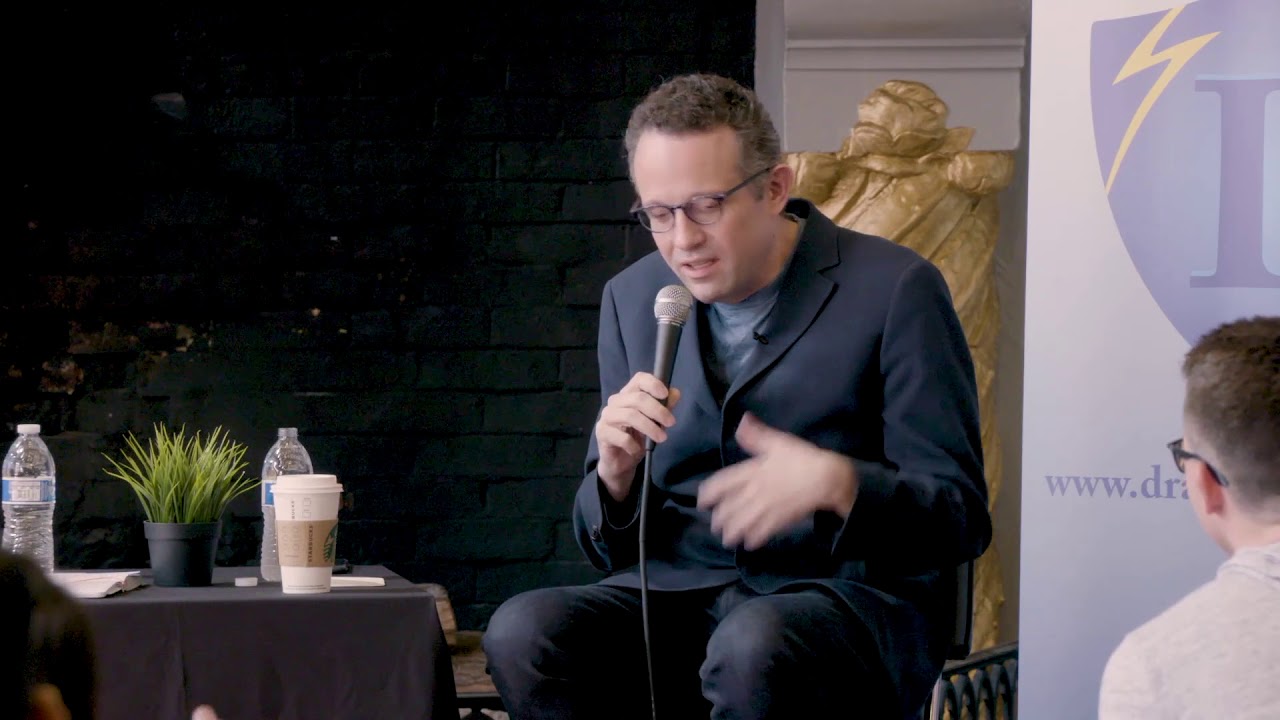
Phil Libin tells founders that VCs matter less than they think, and pitches should feel like recruiting co-founders, not closing sales. He describes All Turtles, a product studio where creators focus on building rather than running companies, and shares how Evernote took many meetings to raise funding.
Chapters
So let's talk a little bit about the actual meetings, VC meetings. So a lot of the students here will have their first VC meetings within the next few months. Last year, actually, one of the alums went to your office, General Catalyst, and we sat together. You probably might not remember, but he was deaf, so he needed some help communicating.
Yeah, yeah, yeah.
His technology didn't work very well then, and pretty much we wasted like 15 minutes out of that 30-minute meeting trying to get that to work. So any tips that you have for these guys and girls going into their first VC meetings?
I mean, honestly, the central thing about VCs is that we are much less important than we think we are. There's many, many types of VCs. I know just about all of them. There's some great people. There's some total assholes. It's the same distribution of brilliant people and morons as you find anywhere. But the thing that all of us have in common common is like we have this massively inflated sense of our own importance in the world. When you look at any objective measure, like venture capital is just not a big or important industry. You know, it's a tiny percentage of financial services based on everything else. It's just like it has— it commands this outsized, like, presence because of the myth, because, like, of the memes that this is the Silicon Valley style of investing. So it's just not that big a deal. And that's probably like a good mindset. And it's like you're talking to You're just talking to people, and you want to convince them to go along on this journey with you. It's the same way that you would convince co-founders, or early customers, or partners. It's just part of the same team. You're assembling a tribe early on in your company, and that tribe includes your team, your investors, your customers, reporters. That's how you talk to media. When I talk to reporters, I talk to them in the same way as I talk to my team or my investors. I'm just recruiting. Talented people to go along on this journey with us, because we know where we're going. We have a clear idea of what the destination is, and we don't have any unreasonable expectations. We're certainly not confident that we're going to get there, but we know the destination, and it's a destination that's worth trying to get to. And I'm just trying to get people along on it, and that tends to work pretty well. So the best pitches are the ones that aren't pitches. Like, if I— if as an investor I feel like you're pitching me, it's already like we're already off on the wrong foot.
Mm-hmm.
I want to feel like you're talking to me like you would be talking to a co-founder, and you're just trying to like say, hey, this— like, isn't this great? This— like, this is what we're doing. We're doing something worthwhile. Let's do it together. And then the other thing to keep in mind is you may have— like, I was talking to a friend of mine who I'd known for a while, but but he only recently started his first company. And he's like, man, Phil, this is like, I'm just fundraising, and it's murder. I'm having all these VC meetings, and like, no one's investing. I'm like, oh, okay, well, let's see, like, how many meetings have you had? He's like, I've had like 4 investor meetings already. I'm like, you've had 4 investor meetings? I'm like, for Evernote, I had like 200 before someone invested. Like, I went to Kazan, Like, I was raising money in Tatarstan. That's a real place. It's where tartar sauce comes from.
Right.
I went to Tatarstan to raise money for Evernote. I was like meeting like 228. Like, sometimes that's what it takes. Sometimes you get lucky and, you know, your first, your first meeting, it's like, yeah, okay. And people hear about that. But like, I've got plenty of friends. My friend Tammy, they just got out of Y Combinator, Carrot Fertility. She's great, she's one of the stars out of the batch. They raised money, they just announced yesterday they raised money. It seems like a huge success. She's had like 50 or so meetings, maybe 60, for the past year and a half. My friend Alex, he's actually in Old Turtles, he's one of my co-founders at Evernote. He just raised money for Sunflower Labs. He had like 120.
Wow.
Sometimes that's what it takes. So, a healthy thing to think about your first VC meeting is, Okay, you're about 0.5% done. Just like, get that in your head. And if it— if you, if you get a deal done in your first 10 meetings, like, you're spectacularly lucky. And it's not even necessarily a good thing. Like, it's, you know, you, you, you, you meet with people, you get better, you refine it. Like, it takes a while. You're gonna get tons of nos. It's okay. Like, don't worry about it and, you know, stick with it, but don't stick with it too long.
Like, Don't—
no one's forcing you to start this company. So, if you, at some point, you actually think, like, hey, this isn't a good idea anymore, then stop. But don't take the signal that you've talked to a dozen VCs and none of them have invested, like, that's not a negative signal. That's, like, that's commonplace. But if for whatever other reason you realize, like, you know, like, the feedback I got, like, they're kind of right. I hadn't thought about it like that. Maybe this really isn't going to work. And like, if you really start doubting yourself, like significantly, then stop and do something else. Like, you know, you don't get any points for persevering.
So let's talk a little bit about All Turtles. What is All Turtles for those of you that don't know?
Well, the observation with All Turtles is that startups are kind of a— like, a lot of what we do here this like Silicon Valley meme of that you have to make startups is actually really stupid when you really think about it. This idea that before you can make an important product, you first have to make a little company. Like, that doesn't make any sense. And so I've spent 25 years now on every side of this, and I've just kind of realized that it's dumb because, you know, what's the point of taking like amazing, talented, brilliant product founders and then like forcing them to be mediocre CEOs? Like, why does that— why should that be the case? And it isn't how any other industry works. It isn't how any other like creative pursuit works. Like, if you're one of the most talented musicians in the world, let's just say you're like a one in a million, like literally one in a million most talented musicians, you're just a great musician.
Yeah.
Well, you don't start a music company, you just play. And through YouTube or wherever else, you get to millions of people. If you're one of the most brilliant writers in the world, you don't start a publishing house, you just write and you get to millions of people because the platforms exist to do that. If you're one of the most talented filmmakers in the world, let's say you're in film school, let's say you're about to graduate from a top film school and You're brilliant. You're a young filmmaker, you're about to get out of film school. You and your roommate have been obsessed about this idea for a TV show that you want to make for 2 years. You've been doing storyboards and geeking out over it. You just want to make this TV show, and you finally decide, okay, we actually have to make this happen. So you're sitting in your dorm room with your roommate, and you're like, we're gonna make this happen. So what are you thinking? You're not saying, okay, here's what we need to do. We need to Drop out of film school, move to San Francisco, start a company, get— figure out our CAC to LTV ratio, and then pitch Andreessen Horowitz for our seed round, and then get some VC on our board and get some random advice about how fast we have to grow. Like, that isn't— that's not what you're thinking. You're like, we gotta get this made at HBO. We gotta get this made at Netflix. Like, you want to go to an environment that has the greatest chance of having your vision made in a professional environment, and that's where we want to be. So we want to make— we want to be that, this thing that exists in most other creative industries. We want to bring it to product entrepreneurship. So if you are, you know, a few years from now, if you're the 2 smartest engineering students that are about to graduate from the University of Mexico in Mexico City, and you've got this vision for a world-changing product, and you're sitting in your dorm room, and, you know, deciding, okay, now we have to do it. We don't want your plan to be like, I guess we have to, like, get visas, and apply to Y Combinator, and move to San Francisco, and start a company. No, we want your, your, your, your plan A should just be, we gotta get this made at Old Turtles in Mexico City. So we want to be the default plan. for, for great product entrepreneurs. So we're basically building Netflix or HBO where we make and distribute really innovative products, but instead of TV shows, we're making tech products, AI products. And then some of those will become companies, and that's great. And some of them will just operate as lines of business, and some of them will get acquired directly from the studio by acquirers. And so, but we're, we're saying focus on the product, not on the company. And if a company turns out to be the best way to bring the product forward, that's fantastic. We'll help you do that. If it doesn't, it doesn't. We are a product-first studio, not something that strives to make companies. So.
More from Tim


He Sold His Car to Build This Startup, Then Pitched It for $1M 😳 #Startups #AI

This Startup Moves Your Crypto BEFORE Hackers Can Steal It 😳 #Crypto #Cybersecurity




15 Months Without Refrigeration?! This Startup Thinks It Can Go Global 🥥 #FoodTech #Startups



