Food + Robotics = Sereneti Kitchen | CEO of Sereneti Kitchen Timothy Chen
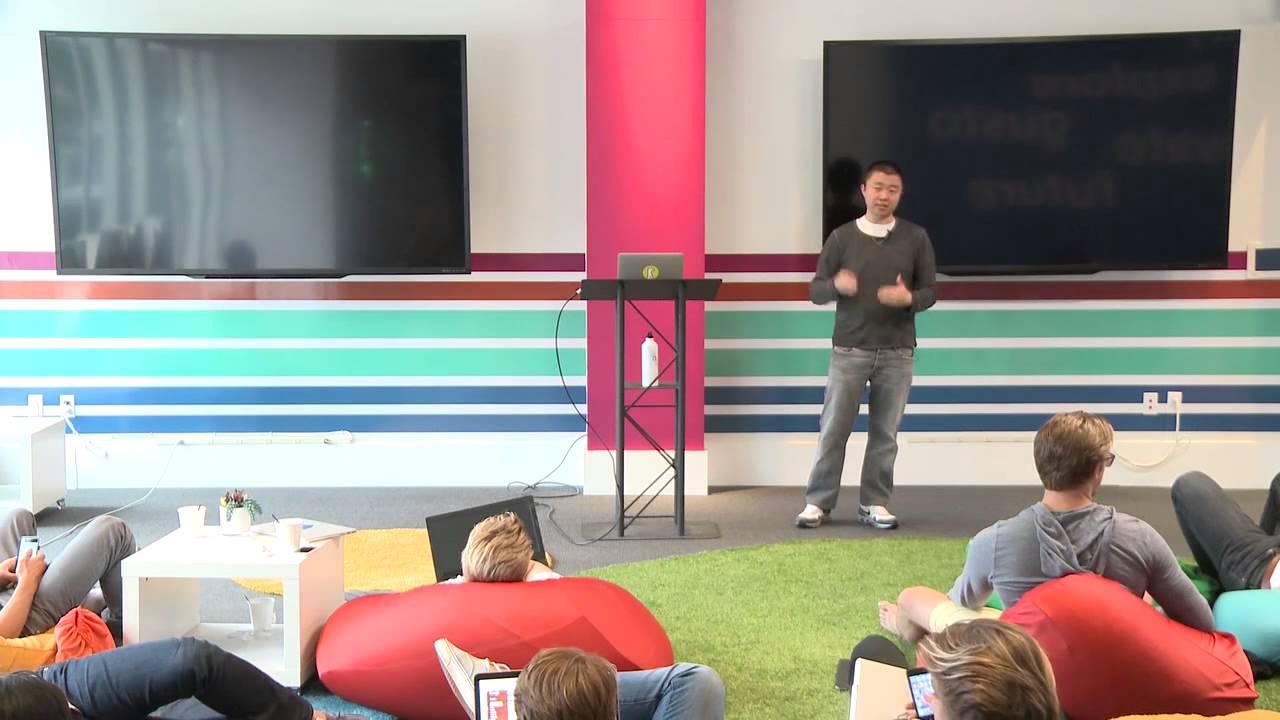
This content was created by Tim Draper. This content was uploaded by Tim Draper. This is a YouTube video titled "Food + Robotics = Sereneti Kitchen | CEO of Sereneti Kitchen Timothy Chen" (posted 2015-08-11) featuring CEO Timothy Chen in a presentation/Q&A with multiple participants (labeled Speaker B and Speaker C). The discussion covers Sereneti Kitchen's food-robotics system and early prototypes, plans to place devices in accelerators, cartridge-based handling of perishable ingredients, par-cooked ingredient supply for restaurants and consumers, a razor-and-blades recurring-revenue model (food subscriptions vs. hardware), pricing and scaling considerations (device ~$499; margins on food), sourcing and co-packing strategy, design and DFM challenges (novel robotic arm), and an app-driven cooking/positioning system.
Chapters
We're doing food and robotics, 2 of the hardest fields, right? How the hell are we gonna get this done? Well, we're figuring that out right now. So this is why we're gonna go into accelerators by the latter part of the year and put devices there, our first alpha hand-built prototypes there, so that people can actually experience putting cartridges of food in there. So on the food side, we gotta make the food, right? 'Cause until we get to a certain size, nobody's gonna wanna play with us. But so we can take fresh ingredients, cook food on a daily basis in a common kitchen, delivering them into a certain place so that if you want food, you just tap a button, you pay for it, and you pop cartridges in there. It makes food for you because the food is perishable.
But like, you put in— so let's say I want to make, I don't know, relatively simple thing for something like this. So you have eggs, right?
So you have a little oil at first to coat the pan, and then you have eggs, and then whatever vegetables that you choose.
Now, is the oil already in there?
It could be delivered by the machine to start, and then it pours the eggs in there. Eggs are usually in an induction cooktop, it takes about a minute to actually start frying up, and then it gets to a certain form factor. You want it to be liquidy enough but not too liquidy because then it won't coat the vegetables. And so that at that time you have to add in the vegetables. Right? You have to let it sit for a little while and then spin it around for a little while. So there you have an omelet.
You know, like, is there a separate— would there be a separate compartment down the road for like salt, pepper, you know, all different things?
Absolutely. Because food is so individualistic. You know, that's a part of the data that we're gathering. That's part of the feedback loop that eventually stores will use to actually drive food, you know, into your home because they know exactly what you want. They can deliver it at a time. Pricing, sourcing is very important, and also the quality that you want.
And quantity too.
Okay.
Is that your product? Yeah, so that's a looks-like prototype. So, you know, we were on TV, we were, you know, we've gotten a tremendous amount of coverage for this because we're venturing into some real uncharted territories. So there's a show called Food Fortunes that, that it's almost like a Shark Tank for food. So When we premiered this, we made some high-end, high-grade ramen with better ingredients for the audience, and they tried it. And so they asked the audience, who would want to buy this? 84% of the people said they wanted to buy it. And at that time, we were testing price sensitivity too, because we said, what if it was $600? That number came down. So we're going to continue to iterate upon pricing and also validation for users. Don't you think it would be better, rather than trying to sell a unit like that to a consumer, Going to like a restaurant where they're doing one, you know, let's say start with one product, you know, food or boiling pasta, straining the pasta, and making that almost like industrial, like doing an injection part. Yeah, that was our first thought too, right? That was actually totally our first thought. That was what a lot of people asked us as well, until when we actually got out into the field and did consumer validation. When you went into a restaurant, One chef says, I want a 50-gallon drum. Okay? The next one says, no, I want something that's much smaller, or I want something that's going to be able to actually take and flip much faster. Everybody wants something custom because in a restaurant there's a certain standard that you need, right? We think a lot of that could be done in a restaurant or could be done in a purveyor's so that you can actually do that at home. So we found out quickly that if we're going to make custom machines, it's going to cost us Probably $100,000 to $200,000 for each machine that we made, plus software, and you can't grow a company that way. But in a consumer home, a lot of times this is the end effector upon which you can actually make food. So it's the last mile that you can just say, you know what, you can put the food in there and then it'll happen. It's almost like the next version of the microwave.
What is the opinion from professional chefs, like for example Gordon Ramsay? Because I think when he sees it, he's just like, fuck, fuck, fuck, fuck, fuck, all over the place.
Exactly. So now that he doesn't have to yell at a person, he yells at the machine, right?
I'm not sure if that's better or worse.
So here's the thing. Here's what chefs should be thinking about, because we've validated this with quite a few chefs. And they said, all right, so are you replacing me? And we said, no, you're the artist. We're giving you the chance to shine. You make food, right? You curate food to a certain extent. You can have your secret seasonings, you can have your secret recipe, right? Or you can actually just do certain types of food. Let's say across the street there's a barbecue place. You smoke that pork butt for a certain amount of time, but if you microwave it, it zaps out all the flavor, it dries it out because it dehydrates food. But if you're actually able to repot it, then you can actually make it better. So they can actually deliver ingredients par-cooked, meaning that's cooked a certain percent, you know, to consumers. They already add value. Now they have a supply chain to do this with 50 meals to here, 500 meals, 500,000 meals across the nation, or 5 million meals across the world.
Wow.
Now food is interactive. So they see their ability to actually do this from one sourcing house without incurring overhead because Most professional chefs, they barely get by.
I think it's different. I think we're going to provide a solution for people to eat healthy at home, and then they go out for dinner for the experience.
Yeah, so exactly. They go out to the restaurants for the experience, but there's not— who's to say that there's not a middle of the road where they can actually cook restaurant-quality food and deliver you the par-cooked ingredients, and you can have restaurant-quality meals in your kitchen every day.
Yep, then they're cannibalizing their own sales.
Not at all.
No?
Not at all, because they're expanding. Because they have a tiered system, because you can't go there to eat every night.
Yeah, can you tell me, so it seems like you're kind of doing the Keurig model.
Yes.
Do you predict that the majority of your revenue will come from the monthly subscription or the weekly?
Yeah, it's a razor, razor blades model, so it's gonna be from the food, because food, we're looking at 50% plus margin on that. the hardware is eventually a wash. If you talk to a number of VCs, this is the model they're looking for, because they're looking for recurring revenue. That— because when you just sell a piece of hardware like the Coolest Cooler, which is one of Kickstarter's all-time, you know, highest grossing things, right? A lot of VCs say, we won't even touch the Coolest Cooler. Because, you know, all they can do is next time come out with the next cooler, and if somebody else is better than them, I just lost a business. So when you do hardware, look at what your recurring model could be, because that's going to get you your valuation.
Yeah, but where's the ingredients and the source of the food?
So ingredients and source of the food, right now, as we start, we're going to have to do this on our own. We're going to have to be able to source the food probably from retail, and then make it in our co-packing kitchen, and then send it out. But as we continue to move forward, we want to get out of that game, because so many people do that as their core business. They do it better. So we want the HelloFreshes, the Blue Aprons, to be able to actually deliver food in our packaging format that fits in our machine to be able to actually cook it.
So it brings us back to the omelet example. The omelet example, I would get a package of fresh mushrooms.
Fresh mushrooms probably pre-cut like a couple of days ago, right? Eggs that are already broken into a— and then the way that you preserve food naturally is to use a certain type of noble gas.
Yeah.
You know, and then you can actually just get those packets, you pop it in, you push a button. Somebody else has a question?
Okay. So I know you're doing the food yourselves now and eventually moving to a third party.
Right.
At what scale does it become profitable where you're able to buy the food wholesale cheap enough and start getting real returns on it?
Right, so that depends. That's a very good question because, you know, when you do something that's perishable within a certain time frame, You've got to start one market at a time, kind of like how Facebook did one socialization market at a time. You have to be able to do that until there's enough distribution, because we see distribution is really ramping up. And when distribution ramps up, costs are going to come down, and that's going to meet somewhere in the middle. We don't know what that time is, but we project it's probably anywhere from the next 2 to 5 years.
Awesome.
What would you retail it for?
So the device, about $499.
Comparable to like a KitchenAid.
KitchenAid or Vitamix, right. But as if people subscribe to food, if they subscribe to our meals, let's say 10 meals a month, then we can actually take that much lower. Be like an iPhone model because it's a razor in a razor's place, right? So you could actually have that for $199 and then we continue to have so much guarantees in terms of food turnover. So I want to show you something that I think it was you actually earlier that said you're making a certain device, you're ready for DFM. We— her. Her, okay. I thought we were ready for DFM as well. I was like, oh yeah, we have a clunky prototype. We'll get it to the factories. They'll use interchangeable parts to be able to do that. How wrong were we? So we started the program. We said, okay, we can just take this and just beef it up. The engineers make you rethink your hypothesis. They want you to think whether this is actually capable of being replicated. We had a robotic arm just like any other. It's a robotic arm that folds and twists, right? Standard throughout the industry. But then they said, well, how are you gonna close a gap, right? Because if you fold, you're gonna have some type of gaps here. Water, steam, it's all gonna get into it. What are you gonna do with that? So we said, okay, let's change that around. So all of a sudden we had a eureka moment that said, what if a robotic arm could be sliced within a certain angle? You know, have an angular robotic arm that twists upon its own axis. Because instead of just doing this, because you don't cook like this, right? You cook like this.
There you go.
That's the mechanism we're seeing there.
Yeah, so we rethought it and we prototyped it. I mean, this was literally within a matter of days. It's able to actually twist and turn. So effectively, we just made a new type of robotic arm. This is the thinking that people ask you to do when you're in these accelerator programs. Take what you know, throw that out the window because there's some flaws to it. Rethink it, rethink how people would use something, rethink how your market would adapt to it. There were concerns, can we get this done? I mean, we have the most complicated project by far at Highway One, this whole cohort.
And your software makes it better In the pan so it touches every area?
It could. Yeah, so we've even come up with an application where you draw a circle, you show the robot how to do something, and it does it.
What if your pan is a square? Sometimes that happens.
You could do that as well, because it's just a positioning system. It's an x, y, and z positioning system.
Huh.
Do you set the temperature on it too? So for instance, if you said start it out at high heat, you could set it at high heat.
Exactly. Yeah, the beautiful part of that is that as you start moving on, You're gonna have an app, you can actually change all of that. Minute 2, do this. Minute 5, do this. It's all modular. You can actually program it just the way that you want it so that it can cook the meal that you want. This is gonna get us to iterations where, you know, every stay-at-home mom, stay-at-home dad is saying, you know, I have a treasure trove of recipes. Why don't I just start making this? And they socialize it out. We plug in an ingredient back into this. This is gonna be the biggest business because revenue from food is the biggest spend of your day.
More from Tim


He Sold His Car to Build This Startup, Then Pitched It for $1M 😳 #Startups #AI

This Startup Moves Your Crypto BEFORE Hackers Can Steal It 😳 #Crypto #Cybersecurity




15 Months Without Refrigeration?! This Startup Thinks It Can Go Global 🥥 #FoodTech #Startups



