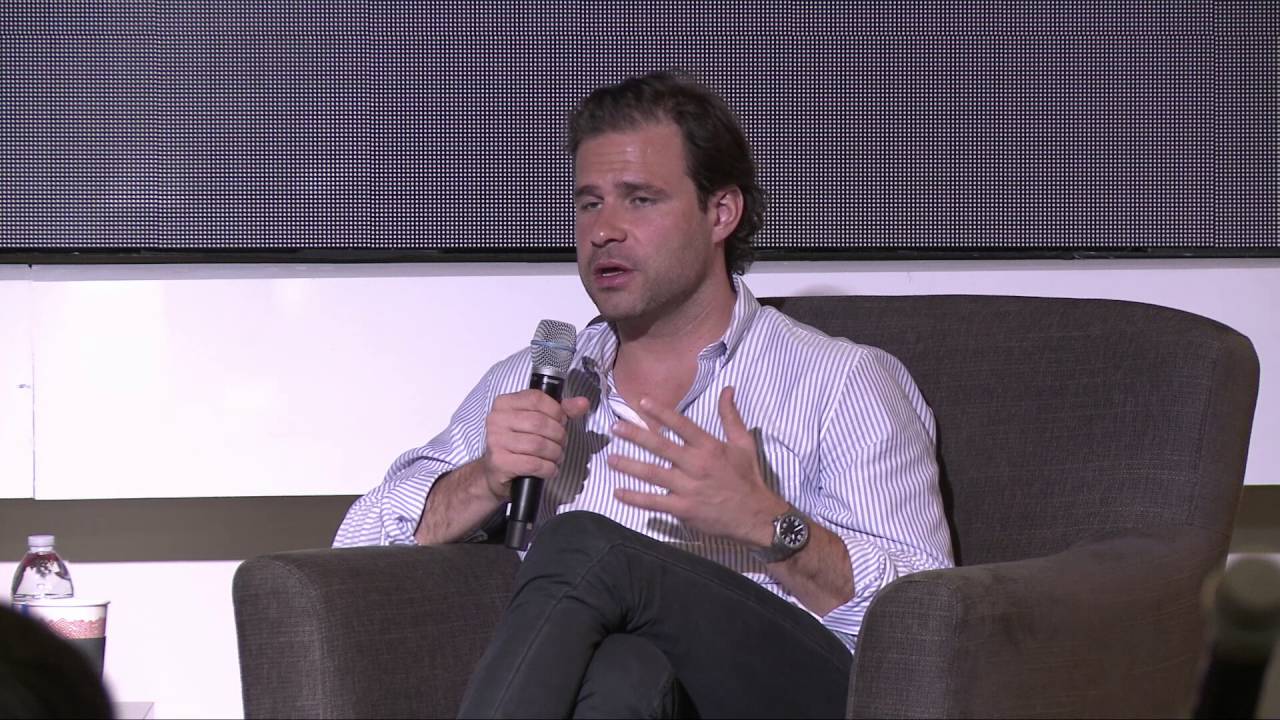
Bastian Lehmann talks about raising Series B and Series D funding, working with investors like Spark Capital and Tiger Global, and how to build relationships with VCs in Silicon Valley through accelerators and introductions.
Chapters
So what about choosing which are the right venture capitalists to bring into the company, right? Because they get a board seat, they get to tell you what to do to an extent, and they're just a really important part of the company, particularly in the later stages. Now you got Peter Thiel, who is his own force in Silicon Valley, and then correct me if I'm wrong, but you also brought in a hedge fund in the last round, right? A wide range. They got Spark Capital and all sorts of other more institutional VCs in there. How do you decide who is the right person to bring into the company as a mentor, as a leader, as a board member?
Yeah, that's, that's super tough. So I tell you the story about the Series B and then the Series D with Li. So we have Nabeel from Spark Capital, which is a great firm, and Li is a later-stage investor from Tiger, Tiger Global. It's a huge hedge fund. So what happened is that we knew both of them for around a year. So we had, we had met either of them previously for an earlier round of funding, and they said, they said that thing like, it's a little bit early, right? It's a little bit early. But what works really well is if you then can come back with the next round of funding and you show them the same plan you showed them a year ago, and you're like, look, we're, we're overexceeding our own goals by 15-20%. That's very impressive because what you have to understand, the reason that it is so difficult to get any investment or any VC money is that most, most people never get there, and most people do not live up to the expectations that they set in the, in the meetings with venture capital firms. So it's totally justified for VC to be very careful with their investments and almost like suspicious.
Yeah. That's their obligation.
That's their obligation, right? So if you can actually have a meeting and you come back a year later and you say, hey, same model, overperforming, and you keep the interactions with that person going over the year, you send an update every once in a while, you include them in news that the company has, then you can— as funny as it sounds, you're building a relationship even if it's just remote. So when we met Nabil, 9 months later and it was time for our Series B, he knew the company. He had spent some time with us and he knew that we're overperforming on the goals. And I had a chance to just— I mean, you don't know somebody after meeting him a few times, but you get an idea on how you could see yourself interacting on the board with that person. And that's really important because a board member has a lot of— not necessarily control, but can influence a lot of decisions on the company. one should not underestimate that the main reason that a board exists is to hire or fire the CEO. So, you know, if you get a lot of people on there that don't like you, then you're probably not going to be CEO for much longer.
Good point. So we're tossing around all these names of VCs and investors, and if you, you know, live and breathe Silicon Valley venture capital, it might make sense, but How do you actually end up— if you're an entrepreneur, an aspiring entrepreneur, how do you actually meet these people? How many cocktail parties do you have to go to before you have a relationship with one of them? And then how on earth do you even get your foot in the door of one of these firms?
I knew absolutely nothing when, when, when I arrived in the US. I mean, I heard of like famous firms because I worked in the venture capital space. I worked in the— I had a company before that in the UK. And in Germany, so I knew a little bit. I knew how it kind of worked, but everything that happened in the Valley is like, was this big cloud. So I remember like I came here and you're like, what's gonna, what's gonna go on next? So this is why we opted in for AngelPad personally, because Thomas, who runs AngelPad, he told me like, look, you come over here, I'll introduce you to a bunch of people so you can start building your network and in the Valley. And I don't like people, and I don't like networking, and I don't like going to cocktail parties. And April knows that because I never go anywhere with her. And I have— oh, it's the worst. I don't know why, but I, I'm like the builder guy. I like to sit down with, you know, my co-founders, and we just like to hack away and do stuff. So I actually did very little of that. And I, and I believe that that, you know, you don't necessarily have to do that. But what you should start doing early is try to meet the right people. I would actually go as far as saying like a cocktail event is probably not the best way to meet a person. What I learned in the Valley though is if you ask someone, it is more like networking is like a turn-by-turn navigation if you get to the right point. So if you know a person that you want to meet, do your homework, see who's connected to that person. Find if you find another founder, somebody who can make an intro. And that's the way to meet someone. The first meeting is likely gonna be a 20-minute coffee conversation. But if the other person just walks away even remotely interested in what you have to offer— and here's the great thing about what happens in the Valley and in San Francisco. I can guarantee you that almost every person that you ask for a meeting, especially on the VC side, angel investor side, will take that meeting.
It's—
They will. And they will sit down with you and they will give you half an hour. It may be 4 weeks out because there's constantly some sort of holiday, but it will work and you can learn from that. And I think that is the better way of doing it than hanging out on cocktail parties because I'm also pretty sure Mark Zuckerberg never hung out on cocktail parties, right? So just think about the concept. Be very targeted of who you want to meet. Know a lot about that person and then figure out how you can get an intro to that. You can use LinkedIn. You can ask friends. You can maybe go to an event where that person is speaking. That's still different from just hanging out at like a cocktail mixer. And what you want to make sure is that you hang out with people that are not like you, right? You can all hang out here together and you can all feel good because you all have the same level of knowledge, but I think it's important to get out of the comfort zone. And if you want to meet someone, then go somewhere where you don't know anybody. So you have to talk to someone and go to people that are different. It's not fun to talk to someone who's like a lot more successful. I never enjoyed that, right? When I had my Series A, for some reason, everybody around us already had their Series D. So you're like, yeah, you're super proud of like the $5 million that you raised, and everybody else is like, I got $100 million. And you're like, mm. I always thought they don't take you seriously. But I think that's where you wanna push yourself. So punch up and go places where you feel a little bit uncomfortable.