Growing independently | Christina Stembel
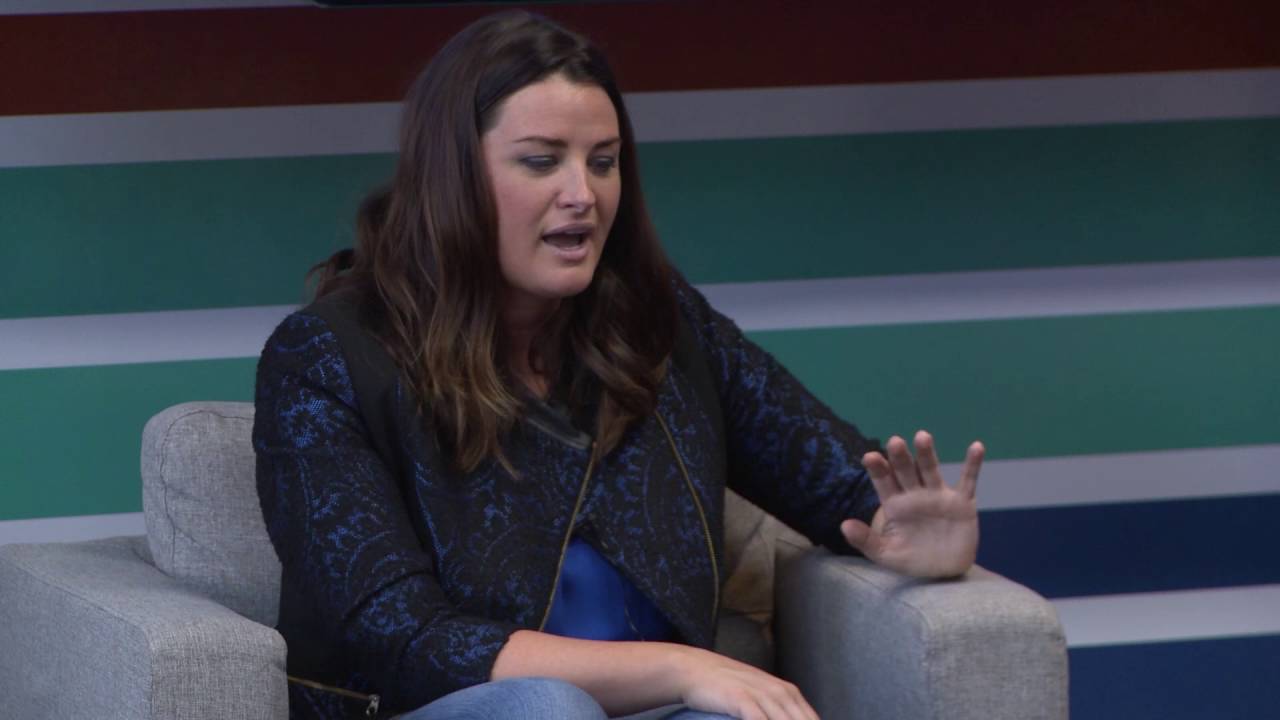
Christina Stembel, founder of Farm Girl Flowers, rejected venture capital because the economics don't match. Flowers have 10-20% margins and sell only a few times a year. She was told to inflate metrics, bring in her husband for credibility, and add on-demand delivery. She refused all of it, kept operations in-house, and hired full-time staff with benefits instead.
Chapters
I don't understand. I have the numbers to back me up. I have the press to back me up. I have New York Times, Wall Street Journal, Forbes Inc., Fast Company, Vanity Fair, Vogue, every single industry publication demographic I have. And yet I can't get capital. And what's going on? And so then I had to take a step back and really think about, OK, well, Number one, why am I not getting capital? And number two, why do I want capital? And the first— to answer the first question, the reason that I wasn't getting capital, when I think about it, it's the whole put yourself in someone else's shoes mentality. So what do VCs want? They want their money back quickly and a lot of it. They want a 7 to 10x return. And it used to be 10 years. Now it's like a 5-year return they want. Very quickly, right? And how do they do that? Really high margins. Really fast growth. Well, I can't do that. We're in a perishable product company that also is a service. What that means is we're in the gifting category. So people are buying us for birthdays, anniversaries. The average consumer buys flowers 4 times a year, not 40 times a year. And it's also, A net profit margin of 10% to 20% at scale. So we don't have a markup of 5,000% on a software-type thing. So if that's the number one thing that investors are looking for is a quick return on their money at a significant increase in a short amount of time, am I going to be able to do that? No. So why would I be attractive to investors? I mean, if I was in their shoes, I wouldn't want to invest in me. And I'm also not going to lie. I'm not going to go in there and say— hey, I did have a lot of VCs tell me— well, number one, I was told you should take your husband in with you, which I am here to say, never do that, women. OK? Never do that. OK? My husband doesn't have anything to do with the company. He works at Facebook. Great job. But nothing to do with the company. Why would I take him in with me? Because he has male parts I don't have? It doesn't make any sense whatsoever. So don't do that. Out of principle alone, do not do that. And then number 2, I was told, you just need to inflate your numbers. Everybody does it. Inflate your numbers. Don't show a 20% net profit margin. You need to show a 30% to 40%. But don't go over 40%, because then they're going to know you're lying, and blah, blah, blah, and this whole game. If you can't be honest, then you shouldn't be doing this. Because I'm really proud to say that our numbers are— we come spot on to our numbers. And what we say we're gonna do is what we do. Actually, we do a little bit higher. 'Cause I'd rather overpromise, underdeliver. Underpromise, overdeliver. That thing. That's what I'd rather do. We've come in at least $200,000 to $500,000 over what our projections are every year. And I'm very proud of that. But I'm not gonna come in there and say, oh, yeah, we're gonna do $25 million this year. No. We're gonna hit, like, $11 million if I'm lucky. $10.8 million probably. So— and why would you then need to be apologizing later? I'd rather have them lauding me as doing a great job later. So don't do that either. And it's just not the right thing to do. So the other thing that I would have to do to raise capital, I found out, was I would have to change my value system. for my company. And this is really important. As you're setting up your companies, really think about before it becomes a thing. Because if you're reactive to this, you're probably not gonna make the right decisions, because you're just— believe me, it gets crazy. I'm like the C-suite and above at my company. I'm the CEO, the COO, the CTO, the CMO, the CFO. Did I miss any? I'm all of them. So if you don't think about this ahead of time, you won't have time to think about it later as you're growing. Think about how you want to set up your company. Like, what are your values? What are your non-negotiables? And I decided very early on that my goal was to create a company that I would want to buy from, and I'd want to work at, and I would want to sell to. And so every decision I make, I think of those things. I'm not going to be dishonest to our vendors, because that's not fair. That's not someone I'd want to sell to. I'm not going to treat my employees— in an unfair way, because that's not where I'd want to work. And I'm not gonna provide a product that I'm not proud of, and that's not a good value for the money, because I wouldn't want to buy from a company like that. So the big thing in how that affects venture capital is— I'm sure you've heard of the gig economy here, and what a big deal it is, and how everyone's talking about, you know, 1099 contractors versus full-time employees and all of that. And we've decided, I've decided for my company that we are not going to mistreat our employees. If we are expecting them to come in and work for, to make our bouquets, potentially cutting their hands or getting carpal tunnel from all of that, from the design work, or putting them out on bikes in San Francisco, which we all know is a little nuts, right? With accidents and drivers out in the Bay Area with the crazy traffic now. Then we should protect them with workers' comp and medical insurance. We just should. It's the right thing to do. I wouldn't want to work for a company where they're expecting me to get on a bike with 20 arrangements and bike up these crazy hills in San Francisco. And if a car just hits me and breaks my collarbone, which just happened last year to one of our best couriers, then they're not going to be covered. That's their livelihood. And they will be out of work for 6 months with no pay, trying to pay their $3,000 a month rent in San Francisco, as we know. And that's not the right thing to do. I wouldn't want to work there. And so, we've decided to not do that. We have everybody who wants to be full-time is full-time. We encourage full-time. Some positions we won't even hire if you don't want to be full-time. We do have some contractors. They're the ones that want to be contractors. And we run it exactly like contractors are supposed to be run. No set schedules. They email us and let us know when they want to work. And we'll take them when they want to work. But I prefer all full-time employees because not only Is it the right thing to do? It helps our company. And people miss this point. So, I think the thing that sets us apart from all of our competitors that look strikingly similar to us is the fact that we make everything in-house. We have all of our customer service in-house, all of our delivery in-house except for FedEx, 'cause we now ship nationally. And I'm not that much of a baller to have my private plane jet. So, we have to use FedEx. So, We do everything in-house. And the reason that I think we are set apart from other companies that actually offer their products that look similar to ours for a much cheaper price point, some of them, is because we care. Our team members care about everything that they're doing because they know it's their livelihood. And if you take care of them, they're gonna take care of you. It's just that simple. I wouldn't wanna take care of a company and do my best and give 110% if they aren't giving me workers' comp and medical insurance and just the basic necessities of life. So why would I expect them to for us? So that's really important to me. It is also a reason why we were not able to raise capital. I was told to come back when I'm ready to run Farm Girl Flowers in a more traditional way, which I found hilarious that that word traditional, because if you look back to Companies of the past, traditional was taking care of your team members. I kind of think I'm kicking it old school. And treating people the way that people used to at the five-and-dime store around the corner when they took care of their team members. So I think I am doing it pretty traditionally. But that is something that you have to think about early on and figure out what your value system is and what you're willing to compromise on and what you're not, because that will affect your ability to get capital. And then the biggest learning that I have learned from starting this and working on it for the last 6 years, 20 hours a day, 6 to 7 days a week, is that success does not equal funding. This is really important. And I think it sounds oversimplified. But like I said, I go to networking events every— still, several times a week. Early on, all the time. And what I found is when I would talk to somebody at these big events, they would ask my name if I didn't have a name tag that they could slyly look at without asking. And then the second or third question would always, 100% of the time, be about capital. Have we raised? Who have we raised with? What round are we on? Something related to capital. And so subconsciously, I think it got in my head that Farm Girl, therefore myself, because as entrepreneurs, it's really impossible to separate yourself from your startup. It just is. Don't listen to anybody who's like, oh, it's just business. No, it's personal and business. OK? Because you're living it. So I started to think that I was not going to be a success. My company could not be a success unless I raised traditional venture capital. Because everyone here, that's what they benchmark their success on. I have spoken at so many places now. I just spoke at one. I'm not going to say where. But there were 2 of us speakers. And the first speaker got up. And he spoke for 20 minutes, his allotted time. And when he sat down, I had no idea what his company did. No idea. None. I mean, it also had a very weird name that I couldn't tell from the name what it did. But no idea. I had to go— I was looking on my phone. I'm like, what do they actually do? And then from their website, I couldn't even tell what they did. But his whole presentation was on how they got to Series A, how they got to Series B, how much they raised Series— up to E. He was up to E. And the whole talk was about how successful they've been based on how much they've raised. And I'm sure you've read this in every magazine article. Everything that we talk about is we talk about the success of a company based on how much money you've raised. Well, in my oversimplified brain, Now granted, I have no college education. I've learned everything from business school books and stuff. And my business school friends get very mad when I say this. I equate VC funding with debt. I know in business school it's not debt. It's very different. You don't have to pay it back. Blah, blah, blah. Whatever. It's still debt. Okay? You're still bringing in money that you didn't raise yourself. That you didn't like work your, you know, hands to the bone to get. And there are strings with that. You have to return it. You don't have to. You could totally fail. Whatever. We all fail a lot. Right? But if you're a success, which we all want to be a success, then you're going to be returning it. Right? So when I think of what I consider successful for a company, I don't think about how much money they brought in. It's the same as if I wouldn't think of, like, oh, how big is your line of credit from Chase? Or how big is that loan from the bank? And it's kind of the same thing. So I think of things like how big is your growth? How fast are you growing? What's your retention? Are you creating good jobs for people? What's your end goal? What's your profit margins? Are you profitable? I think of things like this that are more tangible. Like the real— like if you're building a real company, they are the metrics for success that a real company has. Oh, I did this so that way I could get to the next round of investment, even though looking at the business plan, I may have no way of ever getting liquid or getting any kind of profit. I'm just doing the next thing. I'm doing the on-demand delivery because that's going to get me to the next round. Well, I had a lot of venture capitalists tell me that I needed to do on-demand delivery or they wouldn't invest in us. And I did 30 different financial models. I'm not joking. 30. Wow. financial models. I was in Excel every single night till about 4 in the morning trying to figure out how the heck I could make on-demand delivery work for flowers. That's a highly perishable product, low margins, and a product that consumers don't want to pay $50 for delivery on. So how do I do that in a place where it takes 2 hours to go to delivery down to San Jose or wherever? So I couldn't figure out how to make it work. I took it to one of the venture capital firms that I pitched to and I said, can you show me how to make this work? Maybe I just don't understand what I'm doing here, but I can't make this work. No. There's— in most cases, in 99% of the cases, in my opinion, it's not gonna work for things like this. Now, I think in 1%, it will work. Do I think I'm that lucky to hit the 1%? No. Otherwise, I'd play the lottery a lot more than I do. So, you know, it's— It doesn't work for us. But I do have really good benchmarks on how I can. Our national shipping is growing like gangbusters. I have a lot of other benchmarks that I can tout as successful. And they don't include how much money I'm raising to do something that I don't think that I can ever make a dime on. It's all things that I think, hey, this is how I'm gonna get to the billion dollars. I have— No question that Farmeral Flowers is going to be a billion-dollar company. It's just going to take me longer to get there. I was hoping to do it in 10 years. It's probably going to take me 20. It's OK. I'm only 38. I got a while. So I can do it. And so I had to reframe my thinking to be success does not equal funding to me any longer at all. Success is how quickly I can grow. How well I can keep our brand authenticity that resonates with our consumers, because that's gonna help us grow. How well I can treat our team members and how I can create really good jobs here, non-tech jobs, which are very difficult. How I can create better efficiencies and build— this hasn't been done. What I'm doing hasn't been done. I kinda wish it had been done before, because then I would have kind of a— book that someone had written and tell me how to do it. But it hasn't been done. So if I can figure out how to do it in the most efficient way possible, that's a success metric to me. So what are some of the things that you've done
More from Tim


He Sold His Car to Build This Startup, Then Pitched It for $1M 😳 #Startups #AI

This Startup Moves Your Crypto BEFORE Hackers Can Steal It 😳 #Crypto #Cybersecurity




15 Months Without Refrigeration?! This Startup Thinks It Can Go Global 🥥 #FoodTech #Startups



