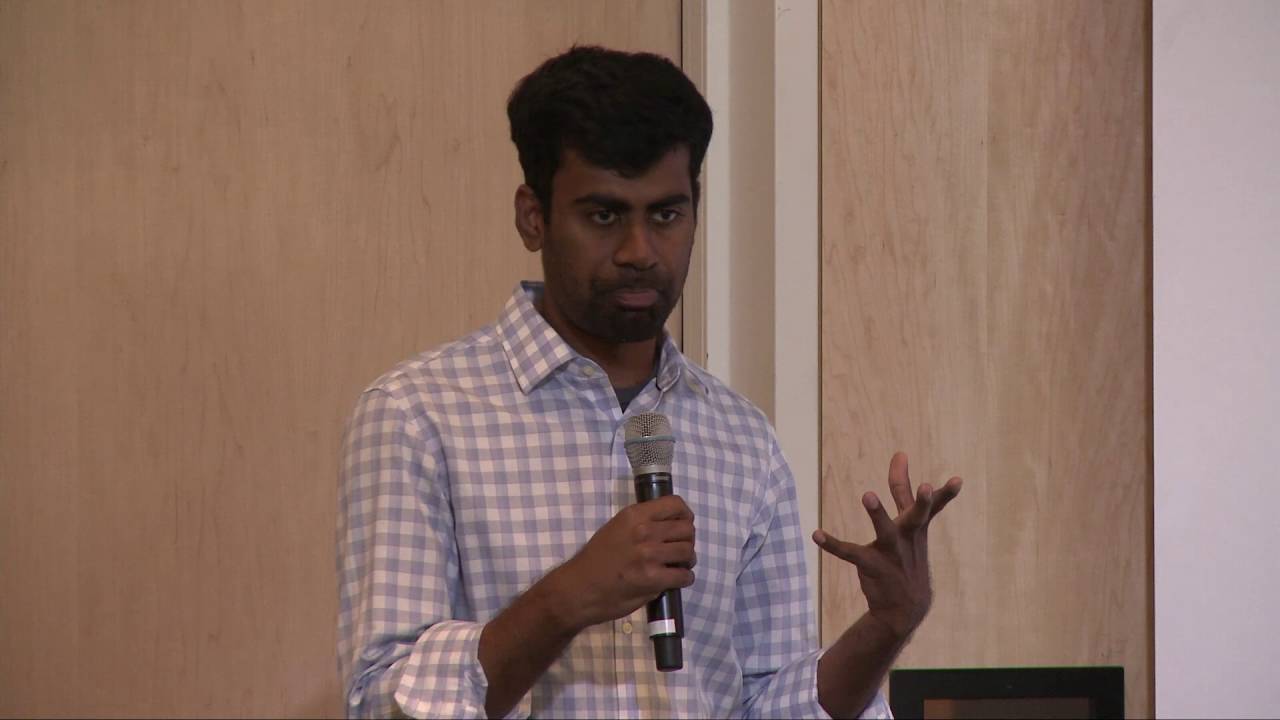
This content was created by Tim Draper. This content was uploaded by Tim Draper. This is a YouTube talk titled "Growth in the dark era part 1 | Yash Nelapati" (uploaded July 5, 2016) in which Yash Nelapati narrates the early story and growth of Pinterest. The content is a first-person presentation describing how he met co-founder Ben (and later joined with Paul), early product instincts (the catalog/collecting metaphor, Pin It bookmarklet), the very small early team and cramped working conditions, fundraising struggles, technical scaling pains (server outages, MongoDB, sleepless nights), and the transition out of what he calls the "dark era." He references other team members (Ben, Paul, Evan, Marty, Enid) and occasionally fields audience interruptions/questions during the talk.
Chapters
Please give it up for Yash Nelathalli. Hey. How are you guys doing this morning? Good? Cool. Seems like you guys didn't have any breakfast. But yeah, I'm here to talk about the story of Pinterest and like the toll to talk about growth, but I don't know, I'm just going to narrate the story and you guys can just feel free to interrupt and ask any questions. But does everybody here know or heard about Pinterest? Yeah. I hope. Cool. That's good. So I mean, a brief product pitch, like, so this is Pinterest. This is my profile. So as you can see, like, you can tell, like, I'm into typography. design, books. So you can kind of tell like what I'm into and what I'm currently curating about, where my thoughts are. So that's the profile. So, and if you can like visit any of one of my boards and like click a pin, this is how a close-up would look like. That's Marty, one of my coworkers or ex-coworkers. So he's into, super into Star Wars and stuff. So this is the current home feed of Pinterest. Like, the more you follow, the more suggestions or recommendations we can provide. So as you can see, like, I'm more into food, photography, and a bunch of stuff. So, cool. So I guess I can start with the story. Like, as I met Ben at a meetup, like, has no intentions of working for him, but like, He found like, hey, I think like you would be a cool addition and have this cool idea of like bringing social catalogs that we like always collect from like different design showrooms or like furniture. Like we just like, hey, can I have that catalog? And we just like take them home and we like go through them. Like, so the human behavior has always been like people love collecting and curating. So how about bring this human behavior into the real world, which is what Pinterest is all about. So when he literally pitched the idea, I was like, OK, sounds like a cool idea. Yeah? What kind of meetup was it? It was a Python meetup. I was in another startup, super boring job. Used to get my stuff done in an hour, and I used to work a ton of open source. And FriendFeed was acquired by Facebook, and they open sourced a long polling server, which was like not really available. So you can't build a chat solution or chat server back in the day. I was like super impressed with the server and all, so that's why I decided to go to the meetup. And like I did a lot of my preparation homework. I like downloaded the source code. I like read through it. I like, yeah, I just like basically read a lot of the code and I had to ask a lot of questions. So that's where I met Ben. Super random, but like, yeah, end of 2009, like he pitched the idea like, hey, let's go like get a drink and like let's talk about it. That's when he pitched like, hey, like how about— he literally brought like a big corkboard and like had— he pinned a lot of his high school— he's super into insects and collections, so he had like real insects like pinned to a corkboard. And he literally brought it and like, hey, this is my pitch. This is what I'm thinking. So you guys were like, okay, cool. what I want to do to the internet. And I was like, cool. But yeah, like, I wasn't super blown away because it's still like super abstract. Everything was in his head and all I could see was like a little path into his vision. So I was like, okay, I'll think about it. And I never answered my phone for the next 1 month. But he kept on calling and like never gave up. So after 1 month, like, I answered and like said, like, I'll I think I might take it, but I'm still not sold. So we had another meeting, and then he finally sealed the deal. At this point, it was like 2010, January, and it was pretty much me, Ben, and another co-founder in one of the most crappiest apartments I've ever been. Super dark, there's not much light, and they gave me the window hoping I would open the window. Yeah? Can I ask a question? What did he say to you to push you over the edge? Nothing really great, but I was like, sounds cool. And like, I like the guy, I liked his persistence, but I really can't remember. A lot of people ask like, why, why did you take it? But I just don't have a perfect answer. It was just like more like a leap of faith. I like the guy, I like his hustle. Every day he was just like trying to raise money, and he's like, I'll pay you, I'll pay you, just come. But yeah, somehow he just like pushed it. I don't really remember like what happened, but like we just call it the dark era because none of us have like a complete 100% picture, but like yeah. So yeah, that's when like we started in this small, super crappy apartment, like 2010. Pretty much you can see the growth is almost like below the line, negative. We spent like almost 6, 7 months just prototyping, like hey, I think we have this idea of catalogs and collecting, Like, how can we actually conceptualize a product on top of this collecting human behavior? Every day I would prototype something, but we were always more like, hey, how do— is it really going to work? So I kind of threw the website online without even telling Ben, because why not? And nobody really cared. We just called it— we were in It was beta, but not really we wanted it to be. But we just didn't know how to market it, or we just didn't know how to pitch to users. But basically all the friends and family of all 3, like me, Ben, and Paul, started using the product. We just gave a small Pin It bookmarklet right from day one. And you just go browse your web anywhere, and you can just click this button and pin any web page you want. And luckily all the content was just really well curated, because I think people have very unique tastes and they just brought the best content into the ecosystem, which kind of really helped Pinterest take off because everything in there is like beautiful, best content, well curated by human beings. So at this point we were like super small, like one web engine, one database, one engineer, 2 founders always trying to raise money. So I could just— we just like meet at 9:30. We have a small, super small standup like, hey, this is where things are last night and I'm gonna build follow model or like I'm gonna build profile. I'm gonna build wall messages. And like I used to just tell like this is what I'm gonna do and like all I hear was like we're gonna raise some money. We'll be back. And they're just like bouncers. And like I see them at 3, 3:30 PM every evening just like with super tired faces and like Hey, Ash, like, hey man, how's it going? How did the fundraising go there? Like, nah, I don't think it went well. I was like, hey, how about I show you some sweet feature? And like, I would just like pump them up. Like, hey, it works this way. Like, we could do this. They're like, oh, that's cool. And like the day goes by again, rinse repeat for like a couple of months raising money everywhere. If we can fast forward like a year, that's the team. Oh, sorry. That's the 3 of us, and this is what we shipped, super V1 part of the product. It still retains most of the V1 versions of the product, but everything is just more polished, thought through design. So fast forward 1 year, you could see the graph is just starting to make some blueness. Things started taking off a little bit. That's when we hired an engineer. We hired around. So finally they had some money to pay off. I got my visa. So a bunch of shit happened. But site was just blowing up at this point. Not really blowing up, but the servers were big enough to go down. And every day, 6 o'clock, I was just like, hey guys, I want to go home. And they're like, no, this is the peak time. All the moms on the East Coast put their kids to bed and they just hop on Pinterest and they just want to pin and the site goes down. So every day it's just the same thing. I come at 9:00, leave at 10:30. It's like, got to keep all the pinners to bed. That's my responsibility. All right, pinning done. Go back. Go back to bed. So yeah. And right the next morning, hey, I think we need to fix this. This can't go on forever. And the new guy has like kids, of course, so he has to leave at 5:30, like put the kids to bed. So it's like a really funny story. So every night it's just, we need to fix this tomorrow first thing. And tomorrow first thing something else breaks, so that needs our attention. So everything keeps breaking. So we plugged all our fingers in different holes. And finally, like the dam just blew in our face. At this point, that's the technology. I don't know if anybody cares about the technology, but we were just like pretty much open source. open source hogs. Like, we just used MongoDB because they pitched to us and we found like, hey, that's a cool database, why not? So at this point, it was just trying to keep the site up, 2 engineers, sleepless nights. That was the conference room. It was literally like out outside our apartment. There was a small couch and like any investor wouldn't like even like to sit on that couch. They would be like, I'm fine, I'll stand. So. That was just like a conference meeting. That's Evan, one of our co-founders who's like the design guy. And that's Enid, like community, Paul, that's Marty and me. So that's how we would have lunch, I mean a round table. So at this point something happened. I just call it like an explosion. But yeah, at this point, Sleepless nights trying to keep the site up. So we just call it the dark era. And we just raised another ton of money, another Series A round— not another, but Series A— hired more engineers, and tried to keep the site up. So let's just move through the dark era pretty fast. OK.