He Left His Job to Build a Crypto Startup | Meet The Drapers Global: Paris
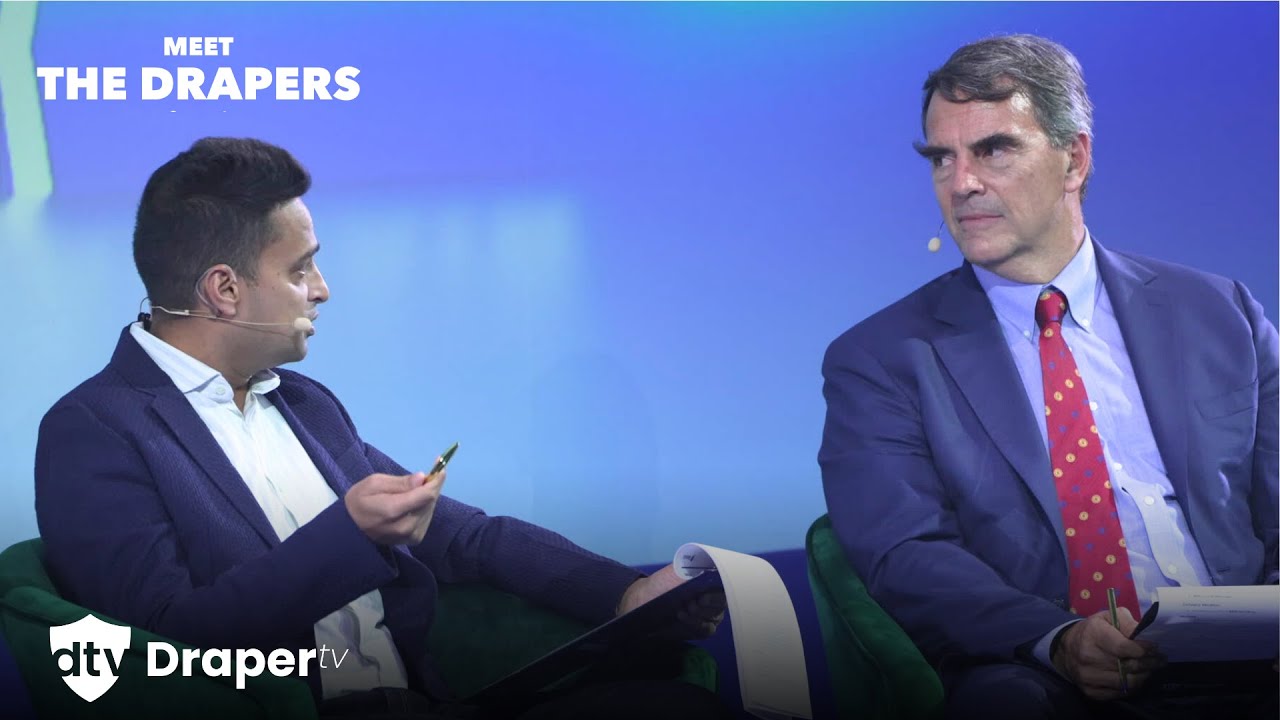
Tim Draper hosts a crypto pitch competition in Paris where four founders compete for $1 million. Bitstack, a Bitcoin round-up app, has 40,000 monthly users and €200k in monthly revenue. The judges grill each startup on fees, compliance, and competition from established players like Revolut and Curve Finance.
Chapters
I'm Tim Draper, and I invest in big ideas before they become the next big thing. I invested in Tesla, SpaceX, Twitch, all when they were just a sparkle in that entrepreneur's eye. This season, I'm traveling the globe to find game-changing entrepreneurs with world-transforming ideas. I'll bring these visionary innovators to Hero City in the heart of Silicon Valley, where they'll compete compete for a million-dollar investment. Here is the twist. You, the viewers, can vote for your favorite entrepreneurs and help them secure a spot in the finale. Who will rise to the challenge and secure the funding to, to turn their dreams into reality? Let's find out together on season 7 of—
Meet the Drapers!
Meet the Drapers takes us all the way around the world. Here we are in Paris. I'm on the Seine. We're looking for the greatest entrepreneurs in the world. One of them might be right here. Hey, you! Are you an entrepreneur? We're experiencing Paris Blockchain Week at its absolute best. Well, here we are underneath the Louvre, and look at all the potential entrepreneurs. Hi there! What do you guys do? We're really having some fun here. Crypto Megan. This is gonna be a really spirited show.
A million dollar investment from Tim Draper.
A million dollar investment.
A million dollars.
A million dollars would help us accelerate our mission of democratizing Bitcoin here in Europe.
This will give us an opportunity to become.
The next unicorn in crypto would really allow us to scale the team and scale our marketing efforts, reach our first million users.
A million dollars would enable easy integrations with all the partners we're working with.
If you would invest one thousand dollars, that's good enough for me.
Welcome everybody to Meet the Drapers. We're here at Paris Blockchain Conference. Transforming our global economy from fiat to crypto. Here on Meet the Drapers, we have an extraordinary couple of guest judges. On my left, I have Bandeep Singh Rangar Draper, co-founder and GP of Glass Ventures, which invests in Web4 and Web3 crypto and AI companies worldwide. What is Web4?
Web4 is the next iteration where it's all interoperable, seamless, and fit for purpose.
But he also did this great thing, Art.com.
Art Co.
And he wanted me to produce a painting for his auction.
It was the world's largest online art auction for COVID relief, and Tim was one of the buyers and my guest on the auction.
It was great. He totally inspired me to make this painting. It's really awesome. And on my right, we have Gaurav Dubey, CEO of DeDeFi. And it's a Web3 incubator and consulting company that provides access to mentors, token economics, and industry connections. So Gaurav Dubey Draper, welcome to the family.
Thank you, Father.
It's great to have you here.
Thank you, Father.
What are you going to be looking for, Gaurav, in these 4 entrepreneurs? How are you going to make a decision on which one you like the best?
I have a plain answer, which is I look for perseverance, ethics, and hard work in the same priority.
This is an exciting episode. We're going to have 4 entrepreneurs come through. Only one of them will move on to the semifinals in Silicon Valley where they will compete for $1 million. Let's welcome our first entrepreneur. But before we do, let's Let's see what's going on behind the scenes.
My name's Adrian Stern. I have a pretty nontraditional journey for an entrepreneur, I guess, because I started my professional life as a musician. I started a reggae band with a couple of friends, played in some of the biggest festivals all across Europe. I got to meet a lot of artists, started producing, founded a record label, and that's really how I kind of built my entrepreneurial chops. After my dad had passed, did a full 180, kind of stopped music, got a job in banking. Didn't love the corporate culture, so decided to go back to school to do an MBA and eventually got to a point where I was like, okay, well, I want to, I want to start my own business. My mom, who has always thought that I would become a doctor, probably was a little frustrated that I would choose again something that has that degree of uncertainty. You know, the way I thought about it was, what is the choice I might regret not making when I'm 85 and looking back at my life? At that moment, it became clear that I had to try to start my own business, and that's what led me to start Reveal.
That is a unique journey.
From reggae artist to banker to tech founder. Yeah. I'm now in a spot where people understand what I'm doing. Sometimes still think I'm working too much, but Balance can be found in the longer term. In the shorter term, there's a lot that needs to be put in acquiring users and getting to break even and figuring out the marketing to scale. So what would that reggae artist say about what you're doing now? He would probably say, WTF, man. Coming up on Meet the Drapers.
The problem of payment business, you have not implemented the cost of compliance, you'll have a tough time growing.
My first time at Paris Blockchain Week. I've been to Paris for different conferences before and it's always an amazing time. I mean, It's such a vibrant city, and I have to say the tech scene has been developing very quickly here. Each time I come back, it feels more and more lively, more and more entrepreneurs, investors. It seems like just a great capital in Europe now for entrepreneurship. And then there's just something in the air about Paris, especially when it's springtime like this, that just feels like vacation. So although we're here for work, it's also very relaxing to just walk in the park next to the Louvre and see all these, you know, historical monuments. It's just such a rich place. This weekend, I am definitely going to take at least a full day off. You know, as a founder, the day is so busy and there's so many things to manage constantly. Just having nothing to do and being able to just go with the flow is vacation. So I'll probably take one of the bikes, ride around the city, stop in a cafe if I want to, go to a museum if I feel like it. The plan is no plans. Although I was a musician and I've played on really big stages, pitching in front of an audience like that is Always nerve-wracking. You know, this morning I wanted to tip the barista for the coffee they made me, but I couldn't because I use Venmo and they're in France and they use Paylib, right? And our payment systems don't talk to each other. It's 2024, but payments are still broken. International transfers are expensive.
Wait a second. Are they broken by design?
I think I was probably a couple seconds into the pitch and he interrupted with some questions.
Are they trying to do that? Are they trying to create a problem for Well, the old rails that we've been transacting on are not efficient, right?
And there are so many intermediaries. And with crypto rails now, we can have instant settlement in different territories and different jurisdictions. But when you look at using crypto, that's complicated, and most people don't really understand it. And so that's why we're building Reveal, an easy way to send money to anyone, anywhere, and on any terms. So what is Reveal? chain without having to navigate the complexity of learning blockchain technology.
How do you get paid?
We will implement a fee on transactions.
How high would that fee be?
Sorry?
How much would they— would you charge?
It was definitely up and down and up and down ride. The average take rate will probably land around 1.25%.
I wonder, I mean, if you're desperate, In a desperate situation, why wouldn't you pay more than that?
I think there are certain circumstances in which people are willing to pay more than that. That being said, I think part of the beauty of crypto is democratizing access to money. And so we're not trying to tax them as much as the old rails do, right? There are also efficiencies that lower the cost for us so we can take a lower margin.
The long term, you're going to have a race to the bottom because other people are going to have these What does this business look like in 10 years?
They were spot on around some of the downward pressures that fees might have in the longer term. But there are a lot of revenue streams that are possible with Reveal. We see really 2 different routes. The first is that we're developing a unique tagging system. I can just tag you, send you 25 USDC, and based on the information I have on you, I know where you want to receive it. receive that, whether it's on Base in a specific wallet. The second is that eventually a lot of commercial transactions will be on-chain as well, and there's a lot of value in being able to associate a commercial transaction with the identity of the buyer, right, and linking that. So that's another really big revenue opportunity in the future.
Do you have their phone number or their email address?
We're implementing that so that you can really search for someone based on phone number, email, socials, Wallet, ENS, etc.
But how do you reach them the next time if they just use you?
The naming system saves that data, right? So you've got different data points related to each unique user tag, and so you can keep searching for that specific information and that user will pop up.
Yeah, but that is— you didn't attend the question, which is how do you go back to a user? If they used it for once for some malicious practice.
Yeah, so when they create their profile and that user ID, that's saved in the database, right? And so you can search for anyone who's already in the database.
The problem of payment businesses usually is that they grow super fast early on because you've not implemented the cost of compliance, you know, which increases radically towards the Towards the volume. So probably you'll have a tough time growing.
Obviously it's the beginning, we're growing super quickly. I think we're starting to prove that there is scalability to Reveal, and I wish I had an opportunity to tell that to judges in more detail.
Adrian, do you have a payments background or a remittance background?
Sorry?
Is your background in payments or remittance?
So our team has a lot of experience—
He's a music guy.
Oh, there we go.
I started in music and then moved to banking and fintech. I think Gaurav speaking to my musician background as perhaps a negative quality, I would definitely push back on that in the sense that I was not just a musician, I built a business in the music space, and that was an entrepreneurial experience. Part of the reason I discovered this is an issue is when I was a musician, I was working with a lot of artists that were abroad, and I had to pay them internationally. And that was a massive headache for me and cost a lot of money. Obviously, I pivoted to banking and then worked in fintech before deep diving into crypto.
Adrian, thank you so much for being on Meet the Drapers.
My pleasure.
Thank you.
Great to have you.
Thank you, Adrian.
Thanks.
I think it's always, you know, throws you a little bit off course when you can't go through your entire pitch the way you planned it. They were great at like throwing those curveball questions, but hopefully I answered properly and they got the right insights from it.
I've invested, I think, in more than 20 payment transfer companies, and in just this crowd since yesterday, I've had 3 pitches. So I think first of all, it talks a lot about the appetite of the market. It's a multi-trillion-dollar peer-to-peer transfer market. Everybody can find their piece, but if you do it right. And like I said, it's super nice in the beginning, but as soon as you start implementing the cost of compliance, that's where you get into the real competition with those who have dominated the world of cross-border payments for the last decades and so on. So I see problem in scale when I, when I invest in these kind of companies.
And maybe one of competition because you invested in 20 of them.
Oh, of course.
I like the fact that, you know, the closer you are to touching the money, the more profitable you are. You get fewer layers and fewer transactions. So I kind of like that part. Having said that, the barriers to entry and the incumbents in that industry are not to be ignored.
They're formidable.
Hey, what did you all think? What'd you think of a reveal? Let's bring on our next contestant. But before we do, let's see what's going on behind the scenes.
My name is Alexandre Roubaud. I'm one of the two co-founders of Bitstack and CEO. Originally, I'm from the south of France, so small town. After my diploma, I moved to McGill in Montreal, Canada, where I spent actually eight years. and where I met my now co-founder, Kabir. I was in business school, he was in engineering school, and we actually met because we both had this common interest for Bitcoin. Not so clear we were going to start a company together. I spent 2 years leading product for Canada's fastest growing saving and investing app, helped them scale to hundreds of thousands of users. Saving is the first step in your personal finance journey. You need to put money aside to be able to finance Any goal that you have— saving for a house, traveling, investing— but then not everyone has the financial knowledge or financial literacy to take their finances into their own hands. How can we leverage an everyday habit that people know how to do to then help them save? And that's when I pitched Kabir to start a new company together, and we moved back to France. Running a company, you kind of have to learn to manage your emotions because you're on this constant roller coaster of, we're doing great, this is going to go very far, to, oh, now the challenges are very hard, this might not go anywhere. And it can be very draining personally if you don't know how to manage these emotions. The key solution is to have a very strong co-founder so that you can kind of lay your head on their shoulders. We know what we're doing has an impact. My co-founder and I have been doing customer support ourselves for almost the first full year of running the company, so we were chatting with our users every day. Money is an important topic, and we know we've been helpful in their journey.
If you were to win this competition, who would get the most excited?
Who would call you right away?
Other than my mom, I would Hope and I think the team would be super proud. We're all very proud of what we accomplished together.
Coming up on Meet the Drapers, I think you missed the question.
Now couldn't Acorn just do this?
What stops somebody else from doing exactly what you're doing?
So this year we were very lucky to host Paris Blockchain Week in the Musée du Louvre. Super excited to be welcoming. In France, all the companies worldwide that are building for Bitcoin, crypto, and blockchain. People were very amazed by all the architecture that's around, but also in the Musée du Louvre. Just walking around and just taking all this beautiful scenery that that we have here. There's obviously all the classics from the Eiffel Tower, the Musée du Louvre. But one thing that my friends and I do enjoy is just sitting next to the Seine that's flowing throughout Paris. You can actually watch the sunsets, and so I. In France, and especially in Paris, we have this terrace vibe where people go on terraces, eat some food, and grab a drink. That's what we all do after work to disconnect. And then during the weekends, we like to just walk around the city. If it's a beautiful day, just walking around and just taking all this scenery that we have here. There's definitely a lot of work to do, so not as much free time as I'd like to, but I do get to enjoy very nice restaurants, and bars as well. Eating well and walking around with some very nice architecture. You're always a bit nervous before you pitch, especially when the crowd is big, but the vibe from the audience was amazing. For many years I've tried to convince my friends and family to buy Bitcoin, but they didn't know how or where to do it. Or even just how much money to invest. So we've built Bitstack, the first mobile app that allows anyone to save and invest in Bitcoin effortlessly. So how does it work? You can link any European bank account to the app, and Bitstack will automatically round up your everyday purchases and invest the spare change in Bitcoin. If you buy a coffee for €2.60, Bitstack will round it up to €3 and invest the €0.40 difference in Bitcoin. It's just a set-it-and-forget-it solution. So now anyone can simply invest in Bitcoin regardless of their financial literacy or technical know-how. And as a result, over 50% of our users are first-time crypto investors.
Didn't really know what to expect, so when Tim like cut me off and to the to the buyers who who leave their change and and you put it into satoshis, do they have any sense of how they can? Spend it, save it. What are they generally doing with it?
I thought I was going to be delivering the whole pitch, but he jumped right into the questions. But I've pitched many times before. I got to draw a lot from that experience. That's how users get started. But already today in the app, they can also buy one-time Bitcoin. They can sell Bitcoin. They can send Bitcoin to any other external wallets.
I think you missed the question. People who are not acquainted to cryptos, how do they retrieve the returns? They still have to get exposed to The crypto literacy.
Yeah, so because of the position we have, obviously we've built a lot of content on like what is Bitcoin, what is Bitcoin's value prop. We've become the number one YouTube channel in France on building that educational content on Bitcoin. We're the number one on Apple Podcasts, on Spotify.
How do you get paid?
So we charge 1.49% every time you buy or sell Bitcoin, and that fee decreases over time as you trade more volume on the platform.
Now, couldn't Acorn just do this, they're doing that same thing. They're correct. They're taking people's change and putting it away for a rainy day.
Yeah.
What stops somebody else from doing exactly what you're doing? The same salami technique, rounding up.
So here's the deal. In Europe, it's a very regulated market. So we're actually one of the first few companies that are fully regulated here in France with the equivalent of the SEC, so the Financial Markets Authority. We've become the leader in less than 2 years in France. We're on track to be the leader in Europe over the next 2 years, and then we'll go for global expansion after that. To give you a few numbers, in less than 2 years, we already reached over 40,000 monthly active users, collectively saving over €8.6 million in Bitcoin every month. We're generating out of that over €200,000 in monthly revenue, and we're growing 10% month over month. I wish I could share more details with them, but there's something very exciting that we'll announce very soon. We have our first partner who's one of the largest financial institutions in France. So I wish I could tell them more about that, but I guess they'll have to wait for the news to come out.
Is your endgame to be acquired by someone like Revolut or become someone like Revolut, assuming they can offer the same capabilities?
We'll beat Revolut. We'll beat Revolut because our thesis is that digital assets are going to be in the core or the future of the banking experience. And we're just uniquely positioned to build that Bitcoin-native bank.
Why do you care?
Why do I care?
Yeah, why do you care? Why does this matter?
Some people say fix the money, fix the world, and so if we can help, that's, that's our job. I connected personally great with Tim. I know Tim is a big fan of Bitcoin, and he understands how Bitcoin is a force for good.
Well, Alex, thanks so much for being on Meet the Drapers.
My pleasure.
Great to see you.
Feeling good, exciting, obviously nervous. some adrenaline, but always super pumped to be able to share our story.
Yeah, so I like the fact that he's got a big ambition, wants to take on the likes of Revolut, but I do feel like it's got a limited scope geographically, barriers to entry are low. Ambition's good, business model, not quite convinced.
I might slightly disagree, slightly and politely. If you're able to fix some something for just a small geography, but you do it right, you are still more successful than those who have a global purview. But at the same time, I do agree that the business model can, can get better. Ambitions for sure work out.
Hey, audience, what did you guys think of this? Alex, good guy, right? Yeah. Okay, so let's bring on our next entrepreneur. But before we do, let's see what's going on Behind the scenes. Eyebrows, everybody. All of you, eyebrows.
My name is Faraj Abutalibov. I'm a co-founder of a cross-chain protocol called CrossCurve by AVA. I'm originally from Azerbaijan. This is a small country between Russia, Iran, and Turkey. And I came from a very, very humble background. My family was living for like $100 per month for like 15, 20 years. I myself, I grew up to become an oil and gas engineer working for large oil and gas companies like BP, ExxonMobil. Then I did my MBA, then Harvard Business School, and I fell in love with crypto. One of my friends, Andre Cronje, he is the founder of Fantom. He was saying that crypto is actually internet of 1991, 1994. Do you remember how dial-up connection sounded like? There's a lot of hype around project founders that are so driven by the ideas. Everyone is trying to go and find new YouTube, and it's still dialing up connectivity in the infrastructure side. So the advice he gave me is build the technology. It's very difficult to jump the ship and become an unpaid entrepreneur with huge risks and having family. House, three kids, two cars, cat, etc., etc., right? It's very hard to leave golden handcuffs of oil and gas industry. They pay you extremely well. But once you start talking to different entrepreneurs, once you start having this virus of entrepreneurship in your blood, it's very difficult to come back and continue this nine to five job. My personal motivation comes from. Maturing this field from Wild West to an adult-run institutional space. Don't take me wrong, I'm not idealistic. I do want to break my ceiling and go to a different level of lifestyle for my family. But I want to create that first Google, first Microsoft of crypto that will serve the industry. Coming up on Meet the Drapers.
Is this logo something that comes out of the back of a unicorn's butt?
Paris Blockchain Week is my fourth time in Paris. It's always super beautiful over here, especially in this time of the year. So if If you ever visit Paris, don't do it in the summer, super hot time, or don't do it in the winter. Do it in this time. Sometimes when you go around the Louvre, going to different places, visiting venture capital guys, partners, you kind of get used to this scene because you go along the river, but I just adore the way it is. You feel ancient history. There is something magnificent around this place. So I usually come here for work, for conferences, but next time it's going to be family, kids. So I'm looking forward to that. We had a private dinner with speakers and VIP guests of Paris Blockchain Week, and there was a private visit into the Louvre when it was only us. We could go to Mona Lisa, we could explore alone with no tourists. all the beautiful art that is there. Every time you go, you will only see 10%. There was a guy who was there for 3 weeks doing internship, and he said he didn't even watch 20% of what Louvre has. So definitely go visit that one, go visit Eiffel Tower, go visit Disneyland. I wish every one of you could come and visit this place at least once in your life. I'm a co-founder of CrossCurve. We're building the future unicorn that will revolutionize the crypto space and especially DeFi space. We are actually solving the 2 major DeFi problems, which is liquidity fragmentation.
Now, how do you know you're going to be a future unicorn? And how far into the future is this unicorn going to take you?
We will see. It depends on the success of this pitch, right?
And is this logo something that comes out of the back of a unicorn's butt?
I'm not sure. I didn't know how to answer, to be honest. It was a question out of the blue, I would say. It definitely was not supposed to be anything to do with a unicorn. The logo is an inspiration coming from Curve Finance. Curve Finance is the second largest decentralized exchange in the world. The 2 problems that we're solving is liquidity fragmentation between chains. Each chain has its own liquidity, has its own user base. Second problem that we're solving is insecure cross-chain communication. More than $2 billion were stolen from the bridges in 2022 alone. We believe that we have solved that with our solution, and we believe also that the market is huge.
Who's the perfect customer?
It's both retail, or it could be huge liquidity providers or hedge funds.
Give me an idea how much the retailer pays you, and then what kind of a deal do you have for the liquidity providers?
Liquidity providers are getting compensated in yield.
So do you split the yield with them?
We split the yield with Curve Finance because we utilize some of their technology, but inside our tokenomics It's already designed that the fee goes towards the liquidity providers.
Was Curve Finance served a Wells notice yesterday along with other DeFi protocols? Yeah, 90 top DeFi protocols got served the notice.
Absolutely.
There's no dependability.
The question from Gaurav was super difficult for me. To be honest, I was not following the news yesterday. I was preparing for the pitch. I didn't know how to answer it. If entire DeFi goes down, and which I don't believe it will, then we might go along with them. But if it survives, and there is also the world outside US and outside US regulator, if it survives outside, we will survive and thrive with them.
Who has the power in the relationship with Curve Finance? You're the front to the customer, so you have the power of the customer. But it's not your technology.
That's the beauty of Web3. A lot of protocols are open source, so anyone can use it. We are working together with Curve Finance to make the pie bigger. I don't expect Curve suing us for utilizing part of their technology because it's open source anyway. I am for the cooperation over competition. Web3 is all about decentralization and open Who would you work on with After Curve? What's your next best partner? All the major bridges first, then with the new chains. So for example, there are— every day the new chain is coming up, and some of those chains pay up to 0.3% of total supply to bring the TVL from Ethereum to their new chain. But there is no way to move this LP out of Ethereum. At the moment, easily without five to ten percent losses. We allow this happen like instantly and efficiently.
Terrific, Faraj. Thank you so much for being on Meet the Drapers.
Thank you very much.
Good to have you on the show.
To be honest, I feel grateful to meet Tim Draper, to meet his incredible judges, to have such a wonderful audience, and thanks Paris. He wasn't overly daunted by the questions. He took them well. So in terms of resilience—
Yeah, I love that, because I was very rude. Didn't let it bother him. He's on a mission.
This is the closest to a unicorn because his biggest strength is that he's targeting an industry that has produced the fastest unicorns. Wormhole. XLR, LayerZero, all of these are the fastest billion-dollar companies, not just in token valuations but in equity. So the closest to—
Does it get to decacorn, or does it get to trillion-dollar business?
So clearly the one who's able to keep up the security and safety of funds for about 3 to 5 years, because that has been the benchmark so far, I think is a clear decacorn. And then Of course, it depends on who do they onboard as investors.
Terrific. Well, let's bring on our next entrepreneur. But before we do, let's see what's going on behind the scenes.
Hello, my name is Gautier and we are building ZyFi. I wanted to make it easy for anyone to access DeFi in the on-chain world. And this is how we came up with Zyfy. Been building this for 12 months. I don't think like certain people would have defined this path for me. Maybe some people would not recognize me.
As a founder?
Yeah, or even as a person, I would say. So when I was like 23 years old, I had a car accident and I wasn't the guy, you know, who's like really working hard or studying hard. And when that happened, the way I viewed life changed for me. I'm here for a reason. I need to accomplish something. I need to have a mission to make this place a better place. And I just got really deep into crypto. I think I see it a bit like America, you know, like pilgrims from Europe were tired of the system. They wanted to create a new world and they just moved to America to create a new country, to create a new way of seeing things. And this is how I view crypto today. I see it as a new place to build things for the future. It's a way to create something new and something better and start from scratch. Is it worth having that much stress for what you're getting in the end? Is it worth it to work that much? And these questions actually come up quite a lot to me. And I keep going. I just think, yes, it is, because you're building something better for the future. You're showing an example for all the people around you. And I think that's the most important. As a crypto founder, like, you always want to get people who have a better understanding of how business works in general. And I think this is what Tim Draper could, could bring to us and what we potentially would need to bring more people into this space.
Coming up on Meet the Drapers.
Why would you go with a chain that has a very small user size when compared to these large giants?
There's really something magical about Paris. It's just so romantic, so beautiful. The whole city is just a piece of art. I was not expecting to be here pitching in front of everyone, so it's a pure pleasure. For me, like, the Louvre is really something to go and visit. Eventually there's a bunch of others like Pompidou Museum, the Eiffel Tower. I feel sometimes that there's more life in Paris, that people are more energetic. And so for me, it's always a pleasure to come back where I was born. And honestly, I've been, you know, just working so hard, and just being outside actually and just taking some bit of time off is a pure pleasure because I can really take a step back on my work and enjoy being in Paris. People always come up to me and say, Gauthier, how can I buy this token? How can I access this on-chain opportunity? Today there's 500 million crypto users and only 5 of them are actually on-chain. We are solving at ZyFi one of the biggest pain points. I think we've all been there, like trying to do something on-chain and you don't have any gas. You want to buy an NFT, want to do a swap, and you just run out of ETH. So this is what we're solving. We're basically abstracting away gas for the users by creating a simple Paymaster SDK which any dApp or wallet can integrate, and then it enables users to pay gas with the token or sponsor gas for their users. We see a future where ETH will be something of the past. You know, it's like internet today. You're using it, but there's a lot of things happening in the background, right? And so this is what we're solving, and this is—
we want—
Now, the other way The way it looks from this is that you're solving the gas fee problem by saying, hey, you can pay those gas fees in a number of different currencies. But the gas fee problem, it's hard to use. You've got to go through all these, you know, 15 clicks to buy gas. You're not solving the 15 clicks, you're just saying, if you don't want to buy any ETH, you can buy something else and then— Use it, pay the gas.
Yeah, look, I think amongst the others, I was the one who was able to go as far as possible in the pitch without him cutting me. You can actually just do a simple signature, and that's just one click, and then the gas is abstracted. So you could actually even abstract it on the frontend side as well.
They're killing the clicks, but— and shrinking the user journey and making all of that happen.
Are they really doing that?
Yeah, yeah, account abstraction, yes.
Maybe I should have emphasized more on the problem, what we're trying to solve, and this is a pretty technical product in the end.
So who's your best friend in the ecosystem then?
We've been building closely with zkSync as they support native account abstraction.
Why zkSync? There are a ton of account abstraction techniques, and because the standard is open source and almost every single chain has that, Why just zkSync? And by the way, there are large liquid ecosystems like SUI, Aptos. Everybody has their own account abstraction. Why would you go with a chain that has a very small user size when compared to these large giants?
It's very stressful, like, to be on stage with all these VCs. It's a battle. Yeah, for sure. Because zkSync is setting the example for all the other L2s. They have what we call native account abstraction. So it's implemented in the chain itself. So the market is exactly—
OmniChain set the example for secondary coins, colored coins, and there were actually other chains. Doesn't mean we have to stick to Omni. We have so much better technology, so much more TVL, so much more users already, a plot for you to play around. Why zkSafe only?
For us, it's the way to start. So we're going to go to StarkNet. They reached out to us. Native account abstraction is being discussed at the Ethereum Foundation. So as soon as that is implemented, we'll be able to go across all the different chains and provide our technology with the experience and knowledge we've gained on zkSync. You know, he asked the right questions and maybe I didn't answer the best way as I could.
Terrific. Gautier, thank you so much for being on Meet the Drapers.
Thank you.
Pleasure.
I think they had great questions. They challenged me on like what needed to be challenged. But I think we have to dig more into the technicalities for them to understand better, like, where we're heading and why we're doing what we're doing.
Okay, so what did you think of Gauthier and XiFi?
A lot of people are doing this. It's important, but it's also important to approach it the right way. If they would stay true to their pitch, which again goes back to where I started, which is Ethereum, which has the largest TVL, the maximum adoption, the maximum dApps, I think they can kill it. The best comparison is, do you think the Google one-click Google login or a one-click Facebook signup changed the world? If you think so, then this will.
What I would like is for each of you to sort of say who's your winner and why.
Some deserve a bigger success just because they're addressing something critical which is also a large market. CrossCurve deserves a better success or will achieve a bigger success in terms of valuations, transactions, and the lives they touch. For me, I think as an investor, that would be my choice.
Mandeep, what do you think?
So I got to applaud all of them there because they all came up very bravely and pitched something that they're all passionate about and that you cannot ever, ever discount.
Exactly. Exactly.
Having been an entrepreneur, I know how difficult Hats off to you for being there.
Now it's time to announce the winner. We can't really come up with this, but there is a crystal ball here. Is it Bitstack? Is it Reveal? Is it CrossCurve? Or is it sci-fi? And the winner is Cross Curve.
Congratulations!
Our partners, our hard work, the good pitch perhaps played out. In my head, I'm preparing for a trip to US.
Here's the good news. You, our viewers, can go to meetthedrapers.com and you can vote any of the others to the finale.
Our job at Bitstack was to make it super simple, super fun, and effortless for anyone to acquire their first Bitcoin. To the audience, please vote back us on the show.
I think the audience should bring us back on because we're really changing the way people can send money. to each other and really connecting the entire world around a single payment solution.
We're solving the gas problem in the industry. This will eventually enable anyone to access the blockchain. We found market fit, so this is why I think you guys should put us back in.
See you next time on Meet the Drapers!
More from Tim


He Sold His Car to Build This Startup, Then Pitched It for $1M 😳 #Startups #AI

This Startup Moves Your Crypto BEFORE Hackers Can Steal It 😳 #Crypto #Cybersecurity




15 Months Without Refrigeration?! This Startup Thinks It Can Go Global 🥥 #FoodTech #Startups



