Healing the Future: Meet the Innovators Transforming Healthcare | Entrepreneur Stories
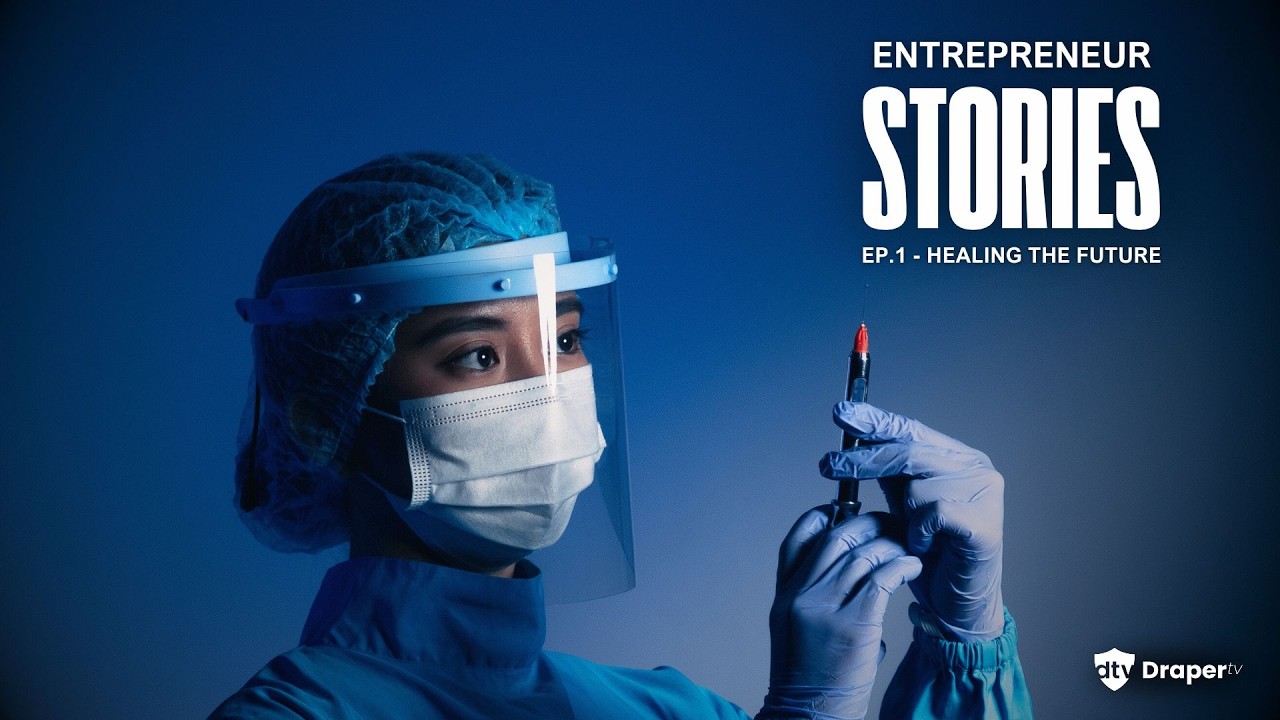
Four healthcare founders pitch their startups to investor Tim Draper. Arlan Biotech uses AI to cut drug discovery costs in low-resource countries. BioSapien's cancer microchip, inspired by founder Khadijah Ali's father's death, needs six patients for clinical trials. Tolka AI develops personalized bacteriophage therapy for antibiotic-resistant infections.
Chapters
The times today are both befuddling and exciting, with entrepreneurs cooking up algorithms that make yesterday's sci-fi look like yesterday's news. Let's meet these digital pioneers who are crazy enough to think they can change the world and just smart enough to actually do it.
So tell us your name and your title and what you do for your company. Name, title, what do you suggest for us to start for our editors?
This dynamic duo, Polat Sadıkuluş and Doğukan Seyitkali at Arlan Biotech, are shaking up drug discovery by making it accessible and affordable All over the world through an AI-powered nanobody revolution.
I'm CTO and the co-founder in Arlan Biotech.
Okay, Bolan and Dokian.
Yeah.
Bolan and Dokian.
Bolat and Dokian.
Dokian. Yeah.
I was thinking that I need to help my community. So this is the most important thing. And I understood. I just started to write on AI models. And I understood that I need a co-founder, and I've messaged him and said, "Let's connect." I was seeking for co-founder from biotech field. So basically, it was a perfect match.
Yeah.
Zaston is really young. The most important thing that when you hunt for the talents, you need young people, you know, generation of young people who think for. Progressively. And one of the most important things is that Kazakhstan is really young. The population of Kazakhstani citizens is really young. They're very well educated. English is becoming like normal. People are able to speak English, which means that we're becoming part of the world.
And I think Kazakhstani economy is very hungry for entrepreneurs. There are not much great entrepreneurs and businessmen, and when you like start some ambitious business, everyone going to support you. And this is the like differentiate maybe our country.
Yes. Why don't you look at me? It'll make you more comfortable.
Okay.
Yeah.
Okay. Yeah.
Hi, my name is Bolat. I'm a founder and CEO of Arlam Biotech.
My name is Dawkin. I'm CTO and the co-founder in Arlan Biotech.
What inspired you? How did you know that this is what you want to do?
So basically, I started working on that company back in 2020 when COVID-19 hit. We were here in Kazakhstan and was thinking that we do not have any infrastructure which could enable us to create diagnostic tests. I need to help my community. So this is the most important thing. So the scientists from Switzerland, they actually helped me. Some scientists from MIT and Stanford also gave me the support. So from that time, I understood that basically I have all the capabilities. Scientific and business capabilities to help my community. So my journey within that project, within that startup, started in March 2020.
How will you feel when your company succeeds and it's changing lives? How is the world going to be a different place because of your company? How are lives being changed?
By providing Most of the scientists with our tool, we will accelerate the discoveries. So you don't have to be, I mean, in rich country. It's a lot of talents in third world countries, but they don't have tools. They don't have enough cash. So they will be able to use our tool and make the discoveries, accelerate the discoveries. Another thing is for the biopharmaceutical companies. They're spending a lot of money For R&D, and they spend a lot of time. Our tool will help them to make things faster and cheaper.
We will not stop. Yeah, we are very resilient guys.
Let's change the world together.
Get ready for the microscopic world of medicine, coming soon to a pharmacy near you.
Q&A session is very important.
Yeah, also we watched some seasons from Drapers to feel this vibe and what will happen and so on. We are ready.
Yeah, Kazakhstan, the place where Bolat and Dalkin come from, is buzzing with entrepreneurs right now. The country's unique culture adds a flavorful twist to its burgeoning entrepreneurial scene.
Is it biotechnological?
Is it, is it AI?
Is it education-based or is it games? What will it be? Ireland Biotech, you're moving forward!
So you guys won. How did that make you feel? What was that moment like?
As for me, I think it was kind of— no, we're happy inside. We're happy, really. We're not thinking about winning. The aim was in the mind that we need to present our idea and startup because it's more important. It's not the winning itself, but the process. You have to take life easy. You just, you have to do what you love. And as I said, it doesn't matter whether you are poor or rich. We all have the same emotions.
Okay, cool. So basically we just kind of start with your name, your company name, and just kind of like a, you know, like an elevator pitch, like a one-sentence description of what you guys do.
Imagine a world where cancer treatment doesn't come with the devastating side effects that have long been considered inevitable. Like loss of hair and weight. Yes, it's possible now because of Khadijah Ali's relentless pursuit of innovation.
Essentially, my dad, who's my best friend, also my business partner and my mentor, ended up getting diagnosed with cancer. So the curiosity kind of shifted from abstract things like human existence to very tangible things like what is cancer, how do we treat it, you know, what are the treatment options that are available. Unfortunately, that was 12 years ago. Unfortunately, he passed away. This is my third year of med school. I came up with an idea when I was doing a meta-analysis to basically make a product, which is one of the lead products for the company today. So that was 8 years ago. My name is Khatija Ali, and I'm the CEO of BioSapien. We essentially are looking to treat cancer locally as a way to sort of give back or like keep that alive, I dove into medicine. So I decided to go to medical school, do some research around cancer. So fast forward 5 years, right, we're pretty much ready with a product that can go into humans. We've done all the animal testing that we needed to do to prove that it's safe and it works. And essentially the next step after that is that you do a clinical trial in humans, and Abu Dhabi was was very forward-thinking, was very innovative, friendly, and said, hey, instead of you guys spending a couple more months trying to do this in the US, why don't you come here to Abu Dhabi and we could start the clinical trials here? So that's one of the reasons why we're here, is to partner with some of the leading hospitals that are here, such as Tuam, which is out of Hopkins, Cleveland Clinic, which is of course out of Cleveland Clinic in the US, and basically allow us to get to patients faster, which is the most important thing. I've been very lucky again to be surrounding myself with people that actually really believe in what we're doing. So the team is full of all experts out of industry, pharma, FDA, you know, clinicians that have now turned into entrepreneurs. So I've been very blessed in that sense to have that sort of dynamic around me. Sometimes I joke and I say I'm the youngest person in the team, and that's primarily by design but also by default, just because we literally have experts around the table that say, hey, you know, we should do this. Most difficult sort of challenges that you run into, especially in the US— so the industry, especially in biotech, is primarily, I would say, 95% male dominant and primarily Caucasian male dominant, right? So one being a female, two being South Asian, and 3, being a minority. All of those things really start to have an impact. Coming from the US, I came with like this conception that it was going to be very different in terms of what you hear in the news and culturally. But what I've realized is that the opportunities for females here are just as prominent and prevalent as it is for men. And if anything, there are a lot more females that work here in the Emirates. specifically Abu Dhabi, in finance and tech and biotech and advisory than I've noticed in the US, which is refreshing and different.
As the visionary behind BioSapien, she's certainly rewriting the rules of cancer treatment. Her groundbreaking approach, utilizing microchips to shrink tumors, offers a lifeline to countless patients.
I think the biggest thing that could happen for these patients is that we are actually able to allow them to stay healthy while reducing their tumors. So our product is all about treating cancer locally, right? It's basically like a Band-Aid for cancer. So you and I are sitting here right now, and if one of us has cancer, you would never know, right, with our product, because your hair would still be there, your weight would still be there, you wouldn't be feeling a certain way, you wouldn't have any of the side effects. That you would with traditional chemotherapy. So that's kind of, I think, the biggest thing for me is the quality of life changes that we would be able to have on patients. One of the main driving forces behind creating this product, one was of course the personal story that came with it, but the second was really trying to understand how it is that we can impact patients and provide my colleagues with more tools within their toolbox, because ultimately the only option they have right now is to close the patient and send them home. So that's considered a failed surgery. But with our product, it provides the surgeon an ability to have an option to potentially treat that patient, reduce that tumor burden, basically make the tumor smaller, and then go in and be able to take the cancer out, which then becomes a success. So I think with Tim Draper and just the Draper family as a whole, as we're all aware, they have fundamentally built what is now called like the VC world, right? Back from the early '60s until now. So I think working with Tim would allow us to take our company from where we are into a global behemoth, right? Because that's something that he has the resources, the skill set, the knowledge, and the capabilities to be able to do. So just having, you know, 10 minutes of advice from him on a monthly basis and being able to pick up the phone and call him and say, hey, this is is the issue we're having, how do we tackle this? I think that's priceless.
She's empowering patients and their loved ones and giving countless people a chance for a better quality of life while going through the big C. By prioritizing breakthrough solutions and opportunity recognition, it's heartening to see how Emirati women are positioning Abu Dhabi With $1 million, we would actually be able to dose the first 6 patients with our chip.
So ideally, in a perfect world, would be treating 6 patients from cancer.
You won.
Yeah, I mean—
So how are you feeling right now?
It's a bit surreal. I think I still haven't processed it. I was really nervous before I got on there, so I didn't know what to expect. I didn't even know who I was competing against, so it was very nerve-wracking in that sense.
Yeah, wow.
We're here.
I think for the beginning, could you just give us your full name, your company name?
Fueled by his own health battles and the countless others facing similar struggles, Johan Wikström from Tolka AI is pioneering a new frontier in natural medicine.
Cystic fibrosis, which means that I am more prone to getting bacterial infections than the average person. So I've always wanted to do something to help people with cystic fibrosis and others suffering from this problem. I've been watching this space for a long time, especially people affected by Mycobacterium abscessus, which is a pathogen that I have. So I was on my honeymoon, and me and my wife, we were in Hawaii, and I started feeling the symptoms of M. abscessus again. And we felt that now was the time to really look into the literature again and see if something new had come onto the this field since the last time we looked, and there was this thing called phage therapy. Bacteriophages are viruses that hunt and kill bacteria, and they seemed really promising. So my name is Johan Wikström. I run Tolka AI Therapeutics, and we make precision medicine against antibiotic-resistant bacterial infections. We contacted the world-leading experts academics in this field, and we felt that while what they had published was very promising, there was also room to move faster towards commercialization. And I had spent many years at Google commercializing various technologies, so we felt like this was a good fit. So we started our own lab, and that's the background.
And just, I'm going to circle back a little bit, just I'm I'm curious, you said the phages come from the soil, so this is something that's like in Mother Nature, it's a naturally occurring thing?
Bacteriophages are the most abundant form of life on Earth. Even a single drop of ocean water can have millions and millions of bacteriophages in it. So they are incredibly abundant, and there is an almost infinite diversity of these things. There's a trillion species out there, and we can just keep isolating more and more bacteriophages to match them up exactly with what the patient has.
Like, for you, if you're sick and you're able to use this therapeutic, what would be the difference between using a traditional antibiotic?
So the long-term vision is that the patient should be able to spit in a cup, send that to us, We isolate the bacteria, we make a custom-tailored therapy for them. And this custom-tailored therapy will have no side effects. You can use it for as long as you want without any side effects. And if the bacteria develops resistance to it, we can change it. We can update it so it always keeps up with the bacteria. Today, if you go to a physician and you have If you have pneumonia, they will essentially give you an antibiotic off the shelf, and if it doesn't work, they will give you something else, and if that doesn't work, you might be in very bad shape by this point. So this precision approach will become more and more important in the future as bacterial resistance grows.
Is this something that there's a lot of competition in, or is this something that is sort of— you guys feel like you're right on the cutting edge?
So bacteriophages and phage therapy has been suggested for decades, essentially, but only very recently do we have the technology to prove that the phage therapy is safe every single time and to manufacture a fully personalized phage therapy in a relatively cost-effective manner. And it's the drop in the cost of the genetic sequencing that really enables us to do this. And that is why the phage therapy field has really heated up in the last 5 years or so. In terms of treating the Mycobacterium abscessus like we are, there are not that many competitors because M. abscessus is considered to be one of the toughest pathogens out there. And it's relatively rare, so people— many people don't know about it, and it's challenging to treat, so less competition.
They craft personalized, efficient medicines tailored to each patient's unique needs.
For you, with where you guys are right now, what would it do to work with somebody like Tim Draper? Like, how do you think that that would, would affect you? How would that affect you as a company and then also just as an opportunity personally?
So to work with Tim Draper would be a great opportunity for us. We have kind of one leg in Silicon Valley and one leg in Florida. Many of the team members have ties with California and Silicon Valley, so we will eventually migrate back towards Silicon Valley in one way or another. way or another, especially to find venture capital investment. And I think Tim Draper is obviously very well known in this field, so it would be amazing to have him on our cap table.
From the heart of Miami's roaring biotech hub, Johan and his team at Tolka AI are wielding a revolutionary weapon: bacteriophages, nature's own tiny warriors against harmful bacteria. It's a wonderful prospect to harness the power of nature for pristine human health.
And then for you guys right now as a company, what would, what would a million-dollar investment do? Like, you know, how would that change your day-to-day?
What would you do with that? A million-dollar investment would allow us to treat more than just 1 or 2 patients. It will allow us to treat several more patients under compassionate use and prove both to ourselves and to future investors and regulators that this actually works.
Okay, so for the first question, I'm just going to ask you to introduce yourself, like your full name, the company name, and sort of like an elevator pitch, like what the project of the company is about in like 1 or 2 sentences.
What if healing could transcend borders, break through centuries of silence, and truly understand a woman's unspoken struggles? Olga Ivanova's SolaCare is redefining women's health by challenging centuries of neglect, catalyzing a seismic shift that elevates countless lives from struggle to empowerment.
On my professional journey, I faced burnout several times, and I was always thinking that it's great to have more help on this journey. For example, I went out of my burnout using I had professional psychological help, but I actually wanted to be in more contact with my psychologist, but it wasn't possible. With traditional tools, we can access only a limited number of women. It's because of the capacity of professionals, it's because of a paycheck, but with AI, we can reach literally every woman in the world who has access to internet and to mobile phone. We can bring this service, we can bring the service to everyone. It won't be possible without AI. My name is Olga. I'm co-founder of SoloCare. SoloCare is a personalized AI assistant for women. It's basically a big mama which helps women to cope with challenges and mental stress and Let's just get a sense of your origin story.
Who are you? Where are you from? What brought you to being a part of this project?
Yeah, I'm originally from transportation industry. I worked for such companies as Uber, as GetTaxi, but I was always in customer experience and customer care, helping people with their problems. Helping a lot of users to find their way when navigating the apps. And a year ago on Cyprus, I kind of met Natalia, and I've fallen in love with the project they were doing. And I think that every woman should have access to this help and to this accessible assistant, which is really for you. It's actually your Kind of a big friend, a big mama. I had this burned-out episode, like several of them actually, and when you are in this state, there are 3 things you actually need: is that to feel that you are okay and somebody sees you, to feel that you are not alone, and that your emotions are fine. I was able to get it from professional psychologist, but not all women have access to professional help because it's expensive and not everyone goes for it because it's also kind of stigmatized. We think that mental health issues are still not the things we're actually doing that, actually dealing with. And if we could, we are creating an app which will make this Professional help accessible. And the person in a state of mental burnout or in a difficult stage of life, as pregnancy is, would have a place to address all her questions, would have access to information, will be able to feel that her emotions are okay and she's not alone. That's magnificent. It's not only seeking for information offer the facts, but it's, you know, it's just knowing that someone is there and can support you emotionally. And lacking this emotional support is a big problem in the world right now. 2 major parts of our product which interact constantly. First of all, there's data about the user. We get it from wearables, We get it from Apple Health. We let user log in data, for example, in mood checks, asking proactive questions and things like this. So we know a lot about our user and we can track it back. Second part is actual personal assistant and interaction with the personal assistant in a chat. Personal assistant ask questions proactively, also answer questions based on requests from users, and it can give suggestions and ask specific questions based on the user data. So you see, we're using here 2 parts. We use the data and the history of all interactions with user, and we use proactivity and interactions within the chat. But for the user, it's more Mostly one-window solution when you just chat with the assistant as if you're chatting with a friend. We have a partnership with Neurointegration Institute and they have a very innovative NeuroBalance scale. So that's an approach how to actually assess the state of human well-being right now and this study, this scale was proved, was scientifically proved on 5,000 employees at Procter Gamble. So we know for sure that this approach to managing your state of mind works, and we have a mentor from this institute on our side. That's from the science perspective. From the technology perspective, we have We have 2 people in the team who are top AI engineers, and they know everything about how AI works and how it will develop. And also, our founder Natalia has 17 years of experience in female and maternity projects. So we have kind of unique expertise here, and it sets us ahead of other possible competitors on, I would say, a year and a half.
Witnessing firsthand the toll of burnout, isolation, and the complex juggle of career and family, Olga transforms personal challenges into strength.
What does the opportunity to work with Tim mean to us? It means a lot because working together with Tim, we will have access to the best knowledge and to best expertise there which exists in VC world. And with this support, we will be able to develop and scale our project as big as it gets.
This London-based entrepreneur creates a digital sanctuary, a virtual embrace offering unwavering support across all borders.
$1 million investment means to our company right now. It means that we will be able to scale our marketing and we will be able to boost our tech team. And doing that, we will be able to reach more women, providing them with help and support they need.
More from Tim


He Sold His Car to Build This Startup, Then Pitched It for $1M 😳 #Startups #AI

This Startup Moves Your Crypto BEFORE Hackers Can Steal It 😳 #Crypto #Cybersecurity




15 Months Without Refrigeration?! This Startup Thinks It Can Go Global 🥥 #FoodTech #Startups



