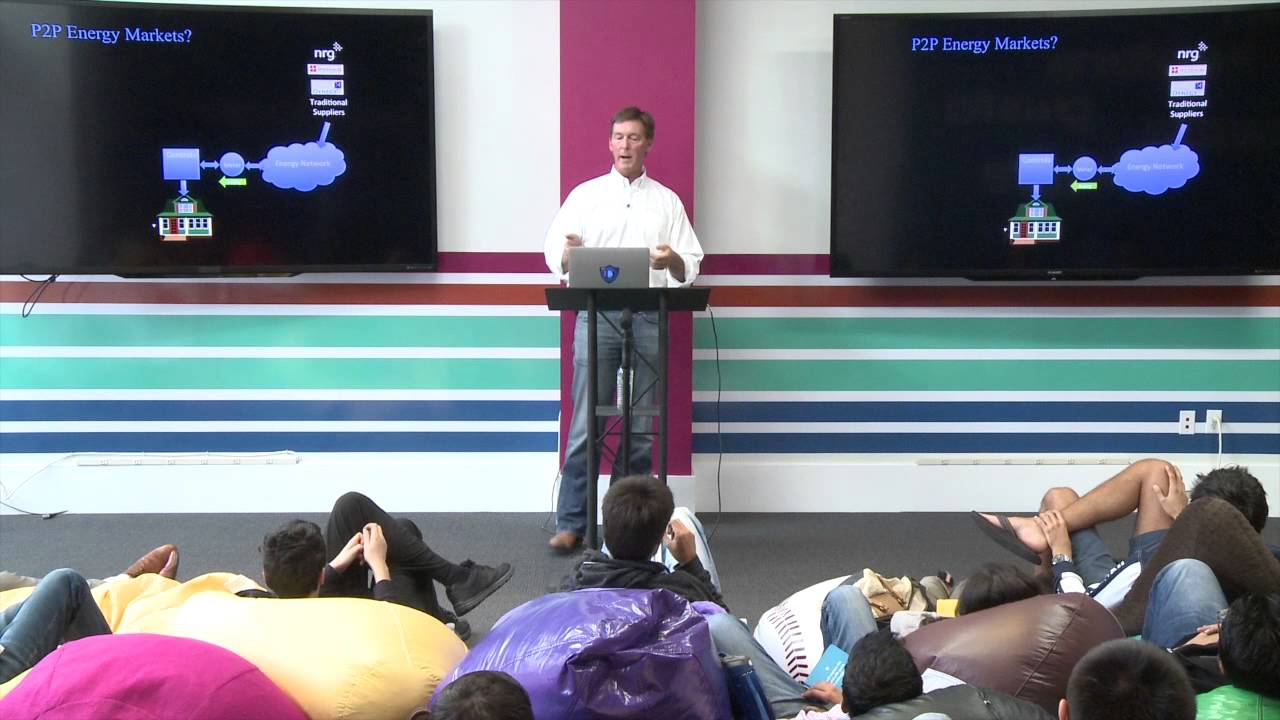
Larsh Johnson, CTO of eMeter, explains how peer-to-peer energy markets could work like Uber, with homeowners selling solar power back to the grid. Regulatory barriers from utility monopolies currently block neighbors from buying and selling electricity across the street.
Chapters
So I want to bring it back to something that is really driving a lot of thought in this business, and that's the peer-to-peer or the sharing economy issues. Because as we think about this idea, we're thinking about things, and one of the topics that comes up is Uber. What has Uber done in the traffic, in the transportation business, and in particular, what has Uber done to yellow cab company? Because if you think about it, They are selling a transportation service. They have big capital investments in the fleets of cars and so forth. They are pretty old sometimes. They have legacy technology. I mean, most of them. Some of them are upgrading. There are significant quality and customer satisfaction issues. There is no standard way to pay for a taxi. Well, if you have Square, I love it. And they are operating in a regulated environment which controls the rates they can charge, The fleet size, the number of tokens they have, the number of cars they can mobilize, and what areas they can operate in. If I go to San Francisco today, a San Francisco taxi can pick me up at the airport. They can drop me off in San Mateo, but he can't pick up anybody in San Mateo to go home. He's got to deadhead back to the airport or all the way to San Francisco. Horribly inefficient, right? But it's regulation. What has Uber done? First of all, they're matching drivers and riders. They're making a market for this transportation service. They're not owning the vehicles, their operating costs. They're using information and analytics to make it extremely and extraordinarily easy for the riders and the drivers. And they're qualifying both so that there's a certain level of quality that's coming through it. And then they settle those transactions with a minimum pain for everybody. And so far it's been minimally regulated. They have problems in certain areas, but so far it hasn't been regulated. So what's happening there is you're taking this old infrastructure-oriented business the taxi business, and now you're disrupting it because you're saying, look, I can match buyers and sellers. I can put them together and settle transactions. I can use information to get optimal matching for those 2 parties. The question is, in that peer-to-peer market, how are we going to think about energy? What we take as a traditional supplier today, we have traditional suppliers putting information, or I'm sorry, energy into a network. You have buyers who are taking it out. They may have some controls that help them to manage their load and so forth. But what's happening now is consumers are coming up with their own supply. And as they add to that, the batteries and other systems, they're able to start to be selling power. So that's what's happening now with a lot of the solar programs. You actually pay for that because you impart your selling power back into the grid. Couple that with additional sources of generation, and now you have a sustainable way for a consumer to actually be a supplier more than a buyer. What people are doing now is saying, well, how do I start to marry that up? In some cases, we have new energy suppliers who are saying, look, I'm going to aggregate homes that have this capability, and I'm going to allow you to have a community buying, and you can sell that excess power to a specific group of individuals or individual. Think about, I have excess power on my roof. I want to sell the capacity out of a solar panel or 2, and I want my buddy across the street or down the road to be able to buy that. Right. I'm going to give them a great deal. That kind of buyer-seller matching, pretty advanced. It's certainly not happening today, but it's starting to be possible and it's starting to happen in certain areas. We actually do have some companies that are coming into this idea where they're going to say, I'm going to use information to broker this buyer and seller now with a peer-to-peer model and just use the energy company with the wires for transportation. Now, that's being discussed in regulatory environments because now this raises a bunch of questions. Well, is it actually legal under the regulations to do that? It's actually not legal for you to sell power across the street to somebody else. That's a monopoly service provided to PG&E in this area. So that raises an interesting question. You can't legally do that. How would I— how would we go about that? It means regulators have to do something. And New York State in particular, California second, They have regulatory processes that are ongoing today specifically to address the role of these wires companies to broker the transportation of power generated by these different entities across their territory. So, you know, the Uber, if you will, of this energy business, it may end up being the old utilities. It may end up being somebody like Google, who's definitely made a lot of plays in the energy business. It may be some new entrant. It may be one of these brokers, or it may be a whole collection of them who then have a regulated transportation system, which is the distribution grid and the wires, but they actually can broker the buying and selling of energy across the network. If that happens, the commercial economics of self-generation at your home will be radically different. People will be doing more to provide it as a service. People will invent new technologies because now this capability will exist to actually sell the excess. Therefore, it becomes beneficial to consider doing that. By doing so, we have a much more resilient grid because we're not dependent on any one big power plant. We are also not dependent on the large-scale transmission. We can operate with smaller regional areas of energy that may end up becoming self-sustaining with a diverse set of sources and uses, mostly becoming the more green of those that the lower emission sources, whether it's photovoltaic or natural gas. So that's the change that we see coming. Thank you.