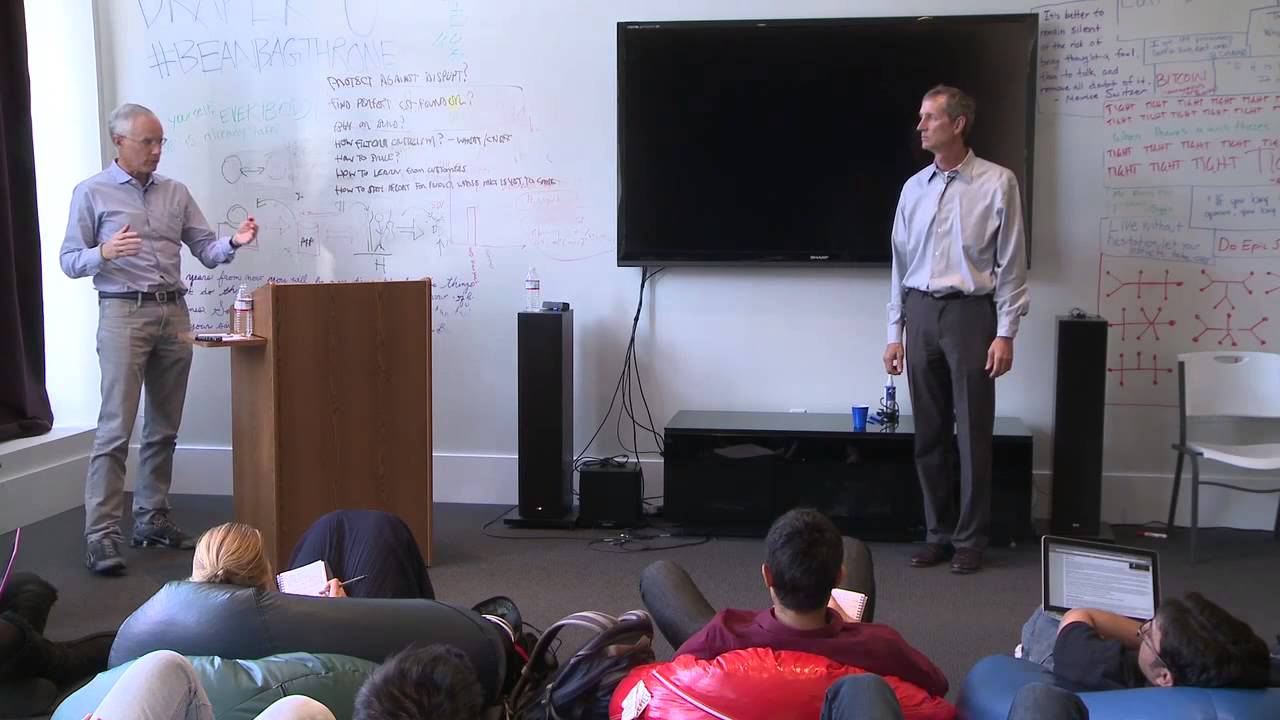
Intuit co-founders Scott Cook and Tom Proulx explain why they had to sell their product themselves. Banks couldn't move the software, so they stopped relying on partners and launched on Apple II with minimal costs. The lesson: create demand yourself instead of waiting for others to do it.
Chapters
And then problem number 3. We'd sold the banks all this inventory, and one bank did a great job selling it to their customers, one of the big fish, Bank of Hawaii. The rest of the banks kind of like couldn't sell it. They sat on the inventory. Because if you're a bank and you have something valuable, where do you put it? In the vault. Where do customers not go? In the vault. So they were terrible at selling boxes of software. So you had to go to the bank and say, I want to sell you this software. So we loaded these banks up with inventory and then they couldn't— they advertised and marketed in direct mail, but they just couldn't move the inventory because they didn't know how to sell software.
Yeah, so we would— it was good for us for a while because we'd get a— Scott would sign up a bank and the deal was that they would have to put 3 or 4 units of our product in every one of their branches. And these were big statewide banks that we were doing. So we would get a big initial order to load up their branches, but it would never sell through. So we'd get a big chunk of cash when we got that first sale, but there was never any sell-through and therefore never any follow-on business. For a while, this was not great, but it was okay because as long as Scott kept selling new banks, we kept getting these big chunks of cash coming in, and that kept the company going. But we realized that—
Your sales force flaked out on you.
Yeah, and first of all, we're going to run out of states at some point. But more importantly, we felt like this is clearly not working. We kept trying to replicate the one bank that had been so successful, Bank of Hawaii. And every bank that we would negotiate a new deal with, we would put into the contract various things that they had to do that we thought were the reasons that Bank of Hawaii had been so successful. And we put them into the contract and the banks would attempt to do it and they just, they couldn't. We were trying to get them to commit unnatural acts. They just— banks don't sell software.
Yeah.
And we came to the realization that this just wasn't right. It wasn't going to work. And once you kind of got to that point, We just felt ethically we couldn't keep doing this.
I couldn't go represent to the banks this would work because enough of them couldn't make it work. And I guess my learning from this that might apply in other situations is that ultimately we had to figure out how to sell the product. You can't rely on someone else to sell it for you. You go after big fish, but they're good at selling what they know how to sell. They're generally not good selling something they don't That's new. So we've tried lots of times with big institutions to try to help sell stuff. We had a deal with Nokia in India 4 or 5 years ago to sell when they were the kingpin of cell phones, and they were totally incompetent at selling something that wasn't a cell phone. So I kind of learned you've got to figure out how to sell it yourself and create the demand. You can't rely on even big rich fish to do that.
Yeah.
So then we were stuck. We had 100% of our revenue coming from bank sales. And now we decided ethically we couldn't do that anymore. Right.
Now the good news though is, as I said, we did get some nice big orders along the way, so we had— You stayed afloat. And our costs had gone to— we were 4 employees, we had no rental furniture, we had the furniture that we were renting, which was not expensive to begin with, we had returned, so it was all this crap from home.
We kind of had rent and utilities.
So our expenses were as low as they could possibly be. We were in the basement, we had a basement office space, space in downtown Palo Alto. And so as we were coming through this— and we did launch our Apple II product, and so we got some sales from that. And Apple was actually very helpful to us. They did some co-marketing with us and helped get us a little bit of retail distribution for our Apple II product.
Yes, you'll like this. At the time, since we didn't have any money, we couldn't afford a hard drive for the Apple II on which Tom was programming the Apple II version, because a hard drive was $3,500, and we didn't have that. A 5-meg hard drive was $3,500, and we couldn't afford it. Apple came and visited. They saw what we were doing. They took pity on us and loaned us a hard drive. So the world has changed in wonderful ways. Yeah.