Here's What REALLY Makes a Successful IndieGoGo Campaign | Alesia Cordesius
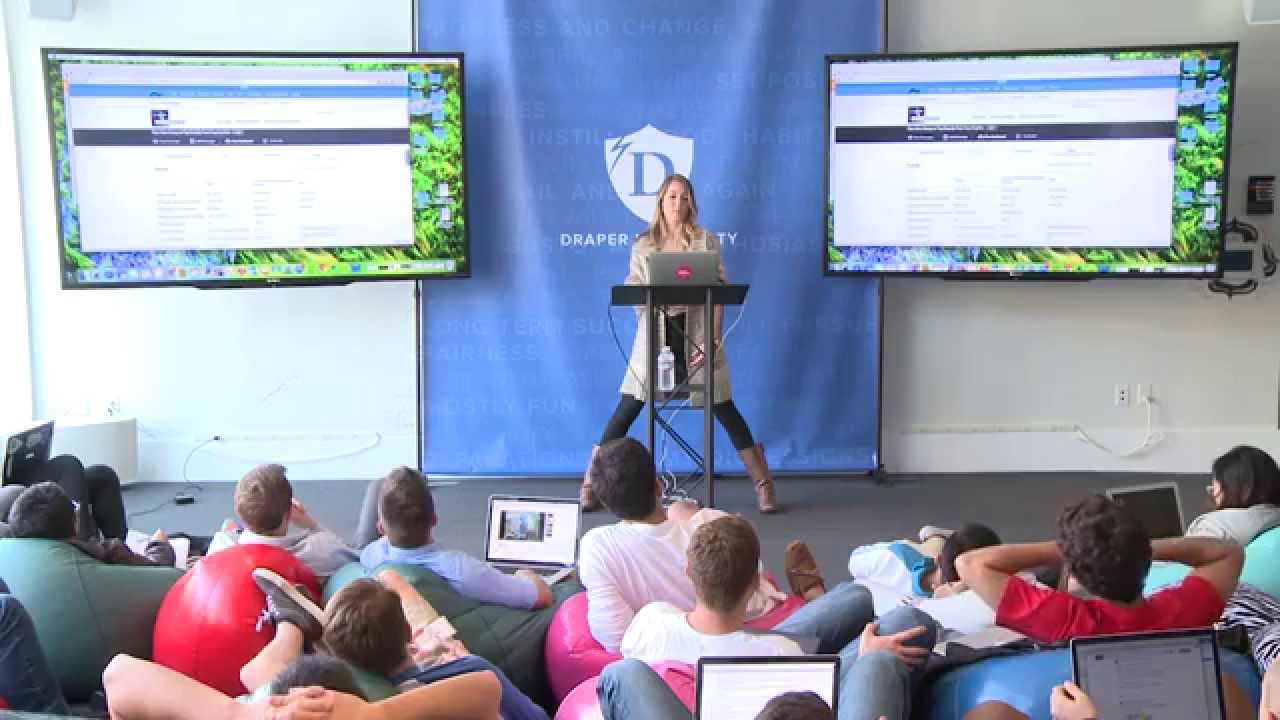
Alesia Cordesius breaks down what makes an Indiegogo campaign work: an attainable goal, a compelling story, unique perks, and constant communication. She uses the 30-30-30 rule—30% of funds from your network, 30% from referrals, 30% from the platform crowd—and shows how campaigns like Flow Hive and LuminAID used crowdfunding success to land VC investment and retail deals.
Chapters
We'll pull up the bees. So this is Flow Hive. These are the guys that launched on Sunday. Normal person would not see this gray tab. Campaign owners and campaign teams that have editing power will be able to go into View Dashboard. I'm not gonna dig into all this 'cause this is their info, but I wanna give you a high-level snapshot of what this looks like and how you can utilize it. So here you'll see campaign insights, campaign activity, what days you're receiving the most funds, contributions by country, domains as I mentioned, top referrers. Then you can export everything to CSV. Perk-wise you can see which perks are doing well, which perks are hidden, which perks have sold out, which perks you have in the pipeline to show and how much you've raised on each of them. Then you can go to contributions and actually filter to see who these people are, what their addresses are, their email, if you've fulfilled their perk yet, did they pay through PayPal, Stripe, credit card, and the like. Finally, you can see at the end the funds that have been raised to date, the disbursement amount that we have held at the moment, and and then the Indiegogo fees that are attached to it. Boom, snapshot. This is always updated in real time. This is your campaign insights that you have complete control over, and this is where you get your business-savvy data. Answer your question?
Thank you.
Yeah, you're welcome.
So usually, how do those campaigners keep in contact with those supporters? Is it by email or on the phone?
Great question. We're gonna get into that. If I don't get to it, tell me. All right. Cool. So overall, cash is becoming a commodity again, which is really exciting. And this idea of the crowd and the traditional financier, it's not a repelling relationship at all. When crowdfunding first came out, People assumed that this was gonna be 2 markets that hated each other. In fact, what we're finding is the crowd and crowdfunding is helping lower market risk and execution risk, and in turn, the traditional financier, the VCs, the investors, everyone in that world, they're still the relationship experts. They're still the advisors. Now they're just able to help advise ideas that are bubbling to the top, right? So ideas come to Indiegogo. Indiegogo pops them out to R&D, to VCs, to banks, to governments, to foundations, and they're coming to us to really see us as this market testing platform in this incubation space, which is cool. That goes back to the idea of Mark Cuban asking LuminAID, did you run a campaign? Tell me more. So you can attract investment capital after running a campaign. GravityLight went on and got a Google Impact Challenge award of $100,000. Miss Possible went and got Series A. They now have $10.3 million in their back pocket. Lava Mae has investor interest despite being a nonprofit right now. You can close investment capital, right? So Bombasocks, they were featured on Shark Tank. Luminate, they were featured on Shark Tank. Other different ways to do this. You can actually spend investment capital more wisely, right? So KitePatch actually came into the game of Indiegogo with already having a $5,000 Gates grant, right? So they, because they could iterate on their brand fast enough, didn't produce and waste time doing Kite Patch or Patch. They did it with Kite and could use that money much more wisely. And finally, you can stay independent, right? So Kuli Kuli, Lisa was approached by Whole Foods by herself, right? And she could make the decision, awesome, like, I wanna distribute and here are my terms. And she didn't have to share the pie at all. So this yin and yang relationship is real, and it's continuing to grow. And in turn, there's just these financial ecosystems that are much more healthy than they'd been otherwise. Because you're able to have more ideas. They're failing faster. It's much more on merit than anything else. And then there's less waste overall. So what do you think about that? You buy it? Well, Not a Ponzi scheme. I just gave so many good examples of the real deal. But I like that you're a conspiracy theorist. All right. Let's talk about what makes a successful campaign, right. Actually, shit. Who can tell me what you think?
An attainable goal.
Damn you. You saw it. Attainable goal. It's important. Very important. What else?
Good story.
Good story. Cool. Good.
Yes? Understanding that it's not a set-it-and-forget-it type deal. You're actually running a campaign.
So important. So important. It's not a field of dreams. If everybody wanted to run a campaign and win the lottery, that'd be nuts. It'd be amazing. But you're right. Not a done deal. Yeah?
You need to be able to market it well, but I don't know how to market these things effectively.
I'm really curious to know. OK. Good. We'll get into it. Yes.
Using social media to do the marketing.
Social media is important. Not the only thing, though, but important. Keeping active and interactive. Nice. Yeah. Good. Anything else?
PR.
PR. Yes.
Building credibility.
Especially with this whole trust thing coming into play. Super important. What else?
What else?
Those are good. That's great. So, high level. I could go into a lot more, and a lot more in depth, but I don't want to take, you know, the month that you guys have here. So, attainable goal. A compelling pitch. Unique perks. And proactive communication. So let's talk about the goal. When you look at these 2 campaigns, you have no idea what they're for. You have no idea what they're about. But you are scrolling through the internet, and all of a sudden, You see them pop up. Which one would you contribute to off the bat? The one on the left.
Why?
Because it's already 40% done. Yep.
I'd go to the right.
Would you go to the right?
Yeah.
Why?
Because they're the underdog.
Oh, I like that. That's good. See? But you're the minority. People quickly, quickly judge and say, OK, the one on the left, they raised $20K, but it's $20K of a $50K goal. They're already 40% of the way done. Obviously, they're doing well for some reason. I want to learn more. Potentially, you're looking to raise less money. Right, because this percentage is crucial, and this bar in and of itself is a standalone status symbol for the performance of the campaign, because humans are social animals, and unfortunately, there is a bandwagon effect here. It's not being tricky. It's just being strategic. Yes.
Can we change the target?
Great question. I'll get into that too. But at the end of the day, both of these guys have raised $20K. They both have 23 days left. It is what it is. You guys know you're scrolling through the internet constantly. You probably have the attention span of a 3-year-old. I know I do. So I'm not gonna scroll down unless I know that this is doing well. Unfortunate truth. People want to give to successful projects. So a higher goal does not necessarily mean more money. And this is to your point, to think through, okay, maybe I do need to raise $100,000, but we can break out the campaigns to say one $30K goal is going to the first third of this bigger vision, right? Because it's way better to actually think through what that goal is and hit it than say, I want $100,000 and I have no idea how I'm gonna start. It would be a drop in an ocean. 87% of our campaign owners that hit their goal actually exceed it. When you exceed it, you keep the messaging going and you're able to implement stretch goals. What do you mean by exceed? Exceed. You pass it. You surpass. These guys, 87% of our campaigns will hit here and they'll still have time in their campaign and they'll keep keep going. That's what the beehives did. Beehives hit that in 3 hours. And they still have 60 days in their campaign. That's a lot of money. Yeah.
Tell me about it.
That was crazy. So, Arit was an amazing campaign owner. She totally was methodical. I worked closely with her. I told her, great. Let's think through what your goal should be. Where do we start? On Indiegogo, successful campaigns, this is not always a hard and like a hard rule, black and white, but this is the trend. 30% of their funds come from their inner network. Their friends, their family, their colleagues. Perhaps people that they know will contribute already from a soft commitment early on as an investor or something. That's their first third. You have to have a jumping-off point in order to get the ball rolling. Because then the next third comes from the referrals that that network makes. Right? So it snowballs. And then the last third comes from the Indiegogo crowd at large. Why is it the last third? Well, we're a merit-based platform. Merit-based meaning we track the amount of funds that are raised, but we also track the amount of interaction you're receiving to your campaign. Interaction defined by click-through rates, top domains, top referrers. Are you as a campaign owner adding perks, adding content, making updates? Because maybe, just maybe, you might not be raising the funds right away, but the crowd is responding. So we want to capture that. And we, as Indiegogo employees, are not curating what's shown on our platform. This is all based off of how the crowd is responding. So that visibility is what gets you that last 30%. You want your gogo factor, that algorithm, to be kicking butt so you can be in our e-newsletter, our social media, our PR resources, and our platform homepage. Ari really wanted to launch with the $100K goal. When we did this exercise of thinking through 30-30-30, we realized she should probably launch at $75K because her first 30% was gonna be $25,000. She still wanted to go with this messaging, and in turn, she fell a little bit short. If she had gone with $75K, she probably would have exceeded it and been much closer to $100K otherwise. These guys did listen to me, though, which was awesome. These guys are a group out of Boston. They wanted to basically show that politics were not necessarily corrupt and that they wanted to change the discourse around Super PACs and how Super PACs should be about politics and not just money. They created the satirical politician Gil Fulbright, hired the actor from New York, and their campaign goal was surrounded around this. Big media push. And I sat down with them and I was like, what is a media push? Break it down for me. Tell me what this goal of your internal $75,000 goal means. So they broke it down and they said, okay, $20K will get us a tour bus for Gil to go debate Mitch McConnell in Kentucky. $30K will get us billboards. $40K will get us a media push. $50K will get us on TV. $75K will get us online ads. That's our goal. That is our plan. That is our roadmap. That's our strategy. That's what we want. $75K. Then we did the 30/30/30. Then we decided, let's launch at $20K, because this campaign could be one of many, and if you hit your $20K, great. If you exceed it, you keep going. And they did. And then they were able to check these boxes off as they went. Add new perks. Add new updates. They actually had contributors from the beginning become repeat contributors later because of this messaging. So it was so exciting to see this monumental movement forward. And finally, they had the artist that did the hope posters for Obama do these crazy cool posters here. They offered it as an exclusive perk the last 48 hours, and they hit over $114,000. Strategy. Thinking through this goal is key.
More from Tim


He Sold His Car to Build This Startup, Then Pitched It for $1M 😳 #Startups #AI

This Startup Moves Your Crypto BEFORE Hackers Can Steal It 😳 #Crypto #Cybersecurity




15 Months Without Refrigeration?! This Startup Thinks It Can Go Global 🥥 #FoodTech #Startups



