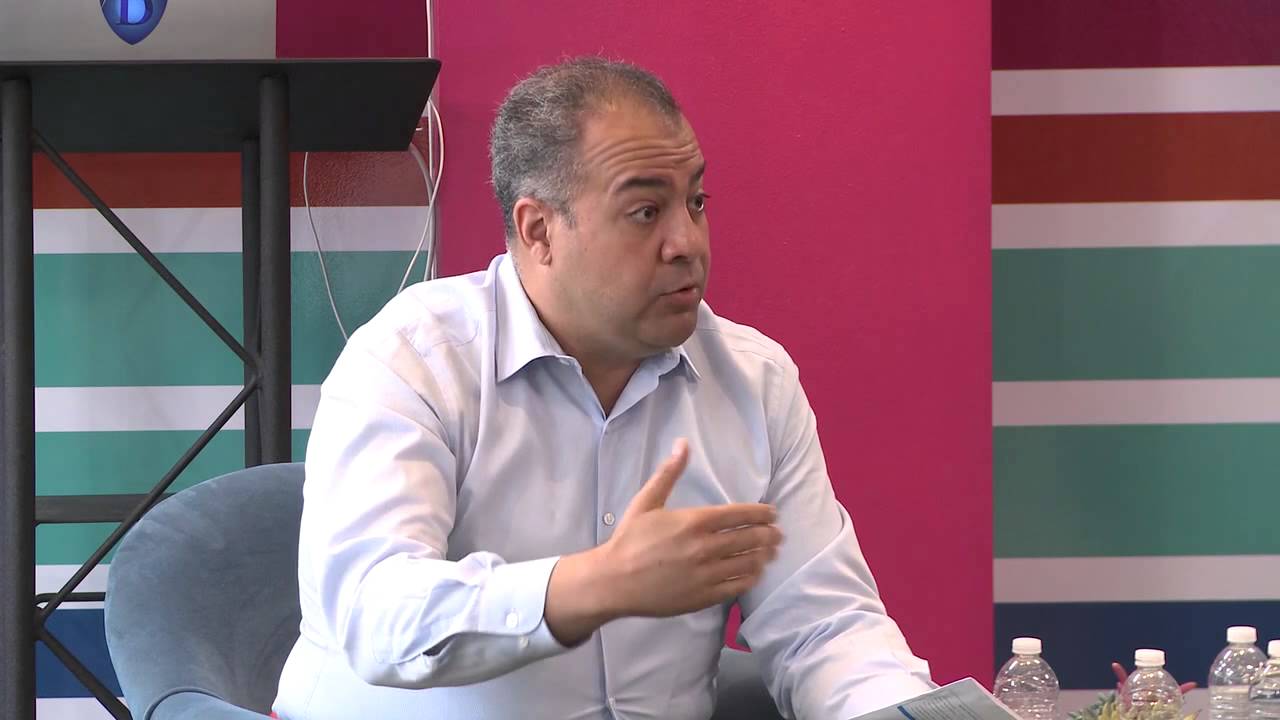
In this interview, Amr Awadallah, CTO of Cloudera, shares practical advice for founders on how to survive and thrive in the high‑failure world of startups. He begins by stressing that founders must be deeply passionate about their idea, as passion fuels the stamina needed when odds of success are extremely low (1 in 10 for general startups, 1 in 10,000 for consumer internet). He then outlines a series of actionable principles: (1) maintain a relentless sense of urgency and execute quickly to stay ahead of copycats; (2) invest heavily in hiring the right people for the first 200 hires, but be prepared to fire mismatches swiftly, even if it means letting yourself go; (3) create a culture that tolerates mistakes, rewarding experimentation while removing chronic repeat offenders; (4) listen closely to customers rather than assuming you know their needs, using the classic Henry Ford anecdote to illustrate the balance between innovation and market demand; (5) project unwavering belief in the company’s success, fostering positive energy that can raise morale and perceived odds, often supported by a co‑founder for honest doubt‑checking; (6) acknowledge the role of luck (or, for the religious, prayer) in pivotal moments, citing Cloudera’s $740 million Intel investment as an example. Throughout, Awadallah emphasizes that passion, urgency, disciplined team building, learning from failure, customer focus, optimism, and a bit of luck together form the backbone of a sustainable startup journey.
Chapters
So one of the very first key advice I like to give is whatever the idea you're going to pick for your company, make sure that you personally are very passionate about that concept, about that idea. I'm a big believer in passion in general, that passion helps give you the extra energy, the extra motivation, the extra power to keep executing very well. But I'll also tell you why passion is important. Creating a startup is not easy. I mean, you guys see all the glamorous success cases, Facebook, Cloudera, Uber, and so on. It's not easy. If you look at the statistics, only 1 out of every 10 companies will do well.
In the consumer internet space, only 1 out of 10,000 will become a big success.
The chances of success are very, very low, and the only thing that will keep you motivated about going despite all of that is the passion that you have.
There is going to be lots of drama, there is going to be lots of maybe possible infighting between you and your co-founders or employees. There is going to be cases where investors will come on the last day before they promised to give you money and say, no, we're not going to give you the money.
There is going to be lots of things like that, lots of things that are very stressful and honestly very demotivating.
And the only thing that's going to keep you going is your passion and belief in that thing that you're building.
So make sure you always have that passion and belief in the thing you're building. If you ever feel a disconnect between the passion that you have and the thing you're building, in my opinion, you should leave that company.
You should leave that company and go do something else. If you reach a stage at the company where you're pivoting to do something else— Cloudera did have a pivot where we changed slightly what we were doing—
but if you pivot to something where you don't If you don't have passion with the thing you pivoted to, then that's also a sign that maybe you should move on and do something else.
So the number one very, very key advice is make sure you're super passionate about the thing you're working on.
That's what's going to help you stay through this whole journey from the beginning to the end.
Number 2, and you guys must have heard this before from many others, is you want to have a sense of urgency.
You want to execute very, very, very fast.
Because of the copycat effect, which is today more true than ever.
As soon as your company starts doing well, copycats will start showing up everywhere.
So for Cloudera, for example, in our case within a year, once our company started clearly showing that this is a good space, copycats started showing up just like that, right? And the only thing that will keep you ahead of the curve is your execution and your sense of urgency, even though you're doing well and even though you're the leader, You're still paranoid about the guys coming after you and you're still moving quicker and quicker. So never lose that sense of urgency, always have that sense of urgency, never get comfortable in other words. Always work hard and always try to do more in less time. Something that comes directly out of that is this, what I said earlier about first you need to hire great people, so give time to hiring great people to join your team, but know That you will make mistakes in hiring people. The hiring process is an imperfect process. Even if it's somebody you know and worked with before, you never know.
Something will happen that maybe they are not the right fit.
So while you should spend a lot of time and a lot of diligence on hiring correctly, also because of the sense of urgency and because you don't have time to really spend years on fixing people, if you find somebody who is a mismatch, don't take too long before—
You fire them.
moving them off the team. And that sometimes might be yourself, which is the hardest thing to do.
It's the hardest thing to do, but watch out for that as well.
And Amar, isn't it true that it's sometimes a good idea to have someone, if you're the CEO, have someone you really trust under you doing the hiring because at a certain point you can't be interviewing everybody, right?
Yes, but I would say up to the first 200 people, the CEO should be interviewing every single person. You think so?
Okay.
Yeah, absolutely, absolutely. Because these first 200 people are the seed and the culture, the founders, not just the CEO should be involved. The culture is really set by that group. So I would say even though it takes a lot of time, it can be very successful.
Yeah, make the time.
Make the time. Yeah, this is one of the most important things that you are doing is that building out that team.
Number 4, and I'm sure you heard this from many others as well, is don't be afraid to make mistakes, right?
You will make mistakes.
as you grow out this company, as you try new things. And it's the part of the innovation game. When you're innovating, by definition, when you are innovating, you are trying something new.
That's what innovation is.
And when you're trying something new, that means there is a chance that that thing will not work.
So don't be afraid from making mistakes and encourage your people and your culture inside the company for people that it's okay to make mistakes. We want you to try a new way to do finance and how we close our books.
We want to try a new way for how we hire, for how we onboard. Innovation is not just about engineering and products and features. Innovation is about everything.
So encourage that and don't make people feel that if they make a mistake you're going to punish them. In fact, almost make it like if you make a mistake we're going to reward you because we're happy that you tried something new, we're happy you're trying to change the status quo.
That said, if you see somebody making the same mistake 10 times, then you should fire them. Right?
So definitely repeating the same mistake over and over is not a good thing, right? So balance these 2 things.
Encourage them to try new things, but encourage them to learn from these things and very quickly make them better.
I'm almost done here, sorry for taking time on this. But 5, and this is one of the most important ones, is listen to your customers. Sometimes we get a little bit arrogant and we think we know, since we are innovating, we are the entrepreneurs, we know better than our customers know. That's not true because at the end of the day what you're doing is building a product for that customer.
So you want to listen to them. So one of the very famous quotes that I really like that balances this innovation versus listening to customers is a quote from Henry Ford.
Show of hands, who knows Henry Ford?
Okay, so Henry Ford, he frequently gets—
Almost 90% of the room raised their hand. Henry Ford frequently gets credit by creating the car. He actually did not invent the car.
Who knows what Henry Ford did?
He did not invent the car.
All the way in the back.
He made the first production line. Exactly, that's what he did. He made—
he was one of the first manufacturing processes for creating a pipeline that significantly reduces the cost of producing a car and allows us to make cars much, much faster.
That said, a quote that's frequently attributed to him is, When I asked people what they wanted, people said we want faster horses. And that's where innovation comes in.
Innovation is not about asking people what they want.
Innovation and what we do as creators, as entrepreneurs, is to ask people and ask our customers, what is your problem?
What is the problem that is really paining you right now? And then we innovate by coming up with a an amazing new solution for that problem.
In other words, always keep your eye on that. Don't innovate in vacuum out of the problem you're trying to solve. Because if you go and build an amazing product that's super innovative that doesn't solve anybody's problem, obviously that's not going to succeed.
So always keep your eye on that while you're innovating.
Number 6, have faith in success, which I know is very hard because I just told you more than once that your chances of success are very low. But I'm a big believer that even though probability and statistics will tell you that, will tell you maybe otherwise, you need to have positive energy inside of your company. And the positive energy, the belief, the suspending belief and making the people around you think that the success of your company is going to be much higher than the average will come from you as a founder. And it will come from you as a founder when you're showing everybody around you that you have no doubts that you're going to succeed. That said, you personally might have some doubts and that's why you need a co-founder, at least one co-founder in the company, so between you and them you can go and express these doubts and have these true honest conversations of like, dude, this seems like we're screwed right now, this is not going to work. But you never want to have that with your team. With your team and with everybody around you in your company, you always want to project this image of we are going to make it despite all odds.
Despite all challenges, we are going to make it.
And I'm a believer in that positive energy will increase the probability of success for your company.
I don't have any data that shows that's true, but I think it is true.
And then a very similar piece of advice that lines up with that, and I give this piece of advice in 2 ways depending on whether you're religious or not religious. If you're not religious, I say wish for luck.
Luck is part of this.
Right, if you talk to any of the super successful entrepreneurs, they will tell you we were lucky at many junctures in our journey. It wasn't because of something we did, it was because of how lucky we were. For example, at Cloudera, we were very lucky that Intel came to us last year and told us here is $740 million.
Of course we would say we did a lot of work that made us reach this stage, but luck played a big part in that.
If you are a religious person, I typically would say please ask your mother to pray for you because that helps a lot. Thank you.