How a strong community contributed to the success of Nomiku | Lisa Fetterman
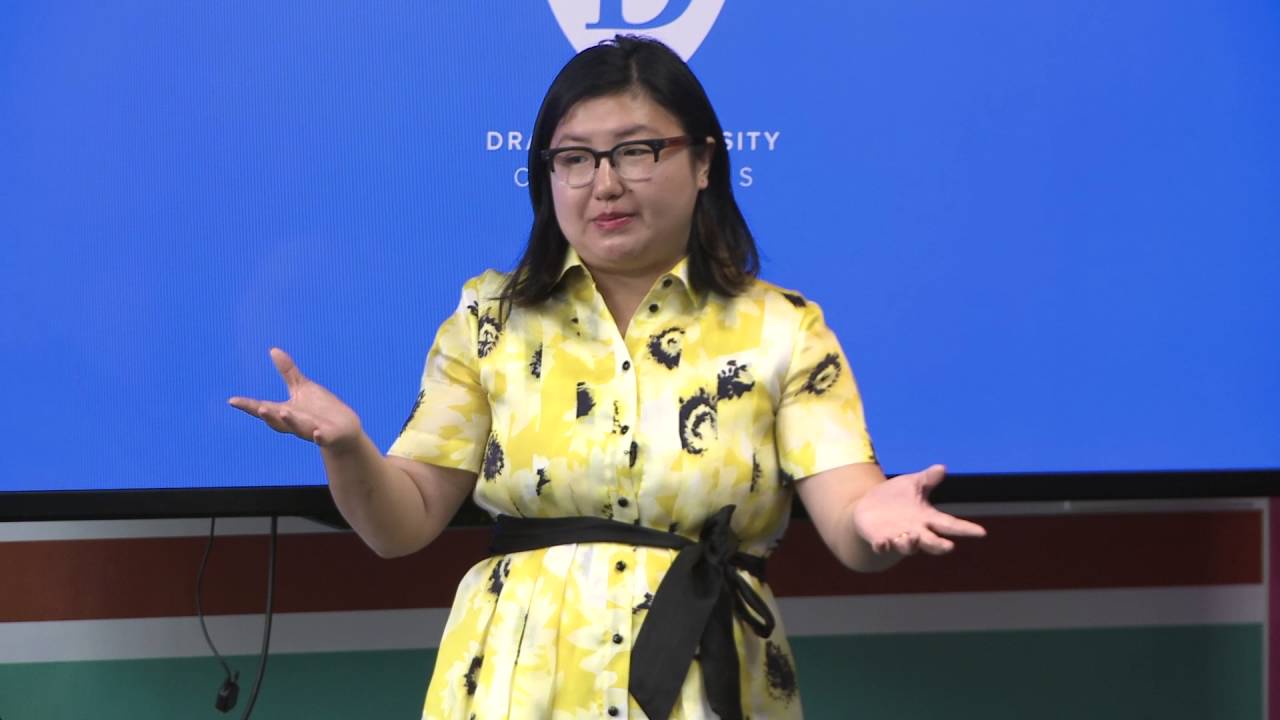
Lisa Fetterman, founder of Nomiku, shares how she built a sous-vide company from her chef background and immigrant family story. Her Kickstarter campaigns raised $586K and $750K, but community support and word-of-mouth sales mattered more than the initial funding.
Chapters
Good morning, class. Good morning. Wow, I like that. Damn, that never happens. You need this. Thank you. See? Now, no heckling though. Thank you. Well, good morning. So my name is Lisa. I founded my own company called Namiku. Like many of you, I manufacture in the United States from what I learned in China. I moved here as an immigrant. I'm Forbes 30 Under 30, Zagat 30 Under 30. I have millions of dollars in revenue. I created a revolution where there was a gap before. Before me, there was nobody in the world who had a home sous vide immersion circulator. What's a home sous vide immersion circulator? Does anybody know? A toaster. Sounds, sounds like— I hope that it becomes something like the toaster. Because then, because then I'll be everywhere. So a home sous vide immersion circulator is a precise temperature cooking machine that every single top chef in the world uses, except I gave this power to everyday people who just want to eat good food. Got that right. It's a precise temperature cooking machine, which means that you can never overcook your food and you get the same results as Michelin-star restaurants. My background is that I worked for Babbo, Jean-Georges, Saison. These are all Michelin-starred restaurants where I hustled as a chef and in managerial positions. Now, I've achieved a lot and there's still a long road ahead of me. What do you guys hope to get from my talk? What would make you feel most successful if you learn? from what I tell you today? Is there anybody who can tell me what you'd like to learn? I wanna learn about your failures. Oh, okay. That's a good one. Because it's really hard to talk about. Especially if you're still in the game. Go ahead. I wanna know how you started it. Okay. How I started it, my failures, and what else? Your life path. Life path. Okay. Yes. Face any adversity being a woman? Every day. Yes. How did you get from it would be amazing if people had the same ability as top chefs to people actually buying this? Okay. That sounds good. Yes. How does it work that it Okay. So how the product works. How it got here. If I faced any adversity and— What's your long-term vision? Long-term vision. How do you balance, like, your work and your personal life? And my personal life. Oh, I'll address that actually immediately. Because I think life-work balance is bullshit. If you try to achieve it, it's just gonna drive you fucking crazy. Who's to tell me I can't think about work when I'm in bed? Who's to tell me I can't think about work when I want to do something? That feels oppressive to me. Right? If you want to, if you want to hustle and you want to dedicate yourself to something, you're gonna think about it every moment of your life. Amen. Oh, holla. Okay. Hashtag blessed. Okay. How I can address all these questions is that I can go through a timeline of exactly what went down. The real real. I'm a little nervous because it's filmed. But I assume that it will be cut perfectly to make me look good. But it's not a smooth journey. How I started was that I worked in these restaurants and I saw this huge hulking piece of lavatory equipment. Really gigantic. Thousands of dollars. And I was new to a restaurant. Like, I had to beg for my job. When I worked at Babbo, it's run by Mario Batali, a famous Italian chef. I actually begged for my job in Italian. And I would do whatever they asked me to. Write the books, make reservations, clean the toilets, whatever they needed. Right? To just be a part of that system. And I was obsessed with these hulking pieces of laboratory equipment because when you— do you guys know about chef culture? If you work at a fine dining institution and you got stars on you, then you can go anywhere into a kitchen and you stage, which means work for free. But you get to learn all of their recipes and you get to hang out with people who really, really inspire you. And what inspired me was that people who are low level like me could cook perfectly with this huge piece of machinery. I wanted one. I was saving up money for one. I saved up, like, about $600, and then I met this guy at the gym. He turned into my co-founder, husband, and baby daddy. And then we never went back to the gym again. He has his PhD in astrophysics plasma physics. And he asked me, like, so what are you into? And I had read, like, the Wikipedia article on plasma physics, and I just basically repeated it to him verbatim. But our conversation about food did. And we decided to make our own sous vide immersion circulator. I was like, how do you even do that? How do you even start? There was a thing called makerspaces at the time. So this is in 2010. In 2010, we went to a makerspace. We learned how to solder. And I learned how to code. And from there, we made our first DIY open-source sous vide immersion circulator. That's awesome. So this is a kit that you solder together by yourself. And we sold hundreds of them. Not because I had, like, gone viral somehow. Not because I had such, like, sick marketing game. But because I went to makerspaces across the United States and physically held people's hands and talked to them and explained how to make this machine. It got to the point where we amassed this huge listserv of people and they were like, why don't you Why don't you just make it? And I remember that day when we were in New York very, very clearly when we were walking together and like it was a cold, cold day in New York. So cold that the wind goes through your clothes. You, like, you remember these times when your life completely changes. And we said, you know, we have to make this or else somebody else is going to. Like, this is the right time to do it. There's so much momentum behind us. You know that feeling. Which is why you're here today as entrepreneurs. You have that feeling behind you right now. And we went to China for 3 months to make a prototype. We joined an accelerator called Hackcelerator. At the time they gave you $12,000 to go. We spent $8,000 on plane tickets and the rest we just spent immediately. And this is, uh, before we even created our prototype because you need to do prototype after prototype After prototype. And this is the first time that I failed. We had zero money in our bank account, personal bank account and business. And we were burnt out. Because it was like day in, day out, we'd try to go to factories and convince them to make our machine. These people that we had no relationships with. That I was like, hey, this is the thing of the future. And then everybody was like, who are you? What are you trying to make? I've never seen this before. Like, this doesn't make any sense. So I just got super sad. And I watched trains pass by on the way to— you know, I would ride the public transport system. And I would just let the trains pass by that were going home. I was depressed. I turned to my fiancé at the time, now my husband. I turned to him and I was like, hey, you know what I can do? I can go back to America. I can sell my engagement ring. And sell a kidney and that would give us $20K and then we could finish this project. He looked at me and he was like, no. No, absolutely not. What we're gonna do is that we're gonna get a new credit card and then we're gonna go to Thailand for vacation. So we go to Thailand for vacation. Mm-hmm. And I was like, this, I was like, what an adventure. This sucks. And we called the only person in Thailand that we knew from a maker class that we had. And I tell him exactly what we're making. When I get off the plane, my phone blew up from my friend in Thailand. He was like, did you know that I have an industrial design degree from RISD? I can make this machine with you guys. Our vacation in Thailand turned into just hardcore hacking sessions. Like everywhere we went we were talking about the business. We were talking about what we're making. He was helping us make it come true. We flew back to China together with our 3rd co-founder. We finished our prototype. One week before our wedding, we begged our wedding videographers, please, can you help us make a Kickstarter video? We put it up on Kickstarter and it becomes the number one most funded project in the food category at the time, $586K in 30 days. Yeah! And after that, we had another one. $750K in 30 days for our Wi-Fi. So I made $1.3 million from Kickstarter. And that was a huge windfall, but it wasn't an overnight success. The reason we were so successful is because we had that community beforehand. Does anybody here know about sales? What is the easiest customer to sell to? Somebody who needs the product. That's true. That's, that's, that's not it though. What is it? Somebody you've already had before. Yes! Exactly. Exactly. And to that shout-out too. Yes. The easiest customer you have is somebody that you've already had as a customer. So what you can do right now, even though your product's not polished, it's not finished, it's a DIY, it's a whatever, it sucks. You can sell your services or whatever prototype you have right now and make a customer. Make a customer, because that customer will be your customer again and again and again, 'cause they have that relationship with you. They trust you already because you gave, they gave you money once. They're like, oh, this is my relationship with you. I give you money. And that's how it works. And that's how it worked for us. And that's why we were able to have our success, is because we did sales right. By accident. I found out recently this is how sales work. But this is just me building my community and genuinely caring about people. That was, I was listening to your oath before and I was like, yes, if you genuinely do all those things, you're actually doing sales right. And sales is just trying to explain the true enthusiasm and passion you have already. I'm gonna go ahead and
More from Tim


He Sold His Car to Build This Startup, Then Pitched It for $1M 😳 #Startups #AI

This Startup Moves Your Crypto BEFORE Hackers Can Steal It 😳 #Crypto #Cybersecurity




15 Months Without Refrigeration?! This Startup Thinks It Can Go Global 🥥 #FoodTech #Startups



