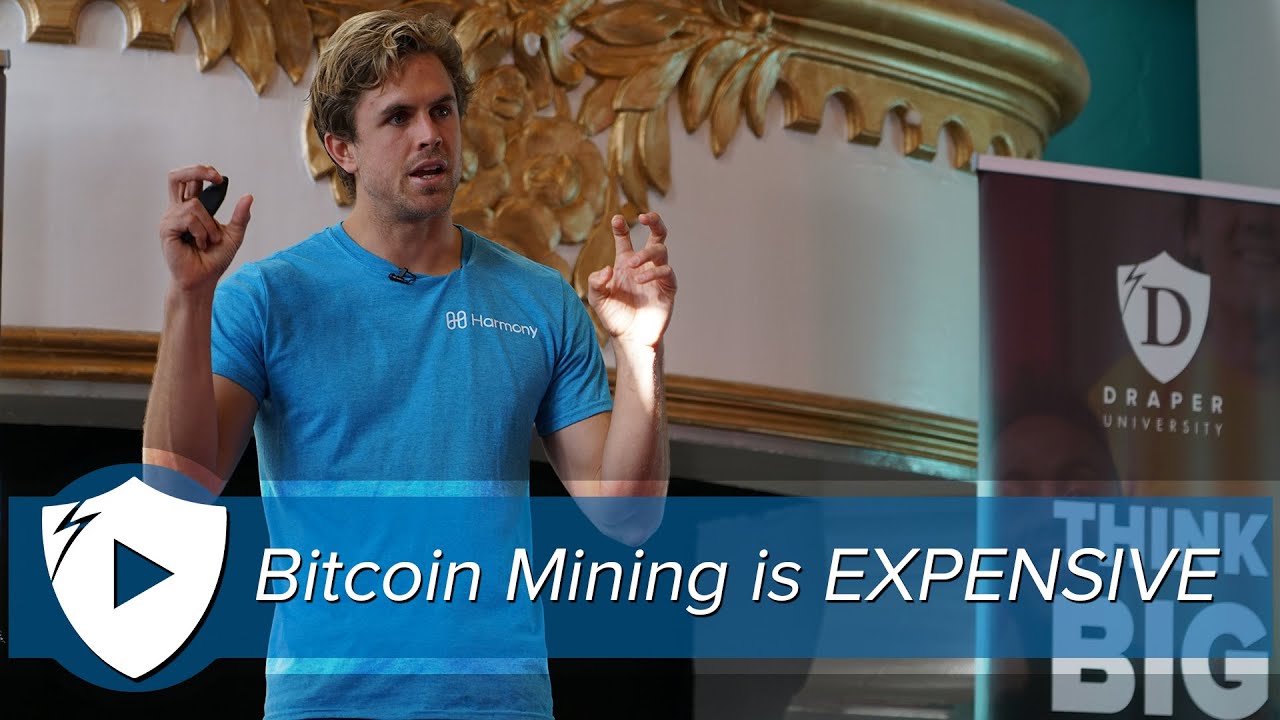
Harmony founder Nick White explains how Bitcoin's proof-of-work system creates consensus. Miners compete to find rare hashes, and the network accepts the longest chain as truth. Rewriting history requires controlling over 50% of hashing power, making attacks prohibitively expensive. Miners earn newly minted Bitcoin, currently worth roughly $500,000 per block.
Chapters
Where I have to have more than half of the total mining power, hashing power, in the whole network in order for me to start rewriting history. And so that's pretty hard to do. You'd have to get like, you know, just so much resources that it makes it very difficult to actually execute anything like this. And that's where the security of Bitcoin comes from. And so this is the way that Bitcoin solves consensus. And it's called proof of work. And so basically, the concept of proof of work is that each block must be mined by finding a very rare hash. So each time you execute a hash, there's sort of like, it's basically random, the output is random. Um, and you can think of it like, like, uh, throwing darts at a dartboard and, um, you can land anywhere. Sometimes it, like, it may land in the bullseye, right? But it's very, it's like rare to land in the bullseye. It's a similar thing with this, like, mining concept. Like, you're just throwing darts at a dartboard and sometimes you happen to hit the bullseye, meaning you find a hash that is rare enough, um, that allows— gives you the right to add a new block to the chain. The reason this is important is because everyone agrees, like the way that blockchain chooses which chain is valid, is everyone agrees to follow the longest chain, meaning the chain in which that has the most work done on it, meaning the most like rareness. You can kind of like sum up the rareness of hashes and Um, the, the chain that has, that people have spent the most time building or mining, the most energy, um, like the rarest chain in some sense, is the canonical chain. It's the chain that everyone agrees on. So if I give you a chain here, um, and I say, hey, this is the, this is the valid chain, uh, but then you, you also talk to some other people and they're like, no, no, no, this is the valid chain. you'll be like, oh, wow, this chain is way longer, way rarer. It has more hashing done into it, more than this one. So, I know this guy is faking me. This is not the right chain. So, we have a way of basically coming to agreement on what the single source of truth is. And what's more important actually is— or another important feature is that the harder the hash is, the harder it is to, like, redo it, right? The harder it is to, like, if I were gonna— let's say I'm on my own, like everyone, you guys are all mining on your own chain, and then I decide on my own, I'm like, hey, I'm gonna create a different chain, and I'm gonna just mine faster than you and create more blocks. I'm not able to do that. If I try to rewrite history, I have to basically undo all that hard work or redo it. And so, unless— this is where like the security threshold of Bitcoin comes in, which is it's like a 51% attack, basically, where I have to have more than half of the total mining power, hashing power in the whole network in order for me to start rewriting history. And so, that's pretty hard to do. You'd have to get like, you know, just so much resources that it's, it makes it very difficult to actually execute anything like this. And that's where the security of Bitcoin comes from. And another important piece is like, why are they called miners? And the reason is that, so mining is really expensive. You have to buy these computers or ASICs, which are like specific chips that just do hashes. And then you have to run them on— with a lot of electricity. It's like running a data center. It's really expensive. And so, the miners need to be compensated in some way. And the way that they're compensated is that each time they mint a new block, they get to pay themselves a certain amount of Bitcoin. When Bitcoin first started, I think it was like 50 Bitcoin per block. Every time you mined a block, you get 50 Bitcoin. Nowadays, if you think about that, that would be roughly like $500,000 right now. So, those people who were mining in the early days, each time they mined a block, they basically earned in today's value of Bitcoin $500,000. That's pretty great, huh? Yeah. 10 minutes, so the block time for Bitcoin is about 10 minutes. So, every 10 minutes on average, a new block is mined. And so, essentially, This is the way that the whole chain is financed, is basically that miners are incentivized to mine because they get rewarded in Bitcoin itself. And the service they're providing to the network is that they are verifying and making sure the state, like all the things are, transactions are valid, and they're making the chain secure so that no one can come in and rewrite history. So, Tim,