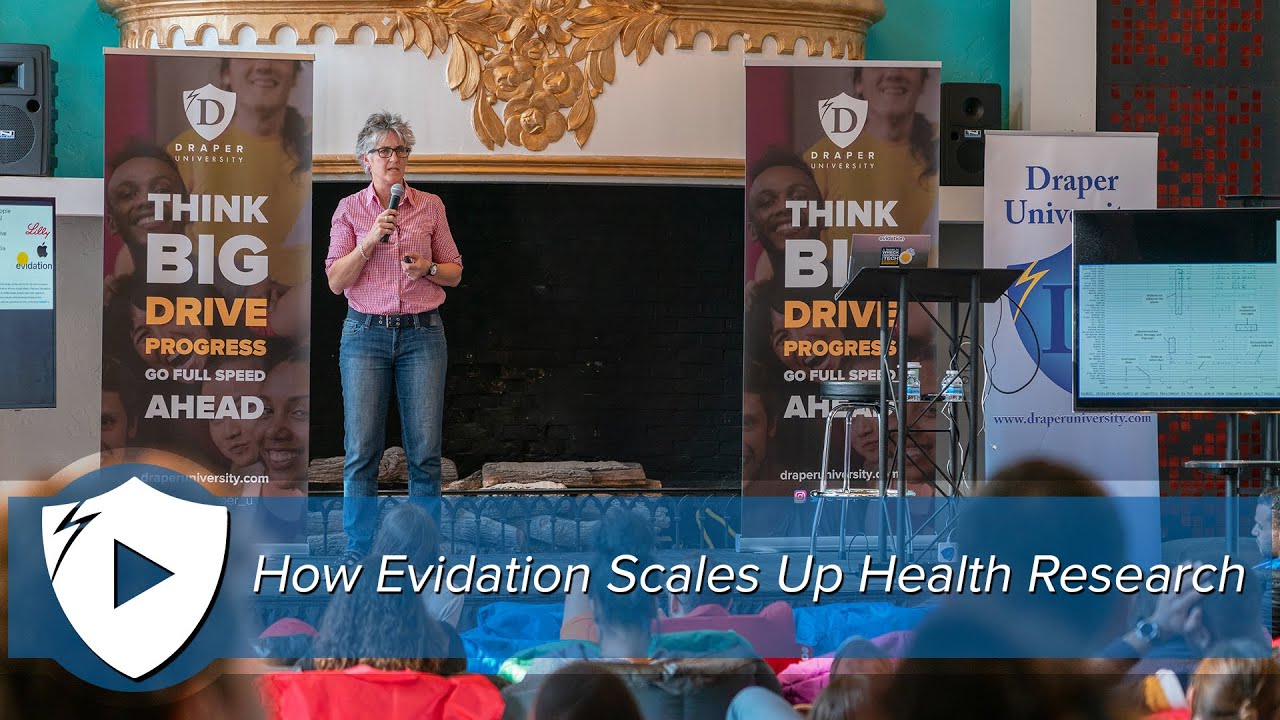
Evidation CEO Deb Kilpatrick built a platform with 3.5 million members that runs research studies outside traditional clinical trials. A collaboration with Lilly and Apple used only phone sensors and wearables to detect mild cognitive impairment. A chronic pain registry of 10,000 patients combined wearable, health record, and genomic data to find pain types beyond standard diagnoses.
Chapters
They're highly regulated companies, right? And so the question I often get, not so much anymore, but certainly a few years ago when we were first beginning to be public about what we were doing, is they would say, this is great, but nobody's gonna do this. How do you know patients are gonna do this? And I thought that was always like an incredibly paternalistic answer. I was like, why do you think they won't? So one of the questions that we get when I go out and talk to people is, wow, this sounds amazing, but does anybody— do you have like 100 people participating? I'm like, no, we have many, many people participating. And of the 3.5 million-ish today, about a third of those people— I don't know what the number actually is today, we hit a million a few months ago— about a third of those people have participated in some kind of trial or research or health health, health survey or health research, um, on the Evasion platform from a standing start in 2016. Remember the number that I said? If I add up all the patients that have participated in products that are companies that I've been associated with in 22 years, we might hit 100,000, right? And I've been a pro— I've been a part of companies that were affecting millions of patients. It's just that there was no way to scale the research infrastructure. And so we're extremely, extremely proud of this. But importantly, it's not just a question of scale and bringing a new ecosystem of scale to people. It's also a system that is now allowing us to ask really important but very different questions that we've been able to ask before. So we know that digital therapeutics are going to need to be evaluated largely virtually in the population, not just inside brick-and-mortar walls. So, in August, we released data at the Global KDD meeting, which was in Anchorage this year, which is the Knowledge, Data, and Discovery meeting. It's probably the most important data science, data discovery conference that happens in the world right now. It's not just focused on healthcare, but there's a lot of healthcare data there because healthcare datasets tend to be the messiest. And so, we have a lot of the world— the world's world-class data scientists are in healthcare at this moment. Yeah. And so we had been doing a study with Lilly and Apple identifying whether or not you could separate mild cognitive impaired patients from diagnosed Alzheimer's. This is incredibly important, using only consumer-level APIs and common data streams that we would be able to detect in the daily life of a person. And right now, we're importantly on our own investing in a 10,000-patient observational registry across the US in chronic pain. And we're using a lot of different wearables data, phone data, and a lot of different traditional medical data like EHR data or genomics information. And what we're trying to do here is we're trying to identify phenotypes of chronic pain or phenotypes of symptoms in chronic pain that go beyond someone just having osteoarthritis or they go beyond someone just having migraines. They become phenotypes phenotypes based on the signals that indicate pain severity. At least that's our thesis. We enrolled this in 2018 and have been doing follow-up on the 10,000 throughout 2019. So one of the questions I get when I talk about Evidation, especially when I talk to you, you have to realize we work with very large global B2B enterprise companies and they're conservative. And the reason they're conservative is because number one, it's patient care, it should be conservative. Number two, they're highly regulated companies. Right. And so the question I often get, not so much anymore, but certainly a few years ago when we were first beginning to be public about what we were doing, is they would say, this is great, but nobody's going to do this. How do you know patients are going to do this? And I thought that was always like an incredibly paternalistic answer. I was like, why do you think they won't? And so I like to show these slides in those examples, in those audiences, to show like this is a typical enrollee footprint for us. Now for comparison, if you saw— let's see, I think the study on the left was uncontrolled hypertension and the study on the right was sleep apnea. And so you're looking at the actual locations of the individuals that are participants in that or that were participants in that. I think the one on the left was a randomized clinical trial and the one on the right was observational registry. But But nonetheless, you can see the benefit here. If you look at traditional clinical trial enrollee footprints, they don't look like this. They look like very— you'll have like 20 concentrated, maybe 50 if it's a large trial, 50 concentrated spots of people around urban areas or large tertiary care centers or academic medical centers, right? And so when we do clinical trials, I want to make sure we're doing them everywhere. Right? Because it's all of us that are going to be taking these products, and so we want to make sure that we're sort of testing them in as diverse a population as possible. And so the answer is, yeah, hell yeah, patients are ready for this. They're more ready than the system is, frankly. And so a lot of what we do at Evidation is, you know, spend a lot of time on the achievement side of our business, really making sure that we give them an experience that they did not expect to get in a healthcare context, right? A really seamless experience to participate in clinical research in a way that feels like the rest of their life feels when they interact with technology, but has a level of privacy, permissioning, and rigor that they're perhaps not used to. So with that, I will leave the rest for questions. And yeah, I will— I may not answer everything. I may not know the answer to everything, but I'll You can ask anything. And thanks for your attention.