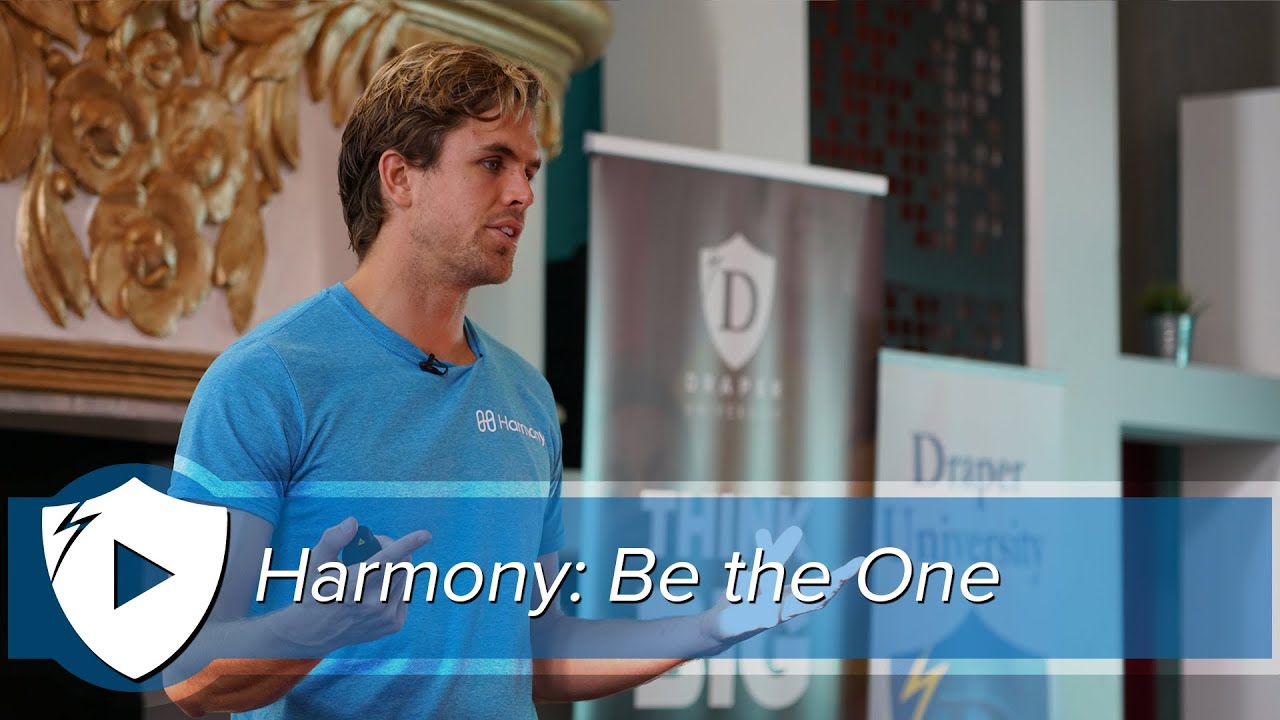
Harmony founder Nick White explains how the team is scaling blockchain for mass adoption through proof-of-stake, sharding, and networking optimizations. The project aims to decentralize power back to users, built by engineers from major tech companies and top universities.
Chapters
And so what's great about blockchain is that it gives power back to the user. It gives it back to the common man. And so this is, I think, a very important thing for us all, because if we don't do this, if we don't build this, then I think we'll keep going down this path of centralizing all this power and corruption in these entities. We think that blockchain in the end can create a more just and harmonious world. And so this really limits the kinds of shared imagined realities that we can create with it. And so that's why, for example, Harmony exists, which is my startup. We're trying to solve this problem and basically build a fast, scalable, and cheap blockchain for mass mainstream adoption. So sort of like going from, you know, dial-up to like 5G, we're trying to basically level up the infrastructure for blockchain so that it becomes more usable for everyone. And that way, we can unleash the potential of this new platform technology. But scaling blockchain is actually very hard because it's this open network that anyone can participate in. And there's so many nodes, and you have to reach consensus. And it's, I think, really one of the, one of the most complicated engineering problems that we're currently— like, the space is facing, and even like outside of cryptocurrency. And that's actually great because it's attracted a lot of engineers to this problem, including myself and my team. You know, and engineers love hard problems, we want to solve these things, especially when it's something like blockchain that has so much potential to change the world. And so this is like some, a few snapshots of our team. We come from a lot of people from Google or Apple, Amazon, you know, UPenn, Harvard, Stanford, Oxford, so a lot, a lot of like even Facebook, we have a lot of— we've kind of tapped into a lot of the talent here in the Bay Area for, you know, low-level engineers who can really solve these very difficult problems. And our approach is that we use proof of stake, which is a new way rather than proof of work, which we talked about. Proof of stake, rather than using hashing to secure the network in terms of the finding the rare hashes, you actually use the currency, the native currency itself to secure the network. So it's sort of like, imagine if I could secure a Bitcoin network with just my Bitcoin. And the nice thing about this is it makes it much cheaper, because you don't have to burn all this energy to secure the chain. We also do something called sharding, which is like, basically a way of splitting up the blockchain into smaller pieces, so that you can run more— you can run— fit more transactions through it and run things faster. And we also do something on the networking layer, which is we actually— we actually, like, try to optimize the way in which data and messages are— and blocks are passed around on the network, because at the end of the day, like, coming to consensus is a very tricky problem. Imagine even just like between people, in order to come to consensus and agree on something, we have to communicate a lot and talk a lot before we can agree that this is the final answer. And it's the same thing with blockchain. It's a very like communications-heavy thing. And so that's why it's very important to optimize things in the networking layer, which is basically how data is passed around between the nodes on the network. And so Some of the things that we have to, you know, apply in order to achieve this are, you know, new cryptographic primitives, like I was mentioning, verifiable delay functions, verifiable random functions. We also use cutting-edge consensus technology, so not proof of work, but proof of stake, and combined with that, something called PBFT. And we also dig down into the actual internet protocols themselves in terms of You know, we're going as deep down into— there's like a 7-layer OSI stack of how the internet functions. And we're going as deep down into that to be as low level as possible to really squeeze all of the potential out of the internet for our communication on our chain. Our philosophy is that, you know, we want to be the one. And what that means is that we think that blockchain is a force for humanity in the digital age. It really gives power back to the individual, power over your money, as well as power over your data. And I think this is really crucial, because we're kind of living through a time where we can't trust institutions, like whether they're banks, or whether they're internet giants, like, you know, the Facebooks or Tencents of the world to actually have our best interests at heart. And so what's great about blockchain is that it gives power back to the user. It gives it back to the common man. And that's going to be very important in the 21st century as more and more of us come online and more and more of our lives are conducted online in a digital realm. And so this is, I think, a very important thing for us all, because if we don't do this, if we don't build this, then I think we'll keep going down this path of centralizing all this power and corruption in these entities. So we think that blockchain in the end can create a more just and harmonious world. And that's really what drives us. And so, yeah, hopefully you guys enjoyed this presentation and learned some. We have some time for questions. But thank you so much. You can find me on Twitter. And you can email me Or talk to Alex, and he can connect us.